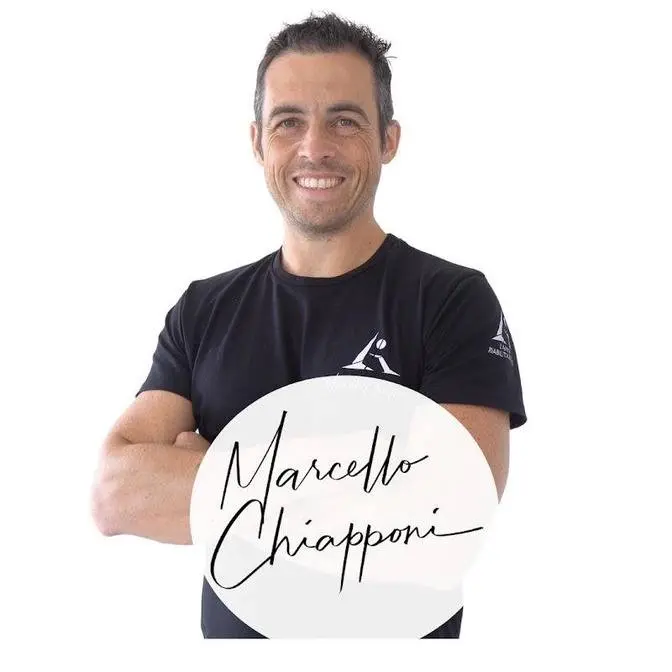
Ernie e protrusioni sono due riscontri molto comuni nelle lastre e negli esami radiologici: in questo video vediamo alcuni stretching molto utili per chi ha problemi di questo tipo.
In questo video, esploreremo tre esercizi di stretching fondamentali per la schiena, pensati specificamente per chi soffre di ernie e protusioni. La schiena è una delle parti del corpo più complesse e delicate, e mantenere una buona flessibilità e forza muscolare è essenziale per prevenire e gestire il dolore.
Il primo esercizio che vedremo si concentra sui muscoli posteriori della coscia. Questi muscoli, quando sono rigidi, possono influenzare la nostra postura e mettere pressione sulla colonna vertebrale. Vi mostrerò un metodo semplice ma efficace per allungarli, utilizzando una cintura o un accappatoio.
Proseguiremo poi con altri due esercizi che mirano a mobilizzare e allungare la colonna vertebrale. Questi movimenti sono progettati per essere delicati ma efficaci, garantendo che la schiena rimanga in una posizione neutra per evitare ulteriori stress o lesioni.
Mentre gli esercizi sono adatti a tutti, è sempre una buona idea ascoltare il proprio corpo e procedere con cautela, specialmente se si ha una storia di problemi alla schiena. L'obiettivo è fornire strumenti utili per migliorare la flessibilità e la forza della schiena, riducendo il rischio di dolore e lesioni future.
🕒 CAPITOLI: 0:00 - Introduzione agli esercizi di stretching per la schiena 1:30 - Stretching dei muscoli posteriori della coscia 3:00 - Mobilizzazione della colonna vertebrale 4:30 - Consigli e precauzioni 5:30 - Conclusione e ringraziamenti.
Spero che questi esercizi vi siano utili e vi aiutino a mantenere una schiena sana e flessibile!
Hi, welcome to this video in which I will show you three simple stretching exercises
that are particularly useful for all those people who suffer from back pain
and who have encountered hernias and protrusions at the level of the spine.
We will see in a moment that not necessarily the two things, having back pain and having hernias and protrusions, are related to each other,
but these exercises that we are going to see can be useful to you in any case.
If you want to go further, in addition to the exercises that we are going to see with a step-by-step method,
then you will also see my free trial lessons that are found in the links that you find in the description of the video.
Before starting, let me quickly introduce myself, I am Marcello Chiapponi, I am a physiotherapist,
I help people to solve musculoskeletal pain also through my express methodologies in the form of online video courses.
Regarding this problem, I really did a lot of work.
I repeat, there are free trial lessons with which you can gain confidence,
then go and watch the links that are in the description of the video.
So, I was saying before, hernias and protrusions are exactly the cause of back pain?
Well, if we talk about statistics, if we go to see the statistics, what do we see?
That in the vast majority of people, unless there are serious damage and neurological symptoms
such as paralysis of the foot, hernias and protrusions are also found in healthy people already from a young age.
So does it make sense to think that they are exclusively the cause of the problem?
No, in essence they are a piece of the puzzle, very often a small piece of the puzzle.
To create problems is much more the general irritation, which is very much linked to the muscles.
In fact, now we are going to see some exercises that allow us to slow down the tension of the muscles.
Are they specific exercises for those who have this situation of hernias and protrusions, L4, L5 and so on?
No, simply because they do not exist.
What do we want if we have back pain?
With or without hernias and protrusions?
But what do we want?
We want our muscles not to be excessively contracted and that our muscles are efficient,
that is, that our core has a good hold, because this reduces compressions.
The stretching exercises we see now are excellent to start with,
but the recommendation is this, the particularity is this.
We said that hernias and protrusions are just a small piece of the puzzle,
sometimes they are a piece of the puzzle a little bigger and in these people we recognize them well
because they tolerate the movements of flexion badly.
So, to have an optimal stretching of the spine,
I do not go to create a direct stretching that brings me the situation in flexion,
because there is a 30% of people who actually have an increase in symptoms,
because the discs compress more.
For the other 70%, the movement of flexion and increase in mobility is not an advantage in terms of pain,
so the stretches that we are going to see are basically stretches that are done in a neutral back position.
The first muscle group that we are going to stretch are the back muscles of the thigh.
Why am I interested in the back muscles of the thigh?
Because basically the more my back muscles of the thigh are rigid
and the more I have the tendency, let's say that my muscles do not go more than that,
I have to bend the spine instead of bending the legs.
When they know a little bit, more or less everyone,
that the load on the spine is reduced if I bend my legs and keep the spine straight.
But the more the back muscles are straight, the more I have difficulty keeping the spine straight.
So, the first muscles that we want to loosen the tension are certainly these.
How do I do it? There are obviously many exercises.
One of the simplest, I take the belt of the bra,
I put myself in a position with my belly up,
I let it pass under the plant of the foot, because under the tip it would also create too much tension,
this beautiful straight, the one below beautiful straight,
I pull slightly towards me until I feel a delicate tension under,
in the back of the thigh.
I hold 30-40 seconds with good breaths, 30-40 seconds on one side, 30-40 on the other,
at least 3-4 times per side.
This is the first muscle group that we want to stretch.
The second muscle group that we want to stretch,
yes, let's also call it muscle group,
is certainly that of the iliopsoas.
I talk a lot about the iliopsoas, it is the main muscle in contact with the vertebrae and in contact with the discs,
so if we reduce its tension, we reduce the compression we have on the discs.
So, classic elongation, illustrated by those who know me many times,
straight leg, but I always see it even for the first time,
straight leg behind, straight spine without throwing it back,
minimum flexion here, tension here, in the front of the thigh,
or slightly behind, little by little.
Ok?
Nice breaths, also here, 30-40 seconds on one side, 30-40 seconds on the other.
The other muscle that we want to stretch, which in reality are always more or less muscle groups,
but, even if we can isolate a single muscle, and we don't even need it,
is the iliopsoas.
The iliopsoas is a fundamentally posterior muscle of the spine
and even there it is an excellent helper, let's say, of what are the compressions.
So if we go to reduce the tension, we go to reduce the tension that is serious on our vertebrae.
The elongation that I find particularly effective is this,
I lean on something, maybe something solid, more than a stick,
but I straighten the spine, what interests me is that I bring the weight from one side,
I keep both legs straight, the foot here I keep it hammered,
and I push the leg down, which is up, I push it down.
If I put a hand on the iliopsoas crest, on the iliopsoas spine, on the bone here in front,
I feel that it goes down.
This is a sign that I have elongated the iliopsoas.
And from this position, I inhale well, and exhale well.
Two or three breaths on one side, two or three breaths on the other.
A lot of caution, very light tensions we always want with these exercises,
because the muscles slow down when the tension we create is light.
Here, in terms of stretching, these are certainly three of the most effective stretches
for those who suffer from back pain.
As I said at the beginning, the question of hernias and protrusions
is not directly related to back pain.
There are no specific exercises for hernias and protrusions,
nor are there contraindicated exercises, regardless of hernias and protrusions,
and certainly these are not.
So, in general, if you have back pain, reducing muscle tension is a good idea,
and this is a great way to do it.
An even better way to do it is certainly to have a complete program
that adapts to your characteristics.
You can definitely do it with my methodologies.
If you are interested in going deeper, there are also free word lessons.
Go and look at the links in the description of the video.
That's all for this video.
If you found it interesting, don't forget to leave a like,
and don't forget to subscribe to my channel.
Thank you for your attention and see you next time.