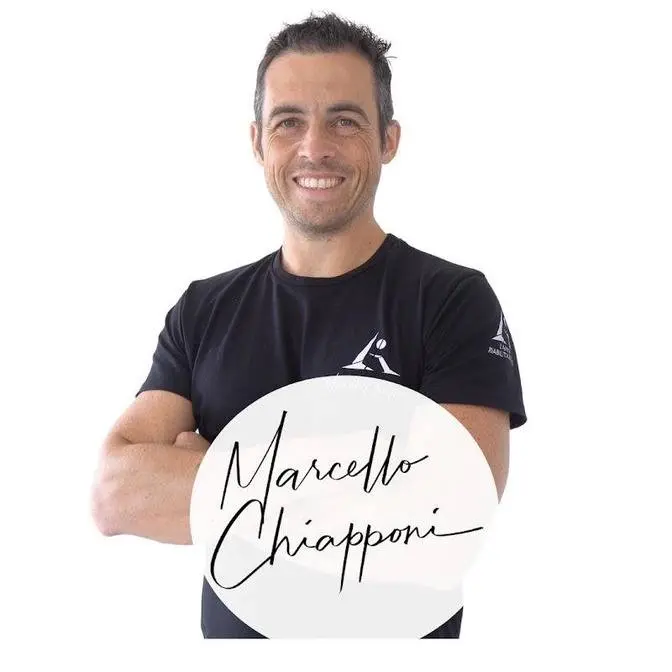
In questo video illustro una sessione da seguire minuto per minuto, di esercizi cervicali prevalentemente di stretching, utili per chi soffre di sintomi come dolore e vertigini.
Gli esercizi di stretching sono sicuramente il tipo di esercizio più utilizzato nella rieducazione delle problematiche cervicali.
Spesso è addirittura il nostro corpo che ci "chiede" degli esercizi di questo tipo: quando ci sentiamo tesi e contratti, istintivamente facciamo una serie di movimenti che in fondo altro non sono che movimenti di stretching.
Gli esercizi di stretching funzionano bene perchè i muscoli cervicali sono spesso estremamente contratti: in più, sono esercizi dolci e privi di controindicazioni.
Praticati con costanza, gli esercizi di stretching cervicale possono ridurre anche a medio e lungo termine la contrattura dei muscoli.
In questo video andremo a vedere alcuni degli esercizi di stretching più semplici e basilari per i muscoli cervicali: come spesso succede, sono anche quelli più efficaci.
PS: se non ci conosciamo, sono Marcello Chiapponi, fisioterapista da oltre 20 anni. In rete sono seguito da centinaia di migliaia di persone, molte delle quali mi conoscono per il mio corso online Cervicale STOP!, che ad oggi ha aiutato più di 2000 persone.
Hi, welcome to this video in which we will see a complete session of cervical exercises,
just a session to follow minute by minute with me.
But be careful for a moment, let's not jump right into the exercises,
I want to give a moment of context, a moment of recommendations first,
because it is important, the cervical disorder is actually one of the most complex disorders
of musculoskeletal medicine.
In this session we will work in the sense of reducing the tension of the muscles,
in this particular way of the trapezius, of the scapula elevator, of the sternocleidomastoid.
So our goal is to reduce muscle tension.
Reducing muscle tension is one of the basis of the resolution of the cervical disorder
because excessive muscle tension increases the forces of compression, increases inflammation
and since the cervical tract is very close to the brain,
it can occur to verify that departure of pseudo-neurological symptoms,
the difficulty of balance, the difficulty of concentration, the visual disorder,
all these symptoms that are typical of the cervical disorder
and that often mix with states of anxiety,
a little because maybe we are anxious and tend to stiffen the muscles,
a little because often it is the symptoms themselves that make us more anxious
and make us further stiffen the muscles, starting a vicious circle.
The session you are about to see is a session of muscle lightening.
The main recommendation is only to use a lot of delicacy in stretching.
The muscles must pull little, they must not give you absolutely annoying sensations,
especially the first time you keep these sensations to a minimum
and especially if you are a person with a high emotional load.
Often very contracted muscles for emotional reasons do not like to be too stiff.
So there are no contraindications.
The only recommendation is to be particularly sweet.
The other recommendation is not to leave this session alone,
but if you have cervical disorders, to work consistently on your muscles
and not just on the cervical ones.
If you want more information on how to do it through my methods,
I quickly introduce myself, I am Marcello Chiapponi,
I have been a physiotherapist for over 20 years,
I help people solve skeletal muscle disorders like this
and I have done a lot of work on cervical disorders,
I have proposed it a lot through my online lessons.
My Stop cervical method has really helped tens of thousands of people in recent years
and I am very, very happy about it.
If you want more information on the Stop cervical method,
just look at the links in the video description.
And now, have a good session.
Hi, welcome to this session.
We will work on cervical mobility and stretching.
I always recommend very, very light tensions,
especially when we are going to work on the extension, on the anterior muscles.
We want the tensions to be super light,
otherwise we know that our muscles relax
when the tensions that we create, or the micro-annoyances that we create,
are extremely light.
Great.
So, let's start sitting or standing, there is no difference.
I go back with my shoulders,
I bring the trapezoid in a slight stretch,
if you feel a slight compression, do the same.
I help slightly with my hand
and let's take a slow breath.
The tension of the trapezoid will change a little, it should not be too much.
And out everything.
I relax everything well when I go with my knees.
Two, three breaths on one side.
Also four, of course, I breathe very superficially, very short.
I slightly help with my hand.
Great.
I melt a little, depending on the sensations I have,
I melt as I prefer.
We are doing the most classic stretches at all.
This is the extension of the trapezoid.
What we are doing now is the extension of the scapula elevators.
It's more or less the same movement.
Shoulders back,
I lean,
I bend my head forward,
I bring my chin forward,
I help slightly with my hand,
slowly.
And while I breathe,
I also try to understand
how the tensions of my muscles change,
what my muscles say.
As simple information.
There is never a right or wrong answer.
And don't force them,
don't create too much tension.
Ok, slowly, slowly.
Let's go to the other side.
I lean.
Very good.
And I melt a little.
Ok, listen to what happens.
There may be sensations of lightness,
sometimes sensations of pain.
If you feel a little more,
there is no problem.
The important thing is that there are always light sensations.
Ok?
You have to listen to your body.
Don't be maniacal,
because otherwise you risk creating the opposite problem.
The body is too sensitive.
And I feel everything.
No, our body is also based on not feeling.
Everything that is not necessary to feel.
But it's good to listen to us.
So, now,
stretching of the front structures.
Ok?
So, a lot of delicacy.
I lean.
I go back slowly,
as far as I feel.
If I want,
I also make some progress with the jaw.
So,
a kind of jaw that goes forward.
And if I want,
here too,
I help a little with my hand.
The important thing is that the final sensation is light.
And I lean a little.
A little.
Leaning.
The body.
Great.
Now, let's go to the position of
extension of the elevator of the shoulder,
as we did before.
I lean.
I lean forward.
What I do now, however,
with this shoulder,
so the opposite one,
is to push down.
I can do it here with the right arm.
Very good.
With the right arm.
Or with the bent arm.
It doesn't change much.
And I go back.
I push down.
I go back.
And let's go to the other side.
Down.
And I push.
Down.
I go back.
Great.
I go back.
Great.
I go back.
As I like.
Ok.
Now, standard mobilization,
which is a great way,
even when we have lengthened, for example,
as in this case,
we have lengthened some muscles,
it is a great way to
move the joints,
in this case the cervical joints,
on a movement,
I'm talking now,
but I keep moving away,
getting closer to the microphone,
it won't be very pleasant.
Sorry.
By lengthening the muscles,
I have obviously improved mobility
and it is as if at this moment
I am making the joints discover
that little more mobility that I have gained.
Let's do the same thing in inclination.
Always with the shoulders still.
And on the other side, slowly.
Apart.
And on the other side.
Again, down, between.
This type of exercise,
of mobilization,
is a little more effective,
obviously, like anything else,
if it is carried out a little in length,
but I have always said,
a minute of work
is a bit of a minimum,
but when you do this type of work,
to look at it for a minute,
because it is not a particularly dynamic,
fun job,
it is not that time flies,
so maybe,
I have the impression that it has passed,
I melt,
I have the impression that it has passed a minute,
but it's been 15 seconds.
Ok, now, in inclination,
let's do a bit of yes,
so down,
six,
perfect,
let's melt well,
because with this exercise,
our session is over.
Well, then,
our session is over,
I hope you enjoyed it,
a moment of final recommendations,
it is not said that the muscles,
you feel them lightened immediately after the session,
it can happen, it can not happen,
it is neither right nor wrong,
it is worth,
if you feel the muscles a little sore,
maybe the next day,
not to repeat the session immediately,
but to leave one or two days of break,
and of course,
the main invitation is not to leave this session alone,
but first of all,
to repeat it,
and then to start a more complete work,
through, for example,
my cervical stop protocol,
which allows you to work on all cervical muscles,
on all postural muscles,
on everything there is to do,
let's say,
to solve this tedious disorder.
If you are interested in more information about my method,
on my protocol,
on my cervical stop course,
go and look at the links that are in the description of the video.
That's all for today's video,
if you found it interesting,
do not forget to leave a like,
do not forget to subscribe to my channels,
thank you very much for your attention,
see you next time!