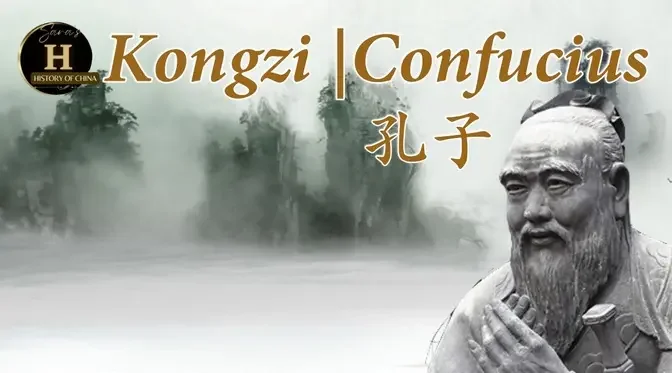
Confucius
Confucius
Confucius, or Kongzi (551–479 BC), was a Chinese teacher and philosopher of the Spring and Autumn period whose ideas became the foundation of Confucianism. Born in the state of Lu, in present-day Shandong, he lost his father early and grew up in modest circumstances with a deep love of learning. After serving in office in Lu, he left his home state around 497 BC and spent some fourteen years traveling among the feudal states, seeking rulers who would govern by virtue. Returning to Lu in old age, he devoted himself to teaching students of every background. His sayings, gathered by his disciples in the Analects, teach benevolence, righteousness, ritual propriety, filial piety and the cultivation of the exemplary person. Honored as the "Teacher of Ten Thousand Generations," he shaped education, ethics and family life across East Asia for more than two thousand years.
Latest UpdatesLIVE


Shorts


Sages of the Axial Age
From about the eighth to the third century BC, great teachers arose independently across the ancient world, an era the philosopher Karl Jaspers called the Axial Age. In China, Lao Tzu taught harmony with the Tao and Confucius taught virtue and proper conduct; in India, Shakyamuni Buddha taught the path to enlightenment; and in Greece, Socrates and Plato examined how to live a good life.

 24 followers

 9 followers


Great Spiritual Teachers of the World
Lao Tzu, traditionally credited with the Tao Te Ching, and Confucius, whose sayings were gathered in the Analects, shaped the moral life of China, while Shakyamuni Buddha taught the path to enlightenment in India. Jesus Christ taught love of God and neighbor, Muhammad is revered as the Prophet of Islam, and Guru Nanak founded the Sikh faith in the Punjab.

 261 followers

 60 followers

 10 followers
 10 followers


View All
All featured content under Confucius