
Inside The Mind of a Genius - Brian Greene on Albert Einstein
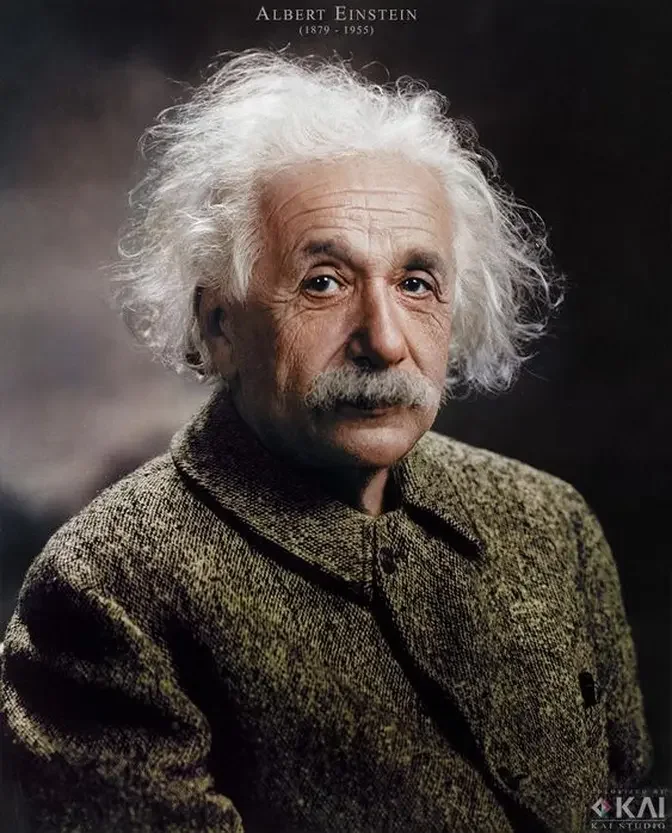
It is the year 1905. A young and highly promising scientist writes a paper that will change the
world forever. Albert Einstein's theory of special relativity is one of the most important papers
ever published in the field of physics. It is an explanation of how speed affects mass,
time and space. The theory includes a way for the speed of light to define the relationship
between energy and matter. Why is it special, you might ask? Because special relativity applies
to special cases, mostly used when discussing huge energies, ultra-fast speeds and astronomical
distances, all without the complications of gravity. So, what is exactly special relativity?
Special relativity is one of the most simple ideas mathematically. It only uses high school
algebra, but it is one of the deepest conceptual breaks. So, roughly speaking, around the year 1905,
a few years before, there was a lot of discussion and confusion having to do with light and its
speed. And the question was, could the speed of light depend upon the source that's emitting the
light and could it depend upon the motion of the person receiving it? If I fire a laser beam at
you, it'll approach you at 186,000 miles per second, regardless of whether you're sitting still,
running toward me or going away. Now, at the time, many people were not ready to accept that kind of
idea. They were coming up with all sorts of contorted notions to try to sidestep that. But
Einstein was the kind of thinker who would just come out, see the facts very clearly and throw
away the preconceived notions and say, look, that is what is the case. The speed of light is constant
and you just need to accept that. The problem is, if you think about it, if the speed of
light is constant, that means it's behaving weirdly relative to experience. And speed, what is speed?
Well, it's how far something goes divided by how long it takes to get there. So, it's space over
time. So, if speed behaves weirdly, then space and time are behaving weirdly. And Einstein went
for it and figured out how weirdly they behave. That's what he worked out in special relativity.
The concept that time itself is fluid and that it can be slowed down is one of the most
mind-boggling facts that derives from the theory of special relativity. In physics and relativity,
time dilation is the difference in the elapsed time as measured by two clocks.
It is either due to a relative velocity between them or to a difference in gravitational potential
between their locations. After compensating for varying signal delays due to the changing distance
between an observer and a moving clock, the observer will measure the moving clock as
ticking slower than a clock that is at rest in the observer's own reference frame.
One of the most bewildering consequences of time dilation is the so-called twin paradox.
Imagine two twins. One stays on Earth and the other flies off in a spaceship,
going close to the speed of light. After an arbitrary amount of time, and they meet up again,
thanks to the effects of time dilation, the twin that took voyage to the stars has aged far less
than the one who stayed on Earth. In a way, when the twin returns from his space trip back home,
he will find he has travelled into the future. This might seem extremely counterintuitive,
but the predictions of the theory of relativity have been repeatedly confirmed by experiment,
and they are of practical concern, for instance in the operation of satellite navigation systems
such as GPS. The nominal GPS configuration consists of a network of 24 satellites in
high orbit around the Earth, where up to 30 or so satellites may be on station at any given time.
Each satellite in the GPS constellation orbits at an altitude of around 20,000 kilometers from
the ground. Each satellite carries with it an atomic clock that ticks with a nominal accuracy
of one nanosecond, which is one billionth of a second. The precision achieved is remarkable.
Even simple handheld GPS receiver can determine your absolute position on the surface of the Earth
within 5 to 10 meters in only a few seconds. To achieve this level of precision, the clock
ticks from the GPS satellites must be known to an accuracy of 20 to 30 nanoseconds.
Besides real-world applications of special relativity, to best imagine how time dilation
works and how Einstein showed time slows down when an object is in motion,
we can make use of light clocks.
This is really just like a wristwatch. It's a way of measuring elapsed time where we can see
the internal mechanism of the clock. And for our purposes, you can use this to pretty quickly get
to Einstein's conclusion, which is time slows down when a clock is in motion. Now take two of these
light clocks and we want one of them to move relative to the other. So the one on the right
will set it into motion. Here's the thing. Look at the trajectory of that ball of light. It's going
on a double diagonal trajectory compared to the straight up and down trajectory of the clock on
the left-hand side. Now if the speed of light is constant and yet for it to go tick-tock in the
moving clock, it has to go further because that double diagonal is longer. Watch the counter on
the moving clock compared to the stationary and you'll see that time is elapsing more slowly simply
because the speed of light is constant but the ball has to go further. Longer trajectory, same
speed, time slows down. That little demonstration Einstein made mathematical, again it's high school
algebra, and that transforms our understanding of time. Before that everybody thought from Newton
that there's a universal clock out there that ticks off time second after second after second.
It drags us all forward in time at exactly the same rate regardless of what we do, regardless
of how we are moving. But Einstein shows that if I get up and start to walk, my clock compared to
yours, if you look at it, will tick off time more slowly. More slowly. Time is not universal. Time
is in the eye of the beholder and depends upon the beholder's motion. That's crazy.
With the turn of the 20th century, the field of physics underwent two major transformations,
roughly at the same time. The first was of course Einstein's general theory of relativity,
which dealt with the universal realm of physics. The second was quantum theory.
Quantum mechanics is a whole different story and it's a theory that applies to the micro world
and starts with Einstein's paper, goes through a lot of development, but ultimately it gets to a
place where we learn from the quantum law that you can't predict definite outcomes in any
experiment. You can only predict the probability of one outcome or another. You can predict an
electron will be here with 30% likelihood, 20% likelihood here, 50% over here. That's a completely
different perspective of reality compared again to the one that Newton gave us. Newton says,
tell me how things are and I'll use my math to predict how they will be in the future.
And quantum theory says that's the wrong way of thinking about it. All you can do is predict
the likelihood of one outcome or another. Again, a completely crazy set of ideas that are borne
out by experiment. And yes, you follow the intellectual trail of quantum theory and it
smacks right back into Einstein's 1905 paper, which is the one for which he got the Nobel prize.
Quantum theory proposed that energy exists as discrete packets,
each called quantum. This new branch of physics enabled scientists
to describe the interaction between energy and matter down through the subatomic realm.
Einstein saw quantum theory as a means to describe nature on an atomic level,
but he doubted that it upheld a useful basis for the whole of physics.
Einstein's best-known contribution to quantum theory was one of his Miracle Year papers in 1905,
in which he adapted Max Planck's original quantum hypothesis to suggest a particle nature for light.
Some people think Einstein should have won multiple Nobel prizes for his contribution
in the field of physics. Even the name itself is synonymous with genius. He was truly one of a kind.
Thanks for watching. Did you like this video? Then show your support by subscribing
and ringing the bell to never miss videos like this.