
How to THINK Like Albert Einstein
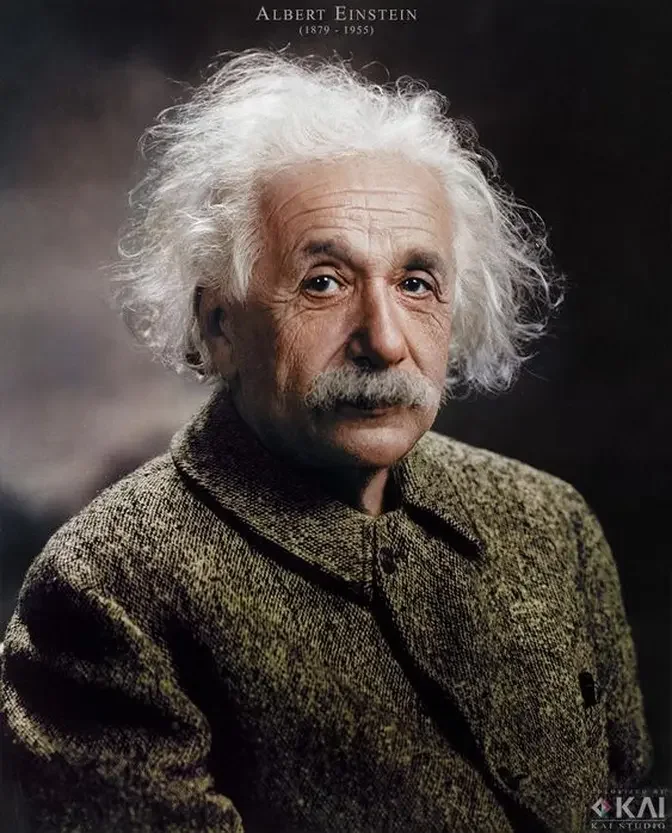
Hey everyone, and welcome to TopThink. Today, we are going to learn how to think like Albert
Einstein. Now, let's begin. After multiple revolutionary discoveries about the physics
of the universe, Albert Einstein became one of the most famous geniuses to have ever lived.
Not only did his theories earn him a Nobel Prize and have a massive impact on the scientific
community, but his intellect also made him a social icon. Even decades after Einstein passed
away, his name is synonymous with genius-level intelligence. You'll still hear people
sarcastically saying, thanks Einstein, as a comment on someone else's brainpower.
So, what made Einstein the prominent genius we know today? And how did Einstein's brain differ
from everyone else's? The simple truth is that Einstein and geniuses like him think differently
than the rest of the population. It's not just because they're better at math or have great
memories. Geniuses seem to analyze the world in an extraordinary way. They search for and discover
innovative connections. They continuously push the boundaries of what we see and what we believe.
Einstein's famous equation E equals mc squared shows how he observed the unique relationships
that govern the world around him. But these skills aren't reserved exclusively for people
with the high IQs. Intelligence is flexible. It's something you can practice and grow.
With the right tools, you can mold your brain into a creative and intellectual powerhouse.
So, even if you didn't get straight A's in school, don't tell yourself that you'll never
be smart. Or that you have nothing to offer. It may not come as naturally to you. And you
may not go down in history like Albert Einstein. But by changing the way you think, you can teach
yourself how to approach the world like a genius. 1. Show Your Work
How many times have you heard a math teacher insist that you show your work?
You probably rolled your eyes and did the problem in your head anyway.
But showing your work is an essential part of thinking like a genius.
In school and in life, most people prioritize the wrong part of the problem.
You see, our brains naturally gravitate towards answers and solutions. We like things that are
definite and conclusive. We're constantly looking for the fastest way to skip to the end.
But when you're focused on the solution, you aren't paying attention to the way you get there.
Teachers tell you to show your work because understanding is much more important than
getting the right answer. You need to comprehend why something is the way it is. Or why it isn't
the way it isn't. Sure, you might know the answer is 4. But how do you know? What laws and ideas
make that kind of answer possible? And how do you know those rules actually make sense?
When you ask these harder questions, you'll notice yourself thinking deeper about what kind
of person you want to be. It's astounding how many things we take at face value. Because,
just like in science or math, life is overflowing with arbitrary decisions and ill-defined rules.
The vast majority of people are just doing what they're supposed to be doing,
without taking the time to ask questions. They don't understand why they want what they want.
They don't pay attention to the way they think. They're just searching for a quick and easy
answer. But you can do things differently. By dissecting the choices you make and the
answers you find, you'll discover meaning, wonder, and personal success. That way,
when someone asks you why your lifestyle and passions are important to you,
you'll know the answer. Because, unlike the rest of the world, you took the time to show your work.
2. Innovative Combinations Have you ever heard the saying,
there's no such thing as an original idea? There is no real originality, because everything is
essentially a combination of things that already exist. But that doesn't mean a concept can't be
creative or exciting, because you can still use those pre-existing building blocks to craft
something truly extraordinary. Think about architecture. Most buildings are made of the
same materials, like wood, stone, or metal. But does that mean that all buildings are exactly
alike? Of course not. Architecture is about finding new ways to reorganize the same boring
materials. Or reinvent age-old structures like windows, doors, and roofs. So, if you want to
think like a genius, stop trying to do something that's never been done before. The fact is that
genuine innovation isn't about inventing something from the ground up. Instead, you should learn more
about the styles, concepts, and ideas that already exist in the world. Then, investigate the different
ways those concepts blend together. Some combinations won't work in the slightest,
and others will seem like a match made in heaven. It's your job to twist and tinker until you stumble
upon something truly innovative. 3. Thinking in Opposites
Black and white. Up and down. Yes and no. Life is full of binary opposites. In the natural world,
if one thing exists, you can be fairly certain there's an equally important thing
at the other end of the spectrum. What does this have to do with thinking like a genius?
Many of the most influential thinkers use opposition to stimulate creativity.
In other words, they start with something normal. Then, they flip that concept on its head.
Suddenly, you have an idea that feels completely new, even though all you did was turn it upside
down. Take the idea of zombies, for example. Just stay with me here. This has been one of
the most widely used concepts in books, TV, and movies, but the idea itself is really basic.
Dead people are usually dead, right? Yeah, right. But when you flip the script, you get this. What
if dead people were actually alive? And just like that, you've got a whole new set of questions
to answer. Opposites are also a great way to reflect on your own life. You may plan on doing
things one way, but what if you did something completely different instead? How would it affect
your lifestyle and personality? How would you adapt to this new situation? Some people feel
unhappy and imprisoned within their own life, because they never leave their comfort zone.
They only do things that align with what they're used to. Opposites let you expand your horizons.
They open your life up to brand new people and experiences. In adolescence and young adulthood,
this kind of exploration is incredibly important. Why? Because it helps to experience lots of
different things. That way, you know which ones you can and can't live without.
Whether you want to boost your creativity or grow as an individual,
opposites will transform the way you think. 4. Physical Thoughts
There are countless ways to express yourself, yet few people truly take advantage of them.
If you want to think like Einstein, you have to learn how to bring your thoughts
into the physical world. Drawings and diagrams are a great place to start.
These forms of physical expression force you to put your ideas down on paper.
That means you have to make a definitive statement. You can't keep speculating,
which is all that many people ever do. More importantly, creating a diagram gives you
perspective on your own ideas. It lets you take a step back and analyze from the outside.
Normally, your thoughts are so wrapped up in your head that you can't separate yourself
from your ideas. Drawings and diagrams give you something stable to build on.
You can see where it's right, where it's wrong, and where you have room to improve.
5. Metaphorical Understanding Something becomes metaphorical when it gains
symbolic value. A metaphor is a figure of speech often used in literature
to compare two different things. For example, you might describe someone as a night owl. You're not
saying they're actually like an owl. You're just comparing their sleeping habits to an owl's
nocturnal schedule. The majority of people dismiss metaphors as some random thing you
learn in English class. But understanding metaphors teaches you to think deeper about
the world around you, to look past literal definitions, and discover hidden meaning.
Many of the most profound lessons you'll ever learn are best expressed by metaphors. It's often
how writers, artists, and other creative minds capture the complex nature of love, selfhood,
and life itself. Einstein is famous for one particular metaphor,
which inspired some of his most important work. When he was just 16, he pictured himself as an
electromagnetic field flying alongside a beam of light. He then tried to imagine what that light
would look like from his perspective. If they were moving at the exact same speed, wouldn't
it appear that the beam of light wasn't moving at all? After wrestling with this question for
a few years, Einstein actually used it to help explain his theory of relativity.
Of course, metaphorical thinking doesn't come naturally to everyone. In fact, it's somewhat
rare. You'd be surprised how much brainpower it takes to understand the multiple layers of meaning
in a single metaphor. Luckily, it's something you can gradually improve on. The hardest part
is recognizing when and where to look below the surface. You can actually practice metaphorical
thinking using small-scale thought experiments. I know this sounds complicated, but it's actually
pretty easy. Let's say you're having a problem with someone. You could be arguing with one of
your friends or having some trouble at work. Whatever it is, try to imagine your problem
as an animal. Stay with me here. What animal would it be and why? If it's loud and hostile,
you could say it's a lion or a bear. If it's passive-aggressive and tense, you might describe
it as a snake. Thought experiments like these let you separate the literal from the metaphorical.
As you hone your skills, you'll begin noticing all kinds of meaning hidden in the world around
you. Thank you for watching TopThink, and be sure to subscribe, because more incredible content
is on the way.