
How Einstein’s Unique Brain Made Him Smarter
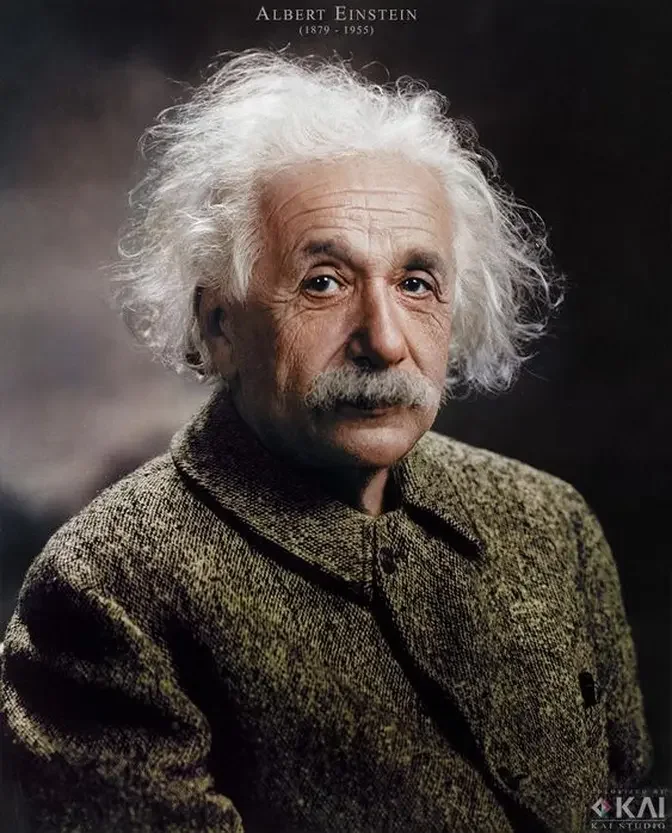
Although Albert Einstein's intelligence far exceeded the average, his brain was intriguingly
smaller than the average man's.
A typical adult male brain weighs around 3 pounds.
Einstein's weighed 2.64 pounds.
While smaller overall, a crucial section of his brain was 15% wider than average.
The inferior parietal lobe is the region of the brain associated with visual and spatial
reasoning.
This brain area would have been crucial to coming up with Einstein's famous theory
of general relativity, which describes how a massive object can bend spacetime around
it, much like how planets move in a curved path around the sun.
In 1999, a team at Canada's McMaster University, led by neuroscientist Sandra Whittleson, discovered
his parietal lobe was wider than normal because it lacked a groove found in normal brains.
The sylveon fissure, also known as the lateral sulcus, usually separates the frontal and
parietal lobes from the temporal lobe.
However, in Einstein's brain, this big crevice was largely absent.
The rear end was shorter, or truncated.
It did not extend as far into the parietal lobe as it does in most people's brains.
This expanded Einstein's parietal lobe, making it wider than normal.
When Einstein died in 1955 at a New Jersey hospital, the pathologist who performed the
autopsy removed his brain and kept it for himself.
Dr. Thomas Harvey later convinced Einstein's son to allow him to keep it for research.
These labels were added by Harvey.
He cut Einstein's brain into 240 blocks and stored them in a cardboard box in his
office in a mason jar and in a cookie jar preserved in gelatinous material.
Dr. Harvey procrastinated and never actually published any research.
He did create 2,400 slides containing thin sections of Einstein's brain tissue to
be examined under a microscope and sent them off to other scientists who revealed fascinating
insights.
In 2001, Dr. Dalia Zedl of the University of California, Los Angeles examined two slices
of Einstein's brain containing the hippocampus, which plays a crucial role in learning and
memory.
She found that the neurons on the left side of Einstein's hippocampus were larger than
those on the right.
The left hemisphere is primarily responsible for logical thinking, analytical processing,
and mathematical abilities.
Larger neurons in the left hippocampus suggested stronger nerve cell connections between the
hippocampus and the neocortex, which is the command center of the brain involved in high-level
thinking.
In addition to the asymmetry in Einstein's hippocampus, researchers also found that the
bundle of nerve fibers connecting the two hemispheres of his brain, called the corpus
callosum, was thicker than average.
In 2013, researchers from China and the U.S. found that Einstein's corpus callosum, denoted
in red, was thicker than those in the control group of elderly men denoted in blue, and
also thicker than most of those in the younger control group of men 24 to 30 years old, denoted
in green.
This increased thickness likely facilitated better communication between the left and
right hemispheres, contributing to Einstein's exceptional cognitive abilities.
It can be likened to a wider bridge between two cities, enabling faster transportation
of people and goods, and improved overall connectivity.
Dr. Harvey also sent off four slices of Einstein's brain in a mayonnaise jar to neuroscientist
Marion Diamond of the University of California, Berkeley.
Her study, published in 1985, concluded that Einstein's brain had more support cells than
average.
These red and blue structures are called glial cells, aptly named from the Greek word glial,
meaning glue.
They play a critical role in nourishing and protecting the neurons.
Additional protection might have allowed his neurons to function more effectively.
Remarkably, Einstein's brain didn't show any signs of aging.
Even at the age of 76, his brain had no traces of lipofuscin, the fine, yellow-brown pigment
granules associated with wear and tear in the human brain.
Similar to how an old car might accumulate rust over time.
It's believed Einstein was born this way, rather than being influenced by environmental
factors.
But it doesn't mean our brains can't change.
Dr. Diamond was the first to show that the brain can change and improve at any age.
Her work with rats demonstrated that those who played with mazes, ladders, wheels, and
their companions had larger brain cells and a greater amount of glial cells, compared
to rats that were kept isolated with no toys.
The implication is that all animals, including humans, benefit from an enriched environment,
and impoverished environments can lower the capacity to learn.
This is now called plasticity of the brain, and it has powerful implications for what
we're capable of achieving.
According to Einstein's wishes, his body was cremated, and his ashes were scattered
in a secret spot by the Delaware River.
He didn't want his body to be worshipped.
But Einstein's biographer reported that he had insisted his brain be used for research.
Even after nearly 70 years, Einstein's brain still has so much to teach the world.
Just like Einstein's brain, our own genetic makeup holds secrets about who we are.
I was excited to partner with MyHeritage, the leading DNA service that helps discover
your origins.
Okay, so I'm looking at the results for the first time, and wow, okay, I knew I was Chinese,
but I didn't realize my ancestry hails from both China and Vietnam, and also traces back
to Mongolia.
I also have two other ethnicities, Finnish, Mesoamerican, and Andean, which I was not
expecting.
This is really interesting.
And it even shows me 97 other people who I match with, so this is going to help me start
my family tree on MyHeritage.
If you're curious about your ancestry, you can order a kit with my custom link in the
You'll also get a 30-day free trial of MyHeritage's Best Subscription for family history research.
And if you decide to continue, you'll get a 50% discount.
MyHeritage will never sell or license your genetic data.
You are the sole owner of your DNA data.
Thanks for watching.
I'm Cindy Pom.