
Be As Productive As Albert Einstein.
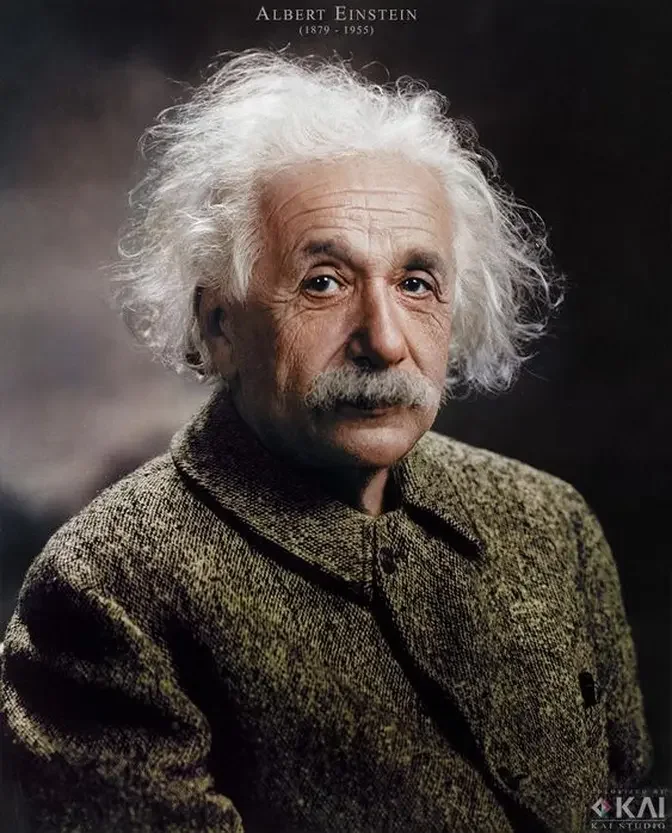
The year was 1955 and the most famous scientist of the 20th century had just died in a New Jersey
hospital. While journalists gathered to grab the scoop, a rogue Life magazine photographer opted
to tell a different narrative. He went to the Institute for Advanced Study in search of Einstein's
office. He discovered what he was searching for as soon as he walked inside the office.
A desk made of wood, the entire top was covered with a flurry of papers, tobacco pipes, and coffee
mugs. Books were piled high and crammed into shelves. Scientific symbols were written on the
blackboard. The photographer aimed his lens and took the image. For years to come, this iconic
shot of the desk would captivate the public. That messy desk belonged to the late great scientist
Albert Einstein. Einstein's cyclone of an office is a paradox for those of us who care about
productivity. We're often talking about how to keep your workstation clear and clutter-free,
how clutter makes us slower, how clutter makes us less productive. So how did a man with such a chaotic
workspace manage to be so productive? He obviously broke the clear to neutral guideline. How could he
keep so focused in such a cluttered environment? Well Albert Einstein would say, if a cluttered desk
is a sign of a cluttered mind, of what then is an empty desk a sign? Apart from his messy desk,
Einstein did many things that many extremely productive individuals do. These routines would
have a huge impact on his productivity throughout the rest of his life. He authored almost 300
articles in his lifetime, proving that his cluttered desk did not slow him down. Einstein's
productivity was based on three basic principles. He had a daily ritual and schedule, he lived a
minimalist lifestyle, and he focused on his most important work. Albert Einstein was one of the
well-known figures of the 20th century by the time he began teaching at Princeton. He was seldom
able to stroll down the street without being harassed by members of the public. He even
invented a simple method for explaining his theory of relativity to onlookers on the street.
Einstein considered his daily stroll to be sacred, since it was part of a regular routine. There are
countless articles on the internet about routines, and videos on YouTube about routines, and how vital
they are for productivity. Entire books have been published about celebrities and famous figures'
everyday habits. This debate continues to take place because routines work. Albert Einstein had
a basic daily routine. He had breakfast, then he walked or drove to work, he had lunch, tea, break,
nap, more work, and then dinner. As you can see, this timetable isn't very demanding or complicated.
Many people may be following this pattern without even knowing it. It's not always about the
components when it comes to the routine. What matters is that Albert Einstein could wake up in
the morning knowing exactly how his day would unfold. Keep in mind that besides the eight hours
of work, each day also has eight hours for fooling around, and then there's also Sunday. Albert
Einstein worked 10 hours a day, six days a week for many years. He demonstrated an amazing ability
to focus on the work for extended periods and apply himself to big thinking and deep work. He
worked in a Swiss patent office in Bern before becoming a prominent professor. He usually finished
his job in four hours and then began working on his scientific publications. Today, a typical
working day lasts about eight hours for five days a week, and most people can take the weekends off.
So if you have big goals and big aspirations, take advantage of the time outside of work, in the
morning, in the evenings, the weekends. If you're not sure where your time actually goes, self-tracking
will help you see that, and I have a great video about interstitial journaling that tells you
exactly how to do this in the simplest, most effective way possible, and I will link that in
the description below. Einstein knew how to work hard, and he also knew when to take time off. No
telephones, no responsibilities, absolute tranquility. I am lying on the shore like a crocodile,
allowing myself to be roasted by the sun, never see a newspaper, and do not give a hoot about the
so-called world. For Einstein, it was imperative to take time off to recharge, and I mean properly
recharge. Are you really relaxing if you're also scrolling five different social media apps with
the news on in the background? To truly relax, you need to switch off your phone and switch off from
the outside world and have, like Einstein said, absolute tranquility. Einstein would wander off
to the silent cabins in the Swiss mountains, or sail away in wooden boats, or play violin in the
silence of the hour, and these are the times when he would generally figure out the answers to these
really difficult, complex questions. Solitude is so important to make a clearer sense of the
thoughts in our heads. It helps us to be original, creative, and innovative, since there is least
outside interference when we are just with ourselves. That being said, don't wait for
inspiration to strike. A new idea comes suddenly, and in a rather intuitive way, but intuition is
nothing but the outcome of earlier intellectual experience. Einstein was famous for engaging in
thought experiments, whereby he imagined himself riding along a light beam and in an elevator
falling from space. In other words, Einstein didn't wait for his theory of relativity to drop on top
of him. Instead, because he cultivated a habit of doing the work consistently, he was able to
recognize the value of new ideas when they emerged from the back of his mind. Practice opening your
subconscious to what's possible. Seek out adversity. To dwell on the things that depress or anger us
does not help in overcoming them. One must knock them down alone. Einstein possessed a talent for
stoicism. Instead of concentrating on life's disappointments, such as a tough marriage and a
job that took years to ignite, he utilized them as incentive to explore his scientific ideas on the
side. For example, as a young man, he was unable to obtain employment at a university in order to
support his family and pursue his scientific ideas. As a result, Einstein accepted a position in a Swiss
patent office. This type of uniformity inspired Einstein to work even harder on his scientific
projects and writings in his spare time. And last, but certainly not least, be curious. Albert Einstein
once said, I have no special talents, I am only passionately curious.