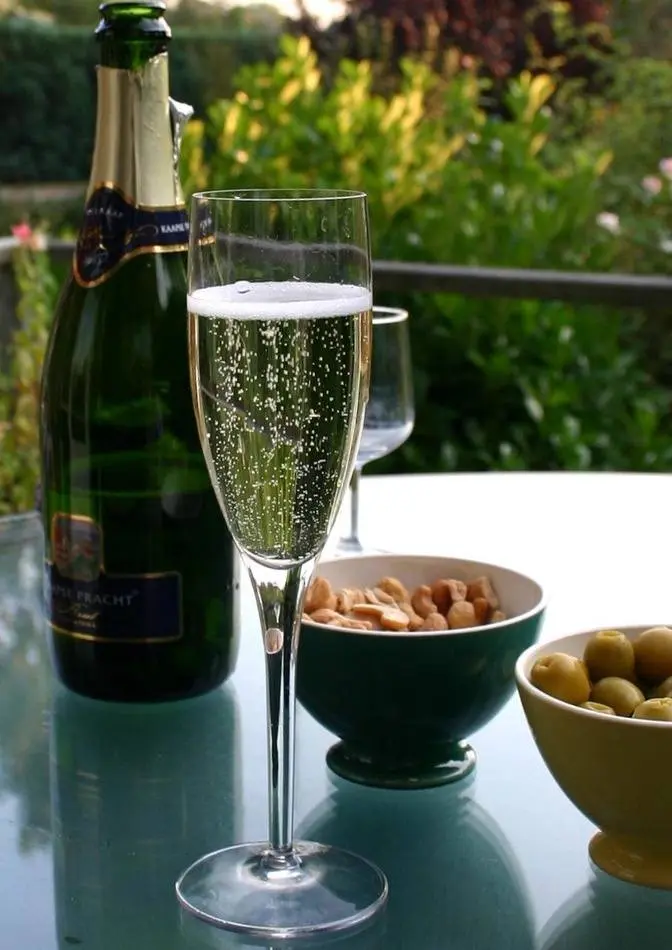
Krug doesn’t open its doors to the public. There’s no tour you can book, no ticket you can buy. You need an invitation and I got one.
Manuel Reman, the youngest President in Krug’s 180-year history, gave me a private day inside one of the most secretive and celebrated Champagne houses in the world. We went floor by floor, cellar by cellar, into rooms most collectors will never see and he answered every question I had.
What actually goes into a bottle of Krug. Why there’s no recipe. How a single Grande Cuvée is blended from up to 195 different wines going back over fifteen years. What the edition number on the bottle actually means. Why one man riddles 30,000 bottles a day entirely by hand. What riddling even is and why it matters. How the reserve wine library jumped from 50 to 150 wines and why that changed everything. What disgorgement actually does to a bottle of Champagne. The story of Clos du Mesnil, the walled single vineyard the house discovered completely by accident. The bottles that have been locked in the cellar since 1915 and will never be sold. And the Clos d’Ambonnay Rosé, made once, in 2008, only 250 bottles exist on earth, and it will never be made again.
Then we sat down and opened the 2013 Vintage and the 173rd Edition of the Grande Cuvée.
If you love Champagne, collect fine wine, or just want to get inside a house this closed to the outside world, this one is for you.
Chapters: 00:00 The Bottle That Started It All 01:41 Inside the House of Krug 03:20 What the Edition Number Really Means 06:28 One Bottle, Up to 195 Wines 09:56 How the Reserve Library Changed Everything 20:00 How Clos du Mesnil Was Discovered 23:00 What Riddling Actually Is 29:00 The Man Who Riddles 30,000 Bottles a Day by Hand 36:00 The Cellar That Survived Three Wars 44:00 The Bottles Hidden Since 1915 48:00 Tasting the 2013 Vintage 52:00 The Rarest Krug Ever Made
Wines tasted: Krug Grande Cuvée 173rd Edition, Krug Vintage 2013 (also opened: Krug Grande Cuvée 169th Edition)
An exploration of the artistry and philosophy behind Krug Champagne, featuring an interview with its president, Manuel. The discussion delves into the meticulous blending process of the Grand Cuvée, the influence of terroir and climate change, and the brand's commitment to creating an emotional, accessible sensory experience that transcends traditional wine intimidation.
I remember the very first time I had Krug.
I was at a function with my parents
and someone handed me a glass
and I couldn't really explain what I was tasting.
Like I definitely had champagne before
but it was nothing like that.
It was this simultaneously like elegant and bright
and at that time I knew very little about champagne.
Knew a lot about wine but I feel like champagne
is almost a different beast in itself.
I had no idea what the number on the bottle meant,
what the addition meant with Krug.
I had no idea that Krug starts completely from scratch
every single year with no recipe.
And then last year someone handed me
a Clos de Menil 2006 Magnum.
And it sounds so silly but when I drink something I love
this thing happens in my cheeks
and it's like a chemical reaction
and I get this beaming smile and it's like sheer happiness.
I'd never tasted anything like it.
And a single vineyard champagne from a walled plot
less than two hectares made from one single year.
It's almost unheard of from a house of this size
and the scale to do something like that singular
and that patience.
Manuel talks about in the video
exactly why that parcel of land is so extraordinary.
And honestly hearing him explain it in person
makes me love that wine even more than I already did.
I hope you enjoy this episode as much as I had filming it.
This has literally been an absolute dream of mine
to be standing where I am.
I am here at Krug in the heart of Reims in Champagne.
This was all started in 1843 by a man named Joseph Krug
who had a vision that champagne
could be good every single year.
And since then they have been producing year after year
to create the amazing champagnes that you have today.
I am going to be interviewing
the president himself Manuel
and we are gonna be touring through the cellar
and being shown some areas
that no one else has seen before.
Please, my pleasure to have you here.
Thank you.
Thank you for having traveled so far.
Thank you.
And what edition is this?
It's 173rd edition of Krug on Cuvée.
So the one that is crafted after the harvest 2017.
And it's a blend of more than 140 wines from 2017,
the youngest one and to back to 2001, the oldest.
I know so many people who are really
into the kind of like wines and champagnes,
they really, they obsess over the number
and what the oldest edition that you've tried.
And so many people just think that,
oh, it's just like, it's a non-vintage kind of champagne.
And you're like, no, it really can represent
that kind of edition.
But honestly, for me, it's fine
that people don't want to get into the details
and if they just enjoy the champagne
and Krug on Cuvée as it is, it's totally fine.
Then we give a little bit more transparency
and information and about what we do,
crafts, the way we craft it.
And also information about the harvest and why,
you know, every year, every edition of Krug on Cuvée
will be in the same philosophy, but a little bit different.
Because there is no recipe to the way they like playing.
Every year you play a symphony, you know,
but with different instruments or different musicians.
So it's, yes, it's similar.
I was going to say Russian roulette, but yeah.
Hopefully not that much.
Symphony is better.
Hopefully not that much.
But yeah, sometimes you play with the climate.
I mean, you're like, let's say 2011, 2013.
2011 was a year which was started with a lot of heat.
You know, it was very warm.
So the harvest started maybe end of August.
So with a style, a taste, aroma, structure, texture
in the grape, totally, in the wine, totally different.
Two years later, 2013, very cold at the beginning of the year
we harvested end of September
and we ended the harvest mid-October
and beginning of October.
Totally different, totally different style.
But yes, you have to craft a Grand Cuvée in 2011
and you have to craft a Grand Cuvée in 2013
and they shouldn't be too different,
but they shouldn't be similar.
Yeah, like even this year, people are thinking
that they're going to look to harvest
kind of middle of August, right?
Which is...
Oh, this year, yeah, middle of August, for sure.
Yeah, which is just crazy.
But going back to, I guess, like Joseph Krug's
like philosophy of...
Oh, you already know Joseph?
Yes, of course.
And he's a true believer in like,
there were no such thing as bad years
and that you can still make great champagne.
Sure.
How hard is it to keep that philosophy
knowing what the years are looking like at the moment?
That's a good question.
You know, sometimes we organise a kind of vertical
of Grand Cuvée editions and we do it blind.
And everybody, of course, will say,
ah, well, I'm looking forward to taste the 164th edition
which was recreated after the harvest 2008,
which is renowned all over the world.
But guess what?
When we do this with a journalist expert
or master of some and so on,
usually what the one they prefer is the 157th edition
of Grand Cuvée, which was recreated after the harvest 2001,
which is one of the most said to be
one of the most horrific year in champagne.
And I think that, you know, the more complex the year is,
the less compromise we make.
Yeah.
So, and it's funny because the 157th edition
of Grand Cuvée is the one maybe with a lower level
of leather wines.
We were so, I mean, at that time,
they were so cautious on which grape we pick,
that they said, oh, okay,
it has a little bit of everything.
And look at this one, 2017.
2017 is not renowned to be one of the best or easiest,
easiest more than best year in champagne.
But all my friends were, you know,
master of wine or, you know,
I trust when they tell me, you know, I like it.
They say 2017 is one of my favorite year in champagne
because it's where you really can separate
good winemaker and not that good winemaker.
Yeah.
And I know you, since coming on,
have really helped expand even the reserve wines
that you have.
You already had quite a bit, right?
It was between like 150 and now 200?
Yes, I think, well, the,
yeah, actually the big step was in 1999
when Krug was bought by LVMH.
When they arrived, they did kind of an audit
and they asked the chef de cave, Eric Lebel,
what do you need?
And he said, I need more of the wine.
I need more palette, a wider palette of colors.
I need more precision.
And I said, okay, let's go.
And we went from 50 to 150.
And it's true that now we are expanding a little bit,
but the big step was then.
It gave the cellar masters the ability to get more,
not one or two or three blues,
but 35 different types of blues.
And it's, when you have the choice,
it's easier to be good, no?
And I think like a lot of people probably don't realize
that in Champagne and especially that Krug,
you have that emphasis on terroir and letting that show,
which is kind of very Burgundian.
And then you're also master blenders as well.
So it's kind of a mix of the two.
It's like on the street and like kind of growing.
That's true.
It would be like a painter who would be very precise,
as I said, about having 35 different types of blues,
35 different types of yellow,
but then not doing a blue painting or a yellow painting,
but blending all the colors.
Yes.
Because what we try to do, what Joseph tried to do
185 years ago and what we try to do now
as a tribute to Joseph,
but also as a tribute to Champagne
is to try to find everything we love in Champagne
in one glass.
Because, you know, some people are expert of Chardonnay
or Pinot Noir or Meunier or Solera
or very old Champagne or very young Champagne,
you know, with this kind of people
trying to do Cluny-Morachet in Champagne, you know?
We love Chardonnay, we love Pinot Noir, we love Meunier.
We love young Champagne, fresh, with tension, vibrant.
We love more mature Champagne with summer fruit.
We love more, even more mature Champagne
with dried hazelnuts and toastiness.
We love everything.
And we love the Aubregion, we love the Vallée de la Marne,
we love Côte des Blancs and Montagne de Reims.
And so we try to put a little bit of everything
with harmony.
And when you try, when you taste a glass of Grand Cuvée,
you should feel everything you love about Champagne.
And of course it's not at the same time
because some aromas are more,
are revealed when the Champagne is fresh
and other when the Champagne is a little bit warmer.
So when you start with a glass that is served
at the right temperature,
you will start with the citrusy aromas,
with the freshness, with the tension.
Then when it warms a little bit,
you get more of the white fruit, white flowers, you know.
And then summer fruit, jam, honey,
pastry, bread and butter, toastiness,
hazelnut, dried fruit, coffee, toffee.
So it evolves.
And then what we love about what we try to achieve
is to have everything we love about Champagne in one glass.
And I think it's what makes Kruger also a Champagne
that is loved by chefs.
Because it's so versatile.
There is always one, there's always one aspect,
one facet of the Champagne that will match
or contrast perfectly with the food
the chef is preparing.
So it can pair with oyster, with burgers,
with popcorns, with parmigiano, with jamón de bellota,
with, you know, you name it.
Not dessert.
Not dessert?
I take it.
We try them.
This can be dessert.
Oh sure.
This can be breakfast.
This can be dessert.
As we're having breakfast, right?
Correct.
Yes, this is the best breakfast I think I've had in France.
Well, Julie Caville, our wine cellar master,
she says you have all the taste,
all the aromas of a French breakfast.
As I said, you know, the sweet orange or lemon juice,
then the fresh fruit, bread, butter and marmalade and jam
and coffee, toffee, and soy.
That's why.
When you don't have time for breakfast,
you just can open a bottle of Krug, no?
Exactly.
So a lot of descriptive words.
Is it true that in kind of your tasting room
that you can only describe using one word?
Oh.
And you can't say the same word twice?
That's correct.
That's a bit tricky, but then you get used to it
and it's so fascinating because, of course,
you start by describing the wine you have in your glass,
which you don't know what it is.
It can be a base wine from Clos d'Ambanay,
a vin clair from Clos d'Ambanay,
but it also can be a meunier from Vallée de la Marne.
So you don't know.
So you're not influenced by the pedigree.
And so you start by describing what you feel
on the nose, on your palate,
and you can use different words.
But at the end, you have to summarize with one word.
And it can be one technical word.
It cannot be, you know, like, oh, three grams of whatever.
Custard.
Yes, exactly.
So it's something that, if you close your eyes,
you forget everything, what comes first.
What's some of your most interesting ones that you've said?
My best emotion has been when a wine has reminded me
some food that was cooked by my grandmother.
Yeah.
Or when it reminds you of a place, you know,
which is close to your heart.
So, yeah, it can be sometimes very personal.
Yeah.
And sometimes when you don't like the wine,
you try to be very, to be very personal.
But sometimes somebody says, oh, I don't like this one
because it reminds me, you know, asparagus.
I love asparagus.
Yeah.
Yes, I'm very much the same.
I once described something as I could smell scones
when I thought about my grandmother.
So, but yeah, people are like, what are you talking about?
I know, that's true.
And honestly, some wine can remind me or touch
some part of my brain that reminds me of a memory.
That's how memory works, no?
Yeah.
It's about emotion.
And for you, it would be different
because maybe you had a different perspective.
Yeah.
You were the youngest president here.
Maybe Joseph was younger than me.
Well, you are on, well, according to Google,
you are the youngest.
Oh, yes, yes, yes.
Don't trust everything Google says.
All good things.
Yes.
What are you, what really excites you
about the future of coming on board here,
especially with balancing, I guess,
that philosophy and tradition,
but with the challenges that we're facing?
You know, yesterday, somebody asked me,
but Krug is 108 years, it's renowned,
so are you bored at work because there is nothing to do?
Everything is already planned.
And, you know, every morning you wake up,
you get up, you come to the office, to the family house,
and there is something that you didn't expect.
You know, when you work with the nature,
there is always something unexpected.
Well, what we are living now,
it's not only about the quality of the wine,
or is the vine in danger or not.
So far, it's doing pretty well,
but it's also about the team working in the vineyard.
How do we make sure they don't faint,
that they are, you know, quality of work is acceptable,
then you have a-
Especially with the heat at the moment.
Yeah, yeah, so, I mean, every day you've got new things,
I mean, because you're dealing with teams,
you're dealing with international market,
with, you know, what happens in Middle East,
in China, wherever.
So there are things on every aspect,
but then when we talk more about Krug itself,
or the Champagne, it's very exciting
because, of course, Julie Cavill, our wine cellar master,
she has, you know, free space, free hands to experiment,
to experiment, to carry on improving and improving.
And when you do that, when you experiment,
maybe you find new ideas.
So, you know, maybe in the future,
we might have some, maybe not,
because we will decide only at the end,
and Julie is the one who has to decide.
And honestly, I don't know what she's doing
because everything is secret,
and only the Enology team is knowing exactly
what happens in the cellar.
So this is very exciting.
It's exciting also to challenge,
to carry on with the same philosophy and style
with the climate changing, and reservoir changing,
and starting really 2018, 19, 20,
we had a major change in the structures,
the style of the Pinclair.
So we have to adapt to that.
Sometimes it's easier than in the past.
We've got ripeness, we've got,
but we are also sometimes lacking acidity in some wines,
so maybe we need to adjust.
Maybe when we were harvesting on plots
that were exposed to the south, we got ripeness.
Now, maybe we are harvesting in plots
which are facing east or west,
so we have to adjust and adapt.
If we talk about market and consumption,
there are so many places where you cannot find Krug,
and for me, it's a shame, it's a pity.
Latin America, Central Africa, India,
it's difficult to find Krug.
Because you're really focused on expanding
into new markets.
Yes, I love that.
I love that, and it's also a philosophy.
I think that rather than selling
all the bottles in the same place,
well, it's better to have more people,
people who have the desire to discover wine,
to discover champagne, to discover Krug.
I went to Thailand recently,
and it's an amazing number of people
who are so fascinated about, passionate about wine.
Yeah, it's a really, I was talking about that last night,
it's a really exciting new market, but yeah.
And what I love, I mean, I love to go to London,
to Paris, to New York, but it has something different
to go into a place where you don't have 200 years
of wine culture, so people are really genuine
about what they, they ask questions sometimes
that's kind of, wow, okay, good.
I love your question, I'm not prepared for that, you know?
Yeah.
When you go to more classic places,
your questions are about dosage,
how many grams do you have?
Oh yeah, I forget it.
Yeah, yeah, yeah.
And sometimes you go, I went to Thailand,
and I was trying to explain Joseph Krug's philosophy
and so on, and I just realized that they loved it,
they loved Krug, but they didn't know
where the bubble was coming from,
they didn't know, the base is, you know, ABC of Champagne.
Yeah.
So sometimes you just step back and say, okay,
let me explain you where the bubble is coming from,
and you, basically you are a Champagne ambassador
before being a Krug ambassador, or at the same time.
But it's amazing, and what we were saying before,
it's what matters to me, that they are genuine,
they are authentic, they want to discover,
and if they love it, perfect.
Yeah, I think it's because of that environment sometimes
with the connoisseurs at the top,
like the wine industry can be very intimidating.
It is.
And so many people pretend to know things
that they actually don't.
And I think that's my philosophy,
is people, some of these might think
it's a really simple question,
but majority of the general population
don't know that a second fermentation happens in a bottle,
what the edition numbers on a bottle of Krug mean,
or let alone looking, why do people look at the back
of the label of a bottle of Champagne
looking at the disgorgement date?
And I think that's really important.
And not only that, I know that you've been known to say
that any time to open a bottle of Krug is a good time.
It's a special occasion.
You make the occasion special.
Somebody asked me, I bought a bottle of Krug,
and I don't know when to open it,
because I expect a special occasion,
but then I said, maybe there will be a better occasion.
Well, sometimes you just open a bottle of Krug,
and this becomes an unforgettable moment.
Yeah, what is the most unglamorous moment
that you've opened a bottle of Krug?
I can remember many.
One of them, we were just moving home.
So everybody was sweating and t-shirt and exhausted.
And we just sat on cases, which were not empty yet.
And I opened a bottle of Krug, but it was just amazing.
I always say, I'm either like gas station
or like top end in terms of glassware.
And it's the same, it's the company that you're with.
In Italy, I've had some of the best wines
in those little just, yeah, little tumbler glasses.
And it's the people that you're with.
That's true, that's true.
And sometimes also, it's not about the moment
that was a little bit rough,
but it's more that sometimes you bring a bottle
that is a little bit aged, like a Grand Cuvée,
I don't know, like 159th edition.
And you just start to tell the story.
And he says, the oldest one is from, I don't know, 1988.
And people in the room are from 1988.
And they say, well, it's the first time I drink them.
So it's making people feel special.
It's not about the champagne, it's about what it creates.
Of course, it's great, it's good.
We enjoy drinking it, but what we really strive for
is to be one actor of unforgettable moments.
Let's go to the cellar.
Yeah.
Yeah, perfect.
Thank you.
You're welcome.
This is beautiful.
So we put some pictures here
because it's a way to tell a little bit the story
that I know we started to tell a little bit up there.
But maybe the first thing I'd like to show you
is this is Clos du Menil.
Yes, I know.
Well, we have to talk about Clos du Menil.
Yes, and Clos du Menil, what I love about it
is it's one hectare 84,
so it's the same size as Romani County, for instance.
Basically, during the harvest, with a full team,
we could harvest it in half a day.
But what we do is we believe that, for instance,
this part is facing the south with this white wall
giving back the light to the vineyard
and the vine is a little bit older.
So it's usually riper before than the rest.
So we harvest it before,
and then we divide it into five different plots.
And sometimes there are two days
between the first and the last,
and sometimes 10 days.
Because if you would harvest everything at the same time,
it would be easier, of course, for logistic reason.
But then one third would be not ripe enough,
so a little bit of vegetal.
One third would be just perfect,
and one third would be overripe, which is fine.
Depending on the wine you want to craft
or the champagne you want to craft,
what we do usually, we say,
we taste the grape before the harvest.
10 days before, it's too vegetal.
Five days before, vegetal,
but you start to have a little bit of citrus aromas.
And then when you've lost everything that is vegetal,
you know, like herbs,
but you are still with the crispy citrusy aromas,
you've got 48 hours to harvest.
Oh, wow.
Some people harvest two or three or four days after,
but we prefer to have a grape and a base wine
that is very precise and not overripe.
Because if you are overripe,
then you get maybe more aromas, more expression,
but you lose focus.
It's like in photography.
In photography, you can open more and get more light,
but you lose focus.
We prefer to have less light, precision,
but the complexity, we get it by blending 120,
140 or 190 different wines.
So this is our philosophy.
Some independent wine growers,
they don't have the complexity that we have
and the number of plots we have.
So they have to get more complexity in the same plot
or in the same grape.
So they tend to harvest a little bit after us.
So there is no good or bad answer.
Sometimes in Avis or Le Menil,
we are the first to harvest
and Mr. Selos is the last to harvest.
And you have here two of the most renowned champagnes.
So there is no good answer.
It's just depending on what you try to achieve
and the way you achieve it.
Yeah.
Well, with Menil, there's such an interesting way
how you kind of discovered it as well.
Correct.
It was hidden within a few of the parcels
that you acquired.
Yes.
Oh, yes.
It was in the 70s.
The House of Krug, they sold one of their buildings.
They had above, just above us.
And they bought some vineyards.
They bought six hectares in Le Menil.
And when they signed the papers,
the seller said,
oh, by the way, there is one of the plots
which is inside the village.
So it's a little bit tricky.
It's a, yeah, okay, let's start to see.
Let's see it.
And at that time,
they were just tasting blind Produit Menil as the rest.
And after the first year, they tasted it and they said,
oh, I like it.
What is it?
Oh, it's a new plot which is into the village.
Oh, good.
But they were, it went into the Grand Quebec.
Next year, taste blind.
Oh, wow.
It's very good, precise, incredible.
What is it?
Oh, you know, it's a little plot
in the middle of the village.
Oh, like last year.
Okay, good.
In Grand Quebec.
And after three, four, five years,
they said, what, guys?
No, this is not a musician
that we want to put in the orchestra.
This is a soloist.
We want to see what he will do playing by himself.
So they started to bottle it in 79.
And when they presented it in 86,
it was, I mean, everybody insulted them,
saying, what are you doing?
This is not a champagne.
Champagne is about blending.
Champagne is not, you are doing a,
you are a house.
You should, you should do a house champagne.
You should not do a wine grower's champagne.
And now it is one of the most recognized.
So I love this story because it's,
they didn't craft Le Clos du Menil
because they wanted to do a marketing coup
or a business or something.
They just crafted it because during the process
of elaborating Grand Quebec,
it's a co-product of Grand Quebec.
And they said, guys, this is very good.
We should, yeah.
And the same happened with Clos d'Ambonnet 20 years later.
Yeah.
It's one of the most iconic.
Yes, yes, yes.
Because it was very famous.
And also maybe something you notice,
we age our Girobois on lees with a cork.
Yes.
So that's, you do use crown caps for some of the others.
But then, yeah.
Do you think that really,
it gives it obviously a little bit more oxygen?
In a different way.
Yeah.
More at the beginning and less after.
Yeah.
Because it kind of gives more oxygen in the beginning.
So it's great also because for the first fermentation,
the lees are doing their job perfectly.
Yeah.
And then after, maybe less than a corn cork.
And it's very interesting.
We did a tasting of Krug Vintage 2003
in bottle, magnum, and Girobois.
Yeah.
I was going to say, how does the,
like, what are the differences?
Very interesting because something you will expect.
Magnum, wider, fresher than bottle.
Yeah.
Girobois, wider, fresher than magnum,
but on a different aromatic direction.
Interesting.
Bottle and magnum, the same direction.
Do you think it's due to the cork?
I think so.
Really?
I think so, yeah.
Yeah.
And maybe the shape of the bottle,
but those are things that we have not scientifically proved.
Yeah.
How long do you age in bottle?
It goes between 15 to 20 years.
That's just crazy to think about
when it's the stuff that you are putting your hands on
and kind of laying down now.
Oh, yes.
The patience in such a quick, fast-paced market.
That's the first thing you learn at Krug.
It's patience.
Sometimes you are building projects
and you are not going to see it.
Yeah.
So that's part of...
Julie Caville, our wine cellar master,
she arrived in 2006.
So she was in Eric Lebel's team.
And in 2020, 14 years later, she became chef de cave,
but Eric stayed six more years at her side.
You know, just...
And that is so unheard of in Champagne,
because I know it's quite...
I know, usually in Champagne, it's more,
you've got one chef de cave,
and then he or she goes away
and is replaced by somebody from outside.
How can you, you know,
transmit the style, the emotions, the philosophy?
I mean, I'm sure they do it,
but it's easier to manage it
when you have somebody in the house for 15 years.
So you were saying it's what,
like 150 to 200 reserve wines?
Correct.
And so for people who don't know what reserve wines are,
how do you best describe it?
Reserve wine is like when every year
we receive wines from the harvest.
We will do blind testing of all the wines.
It's like an audition, an audition of musicians.
And sometimes you have two musicians
who play a little bit the same way.
So you will use one for the orchestra of the year,
and one you will ask him or her to stay a little bit longer.
And so that in two, three, four, five, 15 years,
you might need him or her.
So that's what we have.
We have here wines from 2009.
And so they just stay here?
They just stay here.
Because I know you guys mainly do,
yeah, a lot of stainless steel work.
Yes, we've got 150 different wines.
So they are all kept by plot, plot by plot.
So we don't blend them.
It's such a juxtaposition from there to here.
Yes, yes, yes, yes.
It looks like a, kind of like a Austin Powers.
Yes.
Well, honestly, it's, let's remember,
2012 was an amazing vintage for Champagne,
but we didn't craft a crude 2012
because the yield was so low
that we prefer to keep the best wines for reserve.
Because the idea is the idea.
That's a pretty costly decision, right?
Yes and no, but our bread and butter is Grand Cuvée.
It's what we do.
Everything we do is for and because of Grand Cuvée.
Produit Menil just exists because of Grand Cuvée.
How many different wines can go into a Grand Cuvée?
From 120 to 195 different wines,
different plots from 10 to 15 years.
Yeah, so many people don't realize
when they're buying that bottle,
like crude, yes, in terms of the market is just,
I mean, it's that little bit more expensive,
but knowing how many different years
actually goes into that and to represent the house style,
it's probably the most work in terms of, and it's-
It's, well, it's complex.
Yeah.
To be honest, logistics during harvest,
logistics during first fermentation,
logistics during blending.
You'd want a pretty good labeling system, wouldn't you?
Yes, yes, yes.
No, it's complex and it's great
because Julie developed a digital tool
for her tasting notes
because before everything was in a big black book.
So when she wanted to say,
okay, maybe I'm lacking a little bit of the apricot
or the blackcurrant taste I love in Meunier.
So we need one from the past.
Okay, where was it?
So you need to, but now it's more,
she's got an iPad and she say blackcurrant Meunier.
Oh, that's cool.
And boom, she brings us to,
oh, 215 Sassy Meunier and so she-
Probably cuts down her tastings.
But I know, was it her and Olivier?
They taste maximum like 15 a day, right?
To avoid pallets.
It's a team of six people.
And sometimes Olivier and myself,
we join when we're not traveling
and they taste, last year they tasted 17 at max.
But honestly, when you taste 17,
it's unfair for the wines between eight and 12
because the first one you are just starting, it's okay.
The last one you already know it's going to be the end.
But in the middle, it's a bit, it's very tiring.
It's very, I mean, I don't know if you've tried.
I've had to do 42 wines before and I was like,
I don't know how critics and stuff can do 100 in a day.
Yeah, but wines, base wine of Champagne,
it's pure acidity, it's-
The teeth feel awkward.
So it's very complex to find differences.
That's why we don't, we do maximum-
And they're all still wines as well.
Yes, they are still wines.
So that's why we do 15 maximum.
Yeah.
Yes, yes.
See, I have not spoken about this contraption before.
So do you want to talk me through?
When you do the second fermentation,
the yeast are eating the sugar, giving CO2 bubbles
and a little bit of alcohol and dead yeast.
So dead yeast, when they will die,
they will give all with the time,
they will give fattiness, aromas, texture,
structure to the wine.
So that's why usually a wine with more aging
will have, will be wider and with more expression
and more complexity.
And also will go in a different direction
in terms of aromas than a wine that stays only two years,
let's say, on leaves.
But then you have to get rid of those leaves
because they are not, it's not very elegant.
It's not, it's not a problem.
You could drink it like this.
It's perfect.
Well, that's how they used to-
Yes, correct.
Back in the day.
Yes, exactly.
But yeah, it's that kind of-
But now we prefer to take the yeast out.
So to do it, we need to put the yeast on the top,
on the-
You need to move it from the bottom to the top.
Top of the bottom.
Yeah.
So we do it riddling the bottle.
So there is, at Krug, there is one person
in charge of that.
His name is Raphael.
And do you have an idea how many bottles
he riddles every day?
I wouldn't, I would have absolutely no idea.
But I know, I've seen how quickly some people can do it.
Yes, it's above 30,000.
30,000 a day?
Above, yeah.
Oh my gosh.
Wow, I would love to, I'm sure his technique is insane.
But then it's not only moving
because if it were just moving it,
everybody could do it.
You need to do it with a little bit of,
like you need to shake and move.
Shake and move.
So it's like a quarter turn, isn't it?
Yes, or less, less than that.
But honestly, in Champagne, since 1980s,
there is an automated method.
Yes.
That you put the bottle in the box
and you riddle it, and instead of doing it
in, let's say, three weeks, it's in three days.
Yes.
And it's not better, it's not worse.
It's basically the same result at the end.
We use it a little bit, but you need to have
a different program to set the machine.
So you need to have somebody who knows
how to read the wines.
Yeah.
Because a wine from 2018 will not be the same
as a wine from 2016, and the yeasts are different.
So you need to change and adapt the program
of riddling every new cuvee.
So that's why we have Raphael.
Raphael is an expert of riddling the wines.
He's like a riddling master.
Reading and riddling.
Yeah.
Exactly.
And to keep him busy, we let him riddle by hand
everything that is Cru Grosé, and big format,
and Clos, and Cru Vintage.
Yeah, wow.
But honestly, we could riddle all this by machine,
it would be the same result,
but we need to keep his knowledge.
And also it's great because he can detect sometimes
things that, oh, this cuvee is a bit tricky,
so we can adjust and we learn, we carry on learning.
That's crazy that he can say that with all this.
It's just, look at these, it's incredible.
And the time, yeah, because people would think that usually,
oh, to get the sediment from the bottom to the top,
you could just turn it and it's like...
Yeah, you can do that, but then the issue is that
the heaviest yeast will go first,
and the lighter on the top.
So when you move the bottle after, it will go up.
When you riddle it slowly,
the heaviest stays stuck to the bottle,
and so they will fall at the end.
So, and also when they will, if you take it,
take, I don't know, three or four days or three weeks,
it's stuck one to each other a little bit.
It's more stable.
Yeah, fascinating.
I love how much you guys,
you still embrace that tradition,
things that were going around for such a long time.
But honestly, we challenge everything.
We are not stuck into tradition by tradition.
We challenge everything,
and the only objective is quality.
There's no compromise.
So sometimes you keep things which are traditional
because they are good,
and sometimes you evolve.
For instance, in our new winemaking site in Omboné,
there are things that we have changed
because we wanted people to work in better conditions.
Like the barrels were here on four levels.
In Omboné, they are on two levels.
People were washing the barrels.
Now we've got an automating machine
because we believe we can have a higher temperature
for the water.
We can, it's less back pain for the team.
So it's, yeah, every time we change something,
we tend to, tradition is one thing,
but it's what quality.
What does it bring?
What can improve in terms of quality,
in terms of food safety,
in terms of health or safety for the people,
sustainability.
So every time you change something,
you try to adapt.
It's not tradition for tradition.
It's not innovation for innovation.
You have to kind of find your balance.
I completely agree with that.
Yeah, no, I love it.
It's very cool.
So your background working with,
across so many different brands with Moët Hennessy,
it's nice that you're able to kind of take
all of those learnings.
So probably across multiple different like houses
and producers,
and then really narrowed in to have more of a
straight focus with...
Yeah, basically it helps me understand
what my, what the team wants and ask.
Yeah.
Because they, honestly, they are the experts.
Yeah.
And my role is to make sure they have everything
they need to craft the best Grand Puvet.
This keeps going, doesn't it?
Yes, it's...
Yes.
Oh, my goodness.
It's like 140 years old.
Yeah, it's...
146, but...
It's like 30, 40 years after the Joseph Krug
founded the house.
Wow, and you still have bottles.
Yes, and honestly, it's a miracle because,
you know, the history of the house
was not a long battle for this.
It was, I mean, you had three world wars,
three wars, one, two world wars,
one world war against Germany.
Yeah, because I know about...
You had the financial crisis in the 70s,
and basically you had a bottle, you sold it.
Yeah.
I know a lot of the, like, the Nazis and stuff,
they really focused on trying to, like,
bomb a lot of Champagne regions.
Yes, and, but we, I mean, they managed to...
This is under lock and key, I would say.
It is.
Wow.
What is the oldest bottle that you've drunk?
I think it was 1915, 1915.
And it's, honestly, it's still drinkable.
I prefer younger.
I love the 47, I love the 61.
Yeah.
I was invited to an event in Burgundy.
Everybody brought wine from the 40s,
and I bought a...
I sent a magnum of 47.
One week before, I wanted the Champagne
to relax a little bit.
But it had stayed here for, I don't know,
60, 80 years.
And when it went in the transport,
the cork just dried, and it leaked.
So the guy told me,
oh, Manuel, it has lost, like, 30%.
So I brought, when I went, I brought a magnum of 61.
We drank a bottle of 61, it was amazing.
And the guy said, Manuel, you should try the 47.
I said, no, it has leaked, it's...
Yeah.
No.
He said, Manuel, you should try.
Yeah.
Okay, you've tried, and maybe you're telling me
we should try.
Yes, exactly.
And it was just amazing.
Imagine, after one week of leakage,
the bottle was just perfect.
So sometimes...
It's a lot, 80 years.
That is insane.
So why are some of these bottles standing up?
Because the cork is maybe not that much,
you know, strong.
Yeah.
So it's better to actually...
With the liquid, if it's too much in contact
with the liquid after decades.
Yeah.
It kind of goes into the...
Yeah.
It's attacked a little bit.
Oh, fascinating.
And we don't want to open it and cork
and put a new cork.
I was gonna say, unlike still wines,
you can really do that, but...
It's more difficult, and we don't want to do it.
No, and you don't want to try and...
And honestly, I think they are here,
they are here more for heritage,
for we don't use them, we don't drink them,
we don't sell them.
It's museum.
Nobody feels that he or she is,
you know, deserves to say, okay,
let's open a 53 or something.
Sometimes we use one of those bottles
for auctions, for charity, for...
Yeah.
We put an auction, an experience,
a dinner with a bottle of 1928.
And all the money went to the foundation
of the American Hospital in Reims.
Oh, wow.
To help children who have cancer.
But honestly, we don't use...
We don't open this door often.
No.
Gosh.
So this place in the cellar,
it was used as a shelter,
as an hospital, as a school, as a church.
Some people were born here.
Like, someone that was born here,
that is just unbearable.
Yeah, it is crazy, especially all underneath,
all the, like, cubs and things as well.
That's, yeah, a lot of people.
Yeah, let's talk about 2013.
Have you tried Krug 2013 before?
No.
So 2013...
I've had this, and I've had dreams about having it again.
Oh, really?
Yeah.
Yeah, I love it.
Honestly, I love it.
2013, I already talked about it earlier,
saying that 2011 was one of the earliest harvests,
and 2013 is one of the, let's say, classic harvests.
You know, we had a lot of early harvests in 2000,
2003, and 2007, 2009, 2011,
and then suddenly, in 2013, we had the weather
that was so fresh, so cold, so rainy.
Everything went so slow.
Flowering occurred beginning of July.
When it's, in 2011, it was in May, something, mid-May.
So harvest started end of September.
And it was very interesting,
because it was, like, the young generation,
they were like, what are we gonna do?
Harvest in September?
Yeah.
And all that, see?
We've done that before, you know?
And interestingly enough, we had a good month of September,
which gave the ability, gave the opportunity
to the Chardonnay to ripen,
and started the harvest with great weather,
and Chardonnay was very ripe, very fruity, very citrusy.
If we have to say one word, it's 2013,
the Chardonnay is so citrusy.
And then, when it was time to harvest the Pinot Noir,
weather started to change dramatically,
from good weather to bad weather,
from hot weather to cold weather,
from light, or from bright, bright weather,
yes, it was dark at 4 p.m.,
and then the Pinot didn't get to ripen the same way,
and it was all about structure, tension,
but not a lot of aromatic.
So basically, what we have now is,
we have some 20, 25 wines that were,
I will not say the best wines of the year,
because it's not how we work.
We select the wines that are most representative
of what happened in 2013.
It's a tribute to 2013.
It's not a show-off of what we can do best.
It's a different philosophy.
2013 at Krug should be totally different
from 2011 at Krug,
because we want to express the year.
Yeah, I think so many people,
and a lot of this is kind of the pressure from consumers,
especially wanting to drink quite young,
to have that house style be the exact same,
rather than what it has been for as long as we can remember,
that each of these years are a reflection
of that vintage.
And yeah, it's interesting,
because it's what it should be.
If it was 2013, it should showcase what that year was like.
Yes, and 2013, I mean,
it's just starting to get okay to drink now.
Those who released, who presented 2013,
five, eight years before,
wow, because this is sharp.
It's all about citrus.
Yeah, okay.
Well, cheers.
Cheers.
To 2013.
So we used to give a nickname to every vintage.
It is very citrusy.
Oh, yes.
It kind of has that pop of just lemon flavor
that then comes.
And then we got the structure of the Pinot Noir.
We named it Exhausted.
Exhausted?
Exhausted.
Exhausted, I was like exhausted.
For 2013, we named it Exhausted Citrus.
Mm, I like that.
It's basically a silver plate of Pinot Noir,
just to enhance the citrusy of the citrus.
That's actually the perfect description for that.
Yes.
Yeah, it is a great.
And then now it's a little bit fresh.
When it warms up,
you can feel different types of citrus,
or, you know, confit citrus and yuzu.
It's very much a caviar citrus now.
You know, popping in your mouth.
No, it's fantastic.
And Krug Grand Cuvée 169th Edition
is a Grand Cuvée we created at the same time
we created the 2013.
So it has crafted after the harvest 2013,
with wines coming back to, you know, 15 years before.
So it's a...
Yes, I think I actually held onto that bottle
that I drank,
because I wanted it on my little wine bowl
that I have at home.
But it is, yeah.
So when people see Krug,
with that little number at the bottom,
it's 169th edition of the Grand Cuvée.
So on Tuesday at Champagne & Hip-Hop,
we presented the 163rd edition.
Didn't get through in time.
No?
I don't think so.
Ah, too bad.
Yeah.
But...
I think it was...
Sometimes we have bad ideas,
sometimes we have great ideas.
This was one of the great ideas,
to be, you know, to bring such an event,
a Champagne that has already 10 years
after it was presented.
And everybody loved it.
Yeah.
That, oh, you are not here to...
We are not here to sell a 173rd edition.
If you want to try it,
you go to a wine cellar.
But we are here to, you know,
to have a good moment.
And for us, it's...
You have only passionate people who paid,
you know, to come and...
It's such a great event.
Listen to music, and to discover, to enjoy.
So let's try to bring our part to it.
Yeah.
And it was so fun,
to spend two hours, you know, pouring Champagne
and explaining to young kids,
or young kids, I mean, more than 18.
But there was a bunch of people from the wine bar,
who were like...
Yeah, the young Soms.
It's such a great way for them to connect
with some of these producers,
who, girls, they're heroes.
You know?
Yeah, yeah.
And catching them in a relaxed environment,
rather than like a trade show,
where it can be a little bit more
of a different environment.
That's true.
Yeah, and it was so warm that you had to go relax.
It was...
Everybody was sweating, so...
Yes.
And everybody was expecting the rap,
the hip-hop concert.
So it was...
It's a different atmosphere.
Yeah.
It's a different vibe, and I love it.
Second year, we go there,
and then on a personal level,
I go to the Burgundy in hip-hop event,
which is also great.
Yes, I'll see you there in October.
Okay, you will be there?
Yes.
I went to the one last year, too.
Ah, you were there?
So we didn't meet, but no.
Okay, just ships in the night.
Yes.
But hey, we got there in the end.
So, a lot of people think that champagne
is a celebratory drink.
It is.
But not only.
Exactly.
And how do you go about kind of communicating that?
It's not a...
For us, it's not a communication thing.
We...
People obviously celebrate great moments with Krug,
but we are not communicating on that.
We are communicating a lot.
Everything we do in communication
is not to tell you how to drink your Krug.
It's more about...
Oh, it's a celebration, or gastronomy, or...
We're not here to tell you what to do.
We are just here to tell you what we did.
Yeah.
And what we did is try to recreate the dream of Joseph Krug.
It's try to make sure that every year,
even complex climatic year,
we manage to craft a Grand Puey.
It's paying a tribute to champagne.
That's what we do.
So when we communicate on gastronomy or music,
it's not to communicate on gastronomy and music.
It's a way for us to talk about our craft
in a way that is not boring, or technical,
or intimidating, as you said earlier.
The world of wine is very intimidating,
so we don't need to bring more of that.
You don't need to know about degorgement,
disgorgement, or dosage, or malolactic fermentation
to enjoy a glass of champagne.
So why...
Very true.
The idea is to be...
I love when I try to be very pedagogic and simple,
and people say,
no, no, okay, I already know that.
You can go faster.
Okay, perfect.
But at the end, they were wrong.
They were wrong, where people,
usually they don't dare to tell you,
sorry, I didn't understand what you...
Yeah.
Yesterday, I was talking with someone who told me
I had somebody for four hours in the visit,
and at the end, she asked me,
but where does the bubble come from?
Yeah.
So you say, well, okay.
So you need to make sure.
That's why, at the beginning,
we start by opening a bottle of Grand Cuvée
and start to talk about what you already know,
because it's easier for us to adjust a little bit.
Communication is about adapting, no?
Exactly, yeah.
And I have to obviously talk about Arbonneuve.
It's mythical, pretty much,
and I actually have not had the pleasure of trying it,
but I know that there's a rosé as well that you guys do
that not a lot of people know about.
No, it's more like a unicorn.
Yeah.
But it exists.
Trust me, it exists.
Yeah.
2008 was a year, a little bit like 2013, very fresh,
very boring in terms of weather.
I remember my daughter was born in 2008,
and after two, three months, we were working with her.
In May and June, our June, we are just with the coat.
Oh, it was very, very cold.
You can be in a coat in Australia in June,
but not in France.
Yes.
And so the vine and the grape took its time
to get ripe.
And in 2008, in the Claude Arbonneuve,
there was an enormous heterogeneity in the vineyard.
It's a very small vineyard.
It's not bigger than this garden.
And some of the grapes were regular grapes
to craft a champagne, you know, with great acidity,
but others were very juicy, fruity, like perfect grapes,
Pinot Noir, to craft a red wine.
So at that time, the team had the crazy idea of,
okay, let's go and pick some grapes,
not cluster, but grapes that are, or berry,
that are already ready,
and let's craft a red wine in a mini barrel.
They did 20 liters of red wine.
Yeah.
And so they have, so they created 200
and a little bit more bottles of Côte d'Arbonne, Rosé.
Yeah.
It happened, it didn't happen before,
and it didn't happen after.
Yeah, it's like mythical.
It is, and it's only 250 bottles,
and some people have tried it, and-
Yeah, that is a unicorn bottle.
Would you ever consider making it again?
Don't need to decide.
Yeah.
The weather, the weather, I guess.
The weather and the oenology team.
I know, sadly, I don't know if that's gonna be happening
this year, if that's the case.
You need to have, I mean, you could,
but then it has to be, you need to have a reason.
We are not doing things for marketing or commercial.
I mean, at that time, it was just a crazy idea,
and maybe the team said, okay, let's try it.
And, but now we see the feedback is really positive.
So yeah, maybe it will help them to try to do it again.
Yeah.
But if we, let's say, if we do it this year,
2008, 2026, it takes a little bit of time
and patience to get the bottles, so.
That's very true, I might put my name down
on the wait list of probably like 300,000 people.
No, that was when we presented it,
Mr. Galony from New York wrote a post,
tried it, and said like, 100 points and amazing,
and then we received a lot of phone calls.
So it was, it's complex to have only 200 bottles.
We could have sold 2,000, but it's really tricky.
So we made sure all of our ambassadors
who wanted one bottle could have one.
Yeah, yeah.
It's good and it's frustrating at the same time.
Yes, yeah, it is mythical.
But, well, thank you so much for taking your time
to hang out with me this morning.
Cheers.
Thank you, cheers.
And see you in Australia, in Champagne, or in Burgundy.
Yes, or all of the above.
Exactly, or in Corsica, in Barolo.
We could do that too.
Thank you so much.
I did want to touch on your,
because you have a music program, right?
Yeah, well, the music program is here for two reasons.
The first one is because at Koog, we love music.
It has always been in the genes of the family.
They've always been, I mean, here.
180 years ago, they were inviting musicians,
local musicians, to play in front of
all the socialites from Reims.
So we're helping them finance their studies.
And so it was, it has always been part of the family.
Olivier Krug, who was, his bedroom was over there.
You still have his Madonna and ACDC posters.
Half-joking, but Olivier is crazy about indie rock.
And what we, and it's true that music is a,
how can I say that?
It's a universal language.
You can explain a lot of things with music.
And some people are intimidated by the world of wine.
They don't have the right vocabulary to describe.
And one day, one pianist was here,
and he said, oh, I don't know how to describe the wine,
but there is a piano here, let me play something.
And he played a music based on the emotion of his tasting.
And then he tried another one
and played something different.
That's when the team said, okay, why don't we do that?
So a few years ago, we asked Ryuichi Sakamoto,
famous composer, Japanese composer,
who worked with David Bowie,
who designed a lot of soundtracks, movie soundtracks.
And he's, well, he was, sorry, he was an amazing man,
an amazing musician.
And he crafted three different musics
based on the emotions of his tasting
of three different cuvées.
And we asked Max Richter to do it three years later.
So that's what we love to do,
to ask musicians to craft or to select music
based on explaining their emotions of tasting.
And for us, it's fun.
It's a way to talk about our craft.
It's a way to connect with people who are not, you know,
master of wine or master of some or diploma or WCT.
You say, okay, I like it, I don't like it.
Oh, it reminds me something, but I don't know what.
Okay, maybe it reminds you of an emotion.
Let's put some music.
Let's put an opera.
Let's put a hip hop or jazz or electronic music.
It's not just classical music.
We asked some electronic composer to craft music
and it works very well also.
Yeah, it's a funny way, often described wine
when like a lot of beautiful wines
do carry a hefty price tag.
And when you try just some of those wines,
they can just, they take your breath away.
Like it's unbelievable.
And then you have, the way I discover is like,
you have your commercial wines
and the big kind of industrialization of wines
in that market.
And then you have the craftsmanship.
And it's, you can, like in the way that you can tell a song
is AI or built for commercial purposes
versus a song that you feel it within your soul
and it just moves you.
I think that's what wine can do.
It's the same concept where I think
not enough people have experienced that
and trying a wine that truly moves them
like a favorite song can.
That's true.
And when you get this wine, it's unforgettable.
What is, I think most people typically have a wine
that comes to mind.
Yes.
That is not crude.
No, of course.
One is easy.
People will say, of course, it will be the one for everyone.
I had the opportunity to try Romane Conti, 1919
with Robert de Villene.
And for me, this wine was just mind-blowing.
I was in tears.
But I had also-
I got goosebumps.
Yeah.
So I had also, and he had four in his cellars
and after the dinner, he had only three.
And it was just crazy.
And-
How special.
All the wines from Raya, Chateau d'Etour
gives me some-
they touch some part of my brain,
which I don't know.
I just get totally mad when I try those wines.
And I feel the same when I tried wine
from Corsica or Barolo.
For me, Burgundy, Barolo, Corsica,
there is something that makes me, you know,
having goosebumps and-
Like, it's just like the depth and the history
and just-
It is something about that as well.
I do get that with Barolo.
It can move you.
Yeah, and then also you can try-
And when you have the opportunity to try
very old wines from the 1860s,
or like Madeira wines,
or I had the Chateau d'Etour, 1865.
Then it's kind of, wow, you know,
drinking history, no?
Electricity was not that developed at that time.
The U.S. was not there.
I even-
I typically-
I'm starting to think about
if you're looking that far back in time,
then actually do how much it would be from now.
So if it was planted today, like,
and bottled today,
I feel like when we look in the future,
it feels like so much longer.
Correct.
Because you're so used to seeing a bottle,
maybe like the 80s and whatever,
and you're like, that-
It's 40, so it's like 2080.
Yeah.
2070.
Yeah.
Wow, it feels like-
That feels further away.
I've never had this point of view before,
and I really like it.
Can I use it?
Yes, you can.
I just thought about that, actually.
I said that yesterday.
So there you go.
Okay, wow.
So it's hot off the press.
Totally new.
So it's not yet patented.
No.
So you could probably,
you could use it before it is.
Okay.
No, well,
can't thank you enough.
No, thank you.
It was a pleasure to have you.
Thank you.