
What Else is Beyond Champagne? | Wine Folly
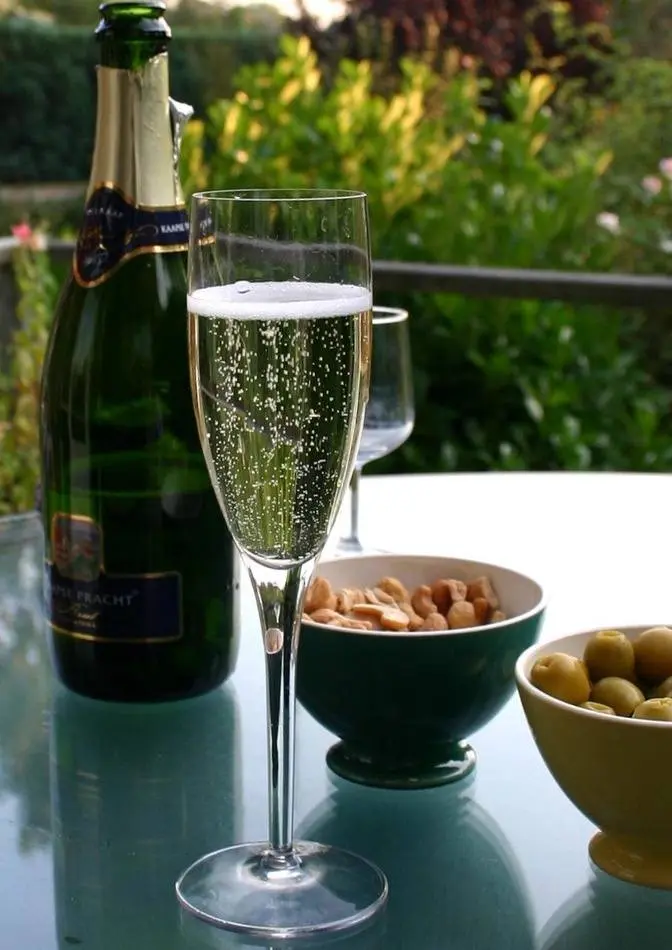
Champagne isn't the only delicious sparkling wine in the world – the others offer great value! Learn the 3 main types of sparkling wines to save dollars and find new favorites!
#wineculture #theworldofchampagne
Wine aficionados love champagne for its bready, toasty aromas and delicate mousse of bubbles.
But it's not the only delicious sparkling wine out there in the world.
And why should we care? Well, other sparkling wines offer great value.
So I'd like to introduce you to the three major styles of sparkling wine,
reveal some secrets on the label so you can find what you're looking for,
and introduce you to some sparkling wines that you deserve to know about.
Before we dive in, let's take a closer look at champagne so you have some context.
Champagne is actually a region in France located about 90 miles northeast of Paris.
And the reason this is useful to know is because you can't call sparkling wine champagne unless
it's from Champagne. Sparkling wines here follow a very exacting winemaking method
which was invented here. The method is a very specific series of steps that involve
making a non-sparkling based wine called a cuvee and adding a little sugar and yeast
that causes a second fermentation to happen inside the bottle.
This is ultimately what gives champagne its bubbles.
What's interesting is champagne didn't stop here.
They further refined their wines with additional rules.
There are three major grapes used in champagne.
The two main classifications, non-vintage and vintage champagne, have specific aging requirements.
And of particular interest, you will see official sweetness levels listed on bottles of champagne.
And here's my quick decoder for you.
Anything with the word brute generally means it's a dry wine.
Anything with the word bryant means it's fruity and actually kind of off-dry.
And anything demisec or above, be ready for some dessert.
So now that we understand the basics of champagne, let's explore these other sparkling wines.
Champagne alternatives.
Producers around the world were inspired by champagne's success
and started their own sparkling wine programs using method Champenoise.
Regions will either use their own indigenous grapes to create a unique blend
or they'll use the exact same grapes as they grow in champagne and basically do the exact same thing.
And that's exactly what I have right here.
This is Rotorer Estate.
This is a producer, actually owned by Louis Rotorer in Champagne,
who makes the famous Champagne Cristal.
Also makes this wine from Mendocino County, California.
These guys use the same grapes as you would find in champagne.
This is 60% Chardonnay and 40% Pinot Noir in the same method.
You know, when I look and I taste sparkling wine,
there's one other factor that I add into the tasting.
And that is, how does the bubble finesse feel on my palate?
Taking a look at this wine, this wine looks to be a medium straw color.
On the nose, smells rich.
Bayer lemon, sweet lemon peel, brioche,
and something a little bit cheesy, almost like cream cheese.
Let's give it a taste.
On the palate, bubble finesse comes in really right up front
with this big frothy explosion of bubbles.
Then I'm left with this nice sort of sweet lemon oily palate sensation on the mid-back.
And it makes me want another sip.
This is a great example of a champagne alternative,
but there are more you need to know about.
Cava.
If you love a lean, dry, citrus-driven sparkling wine,
this is definitely in your vein.
They use the Spanish regional grapes of Maccabiú, Cherilot, and Perillada.
What's cool about this wine is they have an Asian classification,
very similar to champagne.
So if you're looking for quality,
definitely check out those vintage Cava wines,
which are labeled as Reserva and Gran Reserva.
Cremant.
Now, if you make sparkling wine in the traditional method outside of champagne,
you have to be called Cremant.
And there are many regions throughout France that do this.
Definitely check out Cremant de Lemieux, Cremant de Bourboucan,
Cremant d'Alsace, and Cremant de Loire.
Metodo Classico.
Now, this is a very Italian story.
Basically, you have all these really great sparkling wine regions,
but they won't work together to market Italian sparkling wines,
so nobody ever knows about them.
They include Franciacorta, Trentodoc, and El Treppo Pavese.
Cap Classique.
Now, this is a producer's association that is labeled on bottles from South Africa.
And they use predominantly South Africa's major grape,
Chenin Blanc, to make delicious aromatic sparkling wines.
Let's move on to the next one.
Champagne precursors.
Now, the champagne method is actually based on the original sparkling wine method
that seemed to appear almost simultaneously sometime during the 1500s.
And what made the sparkling wine method appear so magically?
Well, it had to do with the emergence of our use of glass bottles with wine.
At harvest, producers would ferment their wines and put them into bottles into their cellars.
The bottles would stay with still some yeast in the wine.
Since the wine was embottled, there would be nowhere for the CO2 to escape,
and it would carbonate the wine.
This method is now referred to as Method Ancestral, or Petulant Natural, aka PetNet.
I have an example right here.
This wine is from Spain.
This is Flochera Barbaroja.
Now, this wine is 49% Sumol, 28% Garnacha, and 23% Cherolo.
Taking a look at the color, this wine is medium copper.
Boy, I rarely see a wine this color.
Very beautiful color.
On the nose, strawberry cream soda, celery stalks,
a little bit of that funky brie cheese, and lemon zest.
Let's give it a taste.
On the palate, bubbles are frothy and explosive,
up front with really big, crunchy bubbles.
Now, the thing about PetNet that I think is interesting
is they're oftentimes a bit cloudy, and I don't know if you can see that,
because of these leftover yeast particles.
And they're known to be fruity and aromatic,
and not necessarily meant to be aged for very long.
Still, these wines are awesome.
The bubble finesse, to me, the intensity is a little bit lower
than the traditional method champagne,
but this is quite a delicious bottle.
If you're looking for this style of wine,
definitely pay attention to the winemaking method.
It'll either say Petulant Naturel or Method Ancestral on the label.
And now for our last group, the innovators.
So lastly, and certainly not leastly,
we have a new way of making sparkling wines.
Actually, it's not that new.
It's over 100 years old.
What happened was we were able to make sparkling wines
in a more efficient way with technology,
and that came along with the invention of stainless steel.
The tank method, what happens to make this wine
is you get your base wine, you add in the accelerants,
but you put the wine in a huge tank that can withstand a lot of pressure.
And when I say a lot of pressure,
I mean up to six atmospheres of pressure.
I have with me here a bottle of Col Vitoraz.
It's a Val d'Or and it's made with the Prosecco grape, Galera.
All right, taking a look at this wine.
This wine is a pale color.
This is a pale straw color.
Look at that, frothy.
Wow.
On the nose, ooh, fruity.
Smells like nectarine, white peach, honeydew melon, honeysuckle,
and a subtle whiff of beer.
On the palate, bubble finesse, much more reduced.
It comes in more with the palate of the wine than exploding bubbles everywhere.
This wine is creamy.
It has nice notes of peach and honeysuckle,
and it's a bit fruity on the finish.
This is a great example of a Prosecco on the fruity side,
although I've had them be much more beer-like in their quality.
What's fascinating about Prosecco
is you can actually find excellent quality Proseccos from the region.
These wines are actually labeled as Val d'Obiadene,
and there are several regions, sub-region within Val d'Obiadene,
which make great wines.
So now that you're sparkling wine motivated,
I want to challenge you to go out and pick out a bottle of bubbly for yourself.
But before you run off to your favorite wine store, I do have one request.
If you enjoy what we're doing at WineFolly, I'm trying to grow the channel.
So please leave a comment on what you'd like to learn about,
and better yet, if you love what we're doing, please subscribe.
When you do, click the bell button,
because it will make sure you see all of the content we make,
not just what the algorithm chooses for you.
And until next time, happy drinking, and salut!