
M17 - Sincronicità o coincidenze? Il caso degli orari notevoli
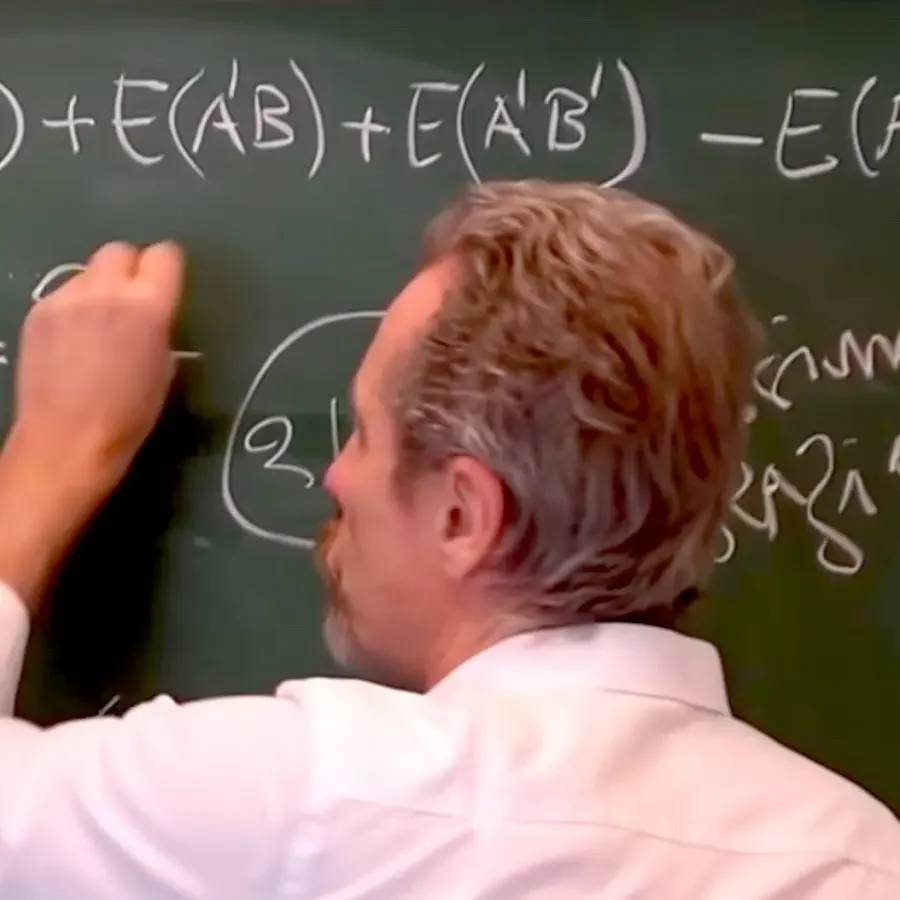
1 Visualizzazioni video·7 nov 2023
In questo video formulo un piccolo avvertimento. Personalmente, avvaloro la possibilità di cogliere nel reale “segni che provengono da oltre”, portatori di informazioni potenzialmente utili alla nostra evoluzione personale. Cogliere questi segni richiede abilità osservative, una mente sgombra, soprattutto da pregiudizi, e la capacità di lasciarsi sorprendere dall’inusuale, da collegamenti tra eventi che hanno un notevole livello di improbabilità. Ma per distinguere le correlazioni che risultano da mere coincidenze da quelle che sono potenzialmente significative, è necessario essere molto attenti, scrupolosi, e prudenti. Altrimenti, il rischio è di prendere le famose lucciole per lanterne e perdere tempo prezioso.
Every now and then I look at the time on my smartphone, but recently something amazed me.
When I looked at the time, inevitably the numbers I observed were remarkable numbers,
remarkable numbers, particularly symmetrical, or with many equal figures.
Okay, once, okay two, but the frequency was such that it really seemed to me
a series of events of very low probability.
And when we are faced with events of very low probability, well,
that's one of those moments where it might be useful to stay more alert,
because perhaps the great mind of the universe is suggesting to us
to observe something significant for us.
But to observe more carefully we need time,
and our time is very precious.
Some say that time is the most precious spice in the universe,
because it cannot be cultivated, we have a limited quantity of it,
if nothing else in our intraphysical life.
But how do you know if an apparently singular event is really so?
Well, it's simple, you have to investigate.
And in fact, the question is,
how rare is it to observe a remarkable number when we look at the time on our smartphone?
Let's analyze it together.
The time on a smartphone usually appears to us as a pair of numbers with two figures.
The first pair are the hours, the second pair the minutes.
There are 24 hours and 60 minutes in all,
so a total of 24 times 60 equals 1,440 different times.
Very well, but how many of these 1,440 numbers are remarkable numbers?
If we can calculate it, we can divide such number by the total number of hours,
that is, 1,440, and get the probability of observing one.
Ok, let's go by degrees.
There are certainly those times where all the figures are the same.
There are only three of them, 0000, 1111 and 2222.
Then there are the numbers with three equal figures, such as 1333,
which certainly catch the eye when we see them.
There are already many more of these, about 52.
I say about because I don't know if I counted them all without making mistakes,
but we are only interested in order of magnitude.
Then we have the always remarkable hours,
where the two pairs of numbers are the same, such as 14 and 14.
And here we have about 21,
excluding the three previous ones that we have already calculated,
where all the figures are the same.
Then, usually, we are also struck by symmetrical numbers,
such as 21 and 12, or 12 and 21,
and we have about 13 of these.
Then, what about the numbers that form a scale of increasing figures?
Well, they are certainly not trivial either,
but they are only three, 0123, 1234 and 2345.
Now, in my opinion, we must also add the scales of three numbers
combined with zero, such as 0234 or 0321,
because they also have a singular aspect,
and we have six of these numbers, if I'm not mistaken.
What else?
Well, yes, certainly all the exact hours,
such as 1500, 1600, etc., etc.,
because even those usually strike us,
and there are 22 of them,
excluding the two that we have already calculated in the previous categories.
Other numbers that I personally find remarkable
and when I see them, they strike me,
are those where the two pairs are formed by the same figures,
such as 11 and 44, or 22 and 33,
and we have about 13 of these.
Ok, let's suppose we stop here.
How many are there in all?
Well, we have calculated 133 remarkable hours,
and since 133 divided by 1440 is about 0.09,
it means that we have roughly a probability of 10% to observe one.
Well, 10% is not little, it is not a rare event,
but in my opinion we must consider a fact.
When we start to see remarkable numbers,
like the ones I mentioned,
we become more likely to consider special even categories of numbers
that are less particular,
such as 0102,
that is, numbers where one pair is exactly the next to the other.
These numbers are not few, there are about 41.
But when we are so attentive to observing remarkable numbers,
we are probably also more likely,
to consider as significant also the hours where only two numbers,
for example the minutes, are the same,
such as 14.11 or 15.44.
And the numbers of this type are many, about 91.
And also those where the two central numbers are the same
could intrigue us, such as 03.31,
and we have about 40 of these.
We arrive in this way to a total of remarkable hours of 305.
Since 305 divided by 1440 is about 0.21,
we get that the probability is now about 21%,
that is, greater than 1 out of 5.
In short, you got it.
Observing a remarkable time on your smartphone
is not so remarkable after all.
Also because we should ask ourselves,
do we remember more easily remarkable numbers,
or any numbers?
Eh, good question.
I stop here.
It was just an anecdote,
to give shape to a small warning.
Stay open.
Observe, listen to every signal coming from the real,
because it can be a carrier of important, unexpected information.
Explore the possible connections of meaning,
which, for example, manifest themselves as synchronicity,
that is, as non-time-space connections
that collide in our personal space-time.
But always do it cum grano salis,
with discernment,
distinguishing the fireflies from the lanterns,
because your time is precious.
Thanks for listening.