
George Washington Carver’s Experience at Tuskegee
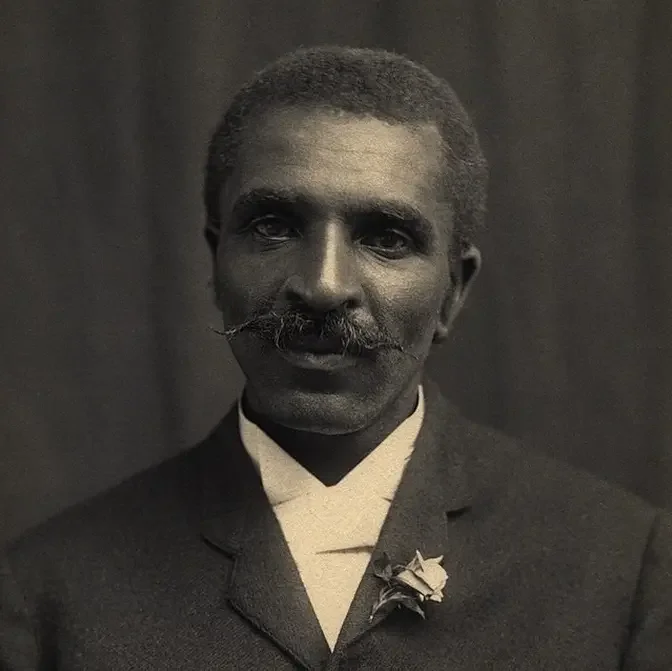
54 Video Views·Feb 1, 2023
Carver had never been in the Deep South.
Almost everything about Alabama's system of agriculture,
with its heavy reliance on cotton
and its system of tenant farming called sharecropping,
appalled him.
When he first came on the train here to Tuskegee,
he talked about seeing all the poor sharecroppers' homes
and thinking, wow, they could do better.
And he knew that he could help them do better.
And he spent pretty much that whole career here
doing work that was going to influence
and help those local farmers
improve the quality of their lives.
In addition to being administrator
of the Agriculture Department and two experimental farms,
Washington expected Carver to teach a full load of classes,
serve on the Institute's Executive Committee,
oversee the beautification of the campus,
serve temporarily as its veterinarian,
and establish an outreach program
for poor black farmers in the surrounding area.
Washington had one vision for Carver
and Carver had another vision for himself.
It was tumultuous at times,
but I think and I know
that they both had a mutual respect for each other.
Carver began his teaching in an old shack
with no facilities.
In order to establish some sort of laboratory,
he had to route through junk heaps
to find usable bottles and other items.
Why in the heck did he come to Tuskegee?
Where he came, where people were jealous of him,
clearly the resources he obtained were less,
came to a hostile environment,
both politically, socially, despite all that,
why did he come?
You know, and you look and read the history
and it comes down to serve my people.
That is the most fundamental piece
that I wanna share from my vantage point
of 40 years in here,
because taking on that task,
that's the most daunting task.
Just a few years out from slavery
and a decade or so out from slavery
right into the heart of the beast.
Now, the only way you could do this
is you have to be a warrior,
you have to have courage,
you have to be timeless,
you have to be so mission-oriented.
He had to suffer the indignities
that a black person had to suffer during that time,
yet he continued on his journey.
That's the real power,
that's the real spirit within.
I think after a while,
you can get very frustrated and go do something else,
but he didn't,
and that's, I think,
his own core of what he never wavered
from what his own commitment was in the very beginning.