
George Washington Carver and the 300 Uses of a Peanut
75 Video Views·Jan 18, 2023
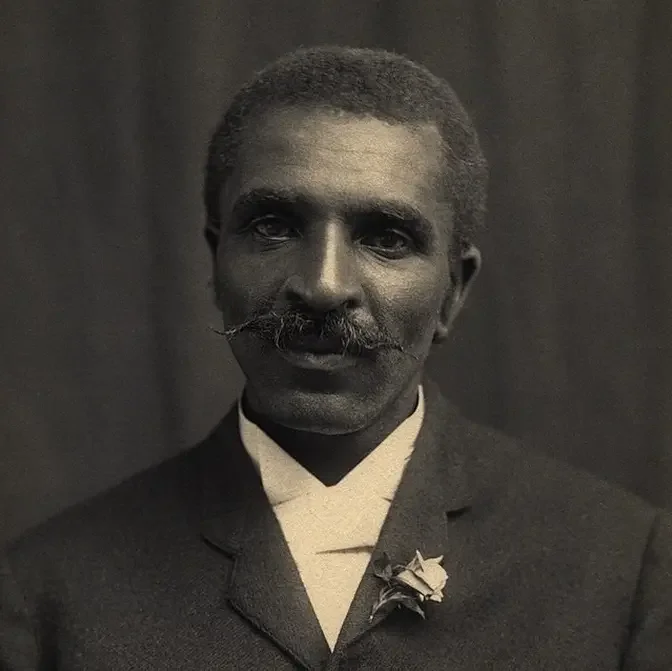
George Washington Carver. No, not George Washington, President of the United States.
This George Washington was instead an American inventor and botanist.
One of his most famous accomplishments? He came up with over 300 uses for the peanut.
Hi, welcome to Knowledgeka. My name is Denny Ward. This is the show about anything and everything.
George Washington Carver was born in 1864, Diamond, Missouri, towards the end of the
US Civil War. Back then, being of African descent in the United States,
unfortunately, usually meant one thing. Carver and his parents were slaves.
While it's incredibly sad to think back to now, slavery was still highly prevalent across the
United States right through the 17th century. By 1805, the northern states abolished slavery,
while the southern states clung on as their economies at the time depended on it.
It was finally in 1865 that slavery was abolished, just after Carver was born.
The original slave owner was Moses Carver, a German-American immigrant who purchased Carver's
parents for $700. The way that US slavery worked is that any descendants from purchased slaves
would also become slaves owned by the slave owner. It's an abhorrent system, but it's the one they had.
Thankfully though, with the abolition of slavery, George Washington Carver would soon be free.
Although curiously, it was still the original owner, Moses Carver, and his wife who helped
to raise him. They became foster parents. It was claimed that they raised Carver like
one of their own children and encouraged him to pursue academic and intellectual pursuits,
despite him sadly falling ill frequently. This helped to foster the talent and skill of Carver,
so much so that he relocated so that he could attend a school.
Segregation would have prevented Carver from joining a public school,
and so his options would have been limited. It was here that he would grow his love of
the natural world, earning him his first nickname, the Plant Doctor.
Carver's route into college was a bit rockier than expected. He successfully managed to be accepted
to Highland University, Kansas, but they quite shamefully rejected Carver when he arrived as
he was not the race they were expecting. After a brief stint tending to his homestead, nurturing
botanical and geological samples, he would eventually study art and piano at Simpson
College, Iowa instead. An art teacher, Etta Budd, saw and recognized Carver's eye for detail when
it came to painting flora. Because of this, she recommended he apply to Iowa State Agricultural
College to study botany, and so he did. He initially studied for his bachelor's degree
and was subsequently convinced to study for a master's degree. George Washington Carver would
work as a botany and plant pathology researcher, alongside working with plants and fungi,
soon being promoted to faculty, the first African-American to do so at Iowa State.
Following this, Carver was invited to head the agriculture department at the Tuskegee Institute,
Alabama. Here he would teach for the next 47 years. Alongside all of this, Carver maintained
an active interest in all manner of plants and flowers. He was one of the first to develop the
concept and technique of crop rotation, an agricultural practice still done today.
This was done to help restore nitrogen to the soil by rotating high-value crops like cotton
with nitrogen soil-fixing crops like legumes. This would lead to the agricultural scientist
to become an inventor of sorts. One such legume that was favoured in crop rotation was the peanut.
This led to Carver carrying out plenty of research on these peanuts, which would soon
turn into product design and innovation. Carver was notable for his Carver bulletins,
official publications filled with practical advice for farmers. His most popular described 105
different ways to prepare the humble peanut. Recipes included peanut punch, peanut sauces,
peanut sausages and much more. This interest in peanuts didn't just stop there. All throughout
his career, Carver talked about the importance of the peanut, published yet more uses for it
and also began inventing original peanut products of his own. This love of peanuts would end up
being given a new nickname, the peanut man and rightfully so. He was one of the world leaders
in the peanut world and is a major reason as to why peanuts have become
as popular as they have done in the modern world. Carver worked hard for many years,
inventing and trying to commercialise peanut-based inventions that came about as he researched
chemical and physical separation of the peanut itself into individual fats, resins, gums,
sugars and oils. Some examples of his products include a peanut-based respiratory medicine,
peanut oil-based hair dressing, peanut massage oil, peanut printer ink, peanut paper and even
peanut axle grease. Carver was never in it for the money. Despite his extensive research and
product invention, he never made very much profit off of his work. He was notoriously frugal
throughout all of his life but never sought to exploit others for increasing his own wealth.
He even went so far as to turn down a six-figure job offer which was virtually unheard of back
then and this was from fellow inventor Thomas Edison. He did however see himself immortalised
as the person who would eventually come up with over 300 uses, preparations and inventions
surrounding the peanut. Due to his scientific successes, his vast number of inventions and
his political activism regarding peanut tariffs, in the last 20 years of his life he would become
a household name receiving fame and recognition for his work across the nation. George Washington
Carver was an incredibly inspiring, bold and talented individual of the time period. He was
really fighting an uphill battle from the start. In racially divided America, being as successful
as Carver was, was rare due to the system holding so many people back. Even today he serves as an
influential role model for aspiring scientists across the globe. While Carver passed away many
years ago in 1943, his legacy still lives on. Today you can pay your respects and reflect
more upon the life of this brilliant individual at the George Washington Carver National Monument
in Missouri. There is also the George Washington Carver Garden, complete with a life-size statue
of the man himself in the Missouri Botanical Gardens in St. Louis. As well as this,
Carver's old home for so many decades, Tuskegee University in Alabama is an officially designated
National Historic Site where you can learn more about the man in the historic George W. Carver
Museum. After George's passing, much of the money he managed to save went into establishing a museum,
which is still open today. If you happen to find yourself in Austin, Texas, then be sure to check
out the George Washington Carver Museum Cultural and Genealogy Center, which pays homage to the
city's African-American heritage and features some of the artistic and inventive works of Carver
himself. I think the following quote, written next to Carver's burial site, speaks volumes about the
kind of man he was. He could have added fortune to fame, but caring for neither, he found happiness
and honor in being helpful to the world. This following quote, delivered by Franklin D. Roosevelt
after Carver's death, only adds to the lasting legacy this man left us.
All mankind are the beneficiaries of his discoveries in the field of agricultural chemistry.
The things which he achieved in the face of early handicaps will for all time afford an inspiring
example to youth everywhere. And with that, it's the end of today's episode. A question for you
before we finish though. Which other inspirational figures, particularly minority figures from the
past, do you think the world should know more about? Let us know in the comments below.
Please don't forget to like, share and subscribe here on YouTube, and follow us on social media.
Thanks to all of the brilliant people who have already done so. I'm so very grateful.
Until next time, stay hungry for factuality.