
The Untold Truth Of George Washington Carver
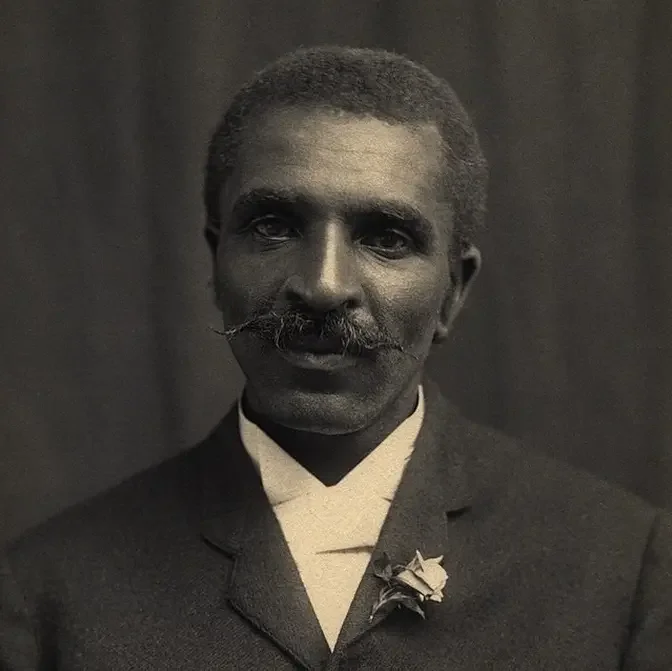
96 Video Views·Jan 25, 2023
Many know George Washington Carver as that peanut guy, but this hardly scratches the
surface when it comes to arguably the most important and influential agriculturalist
in American history. This is the untold truth of George Washington Carver.
George Washington Carver, enslaved at birth, was born in Diamond, Missouri sometime in the 1860s
toward the end of the Civil War. His mother, Mary, was enslaved by Moses and Susan Carver.
It's suspected that his father was an enslaved man on a nearby farm who was killed before George
was born. When he was just an infant, George, along with his mother and sister,
were kidnapped by Confederate raiders. Moses Carver's neighborhood reclaimed George and
brought him back to the farm. Tragically, though, George's mother and sister were never heard from
again. Freed after the passing of the 13th Amendment, George was then raised by the
Carvers along with his older brother, Jim. George Washington Carver proved himself to
be a most unusual child. Moses Carver's wife, Susan, taught George to read and write,
and soon he was consumed by the love of learning. On the Carver farm,
young George, enfeebled by whooping cough, took on domestic chores such as cooking,
laundry, and gardening. Carver also developed a complete fascination with painting,
algebra, music, and, most of all, flowers. Carver later described flowers as his pets,
writing that, quote,
"...all sorts of vegetation seemed to thrive under my touch."
With his green thumb, Carver was dubbed the plant doctor by those who knew him.
Though the Carvers had allowed George to study at home, at the time,
public schools were not open to Black children. But there was an all-Black school in Neosha,
where Carver boarded for two years in the late 1870s. Carver bounced around the Midwest,
using his domestic skills to fund himself, and finished out his high school degree.
But when George Washington Carver was accepted to Highland College in Highland, Kansas,
the offer was rescinded as soon as the college discovered that he was Black.
In the late 1880s, Carver moved to Winterset, Iowa, and became a cook at a large hotel.
It was there that he made friends with John and Helen O'Holland.
The couple pushed Carver to enroll in Simpson College to study art and piano.
But Carver's art teacher, Etta Budd, saw a burgeoning botanist in her student and
encouraged him to change his academic focus. Taking her advice, the next year,
Carver moved to State Agricultural College at Ames, Iowa, to study agriculture.
Carver was able to utilize this keen artici in the field of horticultural though,
contributing his own drawings of plants to botanists. In fact, Carver's painting,
Yucca and Cactus, won an honorable mention at the 1893 Chicago World's Fair.
In 1894, Carver earned a bachelor of science degree and became a faculty member at the college.
Carver then got his master's in agriculture, graduating in 1896.
On October 8, 1896, Booker T. Washington recruited Carver to teach agriculture at
Tuskegee Institute and serve as the department's director.
Carver's role at Tuskegee was a bit unusual. Carver, who remained unmarried for his whole
life, had special perks as a professor. Usually, two professors shared a single dorm room,
but Carver was given two rooms to himself, one for him and one for his plants.
Carver was also paid $1,000 a year, compared to his colleagues' roughly $400 average.
Sometimes, though, Washington and Carver clashed. According to NPR,
Carver could be something of a diva. Though beloved by students, he often threatened to
resign and hated paperwork. He also worked incredibly long hours, tending his plants
from 4 a.m. until 9 p.m. At one point, Carver even asked Washington if he could
stop teaching students entirely so he could focus even more on his plants.
Washington refused him, but his successor, Robert Russia Moten,
allowed Carver to cut back on classes except for summer school.
Carver stayed at Tuskegee until his death in 1943.
Booker T. and Carver believed that people needed to be taught not only how to live,
but to live beautifully."
For Carver, teaching agriculture was a means of uplifting African Americans. He wrote,
It has always been the one great ideal of my life to be of the greatest good to the greatest
number of my people possible. This line of education is the key to unlock the golden
door of freedom to our people."
Arriving in Alabama to teach at Tuskegee, Carver was struck by how the monoculture of
cotton had depleted the soil and caused erosion. He was also aware that the sharecropping system,
where Black farmers didn't own their own land, led to neglect of the soil.
So Carver launched the Jessup Agricultural Wagon, a sort of mobile school, to deliver
tools and teach rural farmers the benefits of soil conservation and composting.
Starting in 1906, the wagon taught about 2,000 people a month. Carver was introducing a method
of social progress outside of the warped Jim Crow system. The Jessup Wagon was a means of
teaching liberated Americans to meet all their needs through tending their land.
He wanted to turn science into products that would benefit the Black rural poor."
To solve the problems caused by the overuse of cotton, Carver developed a system of crop
rotation. By growing plants like soybeans, pecans, peanuts, and sweet potatoes in rotation with
cotton, the soil was enriched, and the yield became much greater. According to ACS, the method
was so solid that Carver was able to transform a half-acre plot from a yield of 40 bushels of
sweet potatoes to 266 bushels in only a matter of years. It was also in these Tuskegee years
that George Washington Carver became the peanut champion. He discovered that peanuts could be
grown as a perfect companion crop to cotton because they grew at different times of the season.
They produced their own nitrogen, which enriches the soil they were in.
With Carver's focus on economic recovery for poor Black farmers, all of his growing tips,
which he published through 44 bulletins, were replicable for one-horse farmers with
limited equipment and no access to commercial fertilizer. During World War I, George Washington
Carver was asked to help fellow innovator Henry Ford with developing new products to help the
resource-hungry country. Carver assisted Ford in developing a rubber substitute using the
peanuts, according to Live Science. During this period, dyes from Europe
were also difficult to track down. Carver set to work developing over 30 variations of dye colors,
all made from Alabama soils. The First World War also brought a wheat shortage,
so Carver began developing a way to make flour from dried sweet potatoes.
This piqued the U.S. Department of Agriculture's interest, and they drew up plans for large-scale
experiments to test Carver's sweet potato flour. The wheat shortage, luckily, didn't last for long,
so few of us are still going to the store to pick up a bag of sweet potato flour.
But Carver's inventive war effort had illustrated something that he had always believed.
Learn to do common things uncommonly well. We must always keep in mind that anything that
helps fill the dinner pail is valuable. So, how did George Washington Carver officially
become the peanut man? In 1921, he was asked by the United Peanut Association of America to go
to Washington, D.C. to give a talk in front of the U.S. House Waste and Means Committee about
peanuts. Congress had been debating a tariff on foreign peanuts, and Carver stood up to testify.
Congress was surprised by the breadth of knowledge he shared about the legume,
and floored by its many uses. They were also impressed by the way he tactfully deflected
racist comments aimed at him during his presentation. In fact, Congress was so
rapt that they applauded when Carver was finished. In the end, the tariff on imported peanuts that
Carver was lobbying for was passed. This was exceptional within the context of America at
the time, when Jim Crow laws and the Ku Klux Klan were the law of the land.
Carver was one of the few Black men who had a mainstream presence in American culture,
and his performance in front of Congress made him a national celebrity.
During his lifetime, George Washington Carver was the most famous Black man in America.
In 1941, Time magazine named him Black Leonardo. Carver had many buildings and institutions named
after him, including a theater in Norfolk, a swimming pool in Indianapolis, and a professional
building in Cincinnati, to name a few. Still, George Washington Carver was a Black man in the
early 20th century, so he was constantly navigating a world of prejudice and segregation within his
fame. Once, for example, while dining at Henry Ford's house, Carver slipped out to eat his meal
outside so that he wouldn't offend any White guests. In the 1930s, Carver arrived at a New
York hotel with a room reservation, only to be dismissed when he attempted to enter.
Even when pressed by White colleagues, the hotel would still not admit Carver.
This was common for him. When Carver spoke at hotel engagements, he was often forced to enter
through the side door and eat in the kitchen. After singing the praises of the peanut crop,
Carver had a new problem to solve. Southern farmers were thrilled with their thriving
cotton crop but had way too many peanuts on their hands. So, Carver set to work thinking
of ways to use the surplus. The result was 300 new peanut products. According to the
Tuskegee Institute, his inventions include flour, meat substitutes, paste, insulation,
laundry soap, shaving cream, peanut orange punch, laxatives, wood stains, printing ink,
and antiseptics.
While peanut butter was certainly on Carver's list of peanut uses, he never claimed it was
one of his own invention. In fact, many of Carver's product ideas were borrowed from
magazines and cookbooks of the day, which he acknowledged by citing over 20 sources
within his brochures, note Smithsonian Magazine. Carver's aim was not to invent peanut products
or even take credit for them with patents, but to show poor farmers that their new abundance
of peanuts was an economic win. In fact, Carver didn't even think his work with the peanuts was
most important of his life. It's just the one that stuck.
Carver's work wasn't just limited to the fields and his lab. He took on other pet projects.
In the period between 1923 and 1933, Carver traveled with the Commission on Interracial
Cooperation to promote racial equality in the South. Carver had a high, squeaky voice
and a humble, excited demeanor that enthralled his audiences and students alike. While Carver
would give speeches about racial harmony to white Southern colleges, he largely refrained
from criticizing any policies of the time or personally making any political statements.
Fittingly, Carver developed a friendship with Mahatma Gandhi in 1929. The Indian leader was
a vegetarian and asked how he could improve his nutrition. Carver gladly fielded his questions
and recommended that Gandhi add some soy to his diet. He trekked to India once and advised Gandhi
on nutrition in developing nations. His international fame grew to the point where even
Joseph Stalin asked Carver to come revive the Soviet Union's cotton crop in the 1930s.
Carver refused. Always looking to help, during the polio epidemic of the 1930s,
Carver was an advocate of peanut oil massages and believed they could offer
some relief for patients with paralysis. It was called Carver's Cure. Reportedly,
President Franklin D. Roosevelt himself tried out Carver's massage technique,
though it was never proven to work.
Carver died on January 5, 1943, after a fall down the stairs. It's believed he was around the age
of 78. Always frugal, he was able to leave behind a life savings of $60,000 to found the George
Washington Carver Institute for Agriculture at Tuskegee. After his death, President Franklin
D. Roosevelt erected a national monument to Carver in his hometown of Diamond, Missouri,
the first-ever national monument dedicated to celebrating a Black American.
Black contemporaries looked to Carver as an example that education was a transformative
path to success, while white people of the era saw Carver as proof that Blacks could be successful
while still living in a segregated Jim Crow-era America. Though, throughout his life, George
Washington Carver's top concern was uplifting the economic lives of Black people and rural
farmers in the United States. As Carver once put it,
no individual has any right to come into the world and go out of it without leaving behind
him distinct and legitimate reasons for having passed through it. Carver certainly left plenty
of excellent reasons. Check out one of our newest videos right here! Plus,
even more Grunge videos about your favorite historical figures are coming soon.
Subscribe to our YouTube channel and hit the bell so you don't miss a single one.