
Forgotten Genius Son of Albert Einstein | EDUARD EINSTEIN | 2020
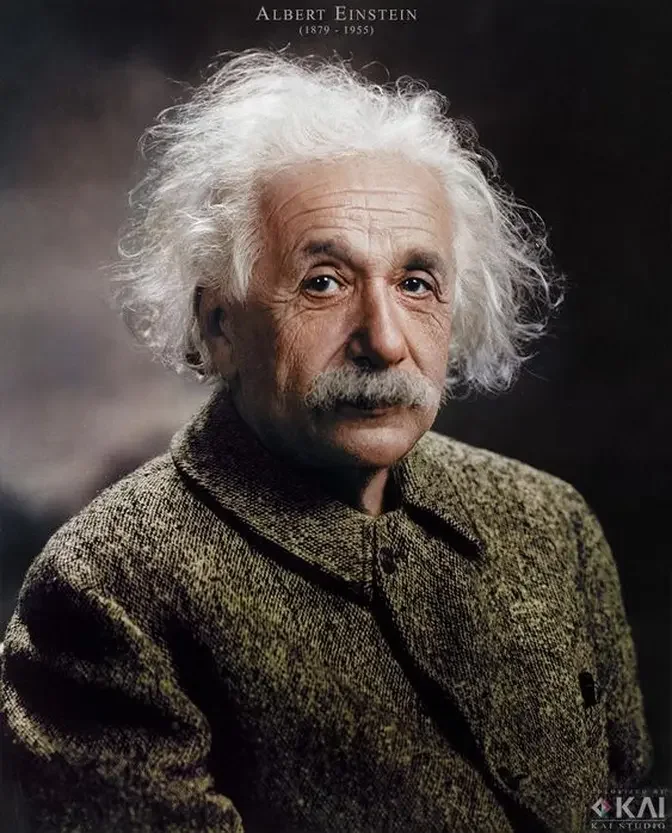
Albert Einstein is one of the most famous scientists in history,
and his name has become a household term synonymous with genius.
But although almost everyone has heard of the physicist and his remarkable work,
few know about the tragic fate of his son, Edward Einstein.
Edward Einstein's mother, Milia Marek, was Albert's first wife. Marek was the only female
student who studied physics at the Zurich Polytechnic Institute, where Einstein also
attended in 1896. He soon became smitten with her, despite the fact that she was four years
older than he. The two married in 1903 and their union produced three children,
Lisa Rolle, who vanished from history and may have been given up for adoption, Hans Albert,
and Edward, the youngest, who was born in Zurich, Switzerland on July 28, 1910.
Einstein separated from Marek in 1914 but kept up a lively correspondence with his sons.
Although Marek would later lament that her famous husband had put his science before his family,
Hans Albert recalled that when he and his brother were young, father would put aside his work and
watch over us for hours while Marek was busy around the house. Little Edward Einstein was
a sickly child from the start, and his early years were marked by bouts of illness, that
rendered him too feeble to take family trips with the rest of the Einsteins. Einstein despaired over
his son even after he had abandoned the household, writing fearfully in one 1917 letter to a colleague
my little boy's condition depresses me greatly. It is impossible that he would become a fully
developed person. The coldly scientific part of Albert Einstein wondered if it wouldn't be better
for him if he could depart before coming to know life properly, but in the end, paternal love went
out and the physicist vowed to do whatever he could to help his sickly son, paying for and
even accompanying Edward to various sanatoriums. As he grew older, Edward, whom his father
affectionately dubbed Tet, from the French Petit, developed an interest in poetry, piano playing,
and, eventually, psychiatry. He worshipped Sigmund Freud and followed in his father's
footsteps by enrolling in Zurich University, although he intended to become a psychiatrist.
By this time, Albert's fame had been solidly established. In one telling bit of self-analysis,
Einstein wrote, it's at times difficult to have such an important father because one feels so
unimportant. The aspiring psychiatrist followed his father's path once again when he fell in love
with an older woman at the university, a relationship that also ended disastrously.
It appears to be around this time that Edward's mental health took a severe turn for the worse.
He was sent into a downward spiral that culminated in a suicide attempt in 1930.
Diagnosed with schizophrenia, it has been speculated that the harsh treatments of the
era worsened rather than eased his condition, eventually to the point where it impacted
his speech and cognitive abilities. Albert, for his part, believed his son's condition was
hereditary, passed down from his mother's side, although this scientific observation did little
to assuage his grief and guilt. His second wife, Elsa, remarked that this sorrow is eating up
Albert, the physicist soon faced more than issues surrounding Edward. By the early 1930s,
the Nazi party had risen in Europe and after Hitler took power in 1933, Einstein could not
return to the Prussian Academy of Sciences in Berlin, where he had been working since 1914.
Einstein may have been one of the world's most famous scientists, but he was also Jewish,
a fact that his countrymen could not accept and forced him to flee to the United States in 1933.
Although Albert had hoped his younger son would be able to join him in America along
with his older brother, Edward Einstein's continually deteriorating mental condition
prevented him from also being able to seek refuge in the United States. Before he emigrated,
Albert went to visit his son at the asylum where he was being cared for one last time.
Although Albert would keep up correspondence and would continue to send money for his son's care,
the two would not meet again. As Edward spent the remainder of his life in an asylum in Switzerland,
he was buried in Hungerberg Cemetery in Zurich, when he died of a stroke at age 55 in October 1965.
He had spent over three decades of his life in the psychiatric clinic of Bergalslie
at the University of Zurich. In the end, if you like the video give it a thumbs up,
subscribe Science Heroes and don't forget to press the bell icon to get all notifications
of my new videos. See you in the next video.