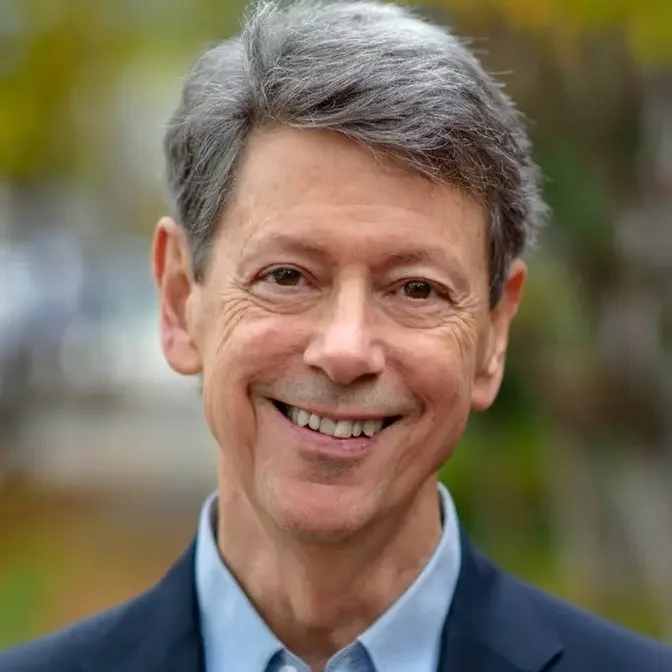
Melvin McLeod and I explored challenges that are both deeply human and deeply rooted in our biology: our brains are naturally more sensitive to stress, threat, and painful experiences than to the good things happening around us. We can become anxious, self-critical, disconnected, or simply worn down—even when life is going reasonably well.
We’ll show how we can work with, rather than against, this built-in negativity bias by deliberately noticing and absorbing positive experiences, using simple practices grounded in neuroscience and positive neuroplasticity.
Through the HEAL process and the practice of “taking in the good,” we can turn fleeting moments of calm, confidence, connection, and gratitude into lasting inner resources—gradually strengthening the resilience, well-being, and sense of safety we need to meet life’s challenges.
Timecodes & Main Topics 00:00 — The evolution of secular mindfulness: From meditation technique to a complete path for personal and societal transformation. 02:27 — Five elements of mindfulness: Mindfulness meditation, insight, and the broader practices that support lasting change. 10:07 — What really reduces suffering: Exploring universal truths, the causes of suffering, and practices that help us respond differently. 12:07 — Insight and self-compassion: How seeing reality clearly and cultivating compassion can help us meet physical and emotional difficulty. 22:24 — The healing power of insight: Understanding pain and identity as changing experiences rather than fixed realities. 24:04 — Holding the good and the bad: Exploring how loving-kindness and compassion can coexist with the reality of profound suffering. 30:00 — Why insight matters: Moving beyond relaxation toward deeper awareness of how identification contributes to suffering. 31:43 — Seeing reality clearly: How slowing and calming the mind naturally opens the door to greater insight and freedom. You can see the meditation that went along with this talk here: https://rickhanson.com/talk-meditation-insight-the-power-of-seeing-reality-clearly/
Guest teacher Melvin McLeod proposes evolving secular mindfulness from a simple stress-reduction technique into a \"complete path of life.\" By decoupling Buddhist truths from religious structures, he introduces a five-element framework—meditation, insight, love, ethics, and community—to foster deep personal and societal transformation accessible to all, regardless of spiritual belief.
I offer these every week along with a guided meditation.
Just click the subscribe link below to be notified through YouTube when I post the latest
recording.
Or, if you'd like to join us live, which would be great, just go into the description
section below and follow the link along to be able to sign up for free.
We have a guest teacher tonight, the Honorable Melvin McLeod.
Melvin is a very distinguished authority in Buddhism, longtime practitioner in Tibetan
Buddhism, editor-in-chief of Lion's Roar, and a related collection of communications
really at the center of the movement of Buddhism into the West in the last generation, and
someone who has published a recent book about the complete path of mindfulness, taking the
insight trainings and other trainings from Buddhism and grounding them in an entirely
secular modern framework as a complete path toward liberation, and a society that lives
in peace and justice and sustainable prosperity for the many, not just the few.
It's really quite an ambitious swing, an ambitious undertaking, so I thought that Melvin could
be our guest teacher tonight.
I wanted to stick around, so Melvin will hold forth.
I might ask him some questions.
So, Melvin, over to you.
Do you want to set the table?
Well, sure.
Give us some teachings.
Well, I don't want teaching, but I can lay out the thesis of my book.
First of all, I believe that the so-called mainstream or secular mindfulness movement
is of historic importance.
I think it is the birth of a genuine new contemplative tradition for the modern world.
It is brilliantly designed for modern people who continue to long for deep methods of personal
and societal transformation, but are not especially interested in following a religious path.
And it is an extraordinary accomplishment, which in my book I trace back to two primary
founders—the Zen teacher Thich Nhat Hanh and, of course, Jon Kabat-Zinn—that millions
of people around the world are now doing the practice, the basic practice of mindfulness.
That is an extraordinary accomplishment.
And now, I would argue, it is time for that mainstream mindfulness movement to take the
second step in its historic development, and that is to shift how mindfulness is understood
from being a very beneficial meditation technique to being a complete path of life.
It can help us transform both our own lives and our society.
And I believe that when we look at mindfulness as a complete path, that it is reaching its
fruition of offering to the world the kinds of deep and powerful techniques for personal
and societal transformation that were traditionally only offered through religion in a common-sense,
evidence-based format for modern people who are not especially interested, for all kinds
of good reasons that we know, in following a capital-R religious path.
So I believe that when we define mindfulness as a complete path of life, we are offering
the world a new way to access the kind of deep, effective methods of personal transformation
that again were traditionally only associated with religion.
So what I'm proposing is one particular framework for looking at mindfulness as a complete path.
And that consists of five elements or keys to mindfulness, which are mindfulness meditation,
which is what people currently associate with mindfulness, the practice of calming and focusing
the mind through following the breath or other objects, to, and this is the key element,
the development of insight.
And in fact, that is one practice.
Although they have been divided in two, and I have maintained that division for the purposes
of this book, in fact, mindfulness has always been and always will be the two practices
put together, the two parts put together.
We cultivate a focused and stable mind, and then, and this is where the real fruition,
the real transformation takes place.
We take that focused mind, which is capable of resting long enough in reality to truly
understand it and develop insight into our own true nature, the true nature in this world,
the true nature of society, and what truly brings happiness and what doesn't.
With that then as the great tool, we then can turn to our hearts and develop love and
compassion.
From that, the combination of love and compassion plus insight allows us to develop an effective
and skillful ethical framework by which we can skillfully help people to have more happiness
and to have less suffering.
And finally, the fifth of these keys is the community in the broad sense, the transformative
power of connection to other humans, to other beings, ultimately to the whole universe.
So I propose that a complete path of mindfulness consists of those five elements—mindfulness,
meditation, insight, love and compassion, ethics, and community.
However, it is also true that lots of other people could have another framework.
They could add in things like the arts or relationships or the body more, energy work,
whatever.
I think the key element is, however we choose to define mindfulness as a complete path,
that we do so and expand and deepen the benefits of mindfulness from being a simple, albeit
very beneficial meditation technique, to understand and teach and practice mindfulness as a complete
path of life.
Could I ask you a question about that, Melvin?
Of course.
Okay.
So, first off, I just want to acknowledge the structure of those five major streams
that intertwine, and again, to appreciate how you locate insight as not so much the
most important of the five, but certainly crucially important and very important to
pay attention to and often left out, in part because the insight you speak of is emotional
and somatic and motivational, in addition to having a conceptual gloss.
But the real import, the weight of it, is the felt knowing of what is actually true,
the good news that is actually true.
So, a little bit of a devil's advocate question so we can name it and then move on.
You're drawing this approach certainly from a specific world tradition.
You could imagine someone who is very informed about, let's say, the teachings of Jesus or
Muhammad or Moses and Abraham in Judaism, and who would then extract from them a particular
structure, a particular offering, quite sincerely, that was decoupled, separated from the realization
of the root teacher, his lived example, in our case, the Buddha, 2,500 years, certainly
from the beginning of a monastic tradition that's been carrying the torch, expanded
further in the Mahayana as it moved into Tibet and then onward to China and then Japan, etc.,
etc., etc.
Is there something wrong about that?
Is it a betrayal?
Does it falsify our roots?
Absolutely not.
I mean, I remain as hardcore a Buddhist as one could imagine.
However, the fundamental truths taught by the Buddha, the Four Noble Truths, the Three
Marks of Existence, the Eightfold Path, these are not somehow unique revelations.
They are, to my mind, universal truths based on universal human aspirations and universal
human capabilities.
Buddhism, in many cases, many of the things we're presenting in this format, is perhaps
the best exponent of these particular paths.
But people who are training their minds to pay attention know that paying attention is
not inherently a Buddhist thing.
It's just a universal human thing.
That the truth of change, of impermanence, again, albeit they are central to Buddhism,
are not in any way inherently Buddhist, nor ultimately even inherently religious.
They're simple truths.
So I think what I'm proposing is that from what, from a Buddhist point of view, we would
call Dharma, it's possible to present in a broader, more universal format without the
alienating qualities or baggage of religion by simply presenting truth as truth and what
works as what works.
And yes, in Buddhism, in Mahayana Buddhism, in Vajrayana Buddhism, there are elements
that you would define as clearly capital or religious.
I myself practice many of them.
But those fundamental truths that the Buddha taught, they're simply universal truths as
far as I'm concerned.
We may, and I may, have learned about them, have been taught a lot about them by Buddhism,
but that does not make them inherently Buddhist.
They're simply truth.
Thank you.
We'll get to questions in the chat.
Some have come in already, and I'll just start with this one.
So Melvin, as you yourself have explored these five major streams and done a lot of reflecting
and thinking about them, coming into this approach from your own deep-rooted Tibetan
Buddhist Vajrayana practice, Mahamudra practice, what has actually shifted for you in your
personal practice as you've moved into these five major elements of the complete path of
mindfulness?
Well, I don't know that anything has.
I mean, things like the Four Noble Truths, guess what?
Suffering is real.
Here are the fundamental causes of suffering.
There is the possibility of lessening or ending suffering, and in fact, there's a specific
path to do so.
In a way, the somewhat fancier, more esoteric practices that I may do may or may not be
effective ways to reach those truths, but I think that those are really what counts.
And in a way, you know, you could say, oh, he's a Tibetan Buddhist, oh, he's a Vajrayana
Buddhist.
Well, actually, he's just actually a Buddhist.
And even to be a Buddhist actually is simply to practice and recognize some things that
are basically true and that basically work.
So I guess nothing has changed in the sense that those things always remain our fundamental
practice as Buddhists, or indeed, and this is the important point, as human beings.
I'm struck by a story of someone who did a three-month retreat in a Theravadan early
Buddhist framework at Insight Meditation Society, and this is publicly described by Jack Kornfield,
and she was quite concerned about going home to her fundamentalist Christian family whom
she loved in the South, in America.
And roughly sometime, weeks, maybe a month or two after the end of the retreat and she
had returned home, people had been invited to send a little note how they were doing.
She sent in a letter whose increasingly well-known little section is, my family hates it when
I'm Buddhist, they love it when I'm a Buddha.
I think you're getting at the heart of the matter here, what it means to be a Buddha,
informed and lived by these five streams of steadiness of mind, insight, love and kindness,
ethics, sila, restraint, appropriate behavior, and then opening out into community to serve
it and be served by it.
Beautiful.
It's striking that of your five elements, three out of five, 60% are intensely interpersonal.
Even insight, fundamentally, into our profound interrelatedness with all things, that we
are a passing patterning, you know, in the river of time, right, is itself also very
relational.
And I wondered if you could maybe speak more to the dimensions of loving kindness, ethics,
and community, because they're really, they form the majority, certainly, of the complete
path of mindfulness as you teach it.
Well, they form the whole of our lives, ultimately.
I mean, we only exist in relationship to other people, to the universe, to the sun, to the
water, to the earth.
I mean, there is no way in which we are isolated or alone, in which our realization or our
fruition as human beings takes place alone.
I don't believe.
I mean, even those who may spend decades in a cave are really only preparing, ultimately,
to go out and to relate to others.
There's only one place in this entire book where I quote the Buddha, and that's in the
section on community, and where the Buddha is famously asked, is friendship half of the
spiritual path?
And the answer is no, it's the entirety of the spiritual path.
And, of course, we don't know exactly what the Buddha said 2,600 years ago, but I would
maintain he was talking about friendship in the very, very broadest connection, that our
deep connection to other people, that the sense of community, even we as individuals
are communities of billions of cells, that friendship or love or compassion or connection
is not even half of the spiritual path, it is the whole of the spiritual path.
Having said that, I now remember what I wanted to say, so I will step back a sec, because
I'm going to reveal the hidden agenda behind what I am trying to do in this book.
I have sadly come to the conclusion, and I have pretty good evidence to do this as an
observer and participant in the capital B American Buddhist world, that although Buddhism
in this world, this modern world in the United States, is of deep value with many great
practitioners and teachers, that the little-known Asian religion of capital B Buddhism is
never going to have a widespread impact or benefit in American society, and that, in
effect, the container of the religion of capital B Buddhism, in fact, is an impediment
to the spreading of the basic truths of the Dharma as widely as possible in order to
produce the maximum benefit.
And in the end, so I propose that, indeed, these are basic truths of change, impermanence,
joy, the causes of suffering, what brings freedom from suffering, all this can be presented
in a way simply that is evidence-based, that is modern, that is accessible without the
barriers or hindrance, not even of a particular Asian religion, but of religion altogether.
Because are these things religious, or are they just inherently human?
So I think that we serious Buddhist practitioners, which I have the feeling there are many of
listening to this now, participating in this event, are going to continue to be able to
practice deeply, to put down the deep roots of the Dharma in the society.
But in terms of actually producing the maximum benefit, I think that Buddhism can be the
inspiration and teacher for the presentation of small d Dharma in the broader society.
But I personally believe that the greater benefit, the greatest benefit, will come from
a deeper and more expansive understanding of the teachings and practices as presented
in the mainstream mindfulness movement.
It's a simple expedient.
You're on a mission.
I support your mission.
I endorse that mission.
I wonder if you could comment on a really deep theme having to do with, let's say,
cancer.
So just to kind of set this up in a frame that people here might be somewhat familiar
with, technically there is the dukkha of the three characteristics.
In other words, living inherently involves change, interconnectedness, and the fact that
sometimes there are unpleasant experiences, and the fact that even pleasant experiences
end and have the nature, due to change and interdependence, of being cloud-like rather
than brick-like, so we can't own them or possess them.
So no single experience is a permanent source of happiness.
That's the dukkha of the three characteristics.
There's no escape from it.
Then there is the dukkha of the four noble truths, the first of which is the dukkha of
suffering.
And a distinction might be made in English between pain in the three characteristics
and the suffering that involves our mental reactions.
That distinction is also found between the first arrow and the second arrow, or the first
dart and the second dart, of the dukkha of the three characteristics and the dukkha of
the four noble truths.
And understanding that distinction is crucially important because life is not suffering.
Life includes joy and sorrow.
It includes sukha, which is pleasure and happiness and sweetness and contentment, as
well as dukkha.
Those are inescapable facts.
So much of our practice is about relieving ourselves from the machinery of tanha, the
second noble truth, of our drives, our cravings, and our selfing.
And so one may have cancer.
Cancer's a fact.
And with it may come, understandably, the pain, the sorrow, the discomfort that's
emotional, the grief, physical pain is very real.
All that may be the case.
And yet, if we do not add craving to it in the second noble truth of tanha, if we do
not add craving to it and selfing to it, then we do not add suffering to it.
In the moment that the second dart arises in our mind, we cannot help it.
It's arisen.
It's there.
But then we don't have to add further second darts to it.
That's our great opportunity.
So that's a setup for you, Melvin.
You know, it's kind of classic dharma there.
How might the five elements of the complete path of mindfulness help a person, you know,
throw fewer second arrows, including with a serious health condition like cancer?
Yes.
Well, I mean, how to actually deal with that kind of level of pain and suffering is almost
beyond my pay grade.
But what I can say is this, that through the creation of mindfulness-based stress reduction,
Jon Kabat-Zinn created the mainstream mindfulness movement.
And in fact, it was specifically—it wasn't even stress reduction.
It was specifically to help people deal with serious problems of chronic illness.
That was at the University of Massachusetts Medical Center.
He created a clinic using techniques of yoga and mindfulness.
And right from the very beginning of MBSR, recognizing that that then led to an understanding
of mindfulness as a very almost mechanical technique to help us deal with specific problems
in this life.
That actually, right from the very beginning, the techniques that Jon had those patients
do in MBSR were based on insight, were based on trying to help them to recognize, for instance,
that the pain that they were experiencing came and went.
That it wasn't as permanent or as solid as they thought it was.
And that the person who was experiencing it also was not as permanent or as solid as they
thought they were.
As they thought they were.
So actually, right from the very beginning, insight was actually the key healing element.
Even in the very medically-oriented, scientifically-oriented program of MBSR.
So, I would say myself that a combination of insight in which we realized, hopefully,
that we were able to find a part of our being that actually is unhurt or is still intact
in spite of what we may be experiencing on a day-to-day level, the physical or emotional
difficulty.
And then that, and this is where the third, perhaps ultimately most important key comes
in, in the love and compassion part.
And as it turns out, the longest single section in my book are teachings, not by me, but by
really good, serious teachers like our friends Kristen Neff or Christopher Germer on self-compassion.
So, I think some combination of insight and self-compassion, love directed and caring
directed towards ourselves really is the best we can do.
But you know what?
Cancer still sucks.
I don't care.
Yeah, thank you.
Thea, I'm going to take a chance here and hope that you have a question or comment that
is concise and of general interest and related to what we've been talking about.
So, I'm going to ask you to unmute.
I got very excited at the beginning and I can't remember exactly what you were talking
about, Melvin and Mick, but we're right on it again.
And I think that I have been working on an autobiography and I worked all weekend to
find my friend that I played with when I was 10 years old and I found her because we used
to discuss, we were friends through Unitarian Church school.
So, we had a general religion that wasn't too religious, but we believed that it was
good to love others always unconditionally.
So, we believed in loving kindness, even though we didn't call it that.
Anyway, so the question we had is, should we love and forgive Hitler?
Okay.
That's the question.
And for her family, not her so much, but she's the one that asked the question, it
was very real because her family escaped Hitler in Austria.
Yeah.
All right, thank you, Thea.
Okay, Melvin, that's an easy one.
That's just a mere softball.
You want to take a swing at it?
Gee, I hope you're being ironic.
I don't consider that easy.
Well, it's the problem of evil in the world.
I guess at some ultimate level, we can love and forgive.
I guess, I'm not sure what forgiveness means, really, but understand anyway, perhaps.
But I can't really do that myself at the relative level.
I think there is such a thing as evil in this world.
I recognize that its roots come from misunderstanding what truly brings happiness.
I mean, even Hitler felt in his evil, evil way that he was bringing happiness to the
world.
So there was a fundamental misunderstanding.
So his idea of happiness was to kill millions of people.
Well, obviously, there could be nothing more misunderstood than that.
But at heart, way, way, way, way, way deep down, there was some sort of universal type
human goodness there.
I mean, I guess my own feeling might be that people under those circumstances at some level
are ultimately not responsible because they're the product of causes and conditions, but
I'd still kill them.
Thank you.
You know, as you know from your Tibetan training, there are these five reflections.
Is it given to me to escape aging?
Is it given to me to escape illness?
Is it given to me to escape dying?
Is it given to me to escape being separated one way or another, one day or another, eventually
from everything I love?
And is it given to me to escape inheriting the results of my volitional actions?
I'm slightly editing those, Melvin, but that's the essence.
And the emphasis on volitional action, deliberate choice.
So Hitler made a lot of volitional choices that he's responsible for and has inherited
the results of.
So anyway, there's that clear distinction in Buddhist morality between volitional, deliberate,
and just being swept along.
You bump into some, if the, I don't know, somebody bumps into you and you accidentally
bump into somebody else and they fall off a cliff, well, it's a terrible thing.
You feel terrible about it, but there's no karma from it.
You haven't deliberately pushed them over the cliff, let's say.
Anyway, just to move on here, before we go further, I want to bring in a question that
came in through the chat privately.
Maybe you could do it kind of briefly, Melvin, so we can keep going.
Rumination.
Rumination is a big topic.
Recently, we've been exploring how to delight in non-proliferation.
Non-proliferation is, of course, the opposite of the proliferation of rumination.
Briefly, how might one or more of these five elements help to prevent rumination in the
first place and also help people get off the rumination express if they find that they've
got a first-class seat on it?
Even though I might say, oh, do this and do that, that does not make it easy.
I mean, the fact that problems are just in our mind, or they are our mind, far from making
them easier to solve make them much more difficult.
But, of course, the standard formulaic answer would be, A, the basic practice of mindfulness,
simply try your best to return again and again to a simple, direct experience of reality,
uncomplicated, in the body, in the breath.
Now, of course, everybody stuck in those things tries that, and your mind still goes on and
goes on.
So that's very tough.
The other thing is, Dan, I guess it's also important to feel sorry.
I have nothing wrong with saying you can feel sorry for yourself.
I mean, in a way, self-compassion is to say, I'm suffering.
I feel sorry for myself as I feel sorry for other people who are suffering.
And that's also good.
And, of course, it's very important that you not blame yourself, because that only
adds another layer of suffering to it.
Oh, I've got to stop this.
What an idiot I am, et cetera, et cetera.
And so finally, I think perhaps the ultimate answer, to the extent that there is one,
is, again, we go back to the nature of pure awareness.
If we start to realize there are these things that are passing through my mind, that are
passing through my awareness, but my awareness itself is always there and is not ultimately
affected by them.
And if I can then rest in the place that lightens up and ultimately sees through those thoughts
that are plaguing me, then I think that's a help as well.
Beautiful, beautiful.
So Marilyn, I'm going to ask you to unmute.
If you're able or willing to turn on your camera, that's great.
It's not necessary.
There you go.
Yeah, thank you so much, Rick.
Thank you, Melvin, because I think what you're trying to do is what's frustrating me when
I get involved in these big meditation groups.
Meditation is taken off.
People are meditating, but that alone is not the spiritual path.
Meditating for relaxation and taking a break from the hassles of the world and letting
your body rest, that's all fine and good.
But during that meditation, the insight that you talk about is what's really important,
I think, and I'm glad to see you trying to promote that to the public, especially to
the people who are already meditators.
I join these big groups.
Rick's got a big one, 300, 400 people, but they're not getting it.
They're not getting the notion of awareness and what it is and what role it plays in their
lives and how all their suffering is tied to their personal identity.
So, thank you for writing the book.
I think it's a wonderful contribution to society.
Thank you, Melvin.
Well, thank you for saying that.
I appreciate that, and I do find it interesting that—I mean, I had an experience when I
first presented this material in Lion's Roar magazine and asked a fairly well-known
mindfulness teacher who was also a Buddhist to write the piece on insight, and he said,
oh, that's interesting.
I've never thought of insight in a non-Buddhist context.
That was a real revelation for me, but it is then interesting that I don't think there
is a sufficient emphasis on insight in the mainstream mindfulness world.
I'm hoping to correct that.
The good news, however, is that even those people who are only in it for perfectly good,
concrete reasons—there's nothing wrong with relaxing, and there's nothing wrong
with focusing and calming their mind—as it turns out, when you do that, you can't
stop insight from arising.
Now, admittedly, you can accelerate that process with a concrete, conscious recognition of
the development of insight and techniques that help do that, but the fact of the matter
is that when you slow down your mind, you can't help but see reality more clearly.
So the good news is that even those people, in the end, will become more insightful.
And you here might be amused to know the fact that Melvin then turned to me to write that
essay in Lion's Roar, which I did, and it was published, and it was an honor to be able
to write that essay, and it amuses me to consider the context.
So, anyway.
Well, I want to say, Rick, that that is a very, very good essay.
It's on Lion's Roar.
I also just put it up on the Facebook post about this event on my Facebook feed.
But I think that, in a way, you did a really superb job of presenting those fundamental
contemplations about the nature of what we're experiencing, both internally and externally,
and how to look at them and analyze them.
And once again, with no particular need for any capital R or religion, it's simply,
hey, let's just look accurately at what's happening to us inside and outside.
And in fact, the chapter in my book on insight is called,
The Healing Power of Seeing Reality Clearly.
And your essay did an awful lot, appointed people to some very important ways and very
helpful ways to see reality clearly.
Well, that's great.
Beautiful.
Let's see.
I see you there, Andy.
Before we go forward, though, I want to name a question that came to me privately, and
it's kind of fundamental.
So, Melvin, to paraphrase this person, this person is really interested in the transcendental,
in God.
And that's very meaningful for this person.
And, you know, there are people like myself for whom the ultimate liberation is founded
in being in touch with the unconditioned, absolute ground of all that the Buddha pointed
to, I think, in his own journey into cessation and nirvana and awakening.
Now, many people absolutely stop at the water's edge of the Big Bang universe as this deterministic
conditioned clockwork unfolding.
Okay.
On the other hand, there are those of us who are interested in and have experiences of
and beliefs in an unconditioned, timeless, not subject to arising and passing away,
unconditioned, eternal ground that may also have qualities of consciousness and lovingness.
Okay.
So, in your development of an explicitly secular, you're making a hard right turn away from
anything that smells like religion approach, the secular, you know, the complete path of
mindfulness, what room might there be in that path, that complete path of mindfulness for
those like this questioner or myself who are deeply interested in the ultimate, transcendental,
eternal, timeless, unconditioned ground of all?
Well, I would say that all of these techniques that we might call mindfulness, loving kindness,
they are completely applicable to anybody of any belief system or none at all.
So, albeit that presenting it as secular mindfulness does make it accessible to those
who are not particularly interested in religion, I mean, it's like the Ten Commandments.
Maybe a couple of them are specifically religious, I don't even know, to be honest,
but a lot of them are simply human ethics and human truth.
And so, I think that the nice thing about these aspects of secular mindfulness is that they're
just as helpful to people who, if they want them, if they find that they're not getting,
or they find it a good adjunct to their current belief system, then that's good.
I mean, I would say I feel a lot of sympathy for that person, whoever you are out there,
because I personally feel, and I'm speaking as a Buddhist, that in our view often of Buddhism
as a quote-unquote non-theistic religion, that we are really missing something that is present
and a reality that's understood by people who believe in God.
And God is simply a name.
But in a way, by looking at Buddhism as not having a deity or not having an external,
universal truth, that we miss the kind of living, loving, universal, even omniscient
quality that is basically a quality of reality itself.
So actually, in a way, although we could often say, well, Buddhism doesn't have a god,
I actually think that a lot of Buddhists, and I certainly can speak for myself here,
are really missing something that a lot of people who do believe in God have, that I think we need
to add back into our Buddhism. Whether it could be added back into secular mindfulness, I don't know.
But at least I know that the techniques of mindfulness, of loving kindness, of good ethics,
all these things, if people find that this particular presentation of them is helpful,
they are completely compatible with believing in God.
I really appreciate your inclusion of the three aspects of loving kindness,
ethics, and supporting community. I've known a lot of people, I got into the whole
psycho-spiritual game back in 1970, I'd say, with the human potential movement,
new thought, blah, blah, blah. And I knew a lot of people who had tons of insight.
They could talk the talk, and they were offended by the reactions of others in various ways,
and yet they themselves were very reactive about the reactions of others.
I think that there's this proverb that we need to be careful about knowing the price of everything
and the value of nothing sometimes. So I just want to kind of appreciate that in your book,
that emphasis on managing our own responses to the responses of others in this life.
Now I'm noting that Andy or Andrew has, there you are, you're back again. All right.
First of all, thank you, Rick, for having Melvin. He's wonderful. He's inspirational.
I couldn't do some of the practices very well, particularly the one, but I mean, that's okay.
That's just the onset of a learning process as far as I'm concerned.
Rick, I just wanted to thank you for all your recent discussion about proliferation,
because labeling it that way helped me understand the mechanism of it to some degree,
and how it was operating in my life. I struggled with it for a little while, but I found a couple
of things that really helped me to dismiss it after a while, and one is just turning my attention
back to my body, and just feeling how my physical self is doing at that moment. And that shift of
focus really relieved the helplessness of feeling that you can't suppress the proliferation.
And the other thing is a loving kindness. It's just like, my loving kindness is like,
they're working for me all the time now. And so, I could sort of turn to that and say, well,
let's just do a little bit of that, and understand that sometimes proliferation happens,
but that we can be aware of it, but not be overwhelmed by it.
Oh, lovely. I appreciate that. And I have to say for those of you that are still here,
I just feel a lot of gratitude for you all, that you're in the game, and you're real. Just think,
320 people, plus or minus, that you're engaged with this. Thank you. Thank you, Melvin, for
having the courage to, as someone at the helm of a leading Buddhist magazine, to stick your neck out
and make an argument that mainstream, capital B Buddhism is not going to have the influence it
might otherwise have if it kind of stays behind the doors of its own religiosity on some huge
topic. And really, thank you for that. Do you have any last sentences, Melvin? And then we'll just
kind of be together. I just want to repeat what you said. I want to express my gratitude for you,
Rick. I feel like we've established a really lovely relationship. And to all of the people
who attended this, and I too feel gratified that some hundreds of people have joined us for this,
that you are all seriously pondering these life-and-death issues, really, the life-and-death
question of what brings happiness, what brings awakening, what doesn't, that you're all pondering
this. And my feeling is, just from this one thing, is that this one event is that you have a really
positive and loving and lovely community. So, I really want to thank you for welcoming me in.
I've really enjoyed it. And it's very heartening in this world with all of its problems to find
so many people who are trying so hard to do the right thing. That's great. Thank you. I thought
we could just take a few breaths and let in the felt comfort and release in what Melvin has been
offering here. So, I'll end, as multiple people have asked, with my own version of the traditional
classic, Five Remembrances from Tibetan Buddhism. And any errors in translation are my own.
These are questions to live into. Is it given to me, yourself, to escape aging? Is it given to me
to escape illness? Is it given to me to escape dying? Is it given to me to be separated
one way or another, one day or another, from everything I love? And is it given to me
to escape the results of my deliberate actions?