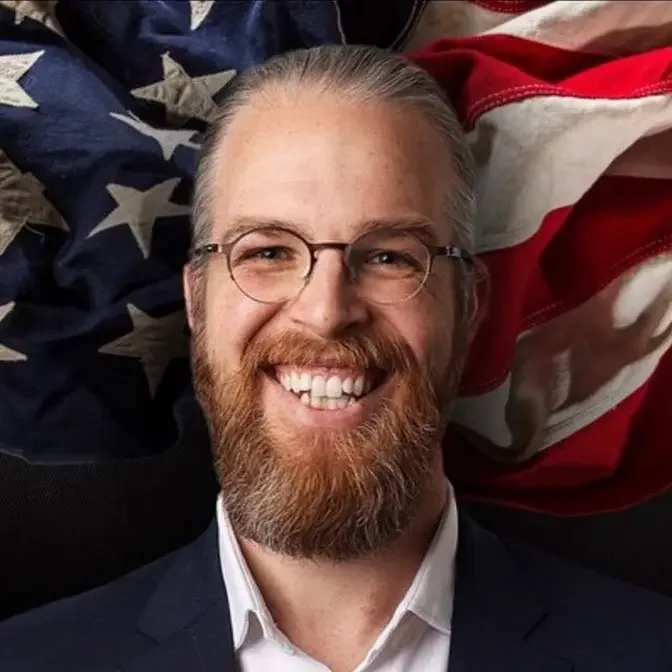
For decades, Americans have been told the food system just evolved that way. It didn't. In this episode of America Hijacked, we dig through the archives and present the receipts. Specific decisions. Specific people. Specific money. From the sugar industry paying Harvard scientists to bury the truth, to the GRAS loophole that let food companies declare their own ingredients safe without telling the FDA, every one of these moments has documents and names attached to it.
62% of the calories the average American child eats every single day come from ultra-processed food. That's not a coincidence. That's the result of decisions made behind closed doors by people who knew exactly what they were doing. This is not a health episode. This is an investigation. And once you see the bigger plan, you can't unsee it.
Call (866) 686-1359 or visit http://TNUSA.COM/MIA for your FREE discovery call with Tax Network USA. Don’t let the IRS be the first to act.
For high quality storable foods and seeds, visit http://heavensharvest.com and use promo code SETH to save 15% on your order.
To learn more about investing in gold & silver, visit http://goldwithseth.com, or call 626-654-1906
Kimchi One from Brightcore – Improve your health, improve your life. 25% Off with code: MANINAMERICA at https://mybrightcore.com/maninamerica Or dial (888) 575-6488 for up to 50% OFF and Free Shipping – ONLY when you call!
To learn more about Red Light Therapy, visit http://myredlight.com and use promo code SETH to save.
This video examines how a century of corporate manipulation and regulatory failure created the American ultra-processed food crisis. It argues that the prevalence of chronic disease is not accidental but the result of deliberate efforts by the food, tobacco, and pharmaceutical industries to prioritize profit over public health through the corruption of science and medicine.
Take a look at this. 62%. That's the share of calories that the average American child eats
every single day. It comes from ultra processed food. It's not a special treat. It's not birthday
cake. It's not a conscious choice. 62% ultra processed food every single day. And look,
I'm not here to tell you what to feed your kids. I'm not here to tell you what's bad for you.
My question is, how did this get approved? Like who was in the room? Who decided it was okay to
put chemicals, like chemicals that are literally banned from cosmetics, banned from going on your
skin into the food your child is eating daily? Who signed off on that? When did it change? How
did this become a norm in America? And what was already in place to make sure that nobody could
stop it? Because when you go back and actually look at the history, the documents, the payments,
the regulatory decisions, the corporate acquisitions, you don't find a series of mistakes.
You find a system built in layers over more than 100 years. Each layer put in place before the
next one was even needed. And it sounds bad. And it is. But how did it get this bad? So right now,
I'm going to show you layer by layer how this operates. And by the end, you're going to see
that this was not an accident. The pieces are going to start to click and you're going to see
the whole picture and what we can do about it. Welcome to Man in America, a voice of reason
in a world gone mad. I'm your host, Seth Holhouse. This is the first episode of my America Hijacked
series. It's an investigative history where we connect the dots, specific decisions, specific
people, specific money. We're going back to the moments when things change, finding out who decided
and why. And that's how we see the bigger plans that have been at work behind the scenes all this
time. All right. So episode one, let's start at the very beginning. In 1910, the Flexner Report.
So take a look at this. This is the Flexner Report, quote, medical education in the United
States and Canada, a report to the Carnegie Foundation for the Advancement of Teaching.
So in 1910, a man named Abraham Flexner published a report. Now, Flexner is not a doctor. He's not
a scientist. He has zero medical training. He's just a school teacher from Kentucky.
And yet he's commissioned by the Carnegie Foundation, funded by John D. Rockefeller,
to visit 155 American medical schools and tell the country which ones are legitimate.
Like, who does that? A school teacher from Kentucky with zero medical background?
Let me know where this makes sense. So pull this up for me. This right here is 100 years after
the Flexner Report. This is a list of the summarized changes where it shows that 155
schools were reduced to 31. So what does Flexner find? So he goes to these schools,
and then he decides himself, again, this is a school teacher with zero medical background,
and he decides that any school teaching nutrition, herbal medicine, homeopathy, et cetera,
is unscientific, that it's quackery and it doesn't deserve funding and doesn't deserve
accreditation. And because Rockefeller controlled the accreditation money, within a decade,
more than half of all American medical schools closed, right? More than half gone.
What's left? Only the schools that Rockefeller funds. These are the ones where the chemical
treatment is now the only legitimate answer, where a drug is the answer to every question.
A drug is a cure for every problem, where food is never seen as a solution or a remedy at all.
So look at this right here. So this is the Rockefeller University in New Cana Hospital.
So from 1910 forward, no American doctor is trained to look at food as the cause of disease.
The entire professional class that might have connected what you eat to how you feel was
systematically eliminated. So first, before the food supply is restructured, before anything else
happens, the watchdog is removed. So there's no one to watch for any crime. And that's how it begins.
Every corporate manipulation that follows operates inside the vacuum that Rockefeller
created right here in 1910. So that's the first layer. So next, I'm going to show you this.
This is the historical timeline of American Heart Association. So now we jump to 1948.
The American Heart Association was founded in 1924. And for the first 24 years, it's basically
nothing. It's a small group of cardiologists with almost no budget, no public influence. Most
Americans don't even know it exists. But then in 1948, Procter & Gamble sponsors a national radio
program called Truth or Consequences. That program raises one and a half million dollars for the
American Heart Association. Now, I want to make sure you understand who Procter & Gamble is at
this moment, because this is the key thing. They're the makers of Crisco, a hydrogenated
vegetable oil that's made from cottonseed, which is an industrial byproduct of soap manufacturing
they've been trying to get Americans to use instead of butter since 1911. So the company
selling the industrial oil sponsors the fundraiser that turns a tiny group of these cardiologists
into the most trusted voice on heart health in America. So check this out. This shows the
American Heart Association's timeline. In 1961, messaging around avoiding saturated fat,
using vegetable oils, etc. Now, what happens right here? So after the AHA launches its very
first national public campaigns, the message is avoid saturated fat, avoid butter, avoid lard,
use polyunsaturated oils instead, like vegetable oils or Crisco. So there was zero disclosure of
P&G's role in this. It looks like it's official health guidance. It looks like it's science.
It looks like it's your doctor who's telling you this, and the public was completely unaware.
The organization Americans trust to protect their hearts gets its start from the company
selling the product that it begins recommending, and nobody knows. That's how it works though,
right? You don't buy the science directly. You fund the institution that delivers the science.
So when the guidance comes out, it doesn't look purchased. It looks authoritative.
Now can you see where this is going? Now here, let's look at this. So now we're 1953. So a
physiologist at the University of Minnesota named Ancel Keys publishes this graph. Six countries,
fat intake is on one axis, heart disease deaths is on the other. So it looks like an almost perfect
correlation. It has this very clean line. The conclusion it presents is that fat causes heart
disease. It's a very convincing visual, but there's a problem. Data existed for more countries,
a lot more countries, and when researchers later plotted the full data set, the relationship
completely fell apart, like it just was blown out of the water. So I want you to see this. So this is
the expanded multi-country scatterplot called fat in the diet and mortality from heart disease,
a methodological note. The clean line only worked if you used the exact six countries that Ancel
Keys selected. When you add the rest of the data back in, the line disappears. Now at the same time,
a British scientist named John Yudkin was building a completely different case, and this is really
significant. Yudkin's argument is that sugar, not fat, is what's driving the explosion in heart
disease. So take a look at this right here. This is the cover of John Yudkin's book Pure, White,
and Deadly from 1972. Yudkin's data is compelling, his methodology is sound. So what does Ancel
Keys do? He uses the American Heart Association and his connections there, his funding, his access
to journals and media, and he goes after Yudkin personally. He calls his work a mountain of
nonsense and he uses every lever he's got to push Yudkin completely out of the conversation. And it
works. Yudkin is discredited, his books go out of print, his research is buried away from the public
for 30 years, and Keys, well, he gets on the cover of Time magazine and shapes national dietary
policy for a generation. He basically becomes the most influential nutrition scientist in American
history. Now look at what I found here. This is the 2016 JAMA internal medicine paper called Sugar
Industry in Coronary Heart Disease Research, a historical analysis of internal industry documents.
So now we get to what I think is the single most damning document in this entire story, and it was
hidden for 50 years. In 1965, an organization called the Sugar Research Foundation has a problem.
Evidence is building that sugar might be driving heart disease. The conversation is getting dangerous
for them, dangerous for their bottom line. So they go to Harvard. They hire Harvard scientists. They
pay each one the equivalent of about $50,000 in today's money. Then they hand-select which studies
these scientists will review, and they give very clear direction on the conclusion that they need.
So take a look at this. This is the 1967 New England Journal of Medicine paper called Dietary
Fats, Carbohydrates, and Atherosclerotic Vascular Disease. In 1967, that review is published in the
New England Journal of Medicine. The review downplays every piece of evidence that connects
sugar to heart disease. It amplifies every piece of evidence pointing at fat, and there's no
disclosure of the funding. There's no mention of who was paying for the study. Those original
documents, the contracts, the payment records, the written instructions from the Sugar Research
Foundation to the Harvard scientists, that was all hidden inside industry archives for 50 years
before they were discovered by researchers at UC San Francisco, who then published it in the Journal
of Internal Medicine in 2016. And what happened to those paid scientists? Well, one of them, Dr.
Mark Hegstead, went on to become the head of nutrition at the United States Department of
Agriculture, the USDA. Another helped write America's first federal dietary guidelines.
So basically, the people paid by the sugar industry to produce a predetermined scientific
conclusion became the people who wrote your government's nutrition policy. And here's where
we get to the next. Okay, let's pull this up. This is the Food Additives Amendment of 1958.
So while all this is happening in the world of dietary science, something equally important is
happening in Washington. And this is the part where everything else just clicks. In 1958, the U.S.
Congress passes the Food Additives Amendment. And honestly, the intent sounds pretty reasonable.
Before any new chemical gets added to American food, it should be tested for safety. That's what
we should expect, right? But instead, they build a loophole into it on day one. And they call it
GRAS, G-R-A-S, which means generally recognized as safe. The logic they use is that you don't
need clinical trials or a full FDA report on things like table salt, right? Ingredients with
a long established history of being safe. Okay, that kind of makes sense. But watch what happens
to that loophole. Let's look at this. This is the FDA GRAS database. Okay, so we're looking at how
GRAS notification system was formalized in 1977. So what happened is the FDA formalizes this
voluntary GRAS notification system, which basically means a company can now self-certify their own
new ingredient as safe. They can have their own paid scientists approve it and then put it into
your food without notifying the FDA. So here's the 1997 FDA proposed rule. Okay, but then here is the
2010 Government Accountability Office report, which says that the FDA should strengthen its
oversight of food ingredients determined to be generally recognized as safe. So the Government
Accountability Office flagged this in 2010. They said the FDA has no way of knowing how many GRAS
substances are actually in the food supply because companies don't have to tell them. So today, 98 to
99% of new food chemicals enter the market through this pathway. And maybe you'd think that by now
people would be wise to it. But as recently as 2021, a federal court ruling has confirmed that
it's illegal. The judge wrote, quote, GRAS substances are specifically exempted from the
rigorous review applicable to food additives. And the FDA has limited resources to allocate to food
safety. So right now, an American food company can invent a new chemical, have its own paid
scientists say that it's safe, and then put it in your food. Now, here's the next layer. This is a
New York Times headline, Philip Morris to acquire Kraft in $13.1 billion deal from October 1988.
So now we're getting into the mid 80s. And this is the layer that changes everything.
So the tobacco industry can see what's coming for them on the horizon, lawsuits, restrictions.
So what do they do? They diversify. So in 1985, Philip Morris buys General Foods for $5.6 billion.
Okay. Then RJ Reynolds buys Nabisco for $4.9 billion. And then in 88, Philip Morris buys
Kraft for $13.1 billion. The Kraft acquisition was at the time, the largest non-oil corporate merger
in American history. And by 89, Philip Morris' combined food empire is the largest food company
in the world. $20 billion in annual revenue. That's an insane amount. And they bring their
entire playbook with them. So here's what you have to understand about tobacco companies.
They spent decades studying addiction science at a molecular level. They identified what food
scientists call the bliss point. It's the precise combination of sugar, salt, and fat that overrides
your body's natural signals that make you stop eating. Instead, it makes you overeat. So they
perfected this on all the chemical additives, but then they applied it to your food. So now you need
to see this. Peer-reviewed research found that during the years that tobacco companies own these
food brands, their products were dramatically more likely to be called what researchers called
hyperpalatable, meaning scientifically engineered to override your stop signals.
The same people who figured out how to keep you smoking figured out how to keep you eating.
At the same time, another piece is falling into place. So take a look at this here.
A man named Dwayne Andreas, who's the CEO of Archer Daniels Midland, has a product he needs
to make profitable, high fructose corn syrup. It's made from government subsidized surplus corn,
but for it to compete, real sugar has to be expensive. So Andreas spends years lobbying
Washington, using connections to the Reagan administration, pushing for tariffs and import
quotas on foreign sugar. So that works to spike domestic prices, and suddenly high fructose corn
syrup is the cheapest sweetener available. So Coca-Cola switches over. So does Pepsi. Then
every major food manufacturer follows suit. So from essentially zero in 1970,
high fructose corn syrup becomes a dominant sweetener in the American diet within 15 years,
and it goes into everything. Bread, salad dressings, baby food, yogurt,
products you would never even think of as being sweet. But now we get to the next layer,
the food pyramid. In 92, the USDA releases the food pyramid, the one that most of us grew up with,
6 to 11 servings of bread, cereal, rice, and pasta at the base, fat at the very top,
using sparingly. So here's what the USDA doesn't advertise. They withheld the pyramid for a full
year in 91 because of pressure from the meat and dairy lobbyists. An internal memo surfaced later
showing the USDA pulled the pyramid after industry groups complained. Like, we're talking about a
document that's supposed to be federal dietary guidance for Americans' children, and it's being
held back because of industry pressure. I want to show you something. So Marion Nestle documented
this in her book, Food Politics. The pyramid's design was directly shaped by industry lobbying.
They changed the language, they reorganized the structure to serve the companies whose products
sat at the base. And who was actually on the committees writing these guidelines anyway?
Up to 95% of the USDA dietary guidelines advisory committee members had financial ties to food or
pharmaceutical industries. So basically all of them had a major conflict of interest. The people
writing the policy that told your school what to feed your kids were paid by the companies selling
the products in the policy. So what happened since then? National obesity rates more than doubled.
Diabetes tripled. More than half of American adults are now diabetic or pre-diabetic.
The government told you the food pyramid would make you healthy but didn't. What it did was make
a handful of industries extraordinarily rich. So now we're at layer six, present day. Check this out.
This is the Maha Commission report called Make Our Children Healthy Again. So let's put this whole
picture together because these aren't separate stories. I want you to see it as one system.
And this is what it looks like when you lay it all out. 1910, Rockefeller removes the doctors who would
have noticed the crimes. 1948, P&G funds the institution that becomes the most trusted voice
on heart health. 1953, the science gets cherry-picked to make fat the villain and protect sugar. 1965,
Harvard is paid to put an institutional stamp on the lie. 1958 and 1997, the legal architecture
is built and expanded to let unlimited chemicals into the food supply without review. 1985 through
1988, tobacco addiction engineers take over food manufacturing. In 92, the government puts it on
a poster and calls it health policy. And now here, look at this. This is a quote from the Maha Commission
in 2025. Over 40% of American children now have at least one chronic health condition. This is the
sickest generation of American children in terms of chronic disease in our history. The Maha Commission
publishes a report, and I want to read this directly because this is the federal government's
own words. Over 40% of American children now have at least one chronic health condition.
This is the sickest generation of American children in terms of chronic disease in our history.
It's the government's own words, and it's so sad. I want you to see this. This is CDC data that shows
that 62% of children's calories come from ultra-processed food. It shows that early onset
dementia statistics have a 373% increase in 30 to 44 year olds and a 311% increase in 45 to 54
year olds. So 62% of the calories consumed by American children now come from ultra-processed
food. Early onset dementia is up 373% in 30 to 44 year olds and up 311% in 45 to 54 year olds.
And your doctor trained in a Rockefeller funded system that removed nutrition from the curriculum
in 1910 has no framework to connect what you're eating to what is happening inside your brain.
The food makes you sick. The pharmaceutical industry built on the same petrochemical base
as the food additives profits from treating the sickness. The regulatory agencies who are
staffed by people who came from those industries and returned to them. The doctors cannot see the
connection because they were never trained to. And the science that might expose any of it can
be bought and paid for, ghostwritten, and even placed into what is supposed to be peer-reviewed
journals and even cited in federal regulatory proceedings as independent evidence. It's the
same interests, the same money, it's one system. So now you see the big picture. These are documented
decisions made by documented people in documented years for documented financial reasons. But all
that evidence is not the final conclusion. How much of this is coordinated design? Well you can draw
your own conclusion. I'm not here to tell you what to think. I was just showing you what I found
when I went back and looked at what happened to us in America. So what do you actually do with all
this information? My honest answer is you can't individually shop your way out of the system
this comprehensive. The grass loophole covers thousands of ingredients you've never heard of.
The chemicals are in the groundwater. The organic farm down the road is getting chemical drift from
the industrial farm next to it. But here's what you can do. You can understand the history so you
can stop being confused by a system that was specifically designed to confuse you. You can
build your own food supply. You can work with others. And I know it sounds like a lot, trust me.
I know it because I've done it myself already. It's not easy. And this is just what prepared
people do. You can build a pantry the industrial food system can't reach. You can protect your
finances. Because the same playbook that captured the food regulatory apparatus is running in your
financial system right now. It's the same revolving door. The same captured agencies.
And you can build real community with real people. Because that's the one thing the system can never
manufacture or control. Real local relationships. Knowing your own farmers. Real trust networks.
People making informed decisions together. Now tell me in the comments what stuck out to you
most in this timeline. And remember that most of us, and I include myself in this, grew up trusting
that somebody was checking. That if it was on the shelf, somebody made sure it was safe. That the
food pyramid on the cafeteria wall was built by scientists who had your children's health
as their first priority. But when you go back and actually look at it, when you actually trace the
money and the documents and the decisions, you see that the trust was placed in institutions that
had been specifically designed to capture it. Because once you understand how the system was
built, you have clarity, not despair. You can stop being surprised by what the system does.
And that clarity is where real change begins. Not in Washington, but in your home, in your
community, in who you trust, in what you feed your family. So share this with one person, right?
So one person who's still trusting the system that built the problem to then protect them from it
and help them see it. Because once you see it, you can't unsee it. And that's where it starts.
Make sure you hit that like button. Make sure you subscribe, whatever platform you're watching
or listening. And I will see you next week for more Hidden History.