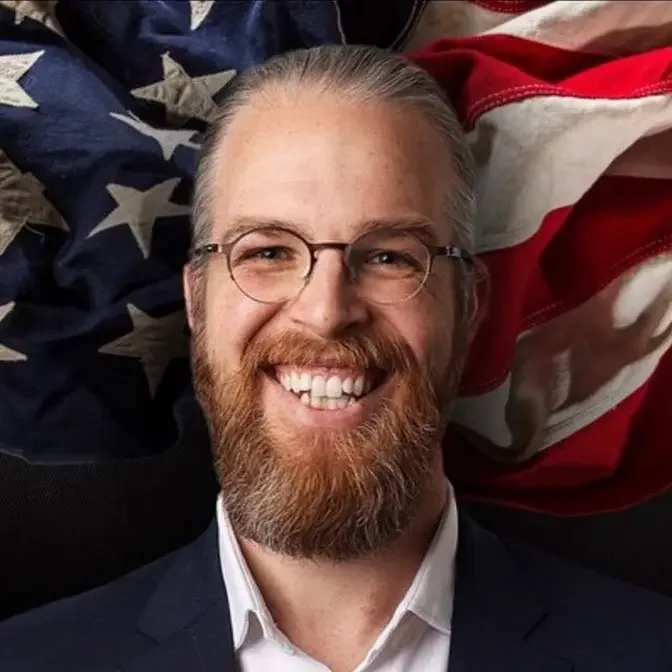
I sit down with Jeff Adam, founder of a family run silver products company, to uncover why silver was once the world's most trusted antibiotic and how it disappeared once big pharma realized nature cannot be patented. Jeff shares his own story, from a chance meeting with a mysterious retired scientist in Chicago, to years spent learning how to stabilize silver in a way that had never been done before. This conversation gives you the real history behind the remedies your grandparents trusted.
DISCLAIMERS: Some of the links in this description are affiliate links and pay me a small commission if you use them. I hope you do! Thank you so much for the support, it really helps to keep this show truly independent.
Guest views are their own and are not financial, medical, or professional advice; consult a qualified professional before acting on anything discussed.
– Improve your health, improve your life with Kimchi One from Brightcore 25% Off with code: MANINAMERICA at https://mybrightcore.com/maninamerica Or dial (888) 575-6488 for up to 50% OFF and Free Shipping – ONLY when you call!
-- Age well by restoring your cellular health with NMN-3 from Brightcore 25% Off with code: MIA at https://brightcore.com/mia Or call (888) 575-6488 for up to 50% OFF and Free Shipping. ONLY when you call!
-- Detox your body from everyday nano-toxins, including heavy metals, forever chemicals like BPA, and pesticide residues: https://zeolite123.com. Use code SETH to save.
This conversation explores the historical use of silver as a potent antimicrobial agent and its displacement by synthetic pharmaceuticals due to profit motives. It details the development of \"micronic silver,\" a stabilized organic solution, and its application in health products like tooth sprays, while discussing the intersection of natural healing, economic independence, and sound therapy.
What if I told you that milkmen used to drop silver coins into their milk bottles,
not for luck, but actually because it kept the milk from spoiling before refrigeration even
existed? Or that farmers sprayed silver on cow udders and got healthier cows without a single
dose of modern antibiotics? This isn't folklore. Silver was once the world's top prescribed
antibiotic used on over 5,000 different health conditions, and its use goes all the way back
to 3000 BC. So why did something this simple and this effective almost completely disappear
from hospitals and medicine cabinets by the 1960s? My guest today says the answer comes down to one
problem. You can't patent nature. Today, he's going to walk us through that hidden history
and share how he built something brand new out of one of the oldest healing tools on earth.
Jeff Adams is the founder of a family-run silver health product company. For years,
he worked as a Chicago contractor, not a scientist. But after a chance encounter with a
retired biochemical engineer, he spent years learning how to stabilize silver in a brand new
way. And here's why this matters to you. So many simple natural remedies that our grandparents
trusted, like silver and basic herbs, have vanished from store shelves in the doctor's offices.
But we can get that knowledge back. So whether you're stocking up for tough times ahead,
or just curious why your grandmothers swore by these old remedies, this conversation is worth
your full attention. Welcome to Man in America, a voice of reason in a world gone mad. I'm your
host, Seth Holhouse. And before we jump in, please hit that like button, the share button,
and the subscribe button. That really helps us to reach more people. Also, if you listen on Apple
Podcasts, the audio version, if you want to leave a review on Apple Podcasts, it really helps us to
reach more people on there. So if you want to check it out on the podcast, leave a review,
I would really, really appreciate it. All right, let's get in this conversation with my good
friend, Jeff Adams. Jeff, it has been quite some time since our last interview, but I always enjoy
speaking with you. So thank you for being here with us today. Oh, you know what? I think this
is the first interview this year. I know you've replayed some of the ones we've done. Yeah,
you're right. It might be. In the past. Yeah, this is the first one this year. So
praise Jesus for friends like you. I do a lot of interviews. There's not a lot of the people I do
interviews that I consider friends. We become acquaintances and stuff like that. But generally,
you and I have about an hour conversation just about life in general and stuff that's happening
and where we're at as a country before we ever get on this interview. So I never worry about
our connection. It's you get busy, I get busy. And if we stay true to what our beliefs are and
let God put it together, it's always amazing when we talk. I mean, we have such a good time. An hour
flies by like it's four minutes. Exactly. It does. It does. And I think it's also you understand
me in the point that I'm very poor at texting. And so I always appreciate your patience because
it's just even with my own mom, she'd be like, Seth, I texted you six days ago, never heard back.
I'm sorry. You've got kids running everywhere, chickens everywhere, dogs everywhere. There's
always a new project. Yesterday I was up till one in the morning harvesting apple or making
apple, homemade applesauce. So it's always something. It is. And I always say if I get
upset about that, then God did not give me enough problems. That's a good point. Yeah, there we go.
Well, I'll remind that next time you get upset for me not responding, which doesn't happen.
I was going to say, I don't think I get upset. Sometimes I agree to wonder and I'm sorry,
I just realized I got to turn my phone on airplane mode. So we're not getting interrupted.
Yeah. So anyway, I've been on a kick lately of really kind of digging into a lot of what was
hidden from us, whether it's old architecture, old civilizations, old healing technology,
getting the old chapels and bells and everything. And I remember the first interview that I did
with you, which was probably two or three years ago, I think by now. And I kind of heard people
talking about the role of silver in health. And at that point, I'd heard about it. I think we had
some silver products at home, but I never really understood it. But that interview that you and I
did together and having you walk through the role that silver played in healing and how it was
so prevalent in society as just the go-to for so many aspects of healing.
And in like so many other things that we've seen, early 1900s, same with the education system,
obviously with the health system, it kind of disappears because it can't be patented,
it can't be controlled. So I know that this is obviously your realm of expertise. So
what role did silver used to play? Where was silver at in the role of healing people before
the early 1900s? Well, before 1923, silver was the number one prescribed antibiotic in the world.
They used it for everything, especially syphilis. You cannot culture syphilis. So I mean,
silver was the only thing that they could use to work on it, but it worked on so many other things.
But it's been, I think a TV guide in 1978 did an exposé on silver, and they call it the most
tried and tested antibiotic alternative that's ever been in existence. And they said it worked
on over 5,000 disease states. So you go back, the first recorded usage of silver was 3000 BC.
The Phoenicians used to line their water vessels with silver so the water wouldn't stagnate
because of the antimicrobial properties. Farmers used it, would put it in their chicken's water,
and then the eggs didn't have salmonella on them, and the chickens didn't get sick.
They would treat certain infections with it, not only for an antibiotic, but also an
antiparasitical because those little bugs would start off as single-cell organisms,
and the silver disrupts the chemical lung of single-cell organisms, so they wouldn't actually
develop. They used it a lot in farming with cows. They didn't have the milking machines back then,
but if you over-milked the cows, the udders would get sore and inflamed,
and sometimes they'd get infections, and the farmers would not only put the silver in the
water, they would actually spray it on the udders of the cows. And the amazing thing about it is
they didn't have to destroy the milk, where now if a cow gets sick, they get antibiotics,
and they've got to destroy all that milk because it's got antibiotics in it.
Well, I also heard, because I'm researching this, that even the milkmen used to have a piece of
silver on a string or something that they would actually drop into the milk to keep it from
spoiling. Because obviously, pre-refrigerated vehicles, if you had a six-hour drop of milk,
how are you going to manage that? And so if I remember correctly, they would actually drop a
piece of silver in to help keep the milk from spoiling. Yeah, they drilled holes in silver
coins and tied a string to them. And remember, you're talking the horse and buggy era. So going
into town was an hour journey. So you really didn't have to go that far. And if you had a
whole vehicle filled with milk with no refrigeration, now what they would do is when they
got up to your porch, you had ice boxes on the porch that you would put ice in, and they would
lift the ice box up, they would stick the milk in there, they would pull the silver coin on and put
the lid back on. But they did that so that the milk wouldn't stagnate. And I mean, that's going
back into the 1800s and even into the early 1900s. And scientists would sterilize their
Petri dishes before they did experiments, they would put silver coins in them. Because if that
is compromised, all your research is now tainted and isn't right. So they'd put the silver coins
in the Petri dishes overnight, take the silver coin out, and then would perform their experiment.
And silver is just as effective now as it was back then. But if you follow the money,
people were making colloidal silver out of their sink water. And it's not the perfect way to do it,
but it's still, colloidal silver for thousands of years was the mainstay of general health. And you
could make it with a 9-volt battery with two electrodes and some silver rods and put it in
water and you're getting the colloidal silver. And then you get into the 1950s, 1960s, they started
messing around with ionic silver, which was smaller size. It wasn't even a particle,
it was a molecule that was highly effective, more so than the colloidal silver. So much so that
the hospital started using it for putting in baby's eyes. When the baby goes through the
birth canal, there's a lot of bacteria there. And they would spray the eyes out and rinse them with
silver and get rid of the infections in there. And they used them for different treatments in
hospitals. Matter of fact, before 1965, there was 5,000 references to silver in the journals
of medicine. And today there's less than 100. So they keep taking them out because it's not
something they can make, control, or patent. And that's pretty much what we've been seeing
going forward. That's everything. I've got all kinds of just little natural remedies and stuff
that we have all over our house. But my wife, for instance, if she has a headache, then we go up and
I've got a little vial of white willow bark. She'll take some of that and, okay, headache's
gone. Versus going and taking an aspirin, which is the same formula. God gave us these compounds
to heal our bodies with, existing in nature. You can't patent those compounds. So man figures out
how to synthetically create the compound, which always has side effects. It's like man comes in
and messes with things. They can then patent it. They can create an entire industry out of it,
make a ton of money. But then you also then find that the natural form, like you said,
disappears from medical texts, is demonized, is mocked, and is basically erased from
the contemporary medicine cabinet these days. Yeah. Well, white willow bark is basically
acetaminophen. But if you take acetaminophen, it'll say, don't take over six tablets a day
for over five days and can cause cancer and all this other stuff. Where you could eat four whole
white willow bark trees and nothing would happen except your headache would go away.
There isn't constipation. Yeah. Yeah. And people have to understand,
when it's synthetic, it does not absorb in the body. Your body stores it in the fat tissue.
And it's very difficult to get rid of. That's why this big mRNA thing that was happening during
COVID was they've been changing the meanings and definition of words. I say they're using the
lessons of Babel against us. They're confusing the language. So the mRNA was messenger ribonucleic
acid. That's what codes the DNA. Well, they changed it to modified ribonucleic acid. So
they're using the same acronym, but they're changing the terms and meanings. And they've
been doing that for a long time in the name of profits. When you look at, according to the TV
guide, that silver kills over 5,000 disease states, that wipes out whole pharmaceutical
lines. And they can't control it. And so I don't like putting anything synthetic in my body.
And I know there's been a big market for methane blue and stuff like that. And it seems to be a
fantastic product and works. But my concern is that because it's a synthetic, it's getting
stored in the tissue and not releasing. And natural things assimilate in the body better.
When God created us, man will never match the machinery that we are. Everything was made to
work a certain way. Every plant, every animal, everything bug that was put out here was put out
for a specific reason. And to synergize with the creation that we are. Look, man created AI,
right? And now they're talking about, oh gosh, we've got to shut it down. It can take us over.
It can become self-determinating, stuff like that. So I'm very, very cautious of any new
products that come out. And one of the ones that I was really concerned about, if you look into
oral care, is the hydroxyapatite. What is that? That's a new chemical composition that come out
that you'll see in toothpaste. A lot of them are going, we now have hydroxyapatite.
It re-mineralizes the teeth. It fills in cavities. And this is where they lost me.
They said, you can regrow teeth. Well, there we go. You got it right there.
Interesting. So they say it's a naturally occurring
calcium phosphate mineral, but it's synthetic. It's man-made. This is where they get you. It's
naturally occurring calcium phosphate, but it's put into a synthetic. And it's only manufactured
in China. Interesting.
So, and believe me, I want to believe everything China says.
Oh yeah, they don't lie. Yeah, they don't lie.
I desperately want to believe it, but I can't. And I was really big on it until
I found out that it was man-made. Oh, I see.
And then when they said it can regrow teeth, you need a blueprint to regrow a tooth,
because I think you're going to have a lump of calcium deposit there, not a formed tooth
structure. And I learned this when I started looking at fluoride. They'd say it's all this
great thing. It's this great thing. Well, no, it's the toxic waste from making fertilizer.
Yeah. It's like Crisco, right? It's just this leftover waste that they figured they can
feed it to the masses. Vaseline.
Yeah. It's almost like there's this secret agenda to poison us. I mean, call me a tinfoil nut
conspiracy theorist, but it's almost as if there's some sort of deeper thing behind this stuff.
Well, poisoning is slow. So as you get sicker and sicker, you're willing to give up more and
more of your wealth to get better. That's true.
And I think the first thing to go is the physical, and then the mental is not too far behind it.
When you've been sick for a long time, I mean, people choose death over life because they've
been sick for a long time. So I think the mental state is really affected by it.
And it was interesting. There is a study called Neuropsychoimmunology,
and it's the study of the immune system in response to our auditory system.
And it's fascinating. When somebody, yeah, it's neuropsychoimmunology.
When somebody is told they got a terminal disease, if they're like, oh, I'm defeated,
I'm going to die. You know, my life is over. Their immune system could shut down by 20%,
or it's actually 25%. Where if they take the mindset of, I'm going to defeat this,
and it's usually people of faith that, you know, I've got this, God's going to take care of this
for me. But usually people have faith that I'm going to beat this. It's not the end of my life.
Their immune system could build up by 25%. So that is a 50% swing. See, that's my dyslexia.
It's psychoneuropneumonology. I always say neuropsycho. Same thing.
But it's really interesting how just hearing things can affect your immune system.
If you could go back in time and buy oil before the world relied on it, would you?
Of course you would. Anyone would. So why aren't you buying silver right now? You see, the people
who recognized oil early didn't just make money. They got ahead of one of the biggest economic
shifts in history. And today, a similar opportunity is unfolding with silver, because silver is a lot
more than just a precious metal. It's a critical resource used in solar panels, electric vehicles,
defense systems, AI infrastructure, and even these massive data centers that are powering
our digital world and the surveillance grid. So while demand keeps growing, it's actually still
affordable enough that the average American can start accumulating it right now. And that's why
investors are turning to silver to protect against inflation and own one of the world's most important
strategic resources. Don't be the person who looks back in 10 years and says,
I saw it coming, but I just didn't act. I'm sorry. So visit GoldWithSeth.com and learn just how easy
it is to own physical silver. Again, that's GoldWithSeth.com. And here's something a little
extra. If you just mention my name when you reach out to Noble Gold, they're going to send you a
one-tenth ounce of gold coin just as a thank you when you open a new qualified account. So again,
that's GoldWithSeth.com. Actually, one thing, kind of jumping topics back to the kind of
historical things of silver, right, is that the silver spoon, right? The whole born with the
silver spoon in your mouth. Growing up, I always thought, oh, that was just the wealthy people
because they would just feed their kids with silver spoons. And funny enough, because I like
silver, I always have chunks of silver sitting everywhere. I actually have, I forget where I
bought them from, maybe like a scrap dealer or something where I saved them aside from my earlier
scrap buying days. I've got maybe 10 or so little silver kind of teaspoon-sized spoons I keep in
our food drawer. And a lot of times I'll give my kids the silver spoons to eat their yogurt with
or to eat their spaghetti or whatever it is they're eating. Their honey with cinnamon.
Yeah. Yeah. Or honey. Yeah. Yep. Raw honey. Yeah. So tell us about the origin of that,
because it's not what most people think it is. Well, okay. So the plague was 1348 to 1350.
13% of the population died from the plague. It was over 350 million people,
which why when the pandemic hit here, they're going, oh, what's the plague? Yeah. Thank God
it wasn't the plague. We'd have well over almost 2 billion people that had died. But you figure
it took out 13% of the population and the doctors started prescribing people to walk around with
silver spoons in their mouth, because less than a quarter of 1% of the people that died were
wealthy. And they realized that they ate off of real silverware. The poor people didn't have the
silver. They used tin. But the wealthy people had silver. And when they'd pull it out, they'd
scrape it on their teeth. They'd bite down on the fork. They'd get these little fractions of silver
in their mouth, and they didn't tend to get the plague. So doctors actually started prescribing
people to walk around with silver spoons in their mouth. So you would see the wealthy people,
you have their top hat on, their fancy clothes, and a spoon sticking out of their mouth.
And then the practice of giving silver pacifiers to babies was also originated during that time
because of the fear of the plague with infants, where they would give silver pacifier as a baby
shower gift. Yes, actually here, look, I'll just do a quick search. A vintage 925 silver
dummy baby soother. How cool is that? So kids would just be sucking on these silver pacifiers.
Yeah, and that all happened during the plague. Interesting. Go ahead.
The interesting thing about that is when the wealthy people would eat off the silver spoons,
and they would scrape them on their teeth, and they'd get little micro molecules or particles
of silver. And they'd go out in the sun because your body goes to expel it much like vitamin C.
It takes what it needs and gets rid of it. It would get caught in the epidural structure of
skin and the sun would hit it and it turned them a bluish gray color. And that's why they
called them blue bloods, is actually because of that. Interesting. Interesting. And so
you mentioned, so we have silver, you mentioned colloidal silver and ionic silver, and then you've
got micronic silver. Yeah, and nanosilver. Yeah, and nanosilver. So walk us through
what these things mean. And again, and also what does micronic silver mean? It sounds like it's
just a new kind of marketing ploy, right? It's like, oh, this is the micronic. It's not the,
it's kind of like bionic silver, right? But walk us through that. I know that in knowing you that
there's actually a lot of science behind this. Yeah. So the first, there was the colloidal
silver and then came the ionic silver. And then the big trend in the 2000s was nanosilver.
Smaller particles have bigger blade surfaces and all this other stuff. Some of the concerns with
that is that if you get too tiny, it can breach the blood brain barrier. Also, it has changed
with static or current electricity and our bodies are polar. So I chose, when I was looking at doing
this, I look at all the silvers and what's going to be the best out there. Colloidal silver and
colloidal ionic and nanosilver, ironically, are made the same way. Two electrodes in water with
alternating current. So you have a little container, you've got the electrodes, you've got
the cathode and the diode, and you run alternating current through. And the arc for colloidal is here,
the arc for ionic is here, and then the arc for nano is there. So the deeper the arc, the smaller
the particle or molecule. They function pretty much the same with different efficiencies.
So like the colloidal silver, you don't want to do a colloid over 10 parts per million
because they create larger structures, they get caught in the skin, and that's when you look at
ageria or the turning blue that they talk about could happen. As the particle size is too big,
it's trapped in the skin. You go out in the sun, it dyes you a blue-gray color.
And that hasn't really happened to many people in history. I mean, you have to take a lot of
it to do it. Usually use silver salts and proteins on the skin for skin conditions,
and then that happens. And then it went to the ionic silver, which is a smaller molecule,
not a particle. And it's very efficient at what it does. And then from there, they went to the
nano-silver. It's a big trend, smaller thing, gets everywhere. And the way that they work in
the body is different from micronic silver. So ours is not just two electrodes in water. We have
a three-step process to making it. Everybody that's making any of those silvers, they buy
their machines from one of three companies. There's basically three companies that make
silver generators. And they all buy from the same companies. They go, but mine is different.
Yeah, really? What's different about it? I make it. It should be made with distilled water,
because then you don't have any impurities in it. Because silver is highly reactive. I mean,
it's unstable. It reacts with light heat temperature barometric pressure. So two degrees
temperature, you have a different product. But it's been very, very good at doing the little
things. I'm getting a cold, I'm sniveling, bacterias, fungus viruses. But it was limited
in its function. So those three types were made the same. They basically disrupt the chemical
lung of the single cell organism in a type of suffocation. They hit it with an ionic charge,
killing it. And those silvers are trapped inside the cells and gets washed out from the lymphatic
and waste system. Those three being unstable, they're sublingual delivery only, absorbed under
the tongue. And then when you swallow them, they hit the stomach acid, creating silver chloride,
destroying the silver. But they're very good at, they stay suspended for about six to eight
minutes, and then start precipitating. As it precipitates, it loses its efficiency because
it's losing its charge. It's not staying where it needs to be. So they have that six to eight
minutes to start entering a cell. And then when they enter that cell, they disrupt the chemical
lung of the single cell organism in a type of suffocation, hit it with the ionic charge,
and then get washed out the lymphatic and waste system because they're trapped in that cell.
When we formulated the micronic silver, ours is not just a sublingual delivery.
Ours is also, I'm going to use the word ingested. It's not technically correct because it doesn't
go through the digestive tract. Water gets absorbed through the lining of the stomach
through osmosis. So the silver goes that way instead of being digested. But for a lack of
term for that, I'm going to say it's sublingual and ingested. So it's a dual mode delivery.
The micronic silver stays suspended for eight to 10 hours versus six to eight minutes.
So a huge efficiency difference in the way it works and functions.
Also, and this is where we believe is the main difference, is the micronic silver works
exocellularly versus being invited into the cell. The micron is a subatomic molecule with a very
high atomic mass. So you've got your bacteria, fungus, or virus. You've got your micronic silver.
When it comes in contact, because of the high atomic mass and a micron as a form of an ion
means missing electrons. So when it comes in contact, it actually steals the electron,
killing the bacteria, fungus, or virus on contact. So ours is truly antiseptic where
the other ones are not. So ours works right away. So nothing can become immune to it.
And then ours takes in the electron and again, a micron is a form of an ion. So it can't hang
onto those electrons. So it steals a little bit of the charge, reactivating it, and ejects it
into the nearest thing, which is a blood cell giving you energy. And then instead of getting
washed out through the lymphatic and waste system, like the other silvers, ours is reactivated and
goes after the next bacteria, fungus, or virus using the immune system to do it for the next
eight to 10 hours. Interesting. And so walk me through, I remember there's a very interesting
story behind the creation of this that involved you being sick and this kind of mysterious old
man. Can you remind me what happened with that? Because I remember being really fascinated with
the story. So I had a construction company in Chicago for 39 years. Don't mess with you.
Chicago contractor. Hey, you know, I'm just saying there's a lake there for a reason.
How it's sewn up like that. So I was doing a project and this man was in the penthouse.
Construction was slow in 2007. Matter of fact, it was dead. I mean, there was like 80 to 90%
unemployment because just nothing was going on. That was when everything crashed in the market.
So I took a job installing the 4G wireless system in Chicago and I had to go to the top of this
building. And the man that was in the penthouse, he said he was a nuclear biochemical engineer.
Said he was one of eight in the world. I mean, brilliant. And he was about 80 years old at the
time. He had his laptop open and he had like 40 different windows open and he would be toggling
between them doing calculations and whatever it is that people like him do. So he was definitely
brilliant. He had over 180 patent on medical and such devices that he made through other companies.
So he was, again, just a brilliant mind. And it was a month long project while I was there.
And when I was there towards the end of the project, I had gotten pneumonia.
And I had had it three times before. So this was my fourth time in six years getting pneumonia.
Do you think it's quickly because a lot of the things you're exposed to in construction,
a lot of the chemicals that they weaken some of your immune system, maybe damage your lungs,
which made you more susceptible to the pneumonia?
No, I'm a contractor. I'm an able person. I got it because I deserved it.
Oh, that makes more sense.
Yeah, I think it was the exposure. I have allergies and asthma,
so I don't tend to get sick a lot. But when I got sick, it's like horrible.
So I think a lot of it was the depleted immune system, the environments that I'm around,
always around dusty, dirty environments.
Yeah, I was using my rescue inhaler, my butyron inhalers,
seven to eight times a day to get through the day. I mean, it was just, everything was just
terrible. And of course, being a contractor, everything's so important that I don't have
time to eat healthy. I don't have time to do these things. I gave directions by where the
McDonald's, the Burger King, the Wendy's, the Home Depot's and Menards were. So I just wasn't
living a real good work lifestyle. Now, my home lifestyle was a little bit different. I mean,
everything was a little bit more regimented. But yeah, I think just because I ran ragged,
and even to this day, I only sleep about four hours a night. I have for the last 40 years,
I've worked 110 hours a week, and that was my normal. So I wasn't getting the rest that I
needed on top of all the stress. There is no more stressful job to me than being a contractor.
I tell people I'm a firefighter. I'm arguing with homeowners. I'm arguing with builders.
I'm arguing with subcontractors. I'm arguing with building inspectors.
All I did every day was argue with people. And so I think the stress level was so high
that my system was just getting attacked from everywhere on top of them spraying the chemicals
in the air and being stuck in rush hour traffic with all the fluorocarbons and stuff from the
exhaust. And so I think I was just made to have it at that time. And so I got pneumonia. And
because I live in the suburbs of Chicago, if I left at five o'clock or six o'clock,
I got home at seven o'clock either way. So I don't like sitting in traffic. So I would just sit down
and talk to this man. And he was brilliant. I mean, his insight to everything. I always tell
people he's probably forgotten more than I'll ever know. I mean, that's how brilliant he was.
And I got pneumonia and I told him, I says, I can't talk to you today. After I get done doing
what I'm doing, I really got to get to the hospital, got to get their medicines, their
prednisone and Z-packs because I've got pneumonia. And he pulls out a little bottle of clear liquid
and said, take this and your lungs won't hurt in the morning. Well, of course I'm still a
contractor, right? So I know everything. So I pretended that I proceeded to tell him how smart
I was. Oh, well, no, I know this and I, this, and it's gotta be this. And, and he grabbed the
bottle out of my hand and said, fine, go to the doctors, be like everybody else, let them kill
you. The world's better off with people like you anyway. And he walked away. And about an hour
later he comes up and he says, do you know how people die from pneumonia? And again, this, this
prideful asthmatic contractor, because I'm an asthmatic, I know everything about the lungs.
And I'm like, well, yeah, it affects the lungs and it does, you know, thickens. And he's like,
that's not what I asked. Do you know why people die from pneumonia? And I thought about it. And,
you know, one of my favorite comedians was Bernie Mac. Cause I just love comedians. And here's a
man with all this money who dies from pneumonia. And it's just kind of like a, just a bright flash
little revelation going, I guess I don't know. So I said, okay, I suppose you're going to tell me.
And he says, yeah, he goes, there's seven medicines that work on pneumonia. And four of them are
different compilations of the same medicine, like amoxicillin, penicillin, erythemaicin,
Zithromax. He said, and they're ineffective within seven years of each other. So by the time
you get to the third year, it's critical in the fourth year, there's no terminal. And he turns
around and walks away. Now being a contractor, I'm pretty good at math. I'm like, okay, four and six
is worse than four and seven. So I got done doing what I was doing and I came up to him and I says,
okay, I said, I'll take it. He says, I'm not wasting it on you. You're just so smart. Like I
said, go to the doctors. That's all you believe in, you know? And I said, you know what? Go get
a spoon. I'll take it right here in front of you. Cause if I take it now, you know, I'll take it at
home. And it was actually this question that actually I think made him decide to get it to
me. And he goes, you're not going to ask what it tastes like. And I said, I don't care what it
tastes like. Thank God it wasn't spirulina. I was like, I don't care what it tastes like. I said,
I know what's waiting six weeks of prednisone and Z-packs just to feel better, to get the pain out
of my lungs and months to get my wind back. And so he got a spoon. He told me how to take it. And
that was on a Friday night. And I took it that night in the next morning. And literally when I
woke up, I literally had no pain in my lungs. And by that Monday morning, I felt a hundred percent
perfect. And so of course I went back to him and said, okay, I guess you're smarter than I am. And
I said, this stuff is great. I says, you know, you got to get this out there. And he says, no,
he says, they'll kill you. And I'm like, they, who's they? He goes, they, they. I'm like,
I have no idea what you're talking about. He's like, well, you're not very bright, are you?
I'm like, well, it's like speaking a foreign language. I'm like, I have no idea what you're
talking about. He goes, big pharma, the federal government, they don't want this out there.
I was like, why not? It works. It helps people. I said, they can't patent it. They don't want it.
So that was the end of that. But, and I said, well, I've seen, I looked at some other products.
When you told me about silver, I said, I looked at, and people are selling it. It was, yeah,
but they're making it all wrong. So, okay, well, so he showed me how he made it, said he made a
difference. And that was an ionic type of silver. And of course, over the next year or so, I started
doing research and, you know, I called him back up and I said, okay, other than the whole killing
you thing, why else wouldn't you want to do silver? And he goes, well, because it's like
it's unstable. It doesn't get along with anybody. I'm like, I think that's you. But he goes, yeah,
it reacts with light, heat, temperature, barometric pressure, two degrees temperature
difference. You have a different product. It's, it doesn't want to get along with anything and
nobody will ever make it get along with anything. He says, it's just not a perfect product.
So I said, okay, so I said, well, why don't you stabilize it? And he looked at me, he goes,
I've been trying for 50 years and I'm smarter than you. What makes you think you can do it?
I'm just asking a question here. So then I spent the next two years, a year and a half studying
silver. My partner, Michelle, she'd went to Israel and the one night I just couldn't sleep.
The verse life is in the blood just kept coming over and over in my head. So I hopped on the
computer. I start Googling hemoglobin and blood, the phone rings and it's Michelle. And she's at
the wailing wall going, Jeff, I was praying. There's nobody around me, but the verse life
is in the blood keeps coming up. I think we need to look at it. And I said, I literally just hopped
on the computer to do that. And so we started researching hemoglobin and blood and how that
works. And then the next year it was the same thing with ozone. Again, she went back there
and same scenario. I literally just, I kept thinking about ozone. I couldn't sleep because
ozone was just going through my head. It's like everywhere I looked, ozone, ozone. And I'd never
seen that before. And I knew ozone was a noxious gas that would kill you according to the government,
but I had no idea what it was. And so I hop on the computer, my phone rings and she's back at
the wailing wall in Israel going, Jeff, she goes, there's nobody around me. She goes, and as clear
as we're talking, I hear research ozone. So I'm like, I literally just got on my computer to do
that. And that kind of started us going forward on this. So I called this gentleman back and said,
hey, I think I figured out how to stabilize silver. He's like, oh, how's that? And I said,
using ozone. And he literally said, don't waste my time. I was like, well, now I think it'll work.
He said, no, it won't work. You're wasting my time. And he hung up on me.
And about, I think it was somewhere around six months. And as I get older, the timeframe changes,
but I think it was around six months. Cause I still think I played softball like five years
ago and it's been 20, 30 years. But he called me, he goes, I figured out how to stabilize silver.
I was like, great. How's that? He said, well, using ozone. I was like, all right. Now I know
you're older than time. And you may, you don't have a good memory, but about six months ago,
we had a conversation about using ozone to stabilize silver. And he literally interrupted
me and said, you'd might as well said peanut butter. Cause you had no idea what ozone was.
I'm like, okay, well, I don't need credit for it. I said, if it'll work, then let's do it.
And he's well, no. I said, you just said, you thought you said, well, I, I said, I think I,
I figured it out. And I said, well, then we can make it. He goes, no. He goes, see, that's the
problem with people like you. You get a little bit of information and you want to run off and
do things. And he goes right now, it's a theory and you have to rationalize the theory. You have
to validate the theory. You have to prove the theory. This is going to be expensive. And I
don't have that much money or that kind of money to you. I said, I got a little money saved up.
I wasn't a super successful contractor, so I didn't have millions, but I said, I got some
money saved up. And I said, what are you talking about? And he goes $7,000. So me, I smile on my
face. I cut a check for $10,000, zip into the city, knock on his door. And I go here and stick
a check for $10,000 in front of his face. And he looks at the check and looks at me and looks at
the check and looks at me, tilts his head and goes, are you dumb or just hard of hearing?
Now in my mind, I'm going, oh my God, did you say $70,000? Cause I don't have that.
And I go, you said $7,000, right? And he turns the check around. He goes, does this look like
$7,000? Are you independently wealthy? You're going to be a horrible businessman.
And he, I said, well, I said, you know what? It's only $3,000. You know, I said, if you buy some,
if you need some equipment, buy it. I said, if you want to pay yourself, I said, you know,
for doing this, he goes, well, that's ridiculous. He goes, I could buy $3,000 worth of gumballs.
At which point I proceeded to say, well, that would explain your wooden teeth now, wouldn't it?
And he slammed the door on me. And a couple of weeks later, he calls me up and he says,
okay, it'll work. It was a couple of months later, actually. He says, okay, it'll work.
I said, great. Let's do it. He goes, no, you just said it'll work. He said, yeah,
but the equipment to do what we need to do doesn't exist. And I can't build it.
Can you? No. This I know I can do. I've been a contractor for almost 40 years. I can build
anything. So we had some meetings, sat down, figured out how it needs to work. And it ended
up being a three-step process. So we invented, I invented the process and the equipment that
actually restructures the ion, changes the hydrogen bond angle of the water, creating
different properties in the water, putting them together. It actually worked and it stabilized
this itself. So, so at that point, it was different than colloidal ionic and nano silver.
So I'm like, well, I can't call it any of those things. So it's broken down to 0.025 microns. So
I'm like, well, let's call it a micronic silver. And so we became, I became the only person in the
history of the world to stabilize silver organically without adding chemicals, because
there are some companies that'll add citrate or chemicals to it as a stabilizer to keep it
suspended. We don't add anything to it. And then became the only person in a hundred years to
validate a new category of silver called micronic silver.
Now I know why I asked you to tell me the story again.
Also, we love hearing stories, right? Like my kids, all they want,
dad, please tell me a story. So yeah, stories are really, really good. They go as old as time.
And so interesting though. And so is this guy still alive or is he?
No, no. So that was in 2007, when we first met, he was about 80 years old.
So he, he was very, very afraid to put it, put it out there because he said that, you know,
he really believed they would kill him. So I said, well, when you, and, and he was like,
I was like, well, I think I can get some investors together. And he says, well,
we can do it ourselves. You know, it's like, well, I don't know anything about marketing.
You clearly know nothing about marketing because you don't know how to talk to people.
And so I told him I wouldn't do anything until he was on board with it.
And of course he's no longer with us. So at that point, you know, God told me to give away my
construction company that I had for 39 years. I had 27 crews running for about 28 years.
And God said, no, I got a different plan for you. So, you know, I got my guys together and I said,
okay, whoever gives me a dollar, the company's now yours. And so I'm, I'm stepping out in faith,
right. But I kept three projects in case God didn't show up, you know, and these are like,
like 50, $60,000 projects. So I'm like, okay, I'm set.
Started to have gone horribly wrong. I mean, you know, they, I built 7,000 decks. I mean,
it's, it's like I could do it in my sleep, but things are going horribly wrong. So I sat the
people down and I'm like, look, I should have never taken these projects. Here's your money
back. You know, and the one gentleman, I didn't have the money to give back to him. I said,
I will get on a payment plan. And that took me a year. I got on a payment plan. And I just,
I said, I will give you every dime back. He's like, but it's half done. They said,
no, no, I should have never taken these projects. So I said, I'm giving you all your money back.
So, um, so I gave the people their money back. And then, um, I was like, God, you, you gotta,
you know, I understood the error of my ways. Um, so you gotta show me something. And, um,
you know, the next day, uh, a gentleman who was an attorney who had been buying the silver that
we were making since 2012, um, showed up at my door with, and stuck a check in my face for like
$30,000 and said, well, you open the effing company already. I'm like, okay, but $30,000
is not really a whole lot of thing, a lot of money. It, on average, it takes about 150 to
180,000 to bring a product to market. You know, even if you're doing it yourself, I mean, there's
a lot of expenditures you have to do in the advertising and giving tons of product weight
away to people so that they could try it. So you can get some buzz about it. Um, so I was like,
well, God, you know, and then the event that I was supposed to go on was, um, the real make
America tour, the one that was in Oregon or wherever it was over there. Well, so I, I started
doing that and then I was told I couldn't go to that one. Now that was all, I mean, we'd make
like $5,000 a month. I mean, it was, it didn't even cover the bills really. Um, and it was like,
okay, now, so I get this money from this guy. Now something's taken away. Um, and then literally
the next day a phone rings and a gentleman says, Hey, are you going to the reckoning fest down in
Texas? I'm like, well, no, I didn't even know about it. He goes, yeah, it's happening the same
week. And as to the reawaken was, I think they have a booth available. And I went down there
and I met a gentleman and he had a radio program and got us on there. And I mean, God's just
rewarded us, you know, for, I'm going to say being semi-obedient, you know, I, I keep going back to,
you know, the contractor and me, Oh, I want to control this. I want to control this. But, um,
you know, when I control it, it doesn't, it doesn't work out. So that's why I've kind of
given everything to God and saying, you know what, it's all in your time. It's all. And like you
said, I, you know, I mean, you know, I was talking, texting back and forth. Sometimes it's days we
don't, you know, or even a month or so we don't get ahold of each other. Um, and that's when I
realized the importance of relationships with people, you know, you don't worry about the
relationships when people are in it for the right reasons. And, you know, you could just call and
say, Hey, how you doing? What's going on? I haven't talked to you in a while. And, you know,
you get together when you have time. And of course, much like, you know, Billy Bond, um, you
know, we've seen each other events. I introduced him to some people, introduced me to some people.
And every time we talk and my friend, Robert, that I'm introducing you to, it's just like friends
getting together and talking, you know, you don't worry about, you know, you wake up every day and
go, it's my best friend, still my friend. Exactly. Exactly. You know? So it's like those relationships.
And, um, what I have realized is the more successful you get, the more people want to
undermine those relationships. You know, they want to fit themselves in there and kind of take over.
Um, and you know, we're, we're a micro company. We're not by, by any means a big company. We're
not, I can't, I'm putting more money into the business and I'm taking, so I can't retire anytime
soon. Um, but I don't worry about it, you know, and you know, you and your, your, your platform
have just been a blessing to us about getting the word out about our products. Um, the Micronic
silver that we made in 2012 is still the same price that it was in 2012. Yeah. Well, I mean,
I use tons of your products. It's one of the, one of the, one of the go-tos for us. Um, you know,
whether it's, you know, a kid scrapes a knee or anything like that. Um, and, and they're,
they're good. But actually one thing I, cause I know that you recently have rolled out something
for oral care and this is why I was, I'm actually, I didn't mean to reach out to you about it because
I want it. Yeah. So this is fascinating to me. So walk us through, walk us through this,
walk us through this, how this applies to the mouth. Well, um, I've been wanting to do a
toothpaste from the day I opened the company and the biggest problem, I mean, we all know about
fluoride. It's horrible. Um, so I wanted something without fluoride and the silver actually does a
lot of the things that the silver does. Um, our silver does a lot of things. Fluoride should do,
does, I should say, um, repairs, micro fractures in the layers, enamel help with mouth infections,
you know, um, helps prevent gum disease. Um, the problem is, is that all the companies that make
tubes are from China. So I don't, I don't do China. You know, we, we were, we're a United
States company. It's manufactured package label created. We do everything in house here. Um,
so I kept putting it off and putting it off. And then, um, I guess God again, put it in my head,
why do you need a paste? Why not make a spray? So we created this tooth spray that uses the
silver in it. Um, that will help restore the microbiome. Um, you can swallow it. So it'll
help restore the microbiome in the gut. Um, and it's figured, well, let's make a silver tooth
spray. So we, we launched the silver bright tooth spray and it's a liquid. You spray five to seven
sprays in your mouth and then you brush your teeth and, um, it foams up just like toothpaste.
And that was the hardest thing is we wanted to make it closely mimic toothpaste and the effects
of it. So when you actually spray it in your mouth and then you brush your teeth, it actually
foams up just like toothpaste. Um, the added benefit is you could swallow it, you know,
and we got, we got into the autism conference right after we opened the company. And we realized
that a lot of, uh, people with mental handicaps, when you put something in their mouth, they
swallow it. And if you look at almost any tube of toothpaste out there, um, it says, you know,
do not swallow, you know, not intended for, for ingestion or do not swallow. Um, and I also
realized that almost all of them use polyethylene glycol, you know, which PEG, um, and their product,
which is basically antifreeze, you know, and they use it as a sweetener, but also as a binding agent.
So, um, you know, it's really interesting how God works because I was so focused on
getting a toothpaste out there. You know, it's gotta be a paste. It's gotta be a paste
that making the liquid and our customers love it. Um, it's, if you have, you know,
multiple children, they're all not touching. I've got a, I've got a two and a five-year-old
and it's, it's a consistent problem. I'll come in there. Like, what are you guys? I'm like, June,
why is Grace got toothpaste all over her face? And she's like, well, cause we're eating toothpaste.
And of course we, you know, we buy really, really healthy toothpaste, but it's like,
that's the problem is if it's taste a little bit fruity or bubble gum to them, it's, it's like me
as with the Flintstone vitamins as a kid, I used to sneak into the kitchen at night and Flintstone
vitamins like they were candy. Now I've got a taste for those. I used to love those or the,
or the Smith brother cough drops, you know? It's like, I don't, I don't have a sore throat,
but I'm taking them anyway. Oh yeah. Yeah. And, and so we wanted something that was,
was going to taste good that you didn't have to, you know, kids really like it. They think
it's fun to spray it in their mouth. You know, it's kind of like the garden hose effect. You
turn a garden hose on the kids over there just right away. Oh yeah. Yeah. And it's the same
thing with the tooth spray. It's, it's, it's a novelty idea. You know, they can, they're not
putting, they don't have to have the dexterity to put the tube on the paste, the paste on the two
or on the brush, you know, where now they just spray it in their mouth and it's there and then
they brush their teeth and wow, it foams up. You know, it's kind of amazing going from that
where toothpaste, all these things are expected because it's always been toothpaste. So people
aren't their kids aren't arguing with them about brushing their teeth. They're looking forward to
it. And then again, you're not transferring from touching that toothbrush on the tube and then
your next child touching the toothbrush on the tube and going forward. So it's, it's more,
it's cleaner to do. And then, you know, that you never can get that final touch of toothpaste out
of the tube. Of course. So where this, you spray it in there and you can tune this to your taste.
So I do about five to seven sprays in my mouth and then I brush my teeth. If you want more minty
flavor, you do a couple more. If you want less minty flavor, you do a couple less. So you can
get the taste you want. How is it different from even, you know, nice quality toothpaste?
But in your own experience, I haven't used it yet, but I'll be ordering some,
you know, after we finish this. So, but how is it different in using it? And what's,
what are some of the kind of points of feedback that you're getting from people who are actually
buying it? Because I know that you talk to the customers a lot directly. Yeah. So we've been
getting reports that halitosis, gingivitis and sensitive teeth is pretty much gone as soon as
I put it in my mouth, my pain was gone. That my, my gums aren't bleeding anymore.
And then silver is known for its reparative ability for tissue. So, you know, and you can
use it in pets too, really, by the way. But yeah, it feels cool in the mouth. The next morning,
my mouth isn't pasty, you know, when I get up, the benefits are, you know, no fluoride.
And really all we have in it is the micronic silver with ozone and then
organic peppermint oil, essential oil. And then we actually created our own sweetener
for it that looks, tastes and functions like real sugar. And we'll talk about that one on another,
another interview because we're getting that company set up. So, you know, our company's
viewpoint is if we're not happy with what we put together, we don't put it out there.
We want to have the top quality. We want to make sure everything's clean, organic, you know,
find out the sources where everything we get from. And because we manufacture the micronic
silver and that's the mainstay on a lot of the products we have, we know that our products are
super clean and effective. What about cold sores or even, you know, say you have a sore throat,
right? So what about those types of infections that are happening in the mouth?
Yeah, the tooth spray will help with that. We also, our micronic silver, actually our nasal
spray. I like it because it's got a real strong sprayer. And if I'm getting a sore throat,
I actually spray the nasal spray and it'll hit the top of the back of the throat where they start,
where typically when you take a spoon of something, it runs down your tongue and it
doesn't get to what's burning. So we've seen a huge benefits with those things with the
micronic silver itself. And because the tooth spray has the micronic silver in it, a pretty
good amount of it too, you'll see a lot of those benefits. And we are hearing from our customers
feedback that, you know, it's better tasting than any of the natural products that they've said
they've tried. And as a matter of fact, I just had a talk with Dr. Sherry Tenpenny and her
executive, Michelle Tavares, and Sherry had made a comment that she's been a huge proponent of oral
care. And she's like, this is literally the best oral care product I've ever experienced,
was the micronic. I trust her. She's sharp as a whip. So I trust her.
We've became very good friends. It was nice. As a matter of fact, the liaison salve
that we have, her executive, Michelle Tavares, calls it the Frank's hot of medicine. She goes,
I put that stuff on everything. She goes, no matter what it is, we pull it out. And that's
one of the first things we put on everything that, you know, any topical application that somebody
has. So we've been blessed, you know, we've really got some good people, you know, her,
Dr. Brian Artis, Dr. Judy Mikevitz, that have all used and endorsed our products.
We got many, many more mainstream doctors that nobody's ever heard about that are using our
products and getting back to us with amazing results, far better results than we ever thought
we would get from just basically a silver product. It's incredible. So the website,
set up an easy one. So it's silverbrightseth.com, which we'll take it there because there's a
discount, right? So, you know, using promo code Seth, S-E-T-H, you get a discount.
And so you've got both a mouthwash and a spray here. And so, okay, so this right here,
30 bucks for one of these sprays, 31 bucks. How long will this last?
So that's a four ounce sprayer. We've had individuals tell us that one bottles lasted them
four to six months, depending on how many sprays they put in the mouth.
Oh, that much. Okay. Okay. So even if kids are overdoing it, you're not thinking,
you just waste a $6 tube of toothpaste in a week, right?
No, no. And again, you know, what we didn't realize is,
you know, there's really not much of a need for a mouthwash because if you brush your teeth and
swallow it, it helps restore the microbiome in the gut. And that's where bad breath comes from.
So when our customers told us that, you know, they brush their teeth and swallow it and they
don't have bad breath all day. So, you know, so we're really not selling as much of the
mouthwash as we are the toothspray. That's a kind of dual purpose.
Okay. Yeah. So again, I'll make sure that these links are in the description, but this is
silverbrightseth.com. And then again, there's a promo code. It's just Seth S-E-T-H. You get 10%
off on that. And yeah, this is the first thing I'm gonna be doing is ordering some of this,
because this is exactly, I just ran out of my other toothpaste and I have some backup stuff
that we've been using, but this just seems perfect. So yeah.
We have the two ounce and the four ounce. So the four ounces, the family size, that's the one
that's $31.99. And then the two ounce we have, the travel size is $24.99. So obviously the best
deal is the four ounce one. But yeah, I mean, try it. You'll like it. We have not had one
negative feedback on it. And the one that most people comment on is how good it tastes.
Yeah. I'm looking forward to this. Well, Jeff, sorry, I'm at my kind of limit for an
next thing. It's been a heavy day of interviews today, but it's always good catching up with you.
I'll make sure that all the links are in the description we talked about in the promo codes.
And yeah, thank you for doing what you're doing. I love hearing your story and love
what you're doing. And I think that you're kind of the American vision of just creating something,
especially creating something that's kind of bucking the system. To me, that's even more
American if you're creating something that's kind of opposing the big pharma or big education or big
food. So I love being able to help support your company. I love being able to take your products
and offer them to not just my family, because we use a lot of your products, which we'll do
another show and get into some of the other products that you have. But it's great feeling
confident to recommend these things to the watchers and listeners of the show as well.
So thank you again, Jeff. Oh, you're welcome. And you know what? This is allowing us to do
to make other products, which is really good, especially there's a lot of the prepper phase
that's coming up with people getting ready for whatever comes down. And because our products
don't need to be refrigerated, they're shelf stable for some of them up to 10 years. So from
that aspect of it, our goal is not to put money in our pockets, which I do want to retire at some
point, don't get me wrong. But it's also to create more health-focused natural products to help
together. Everybody thinks it's left against right. No, the battle is good against evil. It's
the haves versus the have-nots. And if we ever all get together on the same page and we say,
stop doing this crap, we're not putting up with it, we could create the utopia that all of us want.
But that always has to be 100% in. And one note before we go, and this is off topic,
but I've had people, when we talk about their society go, in the history of civilization,
socialism has never worked, or communism has never worked. And I go, yes, it has.
Ants and bees, because they will die for the hive. They are programmed to do the job. There
are no slackers in there. Every one of them works and will gladly give up their life for the hive.
And then if one of them gets sick, they actually, if it doesn't remove itself, they remove it from
the hive to protect the hive. We will never do that as humans. Our goal is survival. So think
about that. And the next time, do you really want to be an ant or a bee, or are you happy being a
human? Yeah. Well, I definitely don't want to be a communist, but if I could be a patriot ant,
which obviously you're not kind of recommending communism, because I know you well enough for
that. But it's a good point though. It's actually about sacrificing for the greater good. It's
about coming together as human beings, instead of the Joe Biden supporter versus the Trump
supporter, or even the Antifa versus the Proud Boys or whatever. It's actually realizing that
actually the battle is not us versus them, it's us versus them. Yeah. Well, most people don't know
what destroyed Rome. It was their social welfare system called dole. That's where doling out comes
from. If you're living in a house and you have your chariot, and you have your life, and the
right next to you has the same thing, but you're working 12 hours a day, but this guy's sitting
home, are you going to elevate him? Exactly. Nope. No, no. The rising tide does not raise
all ships. It sinks the ones that are anchored. Yeah. I mean, I'm sure we'll get on to more
topics when we do this, because it's always too short. Thank you. God bless you. I love you,
brother. And I love the fact that our products work so well for you, and your listeners are
amazing. Yeah. And nothing but good feedback from me, my family, and the listeners. Positive. I
love the opportunity to work with you. Thank you again, Jeff. All right. We'll talk again soon.
Thank you. All right. Bye. Did you know that in the last few centuries, over half a million bells
have been destroyed? There were literally bell graveyards. Now, the textbooks tell us that this
was to use the metal, but if you've ever gone down this rabbit hole, you discover that the sounds that
these bells made had amazing healing properties. There are even claims that certain regions with
lots of these bells, church bells, et cetera, were mostly untouched by the bubonic plague.
Now, your doctor might call you a conspiracy nut for thinking that, but even modern science
recognizing the healing power of sound. So check out this study from the NIH. Doctors used sound
therapy on chronic back pain, and they found, quote, significant reductions in pain sensation
and pain-related disability. But here's the best part. You don't need some fancy, expensive sound
equipment to find relief. So a woman named Linda Bamber Olson created something called the Wave
Watch. So this little device has over 1,200 frequencies that you can use for everything
from joint pain to brain fog to insomnia. So I've got one, and I've been using it for about six
months. This is it right here. And I can tell you honestly that it works. If I'm feeling sickly or
have something kind of coming on, it's the first thing that I'll reach for. And honestly, I start
feeling better within minutes. And that's literally my firsthand experience with it. Even my little
kids love wearing it. And here's how much Linda believes in this watch. So if you get one and you
don't notice any improvements, you can send it back for a full refund within 30 days. No questions
asked. So do something for yourself and for your family and get a Wave Watch for yourself today.
Just go to wavewatch.com slash Seth, or just use the promo code Seth to save 15% on your purchase.
Again, that's wavewatch.com slash Seth, or just use promo code Seth to save 15%
on your purchase. And those details are in the description below.