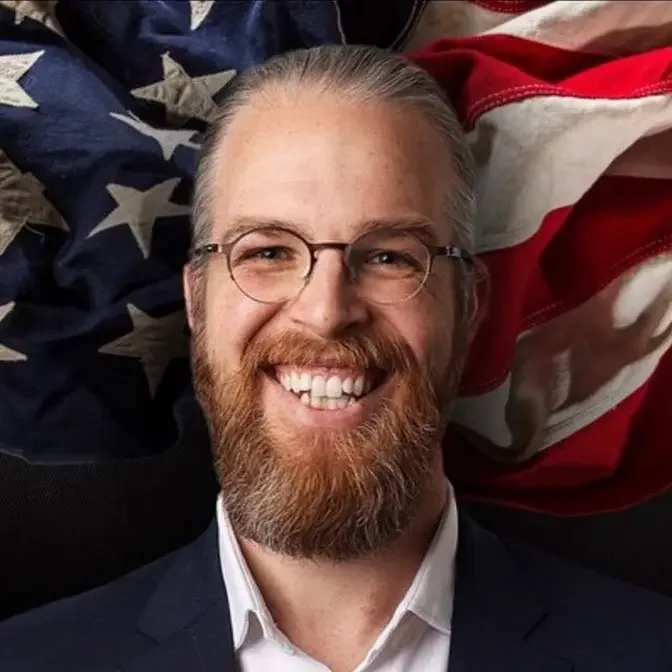
Most people think the data center explosion is about AI. It is not. I sit down with independent journalist and podcaster Sarah Westall to expose what is really being built: a decades-long surveillance grid tracking every American, on every device, all the time. We also get into Sarah's antitrust lawsuit against Google and why conversations like this one are being scrubbed from every major platform. The beast system is being assembled around us. The window to resist it is closing.
For high quality storable foods and seeds, visit http://heavensharvest.com and use promo code SETH to save 15% on your order.
To learn more about investing in gold & silver, visit http://goldwithseth.com, or call 626-654-1906
Kimchi One from Brightcore – Improve your health, improve your life. 25% Off with code: MANINAMERICA at https://mybrightcore.com/maninamerica Or dial (888) 575-6488 for up to 50% OFF and Free Shipping – ONLY when you call!
To learn more about Red Light Therapy, visit http://myredlight.com and use promo code SETH to save.
Welcome to Man in America, a voice of reason and a world gone mad. I'm your host, Seth Holhouse.
If you look around what's happening right now, one of the most important issues,
especially here in America, is the construction of all these data centers. Not only are these
data centers bad for the environment, they're bad for the water, they're putting off EMFs,
they're changing the temperature locally, but the bigger picture is that, in my own belief,
they are the infrastructure for a beast system. They are the infrastructure for a control grid
that you have to partake in if you want to have access to society.
And that is frightening to me because I don't want to do that. I'm a very independent person
ever since I was a little kid. I do not trust authority. And I do not trust the big government
having all this data and them telling me what I can and cannot do. And so this is a really,
really important issue. But one of the most important factors of this is the ability to get
more of our fellow Americans to understand this system as it's being built. And that's why they've
been so aggressive with their censorship campaigns, especially on public platforms like YouTube,
where they will not allow these kinds of conversations to reach the masses because
they want the masses focused on the latest celebrity scandal, the NFL draft, the local
NASCAR race, whatever it is. They don't want them focusing on these topics.
And so joining me today is my good friend Sarah Westall, who is also a fellow podcaster. She's
had a show for actually much longer than I have. And we're going to be talking about this system
that's being built, what it means, the beast system aspect of it, and her own fight against
censorship and against the campaigns that have been targeting her from Google and other such
companies. So it's going to be a really important issue. If you enjoy it, please share it. If you're
make sure you hit that thumbs up button, make sure you subscribe to the channel and all that
good stuff. All right, let's get into this discussion with Sarah Westall.
Sarah Westall, it's so good to have you back on the show. I always enjoy not just listening to
your own show, but just having the opportunity to sit down and talk with you. So thanks for being
here. Well, thank you for inviting me, Seth. I love your show as well. Like I told you before
we started, you're a unique person in this space, authentic, and people love you. So
thanks for inviting me. Yeah, well, and yourself as well. And I think it's,
what I'm seeing happening is that there seems to be a, just a separation happening of what you're
seeing is a lot of kind of podcasts that a couple of years ago were the alternative podcast. They've
gotten really much more mainstream and big, and they've really closely aligned with the Trump
administration, like almost to a T, the exact talking points. And I think that what you're
is that people that have the discernment are sensing which podcasters and influencers are
independent and which aren't. And it's like, for me, I don't care if someone agrees exactly with
what I think. If I know that they're being paid to say those things, I will refuse to watch them
because that's how it works until it's like, they get me, they get me, they get me until they're
told to kind of switch the messaging a little bit. And before you know it, I'm being taken
down a path I wouldn't have gone down organically and I can't stand that. And so you're one of the
few people I know in this space that is just independent and it's really, really important.
Yeah, we're not paid. You can feel it on the back end, but yeah, it is. And you're exactly right
where you can feel that distinction where it's like, oh, wait a minute, this doesn't make sense.
Exactly. So there's a handful of things I wanted to cover today. I definitely want to get into
your lawsuit with Google as one of the kind of big parts of this discussion, but really looking at
just what's happening right now in America. And I covered this on my live show this past weekend
where we're seeing these data centers are just, they're kind of popping up everywhere. It doesn't
matter. I mean, in some cases on the local level, they're able to resist it, but in many cases,
it has no use. And so I think that you're a really good person to kind of look at this with because
you're not just a trust the plan, a bluntly believe everything. You're looking at objectively
and you're saying, hey, there's potentially a digital prison being built. And so I guess
when you look at the data centers at Palantir, when you look at all these things, the flock
cameras, all this stuff put together, what do you see happening right now in America?
Well, I think there's multiple agendas going on into why it's easy to sell it to the people in
the industry, because the people putting it to the telecom people who are developing all this stuff
and the consultants that are building all this stuff, they wouldn't build it if they realize
if they knew they were building a prison environment, right? I mean, they really don't
realize that they are. And the reason that it's like that is because, and I'll do this in a
non-technical way that people will understand, the way these systems and these applications are
written now is they're not efficient like they were before. Okay. We had to be really efficient
because the hardware wasn't fast. It wasn't good, right? The hardware has really become a lot
better, especially with the quantum computer. It's computing. It's going to get even more so.
So things are very fast. They can take inefficient code and they can process it really quickly.
And so back when I was doing a way to be really efficient and data centers were still really
important, we just had to limit how much data we could plow through because it just wasn't, even
though we had all the data models and the databases and all this stuff, we didn't have the computing
power that they have now. And so now with this computing power, they can plow through all this
data, all this metadata that they're creating. And in order to be able to do that, they need to
store it somewhere. And that's what all these data centers are. And so they're putting these up
everywhere because they need them. And so that's why the industry is like, well, we need it just
for basic functioning. They're not thinking through, well, the capabilities that they
actually have. Right. So I'm looking at it from like all different perspectives. I consider myself
a system thinker. So I like to look at all the things, you know, create a structure of the way
the world is and then keep putting it in. What I love the most is something that changes my
structural view of the world. When I get a paradigm change, it's almost like, oh, this is like the best
because then I change the structure. But you keep just filling it in and understanding what's really
happening. And so there's the prevailing mainstream of why they're doing it. And then there's this
other side of what the capabilities are as it's in place. And what people don't realize is they've
been working on this for decades and they've been spending 90 to 100 billion dollars a year for
decades putting all this in place, all this data tracking, all this data information. You know,
Bill Binney, he was the NSA director. He was Snowden's mentor in the Snowden movie. He's
somebody that I've interviewed many times and we've gotten to know each other. He created or he
built, co-built that 6,000 person NSA center. And, you know, he told me years and years ago
that this has been going on since at least the mid 90s, that they've been building out this
infrastructure and they can track everybody all the time doing whatever on every device.
It's everything has a back door. If you think you have your stuff secure, you're wrong. Everything
has a back door. You might be okay if you have something completely off the internet with a
Faraday cage around it, maybe you'll be okay, but everything is capable of being tracked.
And they are. Now the technology is catching up where they can sift through this data
very quickly. And what does that mean? And that's what we can get into if you want.
Oh, absolutely. Yeah. And so you're kind of looking at what you're saying. I'm glad you
framed that as you did. It's like, here's a simple way of looking at it. It's like, okay,
we've seen this mass increase in data centers. Well, okay. So it's not like all of a sudden,
it's not like say the early two thousands when businesses that didn't have websites,
all of a sudden have websites now, right? It's like a lot of the uses of the internet
are already pretty established. You have more internet companies and you have,
obviously AI is a big part of that, but it's not like we're going through this big transformational
change where all of a sudden a billion people are getting onto the internet over the course of say,
three or four years, which is what we would have experienced before. But I think the key though
is you mentioned data, right? But it's the tracking data. And that's the thing is, okay,
looking at here in America, we've got three, 400 million people roughly. And if you look at
all of the tracking points of that, where it's like they're collecting data, if you're wearing
an Apple watch, okay, every heartbeat is a piece of data. Every movement of your watch is a piece
of data. The temperature of your skin, the temperature around you, it's a piece of data.
If you're driving a car with this technology, right? Everything around you becomes a piece of
data. Your facial scan, what your face is doing, that's data. The flock camera that sees you drive
by and realizes you have a small dent on your front right quarter panel, right? This is all
data. Your email that you're writing in Gmail, that's data. The screenshots that your Microsoft
or your Apple computer is taking every so often as you work, that's data. And this is just the
kind of bare minimum of it. It's like this, but this is what's happening is that it's like,
okay, these data centers in a large part, they're becoming these massive hubs for surveillance data.
It's the data of surveilling every single human being living in America to the best that they can
based upon what technology we allow. And then there's the other part of it, which is then
the computing power needed to have the AI models process that data and turn it into something such
as a social credit score or even something as kind of innocent as an advertising recommendation.
Well, and the data centers are needed just to function, right? For us to do our everyday
applications. And then the surveillance is on top. All it is is mining what we're doing
everyday anyways. So they're saving all that. They want to save it for all this marketing reasons,
for just managing your everyday stuff. And then the surveillance is just mining that data
and keeping it. They're storing it. And we are a by-product of that. And they've been building
this parallel surveillance system for decades. And this is why it's able to happen and why
there's a cognitive dissonance because inside these corporations, telecom, banking, healthcare.
Healthcare is a little different. It's its own thing, but there is a parallel tracking system,
but banking and telecom is a little bit more obvious and transparent. And healthcare,
we can dive into that deep, but a lot of people have with the COVID situation and all sorts of
things, but banking and telecom has always been parallel systems where they just did,
and they would use the reasons of criminal activity or whatever. And so the people working
there, they think it makes sense. And it kind of does because we need to be able to tap into any
of this information if we need to get a serial killer or whoever's coming in a terrorist cell
or whatever, which makes sense. The problem is, is when you turn it on the American people as a
surveillance tool. So since the eighties, they had parallel systems. They're tracking this stuff,
right? This is all, that's why I say 90 to a hundred billion dollars a year. And so there's
this entire infrastructure that's already built and all of these big tech players are part of it.
And so are a lot of military defense systems. And I mean, I drew out a whole infrastructure map
so people could understand how all of this works and interrelates. Palantir is just one small part
of that whole system that I believe that Palantir actually, you could look at it as a double-edged
sword. It is the system, the guy, the globalists or whoever you want to call them, the players
are taking a company and making it public. They're taking what they've been doing for
decades and making it public and more transparent. That is a good part of that. It also though,
the flip side of it is they're actually using it publicly and they're telling you what they're doing
and the public is not doing anything about it. It's like, we've been so conditioned
to realize that when Snowden came out and talked about it and Bill Binney came out and Bill Binney
went, wow, has he been targeted? And Snowden, he has been too. He can't even live in this country.
So these people who came out when they first came out, it was a big deal. Now we got something like
Palantir doing what these guys have been telling you all along and people are pushing back and
the masses aren't pushing back. But what they don't realize is Palantir is actually an opportunity
to look at something in a transparent way. They're out there in the open and what you've
got to realize is there's many, many more companies behind this and an entire system
infrastructure behind this. I know people that are working in big tech that are saying the digital
idea is already implemented. It's been implemented at the state level for years and now they're just
grabbing onto it and making it a federal ID. And the big tech companies are already communicating.
They already have all this communication behind the scenes. If they censor one person on one
platform, you're censored everywhere. I mean, that's the kind of inner connection that they
have written into their software. And that's why it's so important that we have disclosure and we
look at what's actually going on because the American people, if you want to have freedom,
you need to understand data at an algorithm level. It's really great the way you broke out
for people all this different data so it's not a confusing thing. It doesn't have to be confusing.
It's pretty straightforward. But it's important that we look at things at an algorithmic level
at each algorithm because what we're doing is we're taking functions that used to in processes
that people used to do and we're putting it into processes that are behind a black box.
Suddenly, because it's behind a black box, we don't question it. No, we should have the exact
same amount of scrutiny that we did when people perform those functions as a computer performing
those functions. It needs to be transparent if it's acting on the public in any meaningful way.
Here's the hard truth. Every six years, your dollar loses half its buying power.
That means a $100,000 savings account today could feel like $50,000 by 2031.
You see it every time you fill up your tank, buy groceries, or pay the bills. Prices are up. Your
dollar's down. But there's a simple way to protect the value of your savings with something real,
something proven. Gold. An asset that holds its value over time. That's why I trust noble gold
investments. They make it simple to protect your savings with physical gold or silver.
No high-pressure sales, no call centers, just honest guidance, one-on-one support,
and transparent pricing. Right now, when you open a qualified account,
noble gold will send you a free 10-ounce silver American flag bar as a thank you.
Head over to goldwithseth.com or call 626-654-1906 today to learn more. Again,
that's goldwithseth.com or 626-654-1906. Don't just protect your wealth. Preserve its power.
You mentioned kind of systems, right? How you like looking at systems level. And that's how I also
try to like, I'm very much so as Gary Vee says, clouds and dirt, right? It's like you kind of
focus on the dirt, but you focus also on the clouds, right? And I like looking at how I try
to understand things as I try to break down things into these kind of simple metaphors or
ideas to kind of represent complex kind of topics. And if you look at the systems level of this,
one thing I like to kind of try to frame is, okay, what is Silicon Valley? What is big tech?
And it's like, that's also part of it because it's like, there's a lot of these different concepts,
these big ideas that the ideas are so big and we've known them for so long that you don't
question the foundation of that big idea. You just take it as it is. And you look for maybe
the lies within that big idea, but you don't question the big idea itself. And I'm convinced
that Silicon Valley in and of itself is almost entirely a front for the military industrial
complex, right? Whether it's Facebook, which was lifelong, Palantir, you have In-Q-Tel funding all
these companies. I mean, of course you have some great kind of startups have done some cool things
out there. But I think that fundamentally that it's basically the same thing to do with the
military, with private contractors and black ops operations. It's like, okay, we're using private
companies to do these, but what if the military through some shell companies and through investment
companies, what if they're controlling these so-called private companies and using them
to develop these tools? That's exactly what's happening. And I think once a company becomes
meaningful and it has the ability to do that, you get a knock on the door and they're suddenly
involved, right? The Babybels, they all had NSA guys with their security people. It was just part
of how they did business. And I think that you're exactly right what's happening. I think YouTube,
if you look at the development of YouTube, they used to say, it's for the average person. It's
for all this stuff. I think once it got to the point where it's a critical mass, it was so obvious
it shifted, right? I always say 2020 when they kicked everybody off, that was the day the internet
died, right? We were in life support, but that's when it died. And that's because of exactly what
you're saying. As soon as the company becomes something of critical mass that affects the
country in any kind of way, that's when they start to exert their influence. And we saw it,
people can look at it just with influencers, right? The influencers who have outsized influence
are being manipulated. And that's why there's so few of us who are independent because even the
ones that are out there claiming they're independent, if you don't know where their
their funding comes from, I don't know. I mean, there's a lot of people who are
obviously selling things, but we know that they're funded. There's obvious ones that are big
that are clearly not independent, but there's other ones that act like they're independent.
And you go and you find out where is their, they have no subscribers. They have no way of looking
at how they're getting any kind of funding. If that's not a major red flag, I don't know what
is. If you have no idea, at least with me and you and me, I'm so transparent. You can look at
everything. I've got my subscribers on Substack. I've got my products that I sell. That's it.
Everything that I got, that's how I make my money. It's completely true. You might not like it,
but that's it, right?
Yeah. And you're complaining like, oh, this guy's a grifter. It's like,
why are you still trying to sell me something? It's like, this is how, that's how I survive.
This is a family business, right? It's kind of like you walk into a restaurant and like,
why are you charging me for this food? It's like, it takes money to make this food for you.
It's not just like I tap my heels and your state dinner appears. I mean, it's like, it takes work
to like, I've got myself, my wife, I've got a small team. Like that's what it takes to do this.
That's right.
Yeah.
Absolutely. You know exactly. So when somebody comments, and I never have a response for this,
I say, if you send me a check so I can pay my mortgage and my bills, I'll stop advertising.
And I never get a response ever. But yeah, but the ones that you question the most is where
you have absolutely no idea how they're even making it. You know, how are they even funded?
Okay. Well, I wonder, right. That's why I have a little bit of an issue with the attack on
Palantir only. Okay. Not, not that Palantir doesn't deserve to be attacked and exposed.
And it's probably a good thing because it's showing people how this works. What bugs me
is if you don't go beyond it, because that tells me it's still a political hit.
You know what I mean? Because of the Trump alignment with Peter Thiel and the rumble
and all this stuff. It's like, not that I'm, I'm not defending them at all. And it's important
that it's exposed. It just feels like a limited hangout if you don't go beyond it.
I mean, to use a somewhat controversial kind of analogy, it's kind of like the Jews.
Like to me, when everyone just says, the problem is just the Jews. It's like,
it's like, there's so much more, there's so much deeper stuff going on here. You have to touch on
the Vatican. You have to get into Jesuits. You have to get into the black mobility. You have
to get into, it's like, just to like, exactly. It's these blanket statements. It's like,
it's like, are there bad people within the Jewish religion that are doing bad things? Yes. Actually,
there's quite a lot of them. Are there bad people doing the same things in Christianity
and in Buddhism? Yes, there are. Right. But I think it's, it's, it's oftentimes it's this kind
of the red herring, right? It's like, Hey, focus over here. Look at this stinky red herring over
here. And they want people to think like that. And I'm glad you brought that up about Palantir
because I've focused quite a lot on Palantir and kind of looking at their, you know, basically how
they're kind of the, in a lot of ways, the backbone, the operating system of our own
government now. But when you, when you look beyond Palantir or behind them, what are you seeing?
Like, what are the companies you think that are being ignored that need to be focused on?
I think Palantir is the sunlight to what's been developed. The $9,100 billion a year that's been
developed is the entire infrastructure. And Palantir is the first public company that's
coming out there and saying, here we are and bringing all that infrastructure a little bit
more into the light. You're talking military industrial systems, every major military
contractor there's there's I don't have all of them on the tip of my head, you know, Raytheon.
And I mean, just, they are tracking surveillance data. Like you wouldn't believe across the world
and in our country, you're talking every big tech company that has any kind of social media,
whether you're talking Google or you're talking YouTube and Facebook, all of their data. So you're
talking Oracle, IBM, I mean, on and on and on. Right. And the fact that, and when I was saying
there's duplicate systems, the whole banking infrastructure, and they all have backdoor
ties into every one of those systems. Aaron Day came up with like 10 different applications
that they're running just off of the banking industry. And this is what's been developed
over the decades that I've been, you know, the 90 to 100 billion dollar a year infrastructure
that's being developed is this entire infrastructure. Palantir is like this,
you know, if you look at this big graph, they're like one little node in it. They're just a real
public, everybody's attention is to them. Meanwhile, there's this whole infrastructure
that's been going on. And I don't know if they're purposely a limited hangout. I don't know if
they are the shiny thing, you know, everybody look at, or if it's because they became so
arrogant, it's time now for us to go public and see what the average person does. And let's just
bring this out in the public. And surveillance is just the way it is, guys. And the people are
going to have to have it crammed down their throats. And we're going to test it out with
Palantir first. We're going to be really public. Yeah. I'm wondering because Palantir really is
just one little node in this huge infrastructure system. Yeah. And so, you know, one part about
this I want to kind of hit on is just, is the general public in this. And this is what's key
because, you know, I was recently kind of covering data centers. Actually, maybe I still have the
page up that I covered. No, I think I might've closed it. But either way, I was looking at,
oh yeah, here it is actually, this right here, just as an example. So this is from
datacenterwatch.org that $64 billion worth of data center projects have been blocked or delayed
from local opposition. And this is really important because the power really does sit
in the people. But the problem is, is that the people have been so social engineered to believe
that they're powerless or do not even care. To be more concerned about the NFL draft than
the data center that's going to poison their kids. So there is a big movement of people.
And I want to actually bring up one thing that just happened today, I think. So
this, I'm not sure, have you seen this before, this data center that proposed in Utah?
I've seen a bunch of different, no, go through this.
So this is crazy. This is a data center that's being proposed in Utah,
62 square miles, 40,000 acres. Okay. The craziness is because they're going to track
everything. And remember when they were talking about making meta,
meta was a parallel universe, it's a synthetic universe, right? The amount of data you need,
I don't think they've abandoned that idea, right? Just the government itself. The amount of data
you need to create that, to have a 3D model of the entire world and every piece of data on it
is massive like that. And the problem is, is that the engineers and the people designing and
building these things have not made that leap to understanding that this is a surveillance
environment. Yes, it also helps us do all these cool things. Yes, it helps us do this, but we can
already take down criminals with what we have already. We don't need more. And we can do all
this, but why don't you connect the dots of the surveillance that's the capabilities? That's what
bothers me is these people are smart enough, but for some reason, they're able to compartmentalize
this to a point where the people actually building it feel powerless or they need a job.
So they just like letting it go. Like, I don't care, I need a job and I can't do anything about
it anyways, or they have this cognitive dissonance. Who cares if they're going to surveil us, what's
going to happen with that, right? It literally is like the matrix, the scene in the matrix. They
literally can automate, they can send, we talked about the frequency device that you have. They
can literally, and this sounds like such science fiction, but it's not. Every emotion that you have
is a frequency. They can send emotions to you. They can send thoughts to you. Everything is,
we are a frequency. Everything is frequency. I mean, if you study physics, you've studied
what Tesla was doing, everything is frequency, right? And so every vitamin, every mineral,
every emotion, thoughts are frequency. I had scientists on maybe eight years ago,
Phil Catalino just came on again, but he has five science degrees, used to work for JPL and NASA,
right? Very high level, respected scientists. And he was on my program like all the time.
And we were talking about one of the things that they developed, which was to get crickets out of
a field, right? They wanted an organic method to get these bug infestations out of a field.
And so what they did, and they got paid to do this, they would send a message to the cricket
that this field is awful. Oh, this is a terrible field. But that field over there, that field over
there is amazing. So they did a push and pull and it worked. The crickets would all leave and they
go to the other field, right? They can do this with people. We're not that, I mean, we have
motion frequencies too. We have the, that's why I push so hard on us having some recognition,
starting to tune in to these signals that we're getting so that we can control it and not just
be manipulated by it. I know it sounds like woo, but it's not. It's really simple science. It's
not simple, but it is. It's a simple concept. And if we start to realize that, this is where I,
and I don't, I know you have a lot of religious people and so do I, but I think my Christian,
which is almost my entire audience, are accepting of this because they aren't, they don't read it
literally. They understand it in a more broad sense. Actually, they might read it literally,
but I'm going to redefine what the literal meaning of it is. We get these sensory data all the time
and now we're getting it through all this crap that they're sending us. And so when the Bible
says don't go, you know, don't go to psychics and don't, you know, don't do remote viewing,
don't do all that stuff. And then they shut their, they won't even go there. I challenge
that. And I say, especially remote viewing, because the remote viewing is just reading
the sensory data that's coming in. I challenge that and say, we absolutely have to start
getting good at this and refining this because we're being bombarded with it synthetically.
And we get the sensory data. Like I had Julie Asheron, whose son has extreme autism,
and he's actually one of the highest studied people now by really good scientists from John
Hopkins and Harvard and great backgrounds. And they're really taking this stuff seriously.
What happens is they're realizing that autistic kids, or a lot of them, I don't know if it's all,
but a lot of them are not able to filter out the sensory data. They're just overwhelmed. That's why
if they get this loud noise or they're in these environments, they're just kind of like, they
can't handle it because they're getting all this sensory data. And they're realizing that these
kids, and now he's an adult, are able to read thoughts and anticipate future events and know
all these languages, compose music. They're able to do all these things. It's really incredible.
She was on the telepathy tapes and it was the most popular podcast in the world at that day
because so many people are interested in it. And if we really are getting sensory data, then
shouldn't we have discernment of what we're actually getting and what's real and become
good at it so we're not easily manipulated? I think that test the spirits, when Jesus said that,
test the spirits, I think that's what that is. Get discernment. We need to figure this out because
otherwise we are completely hosed. We will be manipulated. We won't be able to, we will,
we are sitting ducks for being completely manipulated with this new technology that's
coming out. I know it sounds crazy. It's not. I just, I hope people take this seriously.
Oh, I mean, and I've had a lot of these same thoughts and also conversations as well. And
kind of how I look at it is I do think that there's a very kind of dogmatic kind of religious
perspective of like, that's evil, that's evil, that's evil. And I think that there's, that we've
been warned about these things for certain reasons. Like, let's just say kind of, say
someone is a psychic, right? That kind of, what does that mean? Right now, if say, if I'm a believer
and I have these senses and I have these intuitions, it's like, that could be God
talking to me, right? That's what that is. It's, you know, God, I think, understanding frequencies,
all these things, to me, that actually proves even more so the existence of God because it's like,
this is God's design. It's amazing. I think the warning is when people, it's like, look at the
church how it used to be, okay? We're not going to allow you to even read the Bible. We're going
to be the conduit to tell you what the Bible says. And that's where the risk is, is that when
someone puts more faith in a psychic than God, right? And that's where we can be misled is
because if you say you have this person who's a psychic and you're like, well, the Bible says not
to, can I go there? But you know, I'm really curious when you go there, that psychic could
be reading thoughts from a demon. You know what I mean? That are misguiding you.
Well, because there certainly is. And that's what I'm talking about, making sure you get that
discernment and getting good at it. Because I've been studying remote viewing for the last year
and a half because I'm like, what is all this? And I wanted to understand. I'm actually getting
kind of good at it where I can, it's amazing what you can do, but I won't go into any dark stuff.
But you can get discernment. You can feel it. You can see if it's real or not. And I think it's so
important and I think you're absolutely right. And this is the discernment that I think that
we were warned against. If they can use these emotions against us, that is the discernment.
Learn to understand it. Learn to, you can't just trust the psychic blindly. That's not good,
right? You have to develop your own abilities to read this. We all have these abilities
and have this discernment because otherwise we really are sitting ducks. And I think that
is truly what that was warning against. The more I learn about how all this stuff works,
the more I'm like, wow, they were warning about this. And it is even more important
that we develop these skills and that we have these discernment and understand when it's
something we can trust and when it's something that we can't. It's going to be a hard road
until we get control of these algorithms and we start having transparency and we start saying,
hey, heck with it. They can't do this to us. Well, it's also, that's how they kind of manipulate
the masses is by not being aware of these things. But one thing I actually, I wanted to touch on
really quickly because I pulled up that video of this data center and this is, so I covered this
on Sunday night, this proposal. And so that proposal just passed. I think it was last night.
So here's this post from today. It says Kevin O'Leary's massive, and he's just one of the
investors, it's not like his, but this data center was approved by a county commission in Utah last
night, 40,000 acres, two and a half times the size of Manhattan. It says the commission approved
the proposal despite opposition from hundreds of locals. So I want to play this really quickly
because these are people that I said, these are my people, the people they're showing up and trying
to demand. We do not want this data center. So I'll play this 47 seconds because it's encouraging
to see that there are people still fighting against this, but then I want to kind of transition into
the role of censorship and why conversations like this are so dangerous, because more people
would be acting if they truly knew what was going on behind the scenes of these data centers.
So I'll play this real quickly.
False. This is false. Then why won't they let people talk? Why won't they let people ask questions?
It's false. This is not real information. And we sit here like it's okay. It's a charade.
It's a charade. It's false.
Yes. These are locals. I see some people wearing masks, some people not wearing masks. It's
probably a big blend of people that are left, right. It doesn't matter. They see it for what
it is. And this is why I think that these conversations are so important is because
as much power as this system has over us, as they've had for hundreds and hundreds of years,
fundamentally though, they are still beholden to us. And that's why the propaganda and the
social engineering have been so heavy and so deliberate and so calculative for such a long time
is because if most Americans saw this for what it was, and we had, you know, millions of people
turning up at these kinds of things, right, when this obviously a local level, they wouldn't be
able to get away with it, right? They still need us to be complicit, which is why I'm getting into
your censorship case. I'm so insanely censored on YouTube. I'm allowed within Rumble. It's like,
okay, there's this little pond over here, people that kind of already believe what he believes
anyway. He's not that much of a threat, right? But on YouTube, where you or I have the ability
to influence the masses, where we would both have massive, massive channels, if we weren't being
censored, they won't allow it. So tell us about just your thoughts on that, but also I want to
get into your specific case on censorship. The data center, it gets back to, if we had more
transparency, maybe people would accept it, that there's no transparency. They're not doing any,
what are you using this for? It's all part of my language. It's just like, they don't tell you,
they hide so much from us that people don't trust anymore. I mean, back in the 90s, they were
putting chips in, I had whistleblowers from the Native American communities. They were chipping
them, tracking their bank accounts and their health records in chips. I mean, this is what
they've been doing. Now they've figured out different ways to do it. But the transparency
is so important. I fed Google Gemini all of my data historically and over the last 30 days of
what's been going on on YouTube. And Gemini told me that this was the best metrics it's ever seen.
And I said, what do you mean by that? And they said, well, no, let me clarify. This is the best
metrics I've ever seen with the view gap that you have and that you should be one of the largest
voices on the platform based on these metrics. Google Gemini. And then I fed it to Grok and said,
okay, is it just like hallucinating? And I fed it to Grok and Grok goes, nope, Gemini was right.
These metrics are elite level and you would be one of the top. And that's why
they are censoring us and suppressing us. And because we're just speaking authentically to
the average person. And I have pulled back a little bit because I've realized that all sides
have some creepiness in it. And so I've been trying to be as responsible as I can on bringing
people on that are authentic and that at least the data that they're putting forward is more
believable. That's a hard thing to do in our field. Trust me. It's very, very difficult,
but this is what the people deserve. This is what our whole country was founded on is for,
if we are going to govern ourselves, we need transparency. We need information.
And this isn't a left, right thing. This is a people thing. And this is what we need and what
we deserve. And so my lawsuit is, was based on that. I wasn't even on YouTube and there was all
this defamatory content. There was four channels, at least four channels, two of which were posting
all of my content. And, um, or two, one was posting all of it. The other one was posting
most of it. All four were posting some, but there were two of them. And whichever one was
posting all my content was monetized. Meanwhile, I was banned, right? So come on,
how can you ban me? But yet all of my content's up there monetized by somebody else. You can't,
you can't straight face say I'm a bad, I don't, I'm too dangerous to be on your platform
when you do that. Right. Okay. Okay. We have so many. And then, so their argument
is we have so many people, millions, we can't monitor everybody. You got to tell us. Right.
So I did, I went through that. I went through customer service.
I'm in a plus I'm, I was, I'm, it's not believable. They don't know someone like me
is out there when I led the lawsuit in the ninth circuit with a group of us,
one of the most forefront federal cases against YouTube. Right. It's not really believable,
but, um, regardless, you know, that's the, you can claim that. Okay. So I talked to customer
service as soon as they knew they stopped talking to me like, Oh, let me hear your stuff. And I sent
them and then they ghosted me after that. Okay. And then I did the formal DMCA process, which is
their takedown process. I sent it to five different places and including Google search. And they,
they came back and said, we don't take down channels. We just take down videos.
Okay. So now I hired an attorney and there's way more to this story. I mean, I could talk
about this story for hours, right. But I hired an attorney and, and he sent a letter and then,
and they ignored it, sent another letter. They ignored it. It sent the third letter. And between
the sending those letters, all of a sudden this porn stuff with my name was up on the front page
of Google search. And it was up there for weeks on the front page of Google search with and rumbles
in a lawsuit against Google because they won't show any of the rumble videos. And, uh, they did
suddenly though, for me, these rumble videos that were porn star confessions and my name right after
a whole bunch of them. Renette Zen, I'm a friend of mine did a video. She's in California. I'm in
Minnesota. And I asked people all over the country as North Carolina, all over the place to look at
it to make sure Texas, are you seeing this? Yep. Everybody's seeing it on the front page of Google.
She did a video for me. And there was, there's obscene things. I can't, I won't say publicly
because it's so obscene of what my name was affiliated with all on the front page of Google
search. Then our letter came in and said, we're going to assume you guys, this is, this is not
okay. And then, um, after we said, we're suing you, and then we got some movement and this stuff
came down, but that's just unacceptable. So I had to pay a bunch of money to get my stuff down.
Ladies and gentlemen, our world is being poisoned every day. We're exposed to more
chemicals sprayed into our skies, leaching into our food and polluting our air and water
from pesticides and heavy metals to hormone disruptors and the synthetic additives.
These toxins are bombarding our bodies and silently destroying our health,
but there's something you can do to fight back. And it starts in your gut.
Kimchi one from bright core nutrition contains over 900 strains of beneficial probiotics
that will help flush toxins, restore gut balance and support your immune system.
Because when your gut is strong, your body can resist. You'll feel the difference,
better digestion, more energy, clearer thinking, stronger immunity, and even improvements in your
skin, hair and metabolism. And this isn't just hype. Studies show that fermented foods like
kimchi can reduce the risk of obesity, improve blood sugar and support a whole body wellness.
Kimchi one is all natural, non GMO, dairy-free, gluten-free, and a hundred percent made in the
USA by a company that actually cares about your health. And today you can get an exclusive offer
just for my viewers, 25% off with your code man in America, by clicking the link below
or call my friends at bright core for up to 50% off your order and free shipping.
So give them a call now at 888-575-6488. And their educated staff will make sure that kimchi
one is right for you. Again, that's 888-575-6488. All the links and information are in the description
below. With the Jordan Senate hearings, we were in the ninth circuit against YouTube. We got lost
in California. There's 15 of us that did. We went and said, you guys took us down. And then you
changed your contract at the exact same time you took us down. This is just not good faith.
Well, with section 230, they have like God immunity, right? I'm not against section 230.
I'm against how the California courts are implementing it. They have misread it. And
we're arguing, I have a lawsuit in the federal and DC against the federal government and Google.
We're arguing that the California courts are so structurally biased, you cannot get
any justice there. And we have decades of evidence to prove it. But we went to the ninth circuit
and Google's, they lied in the ninth circuit because Google top attorneys in the Jordan
Senate committee hearings said that the federal government coerced them to take down a bunch of
stuff. And they lied and said they only acted on their own, right? What we're trying to do is we're
trying to get transparency. The American people need to see transparency. What is really going on?
Is there a connected database or connected communication structure across the internet
that affects everybody in every application? We don't know because they won't let us see it.
How are you putting flags and filtering my content? When Google Gemini says they have
the biggest gap I've ever seen. And my metrics shows that I should be a top performing person
on the platform. Why am I not? Why are you censoring me? And if the government censored
this kind of information, am I still being affected by government censorship? Which likely I am.
So that's the kind of transparency that we deserve. What are you doing and how did the
government coerce you? And are they still coercing you? Because that's against our
first amendment. It's one thing of taking down information that is harmful, right?
I think we can all get on board with there's harmful borderline stuff. We can also get on
board of me being able to decide or you being able to decide what kind of content we don't want us,
we don't want our kids exposed to, or I don't want myself exposed to. I don't want to see
porn on my, you know, they have Google safe search, which is supposed to censor all that
stuff out. It didn't in my case. So Google safe search failed. But I don't want to see it. A lot
of people don't want to see it. So it's okay. We can decide for ourselves what we don't want to
see. We're adults. But for the government to make a decision on what they cannot see, they do not
want you questioning certain things because it's viewpoint discrimination. It's not against the
law. It's not dangerous. And in fact, I even think it's safer for people. We are actually
bringing things to the forefront that actually protects you and your family. They don't want
you to see that. If we could have open debates on things when it comes to war, healthcare,
serve government surveillance, perhaps the American people are going to be safer.
This is the information that we need out there. But by saying you can't have a debate at all,
Steve Kirsch offered a million dollars just to debate me. Please debate me. Somebody with
credentials debate me. Nobody would debate him. You can't have open debates because people on
the other side are so afraid to even engage in a debate because the society communication has
been so chilled that people are afraid. Most people won't even have me on their platform. So
thank you so much for having me just to talk about this. You can come on and let's talk about all
your cool crap that you know how to talk about, because I can talk about a whole bunch of things
that are really interesting and fascinating, just like you over the 15 years I've been doing
interviews. I could talk about a lot of stuff. Talk about that, but don't talk about your lawsuit
because I'm afraid of my business. I'm afraid of being censored myself. When you have a whole
group of people who are afraid to talk to you, no one in mainstream media, nobody in the independent
space will talk to you either because they're afraid. They need to protect their own livelihoods.
You have a problem. And this is what we're trying to address.
No, absolutely. And it's this thing is like, you're looking at just the human psychology of it
is where is the red line, right? You mentioned earlier people that are building the data centers,
like what are they telling themselves, right? They just have a job. Hey, it's an opportunity.
We know that the economy is completely wrecked right now. Job loss is at very high. People are
really struggling here in America. So it's like, I understand that, hey, that data center job might
mean putting food on the table for your family, and that's a tough thing. But I kind of look at
it, it's like I use the Star Wars analogy. It's like, okay, hey, you've got a great senior
engineering job for the Death Star, right? It's like, are you okay with that? Are you going to do
it? And it's like, yeah, I mean, it's not easy. But again, I think that what you see with this is
that the biggest threat is the masses knowing this information. I pulled up your YouTube channel,
which I think I found your real YouTube channel here. So this is your correct one, right?
121,000. I lost a lot over the five years, but that's where I'm at now.
Yeah. And this is exact same numbers of my channel. I've got, I think, 135,000. I think
in the last four years, I've grown from 126,000 to 135,000. But same thing, you're putting up
these videos a day ago, two days ago, same number of views I'm getting, 1,000, 2,000, 3,000.
Occasionally I'll get a video that might break out and get 3,000 or 4,000 or 5,000 views, but
this is exactly it, right? But also, it kind of highlights how important it is for people to still
have their own local communities that they're sharing information with, because they can't
control that in the same way. If people are just talking about things over the dinner table or
talking about things at the local farm market. And that's what we have to kind of take the
grassroots approach on top of trying to go after these things at the system level, which is what
you're doing. You have to do both. You have to, because this is the thing is that I think a lot
of Americans are literally just walking and marching straight into the slaughterhouse and
they just don't see it. It's not because they're stupid, right? That's the thing is that it's not
because they're stupid or they're too focused on football. The system has engineered it like that
and they haven't been shown the information, right? That's right.
Why don't I care about the football game? Because to me, it's like, A, I know it's controlled anyway.
They're probably controlling the outcomes of who's going to win. It's bread and circuses,
but because I'm way more focused on other things like building gardens and homeschooling my kids
and seeing how much more off-grid I can get, because I know what's coming. I know the state
of our country. And I think a lot of these people that if they really understood the topics that you
and I are trying to kind of bring to people, they'd be changing their priorities. In that
meeting, we saw the people at the data center meeting, instead of a couple hundred people,
maybe it would have been 10,000 people, right? That was in Salt Lake City. It wasn't in some
small rural town. They could have had 10,000 people standing up there. And that's it. That's
why what you're doing is important, what I'm doing, the audience. The transparency is what's
important. And I actually think the systems engineers that are working at these large
corporations, I don't want people to quit in mass. I want them to work from the inside to
make sure that things are transparent. I want them to be an advocate for the people. And the more the
people on the inside can be an advocate, the better. And if they don't think they're making
any difference, then maybe they need to get another job and be an advocate from the outside.
But I think we need people on the inside to hold that line. I do think there are some companies
that are really working to try to be more, not be so Google-like, you know what I mean,
that are trying to be more transparent, or not transparent, nobody wants to be transparent,
but they are being more utility-based versus viewpoint discrimination-based. I think there
is some of that, but you got to do, a lot of that has to happen from the inside. I think
politicians need to step up. I think the people, the masses, give the politicians,
give the engineers, they give the executives, they give them the power to do something.
Because if you are vocal, that tells the politician, I have backing, I can do something.
But if nobody's vocal, that politician's out there on a limb all by themselves.
Same with all the employees, all the senior engineers, and all the executives that are in
these businesses, they're out there on a limb by themselves if they don't have the support
of the people. So that's why it takes more than what people think. It's hard going out there on
the limb if you don't have any support. It is. And also I think that fundamentally,
we touched on religion earlier, and if people understood that fundamentally this is a battle
of good and evil, and I really believe that what's being built is the beast system.
You must have the mark to buy or sell, you must be part of this system, and it will be used to
control. I think if more people understood that, it's like, okay, frame it from that way.
Okay, obviously we care about the future for our kids, everything like that, but
on a very fundamental level, it's like, this is the beast system that's being built around us,
and we have a window and opportunity right now to resist it and to form a resistance movement
against it. That's what's key. So, Sarah, as we're closing up, I want to bring up,
obviously we looked at your YouTube channel. You've also got this, your website, which is
sarahwestall.com, which I encourage you to check that out, check out your sub stack. I'm a subscriber
to your sub stack, so great way of supporting what you're doing. Anything else that you have
to say as we're wrapping up? Just share what you can, subscribe on these platforms, and help us
get the word out, and talk to people. The best way, word of mouth is still really a good way,
but I mean, a lot of people learn about me through word of mouth, and I hear that all the time.
And so, thank you, first of all, anybody that does that, but like you were saying,
local communities, and you have your art community, which sounds like it's going to be fantastic,
and that's what it's about, getting back to that. But word of mouth is pretty powerful,
and we need to use more of that. Yeah, we do, we do. Well, Sarah, thank you again. It's always
wonderful speaking with you, and good luck with everything you're doing, and I hope that
you grow prosperously and reach more and more people. Can I give a plug? Go to
GiveSendGo.com slash EndGovCoercion. That's what I need to help fund this lawsuit. So,
please go there. GiveSendGo.com slash EndGovCoercion. I maybe should have put up a
better name, but we really need help on supporting this lawsuit. We're going to update it, too,
with the recent stuff that's happening, but yeah, we need support. Okay, great. Yep, here we go.
There we are. Who would have guessed I couldn't spell coercion?
I went to art school. You kind of forget, how's that word spelled again? Anyway, yep,
so I'll put the link in the description. This is important. This is where people can directly
support your lawsuit and your campaign for free speech, right? Yeah, and for disclosure. It's not
just free speech. It's an actual antitrust lawsuit about economic displacement. I mean,
there's so much here, but it's really for being able to see with discovery what the heck is going
on, and it's a big deal. Perfect. It's about what we're talking about here, but yeah, free speech
is a big part of it. Oh, yeah, it is. Well, Sarah, thank you again. Take care. God bless you.
God bless you. Thank you so much.