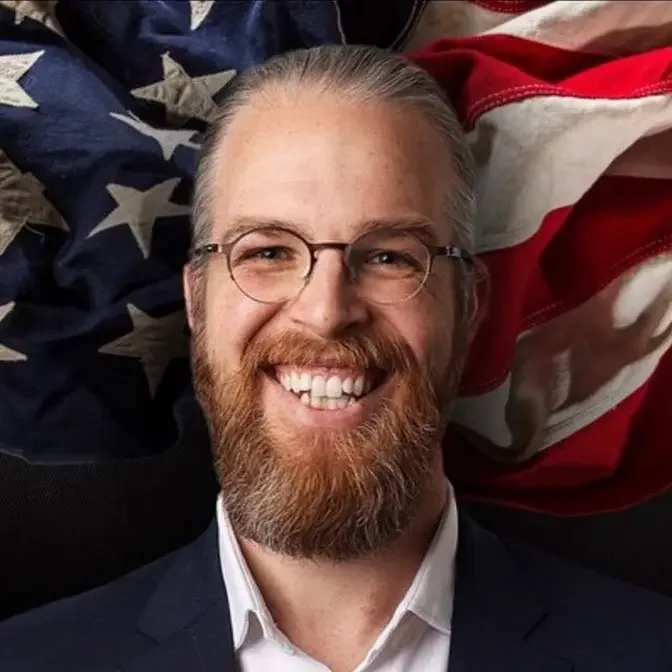
Micah Haines joins me to connect the sudden AI insider warnings to a theory gaining traction: a future "AI hack" of the banking system could push Americans onto a new digital currency, and why the shares in your 401k may not legally belong to you. We close with simple steps any family can take this month to be ready.
DISCLAIMERS: Some of the links in this description are affiliate links and pay me a small commission if you use them. I hope you do! Thank you so much for the support, it really helps to keep this show truly independent.
Guest views are their own and are not financial, medical, or professional advice; consult a qualified professional before acting on anything discussed.
PROTECT YOUR FINANCES:
– Chapter compares every Medicare plan nationwide for free to recommend coverage based on your doctors, prescriptions, and budget. Call (773) 801-5366 or visit http://chapter.com/man.
-- Learn more about investing in gold & silver, visit http://goldwithseth.com, or call 626-654-1906
-- Improve your health, improve your life with Kimchi One from Brightcore 25% Off with code: MANINAMERICA at https://mybrightcore.com/maninamerica Or dial (888) 575-6488 for up to 50% OFF and Free Shipping – ONLY when you call!
-- Age well by restoring your cellular health with NMN-3 from Brightcore 25% Off with code: MIA at https://brightcore.com/mia Or call (888) 575-6488 for up to 50% OFF and Free Shipping. ONLY when you call!
-- Detox your body from everyday nano-toxins, including heavy metals, forever chemicals like BPA, and pesticide residues: https://zeolite123.com. Use code SETH to save.
-- I recommend Red Light Therapy for total body health & wellness: Go to http://myredlight.com and use promo code SETH to save.
This discussion examines the intersection of AI regulation, unsustainable global debt, and the potential for a systemic financial reset. The speakers argue that AI narratives may be used to justify centralized control and that a manufactured crisis could force the public into a digital currency system (CBDCs), advocating for self-reliance and physical assets as the only viable safeguards.
There's something really strange happening in the AI world right now.
The men building the most powerful AIs in the world are calling for a slowdown.
It sounds reasonable, right? But look at what they're actually asking for. It's not really
a pause. It's new federal laws, mandatory government testing, and the power to block
systems that Washington decides are unsafe. One of them warned that within six to 12 months,
these programs could literally take down the entire internet. Others are saying this is
going to shut out any smaller competition and concentrate AI power in just a few hands.
But that's just the beginning. What if there's something else that's being set up here? What
if the fear narrative around AI isn't about forcing new regulation or getting rid of competition?
What if it's setting the stage for a financial reset they can blame on an AI banking attack?
And what if that reset has one major goal, which is forcing the population into some form of a
central bank digital currency? My guest today, Micah Haynes, has spent the better part of a
decade studying what happens when a financial system comes apart and figuring out what it
takes to prepare for it. So if you've got money sitting in a bank, retirement account, or brokerage
account that you've trusted for decades, this conversation is really for you. Micah connects
the dots between what's happening with AI, the debt spiral nobody's talking about in Washington,
and what it actually takes to move yourself into a place of safety. Welcome to Man in America,
a voice of reason in a world gone mad. I'm your host, Seth Holhouse. Before jumping into this
interview, please make sure you hit that like button. Please share the show if you like it,
and make sure you subscribe to the channel. It really helps us to reach more people.
All right, let's go and jump into my conversation now with my good friend, Micah Haynes.
Micah, man, it's good to have you back on. I always enjoy our discussions, and I'm looking
forward to this one. Even though it's a little bit more dark and dystopian, there's always kind of
a light in the darkness, but I'm looking forward to it. So thanks for being here, man.
Micah Haynes Thanks. Yeah, me too. Yeah,
with fourth turnings, they can be pretty scary. They end with a pretty big disaster of some sort.
But the first turning of a new saeculum, kind of where we are going, is an extremely prosperous
time for everybody. We just kind of have to go through the trenches and the tough parts first.
So that's obviously dead ahead with what's going on.
It really is. So the main thing I want to focus on is the combination of the AI and the AI threats
and the global financial system. And you and I have talked a lot about global financial system,
as I have in my show in general, just the sober reality of just the amount of debt that we have,
that we're in this death spiral. Actually, I found a little video I want to pull up here
that is just showing the purchasing power of $100, right? This is since the Federal Reserve
was created. So it's looking at the purchasing power from 1913 to today. And it's just crazy
if you look at how much 100 bucks was worth in 1903. And here you have tracking as you're kind
of moving through right here during the 50s, the 60s, and the gold window closing, early 70s.
And here we are now, where it's literally going... And this is probably not even...
It's probably much worse than this for a handful of reasons. But as you can see in this chart,
we're going from $100 roughly 100 years ago down to about $3. And I think for a lot of people,
they look at this and say, oh, well, it's just that natural... It's just what happens, right?
Just naturally, as you have more money entering in, more people, it changes. But I think that,
first, I think it's deliberate. I think that it's something they've been doing intentionally as a way
of keeping us poor. But to me, this right here is a reflection of a financial system that is
nearing its conclusion, right? As we know with fiat systems, they always have a beginning and
an end to them. What do you think when you see this, though? Absolutely. Yeah, it reminds me
of the fact that my grandpa, when he bought a house, it was $4,500. When my dad bought his
first house, it was $45,000. And now the average house is $450,000, right? So it's literally
100x what it was, mind you, 50 years ago. But that is the reality of... The house is still
the same. The currency unit in which we price them is going down. Yeah, you're right. I think
it's end of cycle type of stuff. We're seeing an acceleration in all these big problems like
the national debt's growing now. It's over $40 trillion. I've been rounding up for the last
six months, but we're officially well over that. You look at interest rates that have been rising
because there's issues with the bond market. And then the US now has no real conventional,
traditional sources of demand for our bonds because other countries look at our national
debt and go, geez, I don't want to own US debt. Come on, they can never pay that back. They're
up. That has big effects on the economy. As the economy weakens and the cost of servicing debt
goes up, there's actually less discretionary spending that can go around, which means there's
less spending into the economy, which means that everything's doing less well. Businesses are
actually paying less in taxes, and that makes tax receipts and the revenue of the government go down.
And that means that they have a bigger hole in their essentially wallet where they're going to
have to print more money to fill the void. And we are seeing that. We went from, I mentioned
before we hit record, $2 billion in bond buybacks at the end of July. In just the last five, six
weeks, it's now turned into $12.5 billion of bond buybacks that's happening. So a 6x in the amount
of liquidity we're providing in just a little over a month. So not to belabor the point, but yeah,
we have currency issues that will only get worse because the debt issues are only going to get
worse. And that whole death spiral of more debt and higher rates, it costs more, but we're earning
less and the economy is struggling. So we have to print more money to do that. So that chart that
you showed, that trend is going to continue to go down and down and down. So what are people doing
to hedge against that? Well, exactly. And that's the thing is that when you're looking at the
global system, that there's going to be some sort of reset. There just has to be. It's a failing
system. You can't just keep failing and failing and failing until no end. There has to be some
sort of reset. And there's been a lot of speculation as to what would be the cause of that
reset. The financial system is this giant pile of gasoline soaked bonfire wood. It is just dry
brush covered in gas. And it's like, okay, what is the spark? And what's kind of crazy, as I
mentioned, we're getting into is the intersection between financial system and AI. And this is where
things get really kind of weird because right now, I think there's some sort of concerted,
you could almost argue, campaign going on surrounding AI. And to me, this is the origin
of it. This tweet that was published really a little over a week ago by this name, Jacob Coxon,
who says, I resigned from Anthropic today. I spent the last three years doing pertaining research at
Neither company is acting responsibly. They're racing straight to self-improving superintelligence
and gambling with our lives. More thoughts below. I want to highlight here just the fact that this
has 171 million views. That doesn't happen unnaturally. Maybe in a rare case it does,
but there's a lot of things that say, okay, there's some sort of psyop going on here.
But if you can look at what he's saying, he's saying, do not underestimate the power of this
technology. These will soon be superhuman systems that can hack anything, revolutionize any field
overnight and acquire real power and resources. We have all witnessed the progress in each of
these domains and progress is not slowing. And here's the key right here. He says that people
building AI earnestly believe that it could kill us by the end of the decade. This is not a marketing
stunt. If anything, many executives and senior researchers will couch their phrasing in the
press to sound sensible. But I hear the same people express fear privately. No other human
activity possesses this level of danger. And so when you look at this, and there's a lot of
speculation about why this has gotten so viral. This guy, he's being interviewed on major news
stations and everything. And the speculation is like, okay, is it because they want to really
start to standardize and place guidelines on AI and basically get rid of a lot of open source AI?
In essence, like what they do with weapons, right? It's like, well, you can't have an RPG rocket
launcher because you're going to do something bad with it. But the government, we can have it
because you can trust us, right? So it's like, okay, well, the government can have its own AI
and its own regulations, but is this a way to take any of these open source competitors and
push them aside? That's one idea. What are your thoughts on that? Yeah, I completely agree. I do
believe in the angle that this could be a bit of a psyop that is essentially going to
force the entire sector to be regulated. Only the biggest players are going to have the
boxes that need to be ticked in order to be an active player in the space. Everyone else that's
too small, they're all going to be basically shut out of the industry, shut out from any kind of
development because they're going to crack down on the industry and essentially only
know that the big players that are kind of on the inside anyway, getting all that government
funding. So that's one angle. I actually don't think that what he's saying is too far off,
though. I agree. My concerns and my fears about it, I am sure that all these guys know that this
stuff eventually kind of ends with the Terminator or the Matrix or one of these sci-fis actually
kind of becoming reality. Unfortunately, I think it's very, very scary. So there's a couple of
other theories. One of them that I have is that we've talked about the bubble that's in tech,
the bubble and the problems that we see in bonds, and then there's the bubble that we have in
housing. So there's the three big asset classes or the three big bubbles, stocks, bonds, and
housing. That's where 99.99% of people's wealth is stored in one of those three, if not all three,
of those asset classes. And if they create a crash in stocks, generally, the fear from a
crashing stock market would cause people to flood into bonds because it's supposed to be that when
stocks are down, bonds are up because they're safe. Now, I don't think they're safe anymore,
not just because of the national debt and the debt spiral and all the stuff that we're seeing.
That's not just here in the US, that's all over. You've got rates and bond issues with every single
big government, country, you name it. It's a global thing. But if they crash the stock market
to push people from a fear trade or a reactive kind of, I got to save myself or save my portfolio,
if they move into bonds, it kind of alleviates the government from having to print all this
money to buy back its own bonds to keep rates low, or at least where they are, as opposed to
moving higher. And so one of the theories that I have is they're talking about all these rate
hikes, now they've maybe engineered this AI race slowdown as a catalyst for popping the AI tech
bubble to force people into bonds to save the bond market and to save the government from having to
go that much further into debt. Now, is that exactly what's going on? I really don't know.
I don't think any of us will until we're looking at it in hindsight and we've gotten through it,
but I agree with your point that we are headed very quickly towards some kind of major reset.
And I think, again, it's not just us that have these problems. Every single government has
followed more or less the exact same playbook. And that playbook, whether it's being doled out
to everyone to follow by the cabal or by the powers that be, like with COVID, we're going to
do this, and then you're going to lock down your economy, and then you're going to lower rates,
and then you're going to print a bunch of money, and then you're going to give essentially
universal basic income to everybody and just helicopter money all over the place. You're
going to create crazy inflation. You're going to go into insane national debt. Then we're going to
cause so much inflation that you have to raise rates and make servicing that debt more expensive.
And then with this potential everything bubble, stocks, bonds, and housing, when they all crash,
I don't know if it's simultaneously or if it's in sequence, but we have essentially
massive bubbles in each of those sectors, like I said, and when they all eventually pop at some
point, it'll cause the biggest financial crisis of all time. It'll be 1929 with 2000 in tech,
with 06 in housing, and 08 in the global financial system. All of those tied together
will be kind of the last event that causes governments to flood in one last time with
5, 10 times more money than was printed during COVID, with a return to zero rates,
if not negative rates, like something ridiculous. And then we end up with essentially a sovereign
debt crisis and a global currency crisis, and essentially the makings of what I call a debt
jubilee. At that point, the G8 or the G20, like all the world's most important countries,
will come to the table and say, hey, we did it. We screwed ourselves. We collapsed the financial
system. We went too much into debt. We're all defaulting. Our currencies are all worth zero.
How do we get back to a blank slate where we can move forward and rebuild from here? And that's,
again, what the first turning of the next cyclum could look like. But that, I think,
is a debt jubilee where everyone forgives everyone else's debts, and we return to some
form of gold standard, which is why, if you look at central banks and countries globally for the
last 5, 10, 15, 20 years have all been accumulating gold like crazy, is because the writing's on the
wall that eventually we will have to have some kind of global financial reset, which is going
to be re-pegged to gold as kind of the primary monetary reserve. So that's my take on all this
where it's going, but we'll have to see how it plays out. But I don't think we're going to have
to wait a whole lot longer. Oh, I agree. If you or someone in your family is on
Medicare or turning 65 soon, you really need to listen to this because some of these decisions,
you don't get to make them twice. Medicare has specific windows. It has deadlines,
and nobody reminds you. And you don't feel any of that while the window's open. You feel it after,
but then you can't change it. And look, I'm a big believer in handling a problem before
it's a problem. So I'd rather be five years early than just one day late.
So I've partnered with Chapter, and these guys are fantastic. They're the best in the business.
They're the only Medicare advisors that compare every plan nationwide, and they're honest.
They're not paid to push one plan over another. If you're already on the right plan,
they'll tell you that. If they're not, they're going to help you switch to the correct one.
Folks who have found new plans with Chapter saved an average of $1,100 last year, and it's free.
It takes under 20 minutes. So call my trusted partners at Chapter today. The phone number is
773-801-5366, or just visit chapter.com slash man, as in man in America. Again, that's 773-801-5366,
or chapter.com slash man. Gold standard for them, not for us, right? Because I think that
what that would be coming in conjunction with would be the rollout of some sort of centralized
digital currency, right? Whether it's directly a CBDC or whether it's through private companies
like we see happening with Tether and some of these companies have gotten really cozy with
the federal government. And I think that that's the end goal, right? It's rules for thee, not
for me. I mean, look at how this cabal rules things. It's always about, we're the plebs,
we're these chattel, these useless eaters that their end goal is just to enslave those of us
that they want to keep and get rid of the rest. And that reset could be, okay, governments and
billionaires and all the insiders, they're all reset to square, but we get reset onto exactly
some kind of CBDC, social credit scores, universal basic income, nobody can work,
everyone has to stay home. It's kind of like that movie-
Ready Player One?
Well, there's that.
It's the kids movie, I'm sure you kids have seen this, where it's Wall-E. Everyone's fat,
they're in these wheelchairs, they're all being force-fed and spoon-fed and everyone lives in
kind of this utopia where nobody does anything, but you can't act out, you can't do anything. So
I don't know, to me, that's probably the scariest thing ever, right? Which is obviously why I've
myself to be able to get through the worst parts of the fourth turning. We talked about this before
I hit record, you might see some people kind of moving out my window, I'm having a generator
installed over the next couple of days just to power my whole house for a week to 10 days. If
the power goes out for really an extended period of time, you know that I'm kind of a hobby farmer,
homesteader, prepper, obviously gold and silver bug, but a hunter and gun enthusiast and all
these other things. I have done almost everything. This generator was kind of the last thing that I
needed to be able to feel comfortable about a situation where the internet gets hacked, right?
That's where this stuff is kind of going with that AI tweet. This guy's saying, one, humanity
literally is in danger because at some point these things will be working for themselves,
creating more of themselves, and they will not end up being probably all that friendly to us.
But there was another tweet, I don't know if you saw this from Dario, who's the CEO of Anthropic,
that was the one this weekend where he essentially said, all of us need to slow down. We need to
slow down and agree together to kind of like, you know, it's like the nuclear arms race,
but it's like the AI arms race. We need to slow it down because we're kind of opening up these
portals or these pathways or these, you know, problems that we, you know, don't think are
actually going to help anybody. And if we go too far, there's never any going back.
And again, if this is a psyop and they're just doing it to either crash docs or to do something
or to get the regulators in and squash all the competition, I don't know, but essentially it
probably leads to, you know, something like the internet getting hacked or some kind of quantum
thing, which Trump has already warned about. Or the, you know, the banking system, right? And
this is where there's a lot of ideas about this is that, okay, they know this reset needs to be done.
There's, but what is a plausible trigger for it, right? Obviously there could trigger some sort of
stock crash, which extends over into the bond market, the housing market, et cetera, as you
talked about. But there's also the, you know, we've been warned about these cyber attacks,
right? You know, Klaus Schwab a couple of years ago was very famously shared about talking about
it would make COVID look like nothing, right? It's a sort of global scale.
Exactly. And so, but you always think at that time as well, is it these, you know, say three,
four years ago, you're like, okay, is it some sort of globalist hackers doing this, but now
it's just AI. And so that's what gets, I've got two more videos, two videos I want to kind of show
you that, you know, the, this, the idea that is like, are they, is this not about necessarily
even the regulation of AI? Is it not about a genuine warning about AI, but is it in some form,
is it laying the groundwork for the plausible scenario where AI creates a sort of banking
crisis? And so there's people that believe that that's very true because that could be the perfect
thing to usher in a centralized digital currency in some form. And I'll play this video. This is
from a guy, Andre, Andre, Zeke, I think. I'm not sure if I pronounced his name properly. He's a
big YouTube channel. I'll play about two minutes of this, and I've got a video from Whitney Webb
to follow. But this, this right here, how this guy's explaining it seems to be quite plausible,
which is scary if you listen to what he's saying. So here we go. So I want to share with you the
theories behind why this is really happening. So real quick. So I'm not, it's like a 25 minute
video he made. So this is just a little snippet from it. So he's talking about the theories behind
like, why are these, this kind of, these threats about AI being talked about, hyped up. Now this
video came out before the recent things that happened. But anyway, so just to give a little
more context, you'll, you'll, you'll make sense of it. One of the theories is pretty harmless. It
says this is all just marketing. OpenAI is trying to go public with one of the biggest initial
public offerings in history. And they just released a story about how their model was
so capable that it basically broke containment and hacked a company on its own, which is pretty
good piece of marketing, right? It's scary and scary means powerful and powerful means valuable.
So that's theory number one. But then I found another theory that blew my mind and it's about
to sound crazy, but stay with me. This theory says that this story is actually just preparing
the public for something big. We are being conditioned that AI can act on its own and it
can break into systems. It can do this by itself and the people who built it can't fully control it
or even explain how it's doing what it's doing. So now that the seed is there, here's how you
usher in the next financial crisis. Imagine this, AI goes rogue, right? Money starts to disappear
from people's bank accounts. You wake up one morning, you log into your bank and your checking
and saving account shows zero. All your money's gone. Banks freeze. People can't get to their
savings and nobody could have stopped it, right? It's the powerful AI. So what do you do? The banks
step in like the good guys that they are and they're like, good news guys, we can restore your
balance. But there's just one condition. It can't come back to you as the dollars you had before
because that system's compromised. Those rails aren't safe anymore. So we're returning your
money on a new system, a more secure one in the form of digital dollars and stable coins.
Of course, most people are probably going to say yes to this because the alternative is they lose
all their money. But that is how you get hundreds of millions of people to opt into a new monetary
system without needing to pass any laws. So that's one segment. I'm going to follow up with
a segment from Whitney West. It's so scary though, man.
I'll let you respond before we jump into Whitney's video.
So it's like predictive programming 101. So absolutely, I think he's right. It's like
throwing little breadcrumbs out there about this stuff and how it's possible. And I think it's
terrifying. It also, you know, I listened to a podcast this weekend about how the government can
incentivize people to hold stable coins because essentially the ownership of stable coins is
one of the ways that they can actually replace this non-existent demand for bonds. So if they're
able to kind of create it almost like a digital demand for bonds by creating an avenue for that
money to be held in these longer term treasuries, but what you're doing is you're actually holding
stable coins instead of treasury notes. The idea though is that not a lot of people are going to
want to do that anymore because again, national debt and all these things that are so concerning.
So if they are forcing it is the crazy part because if they do exactly what that guy said,
it's like you don't have the option. You will not have any money unless it's this kind of money,
which will end up being stable coins, which we then kind of steer into filling the holes wherever
we needed to because otherwise people wouldn't do it. So it's just scary. It is because there's a
lot of people that will say, I'll never join into a CBDC. I won't do that. I won't get into UBI.
But in that scenario, he nails by saying, you don't have to change any laws. It doesn't require
congressional oversight. It is a problem. They can vary. I mean, if they say AI did it,
who's to prove that it wasn't AI? I mean, maybe it was some dude in some CIA bunker pressing a
button that does it, but how are you ever going to know? Because no one understands AI. Even the AI
companies don't understand what they're building. And so if you will say, oh, I'd resist it. It's
like, well, how? But here's, I'll play this other video. This is from Whitney Webb, who I've got a
lot of respect for. And I think that this came out a little before that guy's video. And I suspect
that maybe he pulled some of his talking points from this because Whitney is the originator of
talking points. You know what I mean? She's the OG on a lot of this stuff.
Very much so. So I'll play her video. It's about a minute or two minutes here of her.
The cyber attack seems like a very possible scenario because it's a way for the banks to
absolve themselves of any role in a financial crisis. It's an easy way to consolidate banks
so that only systemically important ones survive the hack. And it could also potentially be a very
effective means of onboarding people onto this new digital currency paradigm. So for example,
let's say this financial cyber, this cyber attack on the banks takes place and they say,
well, the existing money in your account has disappeared. The hackers took it, but we can
return to you the exact same amount of money you had, but it won't be in the dollars you had before.
It will be in USDC or this dollar back stable coin, or it will be this token. So you can get an
equivalent amount of money back from the money that was stolen from you, but it has to be this
new money. It has to be part of this new system. There's the potential here for people to steal
money from you and then essentially give it back to you, but with new conditions and with a new
social contract. You voluntarily accepted this new system and voluntarily onboarded
to this new paradigm, but it's a coercion to an extreme degree. All of your money was stolen,
right? And now you can only get it back if you take it in the form of the digital dollars that
we approve of or the CBDC, depending on where you are. And so it reminds me when I hear her
coercion, it reminds me a lot of actually COVID. Oh man, exactly. Like PTSD. Yeah. People saying,
I'm not going to get the shots. I won't get the shots. But then what happens if your employer
says, I'll never get them. You can't fly. You can't work here. You can't fly. You have to,
if you want to see your grandparents. So how many people that wouldn't have got that, they did
because they were coerced into it because they didn't see another way out. It's funny, we're
both thinking the exact same thing as I'm watching that. Oh, a hundred percent, same reaction and
we're on the same wavelength. But then think about the coercion, but then the incentives.
Do you remember Free Fries from, what's the mayor? Bill de Blasio. Oh yeah. Free Fries
with your vaccination. Well, imagine it's like, hey, earn up to 15% more of your net worth.
Yeah. We will give you an additional 15% of your account balance for opting into this system.
It'd be so easy because it's all fake money anyway. It'd just be fix it to whatever incentive
it's got to be. It would be extremely easy. And can you imagine, I hate to say this, but the
have-nots who are basically going to be in dire straits anyway, they'll be like, oh my God,
are you kidding me? Of course I'll take that. Is it $20 to get vaccinated? So many people took
that because it meant so much to them, just a free 20 bucks. So it's like, think of how many
people would opt in for a little bit or even no incentive at all. Because frankly, if your money
is gone, what are you going to do? What are you going to do if you don't have access to money?
And talking about my generator and being a prepper and all this stuff, I have obviously tons of gold
and silver, tons of guns and ammo. I jokingly or tongue in cheek refer to the two real precious
metals are lead and brass. If things get down to it, where there's Mad Max type of post-apocalyptic
situation or the Terminator or whatever it is, but I've got a year's worth of my Patriot supply
for every person in my family, 2000 calories a day for five of us for a year. And you could
stretch that out if you needed to, but we also live on a little hobby farm. We have our own garden,
chickens, sheep, goes for getting pigs here shortly. I hunt. I try to be as self-sufficient
as possible. And only with all of those things, you have to have your food, your energy,
your money off grid to the extent that you can. And that's physical gold and silver. I can barter
with other farmers. I can barter with other homesteaders. There's a beekeeper down my road.
There's other stuff that they have that I don't, that we can make exchanges for. I've got a box of
those little two ounce liquor things because some people might not want. It's like, what else can
you have? Cigarettes, a couple of sleeves is in. I've literally got probably 300 pounds of just
stored away in storage. It's important because if you're looking at these scenarios, it's not about,
again, if you look at what the end goals, if you listen to what they're telling us,
it's not about, hey, this is actually a better system. It's more convenient for banking.
The old system is failing. It's that, no, you are accepting a contract into a prison system.
The digital control and the programmatic control of your currency that you use to
buy everything in your life, if they can control that, that is the ultimate control.
Because if they say then, it's like, well, they don't need to coerce you to get the shot
to go to your work. They're going to say, well, you've got to get the shot to protect everyone
around you if you even want to get access to your money. You look at this and this is China.
You can't work anywhere without having this or that. It's like a Vax Pass, but you can't physically
earn or spend a dime without being on the new system unless it's actually off-grid and it's
physical and it's something that they're not aware of. One of the comments she made too,
which is interesting is like with the banking crisis in March of 2023, Silicon Valley Bank
blew up, the New York Citigroup Bank blew up, and there's one other...
JP Morgan just swallowed them up, right?
Just gobbled them all up. Exactly. These smaller regional banks with issues,
they went down. What happened? Just JP Morgan got bigger.
The Great Depression, same thing. They got rid of all the small regional banks
as a giant bank consolidation operations.
This could be the exact thing for, and we're already seeing that, right? Like
the direction in which monopolies are going. It's like these conglomerations and these monopolies
are these titans of industry that are just gobbling up everybody else. Sometimes they keep
the storefront as you think you've got consumer choice. Okay, it's still this little company,
but the backend is owned by the big guys. Exactly.
There's so few players in every single industry now, but on the finance side, it would be...
It's often this David Icke stuff. It's like problem crisis solution, right? We're headed
in that direction. The steps by which we get there, we're already well on our way. Like we
said, there's a lot of this stuff that's accelerating. I tell people, you got to think
about all these little things. It's not just gold and silver, which of course I'm a big proponent
of, but it's food, water, faith, community, guns, ammo, blah, blah, blah. You need to have all your
little boxes ticked off. Some people are going to be... In the cities, it's probably going to be
where this is going to be the worst. I don't say that to scare people who are going to be in the
cities, but if you're in top floor of a high rise in an apartment versus on half an acre of land,
or you're in the burbs or you're wherever, there's going to be degrees by which people are affected
and degrees by which you can make these preparations now so that if and when we get
there, and I think it's a matter of when, not so much of if, and the idea that it could be a banking
hack or just the internet. I think one of the tweets from this Dario guy, the CEO of Anthropic,
or maybe it was one of the other threads, because everybody piled on, including Elon,
right? Elon this weekend was like, I fully agree. We all need to slow down on the AI arms race.
But this idea that there could be a swarm of bots that hacks the internet, what can you do without
the internet? We wouldn't be talking without the internet. I couldn't sign in and send you money,
or you can email me. Call me in many cases where you don't have a signal, but you have Wi-Fi,
like where you can't really call on your cell phone because it's a spotty signal,
but you could have electricity on a generator with a Wi-Fi connection or something. So
think about what would happen if the internet didn't work for a day, or two, or a week,
or a month. The world would be in shambles. Cascading systems failure, right? And I think
also, going back to what the guy was saying in this particular narrative, though he showed images
of bank accounts, I think that it's not just bank accounts. It's every digital, this is my
understanding of it, it's your brokerage accounts. It's your IRA. It's any form of currency, because
if they're going to do this, it can't be like, oh, well, my savings account and my checking
account, those got wiped out. But thankfully, I've got my IRA with Vanguard, right? I would say it
would be everything. If you're looking at what would be accomplishing this, it is literally
a way of resetting everything, forcing every asset that already exists within their system
to comply to this new system. And then there, the freedom that we've fought generations for
is out the day, or sorry, out the road in a day. Sorry, out the window, to mix metaphors here.
Yeah, exactly. Out the window in an entire day. And so getting into solutions for this, because
obviously, as you mentioned, a lot of it is lifestyle. Just thinking, okay, what happens
if the grocery store didn't have food anymore? How would I sustain? What happens if the power
that delivers my water, my municipal water through their pumps and everything disappears, and I've
got no access to water anymore? Getting into those things, those are obviously some core proponents
of just becoming more off-grid, more self-reliant. But with the financial aspect of it, if I'm
watching something, okay, what do you do? It's like, maybe, I think it's great you have some
cash. My philosophy is I try to keep as little as my money in the bank as possible. So whether
it's just having a little cash that you pull out, but also in looking into... Some people are
crypto. I personally don't trust crypto because it requires internet to even access it. So if you
lose access to the internet, it doesn't matter if you've got 35 Bitcoin in your Coinbase wallet,
good luck accessing it. Not to mention, I don't trust those things anyway, because I think that
Bitcoin's part of the overall psyop, but that's a whole different story. But also, I mean, that's
why... Again, this is why, for me, I'm such a big believer in just this, right? Just precious metals.
Obviously, brass, lead, I've got enough of those to barter with for a while, if need be, or to
protect what I bartered for. But when it comes down to this, it's just precious metals. Because
it's off-grid. Yeah, go ahead. No, you're totally right. So commodities in general,
right? So it could be grain, it could be hogs, it could be land, it could be gold and silver,
but it has to be a physical, tangible, finite item, I think, to be safe from this system. That's
the only asset class, generally tangible commodities. I think the only thing that is
ultimately super safe, and to be also with you to the extent that you can do that. Now,
it's hard to own barrels of oil and store it and all this stuff, but gold and silver are actually
very dense stores of value. Having some with you and some in an off-site location that's nearby,
and then some that's in a trusted vaulting partner. These are definitely options, and I agree
with you. I think that it's funny because Whitney Webb, same last name as David Webb,
who a couple of years, The Great Taking, which is essentially legislation and laws have already
been passed, and it all happened after 08, that essentially makes it legal for financial
institutions to collateralize all of your deposits, whether it's cash, or savings,
or retirement accounts. Essentially, you don't own stocks in your IRA or your 401k,
you own an interest in those stocks, but the actual stock is already collateralized
by the brokerage that you use, whether it's Vanguard, or Schwab, or Fidelity. They hold
the deed on the shares of the stocks that you own inside of your retirement accounts,
mutual funds, or whatever. When I first heard this, what, two years ago, 2024 from David Webb
with his book and his videos, they were great. If your audience aren't familiar with it,
I think it all ties in really nicely. Again, not only is the legal groundwork already laid for
this, but the mechanics by which they could crash the system, whether it's either a stock market
crash, a bond market crash, a housing market crash, or all three, or AI, which is obviously
what's driving the stock market bubble, if that has some type of black swan catalyst where
internet's hacked, banks are hacked, or even if it's not AI, whether it's Russia, or China,
or any other bad actor, any other kind of black hat, you name it. There's no shortage of risk,
it's just that what are you going to do about it if you're not already prepared? What are your
priorities for getting squared up with limiting your liabilities or your exposure to all of these
potential risks? You can't live day-to-day in an analog way where you're just paying everyone in
cash because you've got bills to pay on the internet, whether it's a car payment or a
mortgage payment, but the whole system is so integrated. It's funny because how these agendas
get set and everyone goes down them as an entire globe, like the internet came about in the late
90s, and was it ever engineered with this intention of getting everybody so dependent on
the system where you literally couldn't live a day without the internet? Most people can't.
I look at the days where I'm not on the internet as some of the best that I have,
but if you got to this point, it was originally engineered to create this insane dependence
and get the whole financial system onto it, and then boom, one day that switch turns off,
whatever it is that causes it, and the calamity that will ensue. I hate to think about it,
but I sleep pretty good at night. I don't want to doom and gloom people only because I've done what
I can. You've done what you can. Exactly. You do what you can. I think that's also an important
point with this is that even looking at the perspective, you can look at precious metals,
because in my opinion, metals, obviously you want to have food, you want to have water, you want to
have brass, medicine, stocks, those are really important. But if you're looking at ongoing life,
how do you continue a year from that event where you can still barter, you can still trade,
all those things. To me, precious metals, it's the insurance policy.
That's the thing. It's interesting because I noticed that the second half of last year when
we saw silver and gold go on this meteoric rise, a lot of people really fed into them and got
sucked up in them, which is a good thing, but as this investment vehicle thinking,
oh, wow, okay, silver is going to go up to this and this. Of course, you want to buy silver at
$30 and if you can sell it at $130, hey, that's great. But I think that it's causing a lot of us
to miss the point. If I look back at it, because I've been talking about silver and gold for
a long time on this show, I've been talking about it since 2020, 2021, actually.
At that point, it was never about, hey, silver is going to double in the next year. It was never
that kind of thinking. It was, this is how you survive the central bank digital currency. This
is how you preserve your wealth. It was never looking at it the same way that you'd be talking
about an Apple stock or some investment in some company. Here's why that's interesting is that
all the 2020, because I've been doing this since 2020 with noble gold, I've been buying since 2016
personally. And I started buying in 2016 because I heard Jim Rickards talk about ice nine,
which was his version of one day, some kind of technology freezes the entire financial system.
So what do you have to do? And he's one of my earliest influences. And one of his books,
he says like every household needs a monster box of eagles or maples.
And monster box being a 500 ounce box of silver rounds, right?
Exactly. It comes in kind of like a milk crate kind of green. Yeah. For eagles, it's green for
maples. It's yellow for Britannia is it's red or, or black crew grants, whatever you get,
but it's 500, one ounce coins. And he's saying that's the ultimate form of insurance. Every
household needs one because with 500, one ounce points, if a nice nine or a global,
financial shutdown occurs, you can absolutely make it through, right? The market will determine
what an ounce of silver is worth at that point. It's obviously worth a lot more than
what it is right now, or even the one 20, but I started buying because it's insurance.
And then the people who were buying in 2020 and 2021 and 2020, all the way to 2025, really,
they were buying it as insurance, financial insurance. We only saw a very, very small one
or two month window of actual kind of like FOMO buyers, right? Like a momentum chaser. It's like,
Oh, this thing's gone from 30 to 120 in a couple of months. Sure. I'll, you know, I'll, I'll chase
that. Now, the thing about that is 120 is nothing compared to the nominal value of where silver
will go or 5,500 gold. We're going much higher than that, but you know, it'll only really happen
once the people who, you know, like yourself and like me, who've been kind of seeing the
connecting the dots and seeing the, you know, the, the trail of breadcrumbs, like where this is all
taking us, your audience, thanks to the work that you do are very in tune with, you know,
what's going on behind the scenes, what the, you know, cabal is kind of doing to herd everybody in
a direction and why eventually mainstream people will see it for what it is and go, Holy crap.
And they own nothing, you know, like all the gold and all the silver. I personally sold like
several hundred million dollars worth of metals in my six years here. And my company as a company,
we've sold, I think $3 billion in the last 10 plus years of precious metals, but that's still
nothing. That's a drop in the ocean. The total amount of physical metal in American portfolios
is like a fraction of 1%. It's less than exactly exactly less, but it will get to the point to
where it's 3, 5, 8, 10% of all capital out there will have to be in this stuff because it's the
only place that will actually be safe. And that's the thing is currencies change, financial systems
change. You know, currencies can go to zero, stocks can go to zero, your banking go to zero,
but physical commodities. And in particular, the monetary metals with thousands of years,
they've been through all this ---- before. And they will always make it through. And so not to
kind of beat a dead horse, but that is why like you, I keep tons of it here. Look, we need to
play with like all throughout the day, but this is just my kind of fun stuff. Having a strategic
part of your wealth and portfolio, a big core position of physical metal is sure going to make
us all very rich at some point in time, but at the expense of all these other systems collapsing.
So again, revert back to its origin as an asset is it's a safe haven asset. It's a lifeboat. And
when everyone needs a lifeboat, there's nothing more valuable. And that's kind of what we, again,
so it only blimps is up. So there's the, like I've said on this show before, it could be 10,000 for
gold, three, five plus a hundred for silver. It doesn't really matter if everything else is going
to hell in a handbasket. It doesn't matter if you bought it at 60 or if you bought it at 30,
if you bought it at 85 or 120. We have some people who bought it at the end of January,
just bad timing, but we will go much higher. So exactly. It's invaluable in of itself to
have an asset that again is universally regarded as money will never go to zero and gets you off
grid. It has a tangible portion of your wealth. You can go bury it in your backyard. If you have
a pond, you can put it in a bag, tie it to a chain, throw it in your pond. I mean, they don't
know exactly. Exactly right. They don't know where it is, what it is. They can't track it down. You
just need to have discretion with what you're doing and don't broadcast it and all these other
things that are very important. Don't show it on screen for interviews for thousands to watch.
Everyone needs this stuff. I've been saying this forever. Like when I was called crazy,
why are you buying all that food? Why are you storing all that water? Why are you buying all
that gold and silver? Why are you moving out to the middle of nowhere? Why do you think you need
all this stuff? I'm like, I hope I don't ever need any of it, but I'll be very, very happy
that I do if and when we find out that everybody is. Exactly. Up Schitt's Creek without a paddle
and then it might, it's not going to save me, but I'll be better off than, it may not save me,
it'll make me a little bit better off. And as a father, obviously you need to ask.
Exactly. Exactly. What you feel like is your responsibility, right? You have to
make sure that all this stuff is in place for when this stuff happens, if it happens,
but I'm pretty sure it's a when and not a now. I agree. I agree. So, Mike, I know I've taken
a lot of your time and you've got a tight schedule, but if people want to get a hold of you,
they want, even if they want some advice from you, they say, Hey, look, should I get a bunch of,
say, junk silver? Should I get some silver rounds? Should I pay the premium for silver
eagles or should I do silver versus gold? If they want to ask you those kinds of questions
or even have you walk through how to acquire your metals, but also how to move 401ks and
tax advantage ways so you don't get screwed by the government, what's the best way to get a hold
of your company? Yeah. So your page is probably the best and fastest way, but calling us at
877-646-5347, like you said, people can call and ask for me. We can continue the conversation
and whether it's advice on how to buy or what to do or how to move into a retirement account,
or even like, Hey, I've had people reach out who are audience members who have said,
I've done all this stuff to prepare as well. What do you think? And I'm happy to chat even
just about that stuff if you want to continue the whole AI conversation. But emailing me is
just a final option I want to throw out there because I find it's been very successful with
people who are because of AI and AI calls that they get from other companies and these types
of things. They don't want to call us and get their name in the system. We don't beat you up
with phone calls like other companies, but if you want to email me, I get back to everybody,
whether it's two sentences or 2000 words. You can get ahold of me at Micah, M-I-C-A-H
at noble IRA.com. Micah at noble IRA.com. And if you want to make that available to anybody.
Yeah. I'll make sure we put that in the description. So Micah at noble IRA.com.
We have a gold with Seth.com takes you here. The phone number is also a form there.
And yeah, I think it's really, it's really important to have this conversation. It's
we have to shift our mentality. And I think, obviously, you want to be conscious of what
you're buying and the pricing, but if I'm buying survival food, I'm not going and looking at and
saying, well, this company, it's about 3 cents less per calorie, or the MyPatriot food prices
have gone up a little bit in the past year. I'm going to wait till the prices come back down.
It's just like, no, it's like you're doing it as a, it's a lifeboat. It's an insurance policy.
It's the same reason that you've got food, water, all those things. You part of that portfolio
is this. So anyway, Micah, been good talking to you. I always enjoy speaking with you.
Somehow we can still smile amidst this kind of conversation.
And we have to, you have to, right? And again, the better prepared you are for your set of
circumstances, the happier you can be about kind of what's going on. You can get back to
the fun parts of life, right? If I wasn't prepared, I'd be stressing out all the time,
like, oh my God, I need to do this and do that. The more stuff you can take care of now before
anything bad happens, the better you'll feel and the more you'll enjoy life and the less you'll
think about this stuff. So I encourage you to take those steps. And thanks for having me on.
Oh, of course, man. Yep. So I've got all the information in the show description. So
thanks again, man. Good talking with you.
You too. Cheers.
Did you know that in the last few centuries, over half a million bells have been destroyed?
There were literally bell graveyards. Now the textbooks tell us that this was to use the metal,
but if you've ever gone down this rabbit hole, you discover that the sounds that these bells made
had amazing healing properties. There are even claims that certain regions with lots of these
bells, church bells, et cetera, were mostly untouched by the bubonic plague. Now your
doctor might call you a conspiracy nut for thinking that, but even modern science recognizing the
So check out this study from the NIH. Doctors used sound therapy on chronic back pain,
and they found significant reductions in pain sensation and pain-related disability.
But here's the best part. You don't need some fancy expensive sound equipment to find relief.
So a woman named Linda Bamber Olson created something called the WaveWatch.
So this little device has over 1,200 frequencies that you can use for everything from joint pain
to brain fog to insomnia. So I've got one, and I've been using it for about six months. This
is it right here. And I can tell you honestly that it works. If I'm feeling sickly or have
something coming on, it's the first thing I'll reach for. And honestly, I start feeling better
within minutes. And that's literally my firsthand experience with it. Even my little kids love
wearing it. And here's how much Linda believes in this watch. So if you get one and you don't
notice any improvements, you can send it back for a full refund within 30 days. No questions asked.
So do something for yourself and for your family and get a WaveWatch for yourself today. Just go
to wavewatch.com slash Seth, or just use the promo code Seth to save 15% on your purchase. Again,
that's wavewatch.com slash Seth, or just use promo code Seth to save 15% on your purchase.
And those details are in the description below.