
Nghề truyền thống làm hương bài - Quảng Ninh
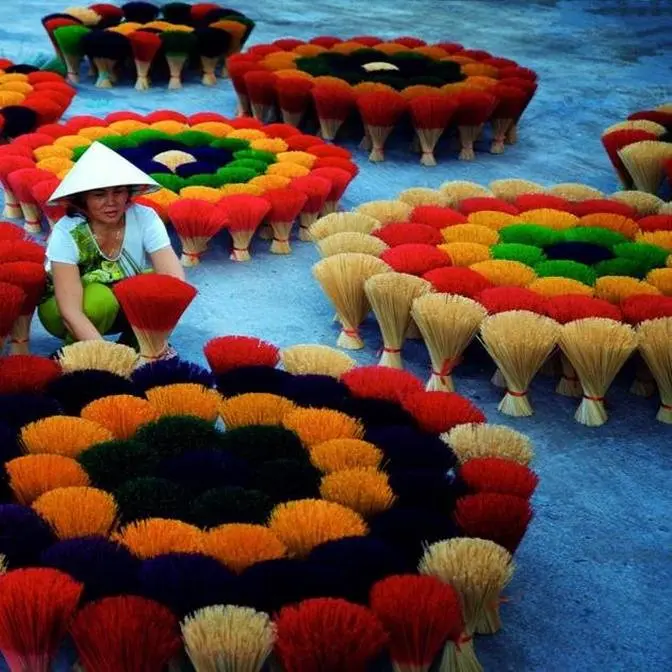
5 Lượt xem video·28 thg 5, 2024
Nghề truyền thống làm hương bài không chỉ là món quà quý báu cha ông đã để lại mà hơn hết, nó là biểu tượng của mạch nguồn văn hóa làng, xã được hun đúc từ bao đời.
Welcome to the first episode of the series
Experience the local culture in Thần Tiên
with trips to experience and better understand
the values of the UNESCO World Heritage Park
one of the most discovered landscapes in Vietnam
And in the first episode today
we will experience and discover the special values
of the traditional village of Tuyến Ba
of Cao Bằng spring geopark, Viet Thắp village
And right now, please follow me
Viet Thắp village is located in Phúc Xen commune, Quảng Hòa district, Cao Bằng province
The village has a special geographical location
because it is at an altitude of about 1,000 meters
compared to the sea level, on the mountain range of Đa Phôi
is the main residence of the people of Nụ An
Viet Thắp village has a long history of culture
associated with traditional incense making
for hundreds of years
In Vietnamese culture in general
incense is considered the bridge between modern life and the spiritual world
Viet Thắp village is an important link
has and is contributing to preserving the beautiful spiritual culture of the people
Although it is not clear who is the ancestor who brought the craft to the village
but incense has brought the people of Viet Thắp
from this generation to another
and everyone in the village knows how to make incense
Therefore, the craft of making incense in the minds of the people here
is not just a job to bring income to the family
but more than that, it is a great pride
and a historical link connecting generations together
With a special geographical location and unique cultural features
Viet Thắp incense village
not only becomes an attractive destination for tourists when visiting Cao Bằng
but also a land that brings a special cultural value
of the UNESCO World Heritage Site Cao Bằng
Viet Thắp is the largest traditional incense production center in Cao Bằng
and incense here is made mainly from the unique herbs of this land
and the secret to making incense has been passed down for hundreds of years
Therefore, the incense that is made also has a very natural and unique scent
and for you to be able to imagine more clearly
right after this, I would like to invite you to follow me
to meet and talk to the local people
who have lived for decades with this traditional craft
Please
When I was visiting the village, I saw a lot of incense here
and I also have two incense sticks from Viet Thắp
Can you share with me, as you can see in the video
how to make a complete incense stick
and what materials do you use to make it?
There are almost three things
The first one is bamboo
to make incense
The second one is wood
to make incense
The third one is wood
This is the main one
What materials do you use to make incense?
This one is used to make incense
Bamboo is also used to make incense
Bamboo leaves must be dried for two days
Bamboo leaves are also bought in the market
People will try to dry it
Dry it for 2-3 days to make it
The leaves must be dried for 3 days
to make it dry
After a few days, the leaves are mixed together
to make incense
The first thing you need to do
is to mix the leaves well
If you do it the second time,
you have to mix the leaves and wood together
to make it stick
Then you take the incense stick and mix it
After finishing, do you put the incense stick in the incense box?
Or do you continue to dry it?
If you can do a lot, you can dry it
If it's sunny, you can dry it
After 5-6 hours, it will be dry and ready to be used as incense.
I understand. I know that the incense in your village is very famous.
I wonder if the incense in your village is different from the one in other places?
It's different, but the incense here is not chemical.
We make it from the time of our ancestors.
We make it by hand. There is no chemical in it.
You just do it the way your ancestors did it.
You don't add chemicals or add anything to it, do you?
No, we don't.
The incense in your village is very famous.
Yes.
Do you know how to make it?
Yes, I do.
You make it yourself?
Yes.
Do you make it yourself?
Yes, I make it myself.
Do you know how to make it?
Yes, I know how to make it.
We make it by hand.
By hand?
Yes.
We make it by hand.
We just need to make it by hand.
If I make it by hand, it will fall from the tree?
We just need to make it by hand.
If there is no incense, we make it by hand.
We make it by hand?
Yes.
We make it by hand.
And they can't get enough.
We have to raise by 50%
The farming industry is tied with the people but it's a part of the family's economy
to keep society together.
for each person.
The traditional incense is made by hand,
with most of the steps being done by hand.
But the price of traditional incense in the market is quite low.
It is usually sold at wholesale markets in high-end provinces.
Some are sold in neighboring provinces,
such as Bac Can, Lan Son.
The raw material of incense is increasingly rare and difficult to find.
Although people have tried to change and find more raw materials,
it is still extremely difficult.
In addition, traditional incense has to compete with many traditional incense products
produced under the modern technology
to preserve and develop this traditional incense.
In addition to the efforts of the government and organizations,
the most important force is the young generation in the village.
With the youth, passion and responsibility,
they will maintain and bring the traditional incense industry
with 102 branches in Cao Bang to continue to develop further.
Steaming is an important component of the global geopark.
Maintaining and developing the traditional incense production industry here
also means protecting and developing the common cultural values
of the UNESCO Global Geopark Cao Bang.
I hope that with the first episode of the series
Experience the local culture in the real world today,
I will help you understand the special values of traditional incense
and understand the importance of protecting and developing
the natural cultural values of this region.
And if you want to experience and learn more about those special values,
please come to the UNESCO Global Geopark Cao Bang
And don't forget to experience the local culture in the real world.