
The Tudors: Henry VIII - The End of Henry VIII's Reign - Episode 28
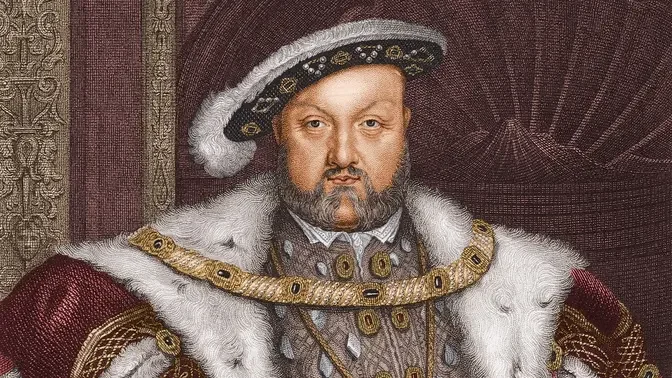
This I'm Sark and in this video we are looking at the last years of Henry VIII's reign, so
the last video of Henry VIII before we look at Edward VI. So the last years of Henry VIII
were dominated by rivalries between the Conservative and the Reform factions. Now this was encouraged
by the King's decision to not appoint a chief minister to follow Cromwell and his apparent
encouragement of the arguments between the factions. Now this was to do with his egotism
and his enjoyment of watching people fight for his attention and it also created a balanced
court between the Conservatives and those who wanted reform. Now in 1540 the Conservatives
were very confident as the six articles had been recently introduced, the greatest enemy
Cromwell had been executed and they had increased their access to the King through the King's
marriage to Catherine Howard who was the Duke of Norfolk's niece. So temporarily the
power also lay with the Conservatives such as Stephen Gardiner and the Duke of Norfolk.
However this was changed when Catherine's infidelities came to light. Now although Henry
had described Catherine Howard as his rose without a thorn, she was 19 whilst Henry was
now 49. So it was clear to others that she had other admirers in the court and in 1541 the King
was presented with evidence of her unfaithfulness with Thomas Culpepper. Now she was beheaded for
high treason in February 1542 and this did serious damage for the Conservative group. Now worse was
to come for the Conservatives when they accused Cromwell of Protestant heresy. However the King
rejected these claims and put Cromwell in charge of the investigations of these claims. Now Henry
also married Catherine Parr who was close to the Seymour family and sympathetic to Protestant
reforms. Now she was influential in the education of Edward and Elizabeth where they would become
firmly in favour of Protestant reforms. Now the Conservative faction tried to accuse her of
treason in 1546 yet Henry rebuked these claims and supported his wife. But as the King's health
continued to deteriorate the political rivalries only intensified as people like Edward Seymour
and Sir William Padgett were able to build on their positions at court. Now Edward Seymour
managed to do this by showing his military prowess in Scotland whilst William Padgett
became one of Henry the Eighth's chief advisor. On the other hand the career of Stephen Gardiner
was in decline as he had been accused of trying to reinstate the Pope as the head of a church
and his role in the plot against Catherine Parr meant that he was pushed out of the circle of
royal advisors. So this was the decline of the Conservatives in court. Now this opened the door
to the rise of other reformers such as Sir Anthony Denny and in October 1546 Sir Anthony Denny was
made Chief Gentleman of the Privy Chamber which meant that he tended to Henry's needs and decided
whether visitors could visit Henry. He was also able to have access to the dry stamp and the
holder of the dry stamp could make an impression of the royal signature on the paper. So this meant
that Seymour and Denny could legalise any document they wanted and they were able to add provision to
Henry's will so that more power was left with the Regency Council which they would be in. Now the
Conservative group was finally broken apart with the downfall of the Duke of Norfolk and the arrogance
of the Norfolk's son meant that he had openly talked about his family's claim to the throne
whilst putting part of the royal coat of arms of his ancestor Edward I onto his own family
emblem. Now as a result, Sir Henry was executed a week before the death of the king and Norfolk was only
spared the axe because Henry VIII died on the 28th of January 1547 before giving the order. Henry's
death was initially kept secret as the leading politicians discussed the transition and this was
led by Edward Seymour who began to appoint his own Privy Council. Now the succession had basically
been managed by the reformers. So now it's useful to look at the state of the Church of England by
1547 as the six articles of 1539 had reintroduced many Catholic beliefs such as transubstantiation,
community only being for the laity and an emphasis on seven sacraments. However even after Cromwell's
death, Protestant ideas were not wiped out as Cromwell remained the Archbishop, Catherine Parr
gave a Protestant movement renewed vigour and the Pope still had no control over England. But
ultimately by Henry's death, England was a Catholic country with some Protestant doctrines and no Pope.
So the Catholic doctrines in the country was that the Eucharist was seen mainly Catholic
and this included the belief of transubstantiation. Now still only the clergy were allowed to receive
both the bread and the wine as lay people only received bread. All the seven sacraments remained
in force, English clergy were required to stay celibate and many of the processions and events
of Catholic Church remained in England. However there were still some Protestant doctrines within
the country and these included the fact that although many services were held in Latin,
Cromwell had succeeded in introducing some English elements. The Great Bible of 1539 was the
authorised English version which replaced the Latin version. There was much less emphasis on
saints and the laity were forbidden from going on pilgrimages and the number of saints days had
been reduced to 25. So that shows the state of England at the end of Henry VIII's death and next
video we will look at Edward VI and his reign. So thank you for watching and see you soon, bye!