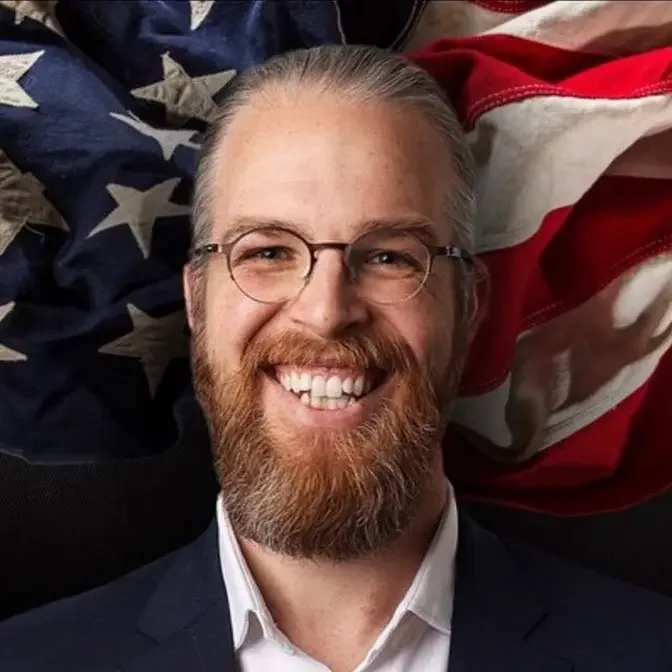
Ladies and gentlemen, welcome to Man in America.
I'm your host, Seth Holuhouse.
Tucker Carlson recently gave what I think is a really important interview
with a Swiss media company.
And he talked about a lot of different subjects, but one of the things that
really stood out to me was his perspective on where the world is at.
And he specifically noted how a lot of Americans don't really see much of the
world when looking at things through the filter, especially of the mainstream
media that's here, and even though we may not be watching the mainstream media,
the mainstream media still dictates a lot of what the conversations are around us.
So we can still be cut off from this vital information, which is why maybe
you watch this show because we're trying to give you that important information.
But something that really stood out of that interview with Tucker Carlson is
him talking about how basically that our system is collapsing.
The system that gave us the life that we know it here in America, the system
that emerged post-World War II is at its end.
And so joining me today is Dr.
Kirk Elliott to talk about what this means.
Look at Tucker's words and analyze them and really take a step back and look at
the cycles of history and where America is at right now, where the world is at
right now, and what's potentially coming next.
So folks enjoy this economic update with Dr.
Kirk Elliott.
Kirk, man, as always, it's good to have you on.
How are you doing?
I'm doing great.
Uh, getting ready for a wedding in our family.
My daughter's getting married this week.
And so never a dull moment when you've got daughters getting married, a news
cycle that's wild, Congress that that's threatening to shut down the government,
wars and rumors of wars.
I mean, there is never a dull moment.
It's true.
I guess that's one thing is that as much as, you know, perhaps someone's
complaining about the, the era that we live in.
The one thing you got to say, it's not a boring time to live.
That's for sure.
Well, it's not boring, but you know, I've asked myself this a bunch, right?
It's like, God, why, why me?
Why now?
Right.
But, but here's the thing when, you know, God knows all of the days are of our
life, right?
He, he knit us together in our mother's womb and we were born right now, not 400
years ago, not 200 years from now.
Right.
For right here, for right now, for a special purpose.
And that's to be light in this dark world.
Right.
And to, to help people navigate through it.
And I mean, neighbor by neighbor by neighbor, or in this platform, thousands
or tens of thousands or a hundred thousands of people at a time.
Right.
So, um, I'm just honored and blessed that God chose me to be alive for right now.
As crazy as that sounds, as bad as it is.
Right.
It's like, but, but yet we're, we're here for a purpose and we're here for a reason.
I I'm in the exact same boat.
I feel like it's not as, I mean, it's even more than just like I was
chosen for to be alive right now.
I feel like that we're at this war.
Like I was plucked and I was chosen to say, you're going to fight in this war.
Right.
It's, it's almost as if that's, that's like my mission, you know?
Like it's, it's what God wants me to do is just to, just to fight and to fight in
this war of awakening people and, you know, helping people come back to being
good people again, that's what I think a lot of the war is like, we got to be good
people again, like America wouldn't be in this place if we rejected this, that
the satanic agenda, like as early as we saw it, but we, we kind of is all those
little, it's not that bad that got us to where we are now.
So now we get to rip it all out.
Yeah.
Ripping it out.
That's the best way to put it.
It is.
So, so jumping into our discussion today.
So Tucker Carlson recently gave an interview with, I believe it was a Swiss
publication, if I'm not mistaken, or a European publication, and he talked about
a lot of stuff.
It was a really good interview, but one thing in particular he was talking about
was the dollar and the system that we're in.
And I think it's really important because obviously, you know, Tucker is
probably the single most influential person in the world outside of maybe a
few world leaders or, you know, from that perspective, but he's someone that gets
hundreds of millions of views on his, on his content now.
I mean, he has a massive amount of influence.
And so his words bear a lot of weight when he says them.
And so I want to bring up this article.
This is Zero Hedge.
And the title is, Our System is Collapsing in Real Time.
Tucker Carlson gives bombshell interview.
And I'll, I'll scroll down just a little bit.
Actually, I'll kind of start with the intro.
It says, they're all afraid.
It says, Tucker Carlson's unstoppable.
Since his sudden departure from Fox News, he scores record viewer ratings.
In an exclusive interview with Weltwatch, the political media star demolishes the
mainstream media's manipulation machine, reveals his concerns about a potential
Trump restoration, interesting, speaks about the disturbing state of the Biden
family and discusses what's next for him.
But there's one kind of section here I want to highlight, come to, is he's
talking about where he sees the world at and they're asking him, you know, what's
next for him and what kind of views you're expressing.
And so he says that I've become convinced over the past several years,
particularly since the war in Ukraine, that the world is changing much more
quickly than most Americans understand.
And because there's virtually no coverage of the rest of the world in American
media, Americans don't have a good sense of it.
What we in this country refer to as quote, post-war order.
Uh, the institutions set up in the wake of World War II to keep the world peaceful
and prosperous in the United States at the top of the pyramid, and that would
include the dominance of the dollar, the swift system, NATO, all of that appears to
be crumbling.
That's my view of it.
And so I, I want to, I want to dig in that a little bit because this takes us to a
much broader discussion because it's, you know, you know, you and I, Kirk, we talk a
lot about the, the, the collapse of dollar and the BRICS nations and everything.
And, um, there's a book that I read recently, it's by Peter Zeihan called the
end of the world is just the beginning.
And it's an entire book by this, this brilliant, brilliant man talking about
specifically this, about how the world that was established post-World War II with the
Bretton woods agreement and everything.
Um, the, you know, the dollar is the world's reserve currency.
That world is coming to an end.
It's not just that the dollar's dying and CBDC is coming in.
It's like that what was established with the dollar and that dominance set up really
what our world is today.
It allowed for the growth of globalism because it allowed secure trading and
everything.
And, and so I want to just really hear your thoughts on that, about where our world is
at, because, because I think that we are at the end of a, a very specific way of
life that we've gotten very used to.
Yeah, well, we did, you know, we've, we've become accustomed to this since
1944, right?
When we became the world's reserve currency with the Bretton woods act, which did
what it made all international settlements to be transacted in us dollars to actually
bring stability to the international financial order, right?
Rather than all the chaos of all these different currencies and different exchange
rates and everything else.
It's like, everything's going to be traded in dollars.
Well, when that happens, we are forced to print more dollars than what we need
domestically to fund all these international settlements.
That means capital inflow came into America.
It was automatic built in demand for our dollar.
Now, what did our politicians do with that built in demand for our dollar?
Right.
They, they built a system created on debt.
It was kind of like false prosperity.
Yeah, it was, it was real prosperity.
Right.
But it's based on, on debt.
And we went into debt to now where we have quadrillions of dollars of global
derivatives debt quadrillions, right?
Because, you know, if you can buy something and pay cash for it, that's
like nice, slow, steady growth.
If you can finance it, then you can use that other money to keep financing other
things.
Right.
And it's accelerates that growth.
And then, you know, regular debt isn't good enough.
So you, why, how about you leverage that debt?
Right.
And it's not even dollar for dollar debt.
That's where derivatives come in.
See, it's like this insatiable appetite for more.
That's actually created the world that we live in.
We couldn't have gotten to that place without being the world's reserve
currency.
Right.
So fast forward from 1944 to 1971.
So in 1971, Nixon closed the window on gold completely.
Right.
Because when, when we had the federal reserve act back in the early 1900s, U.S.
consumers couldn't transact in gold anymore.
They, they basically took the gold backing of our currency away, but
international countries could still basically ask for settlement in gold.
Right.
So there was still like this sort of quasi backing of our currency with gold.
Well, in 73, Nixon closed that gold window because France wanted debt
repayment in gold rather than stinky U.S.
dollars.
Well, Nixon gets blamed for a lot of the inflation that we have today because he
closed that gold window.
He said, no, we're not going to actually allow settlement in gold.
We're just going to give you our stinky, stinky dollars.
I would have probably said the same thing, quite honestly.
It's like option.
Should I give him my gold or should I give him our stinky U.S.
dollars?
I would have given him stinky U.S.
dollars.
Right.
So, cause he wanted to keep the gold, but what that did, the kind of.
Unintended consequence was it created a completely Fiat based money system with
no tangible backing whatsoever.
It allowed us to amass tens of trillions of dollars worth of debt, but because
we're the reserve currency with the petrodollar in 1973 and the Bretton
Woods system in 1944, we had all this built in demand for our currency, even
though we were printing money, like there was no tomorrow.
Right.
Any other country on the planet, if they were to print money, like there's no
tomorrow, the demand for that currency would go away because they're flooding
their markets with it.
And the automatic response is they raise rates in that country to try
to attract more foreign capital.
So this is why interest rates start to rise.
Right.
So, so we got to get through that period with printing as much money as we really
want because there was built in demand for our currency with not just reserve
currency status, but petrodollar.
And they were artificially keeping rates low during that time.
You know, since nine 11 really is, is when they really started to print money.
Like there was no tomorrow to try to stimulate the economy.
Now people don't remember how bad nine 11 was financially.
A lot of people don't cause it was, it was 20 something years ago, right?
But they shut down the markets.
For days or weeks.
Right.
And it's like the, they, they couldn't stop the free fall of what was happening.
And that came off the heels of, of the tech stock collapse that was during that
timeframe as well in where tech stocks came down 80% during that timeframe.
I mean, it was brutal.
So the mechanism that they decided to use was, Hey, let's just print
money like there's no tomorrow.
There's no tangible backing.
We can, and we have built in demand for our currency.
So we can do it.
So this created the cycle of debt, right?
Where everything that we see is almost like a Potemkin village, right?
It's just this false front buildings and there's nothing behind it.
Right.
The, the entire global system is based on debt.
And once that, that, uh, kind of water faucet of debt gets shut off, the
whole thing comes collapsing down really.
And so this is what Tucker Carlson is referring to where economics.
So there's, there's cycles.
And I think maybe I can explain it in cycles.
So financial problems lead to economic problems, economic problems,
lead to political problems, political problems, lead to
geopolitical problems all the time.
Right.
So, so for example, you look at the banking crisis that we saw in
2008 subprime land subprime lending.
Well, that led to an economic crisis.
It was turned into a national thing.
They actually then had to change policy, which turned
it into a political process.
They created laws like Dodd-Frank bill and other things.
It's restricted our freedoms.
And now we have geopolitical problems because of it, because we're stealing
money out of other countries wallets by printing money, like there's no tomorrow.
That's what that cheap credit did.
You can see the same cycle in 2000.
When, when you had the tech stock bubble that was erupting and, and
Bush at the time had a very low popularity rating, the economy is really stinky.
So then what happened?
That turned into a political problem after nine 11, where they started to do
like Patriot Act and things of that nature.
Well, then that's still going on today.
And with all of that, you've got this geopolitical conflicts
that arise from all that.
These cycles play out the same every single time.
And they go through that.
And we're seeing the same thing right now.
I love studying cycles.
I really do.
I know that you've interviewed Martin Armstrong before and, and he's one of the
best cycles guys I've ever studied ever.
Right.
And, and, and he says that the food and heat, you know, if you have lack of food
and you have too much heat makes you grumpy, right?
I mean, so these kinds of cycles that we're in right now are leading us into
social unrest and then war site.
So we're in this war cycle right now, and it's all a function of, of the social
cycles that are actually imploding and people start to make crazy decisions.
But some of this stuff we can't avoid because it's human nature.
It's it's, you get too much of something and you just have to like cut it off.
Right.
It's like going cold Turkey.
We've got too much debt.
See, and now you've got Congress that has to vote on the debt ceiling.
And I'm not so convinced that they're actually going to raise it
willy nilly like they have before.
I think there's going to be conflict and opposition this time because you've got
so many factions fighting right now.
You've got part of the GOP that basically is hard money crowd, right?
That says what?
They're, they're saying we're not going to raise this at all.
We've got too much debt.
This is detrimental to future generations.
You've got part of the GOP now that says there's no way we're going to cut spending.
Right.
It's like what you're, you're part of the GOP and you said there's no way you're
going to cut spending and entitlements.
Right.
And then you've got part of the democratic party.
That's talking like the GOP and, and this becomes a problematic cycle because they
know that with what Tucker Carlson was talking about, this, this paradigm shift
of losing the petrodollar, losing our reserve currency status, the bricks
nations rising up, we've got problems with NATO, coupled that with an interest
rate cycle and unsustainable debt.
If we don't raise the debt ceiling, you got social unrest like crazy,
which what follows that a war cycle.
But if you raise it, what are you going to do?
You're going to have to raise interest rates even more to slow down that inflation.
The rest of the world is already starting to dump us treasuries.
I mean, you raise rates too much more from where they are right now.
I mean, listen to these numbers, these numbers.
I just did this research a couple of days ago, but 51% of all banks in America now
have tighter lending standards, which means it's harder to get a loan for, for
businesses or for individuals or for home equity credit lines or construction loans
or anything.
So over half now commercial lending has plummeted 52% in the second quarter alone.
So the second quarter commercial real estate lending came down 52% and the
number of loan originations that banks have done in the past 12 months in the
past year is down 73%.
Why is this?
Because of rising interest rates and because of lowering wages.
So this is the cycle that, that Tucker Carlson is talking about where he sees
everything is kind of unplotting and unwinding at the same time.
It's not going to be a soft landing.
And I hate to be a prophet of gloom and doom and the bearer of bad news.
It's just the end of a vicious cycle that they let go on for too long.
Right.
They, they kept keeping interest rates artificially low, artificially low,
artificially low, kept building up that debt.
So now when the interest rate cycle changes, they can't keep rates at zero
forever and you built up all of that debt on these low rates, unless you pay off
the debt, the low, the rising interest rates is going to be the kiss of death.
You can't pay off that much debt that quickly.
You realize it's 20 years of basically unencumbered debt creation.
You can't pay that off real quick.
And, and the rates are rising.
This is what's giving rise to the BRICS nation saying our time is now.
We've been waiting patiently in the ways we've been building up our infrastructure.
We've been building up amassing tons and thousands of tons
of gold backing our currency.
Our time now is to strike.
Right.
And I think that's what they're doing.
And that's what Tucker Carlson's alluding to.
There's this other article that was on zero edge recently.
I feel it's funny because it came out maybe a week or so before that Tucker
one, which, which really hits the nail on the head, the coming collapse
of the global global Ponzi scheme.
I'll read the first paragraph.
It says it won't be long before governments around the world, including
the one in Washington self-destruct strong words, but anything less would be
naive as economist Herbert Stein once said, quote, if something cannot go on
forever, it has the tendency to stop a good point, right?
So he's a case in point fiat money, political regimes.
Um, and they say that, uh, interventionist economies of the West
are in a fatal downward spiral comparable to that of the Roman empire
in the second century burden with unsustainable debt and the antiprosper
anti-prosperity policies of governments.
So this is, I mean, it's hitting it in the nail on the head.
I mean, it's, this is just the, where things are at in history.
And I didn't, I did a show with, uh, John Perez last week about real estate.
And it was, I mean, it was pretty serious and sobering looking
what's happening in the real estate.
I mean, it's obviously a crisis, but here's the, the kind of the big
question was it, was it a Roman Manuel?
Wasn't he the mayor of, um, Chicago who said that never let a
good crisis go to waste.
Right.
And so this is a, a crisis, uh, you know, from the cyclical perspective, this is
a massive, you know, it's like every couple of years or even more this type
of crisis, like where a global system like this, like the global Ponzi scheme.
Collapses.
And my concern is their solution to it.
Right.
Never let a good crisis go to waste, which also means, well, what if they
help create the crisis is because crisis has become great tools to bring in
things like central bank digital currency.
And so that brings us to this, another article I wanted to talk about with you.
Because we've talked a lot about CBDC and how this all fits in, but right here
about cash will be no refuge under CBDC.
So there's a lot to unpack here, but you know, one thing I want to bring your
attention to is just this tweet talking about how Australia will be
functionally cashless by 2025.
I mean, these are major Western nations that are already stopping.
Um, they're laying the groundwork to get rid of cash altogether.
I mean, this is to me, like what you can see unfolding here, whether they're
successful or not, is the collapse of the system at the same, same time as
them bringing in their new system.
Yeah.
I mean, for, so for Australia to be limiting ATM withdrawals to $500 a day,
what are they doing there?
They're limiting the amount of paper cash in available in America, just this
year alone, we've seen $1 trillion reduction M2 money supply, which is
checking his accounts, savings accounts.
You know, you're, you're very liquid capital in banks, a trillion.
Right.
We've seen not only that, but we've seen now banks.
I mean, they're, they're story after story after story that I've seen just
over the last week and a half.
I mean, this is, this is why we haven't seen this kind of stuff recently, but,
but Wells Fargo, um, not, not allowing a withdrawal and not allowing a deposit of
$203,000 in a client's bank account, because they said they couldn't verify
where the funds came from, even though it was from, uh, an adoptive mother's
estate from another bank from farmers and merchants bank, right.
It's like, geez.
So, so it showed up and then it didn't it's like lady saw it in the account.
And then three hours later, it was gone.
It's like, where'd it go?
Well, we don't know.
We'll have to investigate it or, or people who, who like, Oh, what's the,
what's the name of the what's green dot bank.
So green dot bank, nobody's ever heard of green dot.
I've never heard of green dot bank until last week.
So, but green dot bank does the, the background for Uber for quick
books, like for into it and Apple pay.
Right.
So it's a technology bank, but they also are tied to treasury direct.
So they do all of their, their investments into us treasuries
right from treasury direct.
Well, treasury direct changed the rules and said, we're not, we're not
actually allowing any kind of inner term redemptions of us treasuries.
You have to wait until they mature.
So now all these people that are needing money out of their bank
account that were put into treasury direct because treasury direct, which
is the U S treasury is basically withholding people's withdrawals.
They're withholding all of them.
So imagine if you're a retiree, Seth, and you've got this green dot bank and
you've got your money in treasuries or whatever, and there's all this social
security automatic deposits going.
Well, then they say, we're not, we're not allowing you to withdraw.
It's like what for like a day for a week or like for how long this
has been going on for six months.
And I'm just hearing about it, right?
Because green dot bank isn't that famous of a bank, right?
But they've been withholding withdrawals for six months.
Then there was another bank city bank actually did the exact same thing.
Uh, deposit showed up, disappeared.
They can't find it.
They said, we sent it back to the other bank.
The other bank has no record of it.
So where's this lady's $120,000 retirement.
It's gone.
See, there's a lot of weird stuff happening on right now in the banking
world, but I see this as a precursor to, well, we've got a solution.
Let's just get rid of this paper cash system that we've got.
Right.
Because you create crisis that's so bad that people will want
something that's different.
So you and I have been talking about central bank digital
currency for months now, right?
Well, just two days ago, um, city bank actually unveiled their central bank
digital currency to institutional clients only, right?
So, so not to their individual clients, but you have no choice.
If you're a city bank customer, if you're going to use this fed now app and use
their central bank digital currency, if you're a business owner or institutional
client, they just rolled it out.
You can't opt out.
It is what it is.
So they're going to force people and say, well, maybe I just have to
go to a different bank then.
Right.
So you're starting to see weird upheaval and almost like a forcing of the
decision-making process to happen right away, which tells me what's when, uh,
so it's hard to pinpoint what's the chicken and what's the egg right here.
We, because everything's happening at the same time, creating conflict,
creating unsustainability, pulling money out of the system.
Uh, people are afraid withholding bank accounts, forcing now a new system and
people have to comply or else you can't have a bank account there.
Right.
Then we're seeing ideological uses of funds being the, the divorce
agent from you and your money.
Like with Nigel fraud, with Dr.
Mercola with capital pun gateway pundit.
Right.
You're seeing these things start to happen.
It's like, Hmm, Hmm.
The things Kirk and Seth have been talking about are actually happening like right
now and Tucker Carlson doesn't really pinpoint the exact reason why other than
that, that really article, it's a long art, but it was an amazing, right?
If you scroll through it, he, he interviewed the, um, premier or president
or whatever you would call it of United Arab Emirates, what was his takeaway?
This guy is very humble and very wise.
Like the wisest person I've ever talked to in my life.
Kind of wise.
And then he says, humility is the key to wisdom.
And the contrasting agent there is he doesn't know any politicians in America
who have that kind of humility, right?
And so they've been waiting in the wings, waiting, waiting, waiting for decades,
building up this brick system.
And now they're just ready to strike.
Right.
So there's humility and there's there.
Now I'm not saying everybody at the bricks nations are humble.
Putin certainly isn't right.
But, but some of these people that are not part of American politics that are all
about control and manipulation and, and things of that nature, it's like, we're
seeing a shift.
We're seeing a power shift from the West to the East.
It all boils down to money.
It all boils down to people control, which is all about money.
Right?
So as you look at this kind of stuff, no wonder I keep referencing back to it, but
no wonder Tucker Carlson sees the beginning of the end, right?
And this unraveling that's starting to happen because we don't have, we don't
have the ingredients to a good recipe in this.
We're not operating with humility.
We're operating with pride.
We're not operating with obedience.
We're operating with disobedience.
We're not operating with love.
We're operating with hate and division, and there's no unity in any part of our
world right now.
We're not, we're not operating, um, with self, uh, restraint on our spending.
We're operating out of unrestricted debt, right?
Um, everything that you need to be a prosperous nation, we've got the
opposite happening right now.
Oh, we really do.
Um, I think there's a resurgence of people trying to get back to what you need as a
but it's, I mean, it's such a small percentage of people.
Um, something else I wanted to just kind of touch on that article had mentioned
the one about, um, CBDCs is it just, it was an interesting point about saying
cash doesn't buy you freedom under CBDCs.
Cause that, that's also, um, you ask, we'll see that coming.
Okay.
What do you do about it?
Right.
I, the author says there's an error in thinking, um, uh, the, or says the
error in thinking so arises from a failure to understand that cash is simply
older iteration of what digital cash is.
And CBDs are going to be denominations in a currency backed by nothing and
controlled by the very state you're trying to protect yourself from.
It says it gets worse because this is also the same state that has already
weaponized the currency against you.
Either slowly via targeted inflation, AKA theft, or overtly as you saw in
Canada during the freedom convoy.
The only thing I can see happening to the paper cash economy after a given
country has successfully gone cashless is that the paper currency will lose
most of its value and everything gets far more expensive when priced in terms of cash.
And the author makes a really good point here too, saying that it'll be
easier to destroy cash than ban it.
This is far easier after all governments and central banks have been
destroying cash throughout history.
And here they have this, this little graph showing the dollars worth and
how the purchasing power you've talked about is 99% of what it was, um, you
know, before, so it just, it's, it's an interesting perspective on this because.
Again, never let a good crisis go to waste.
Um, and if they can use that crisis to advance their agenda, they certainly
will and saying that that's also why, why we see, you know, Biden, we then
now come out that they're paying for small business loans in Ukraine and
they're paying for the entire, you know, uh, first responders in Ukraine.
I mean, they're just dumping money over into there because I think a, because
it's being laundered back to the politicians here, but I think B because
they realize they're at the last 1%, the 1%, and they're just trying
to just hasten that collapse.
I think in a lot of ways, um, they're, they're on some sort of a
before 2024 election to get some of this stuff done, but, um, it just
makes, it makes interesting points in there.
Well, okay.
So the whole concept of banning a currency versus like just destroying it.
Right.
So it's easy to make inflation with a digital currency much easier than it is
with paper money because with paper money, there's a process, right?
You've got to cut down the tree.
You make it into paper.
You put, you know, make it into the big sheets of whatever.
And they've got the strips of metal going through it.
And then you put it through the printing press.
You put ink on it, you cut it, you band it up and you have to bring it to all
the different federal reserve banks.
Right.
So there's a lot that goes into making a trillion dollars.
I mean, that's a lot.
I mean, truly a trillion dollars, like thousand millions.
It's, it's a lot of money.
Where, how do you create a trillion dollars digitally?
You just hit zero a few times and say, okay, money supply done.
So I, I truly, I just created a trillion dollars just in, on my
fake computer here, right?
So it's easy and it's fast, but what comes with it is not just the ease of
inflation creation and destruction of a currency, right?
It's, it's people control.
So there's more to it than meets the eye.
See, they've been eroding our currency since 1913 when the federal reserve
act, where it is only worth one penny of what it used to be back then.
Right.
Where, but imagine if you could do that with the press of a few buttons, you
know, like the Zimbabwe dollar, right.
Or the Argentinian peso or the, or the Venezuelan Bolivar, right.
I mean, we're talking about millions of percent of inflation, like these
places have seen in very short order.
When you're as big as we are and you lose the demand for that currency
globally, politicians are going to be forced to just print like there's no
tomorrow, so they would rather devalue it, destroy it rather than ban it.
Right.
I mean, this is the weird era that we're entering into.
Yeah, it really, it really is.
Um, it also makes me think too, and we know that, you know, they've talked
about, uh, inflation being a weapon to be used against us and I mean, imagine
if, let's just say it's a token based system and all your money, say you have
a hundred grand, the bank account that's now is a hundred thousand tokens.
And it's okay.
Well, milk is five tokens.
And then the next day you look at milk is 10 tokens.
And then, you know, a month later, milk is 20 tokens.
It's like they can, they can control and program if it's
programmable as they wish.
So that could certainly be a way of, it's like, okay, well, if the masses
are revolting, let's double the price of milk, we'll see all that, how they,
how they love that, which gives them just even more control.
Um, so Kirk, we're, we're rounding out our, our kind of time together here.
I know that, you know, you and I have talked, we talked a lot about gold and
silver, obviously as the solution to this.
And, um, you know, a lot of the new viewers, maybe it's a new concept to them,
but, you know, we've, uh, it's not necessarily a broken record, just that's
the record that's on play right now, because that's just where things are at.
Yeah.
Well, it's really where it's at.
And you know, we're not the only ones that are buying gold and silver, right?
You look at what central banks are doing right now.
We have the largest amount of gold holdings at central banks
ever in the history of the world.
I mean, it's this new era that that's coming.
I mean, there's a chart in that article that's on the screen right there.
It's like, we, when did we see a downturn 2007, right.
When they actually were central banks were selling their gold, right.
And they were printing paper money and they were trying to stimulate the economy.
Right.
But, but now it's been this resurgence since then, then it's almost
like they knew what was coming.
It's almost like they knew that when you print money, like there's no tomorrow,
like they did and provided stimulus to get out of 2007, eight, nine, and then
you have COVID and you printed money again, like there was no tomorrow.
What were these central banks doing when they were doing printing all this money?
They were buying gold because they know that the end of the system is not
when that happens, right.
And so what is going to be part of the backdrop of a new system
could be a gold back currency, right?
This is where there's a light at the end of the tunnel.
I think the government overreach that we're seeing from the world economic
forum for the bank for international settlements for them, the IMF, the G20
nations, right.
They want to put all these controls, all these unrestricted
printing of money things on us.
You're starting to see behind the scenes, um, states rise up.
We just had federal registration legislation at the house past the
committee level, so it's going to go to the house floor for a vote
on banning CBDCs in America.
Now, I mean, so does that mean it's going to pass?
No, because I doubt that it gets past the Senate, but what it does mean is
that people are now talking about it and they're seeing the overreach.
And that's exciting to me because enough people speak out against it.
It won't pass.
Right.
It's like you, you we're moving into an era where truth is really starting
to manifest itself in a big way because the lies are so huge, right?
So, so here's where I am encouraged.
We can allocate in our own personal finances like central
banks are doing behind the scenes.
While they may be poopooing gold with their mouths, they're
certainly not with their wallets.
They're buying as much as they possibly can to record levels.
Over 38,000 metric tons of gold are now held by central banks.
That's a lot.
And the thing is, that's what's reported.
China stopped reporting its gold holdings years ago, right?
So who knows how many is actually owned out there, but it's at least 38,000 tons.
So we can on a smaller scale, individually ounce by ounce by ounce,
start to do the same thing that the central banks are doing by the hundreds
of tons or thousands of tons and protect and preserve and grow and thrive for this
new economic world monetary system that is coming, it's coming, right?
I don't think we can stop it, but what we can do is counteract it and thrive.
Exactly.
So if folks want to go get ahold of you, it's goldwithseth.com or the
phone number 720-605-3900.
And if someone fills out the form on the website, there you
scroll down goldwithseth.com.
If they do that, or if they call you, what's that process look like?
What, what happens next?
So it's real simple.
You'll talk to one of my amazing concierge team members, and they'll
just ask you some questions wondering, Hey, what was it that Kirk and Seth
were talking about that caused you to want to reach out?
You know, what are you trying to protect?
And then you'll be scheduled with one of my advisors.
We'll actually dig in a little bit deeper because we want to set up a
strategy moving forward that allow you to thrive rather than just survive, right?
Because we want to hear your dreams, your, your concerns, your fears,
your aspirations, your goals.
What do you want?
All of it all jumbled up because we want to put together something that'll,
that'll actually stand the test of time and allow you to thrive.
And believe me, this is how you and I can both have a smile on
our face because there is.
Yeah.
We talked about a lot of dark stuff every single week, right?
The economy collapsing, petrodollar going away, inflationary
pressures, money running out.
But in all of that, those are all stimulus factors that
cause gold and silver to go up.
You know, we can't change some of those things, but we can identify
them and act accordingly.
And this is where we really start to thrive.
Perfect.
Well, Kirk, thanks again for coming on.
It's always fun having you.
I appreciate it.
Thank you for what you're doing.
That's my pleasure.
We'll talk soon.
All right.