
THE LIFE OF HENRY VIII (part 3) | Tyrant King | Tudor monarchs’ series | History Calling
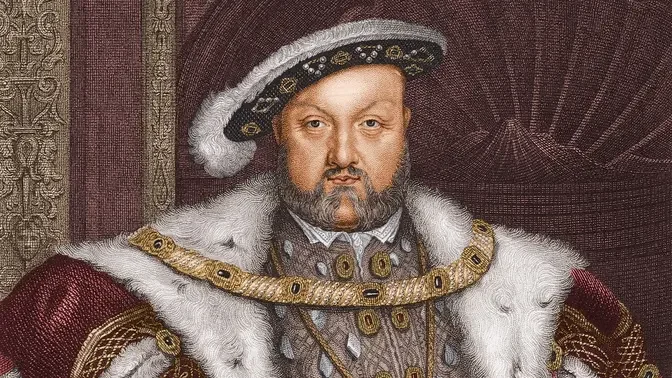
Hi history lovers and welcome or welcome back to the channel.
It's the 20th of May 1536, the day after the death of Anne Boleyn,
and already her husband has become engaged to one of her ladies-in-waiting, Jane Seymour.
As you may know, however, Henry and Jane wouldn't have a happily ever after
any more than Henry and Anne had, and the King would in fact marry four
additional times post-Anne before his own death in 1547.
In this week's History Calling video, which is my third on the life of Henry VIII
and the fifth overall in my Tudor Monarchs series, we'll be looking at the last decade
or so of Henry's life, including his marriages to Jane Seymour, Anne of Cleves, Catherine Howard
and Catherine Parr, as well as his response to the Pilgrimage of Grace in 1536, his invasion
of France in 1544, his failing health and increasingly tyrannical behaviour, and his
relationships with his children, Mary, Elizabeth and Edward.
I'm sure you all know the drill by now, but just a quick reminder to please like,
comment on and share this video, and subscribe to the channel with notifications switched on.
You can check out the rest of the Tudor Monarchs series, plus my series on the
Six Wives of Henry VIII, using the links to those playlists in the description box.
There are also lots of links for books, movies, TV shows and documentaries down there if you'd
like to learn more, and a link for my Instagram account, which is historycalling,
if you'd like to follow me over there.
After their speedy engagement, Henry and Jane were married on the 30th of May 1536 in the
Queen's Closet at Whitehall. This was the first of Henry's marriages which was, to his eyes at
least, undoubtedly legal, the Archbishop of Canterbury, Thomas Cranmer, having issued the
couple with a dispensation to marry despite being fifth cousins. Henry's new marital bliss
was tempered by loss elsewhere, however, for on the 23rd of July, his illegitimate son,
Henry Fitzroy, Duke of Richmond and Somerset, died at the age of 17.
His relationship with his daughters was not good at this point either. He temporarily forgot about
Elizabeth in the wake of her mother's disgrace, and she soon ran out of clothes now that Anne
was unavailable to send money for her wardrobe. With Mary, however, who had been in her father's
bad graces for several years over her refusal to acknowledge the illegality of her parents'
marriage, things slowly improved, though only because Henry finally broke her spirit and
forced her to admit that she was illegitimate. The new Queen Jane also promoted better relations
between father and daughter, and Mary came to court and saw the King on the 6th of July 1536
when he showered her with attention and a thousand crowns in money.
That same month Parliament passed a new Act of Succession which allowed Henry to appoint his own
heirs, and he did eventually restore his daughters to the line of succession,
though he never re-legitimised either. Indeed, had he died before the birth of a son,
it's anyone's guess as to who would have actually managed to take the throne.
His sister Mary, Dowager Queen of France and Duchess of Suffolk, had died in 1533,
but his sister Margaret, Dowager Queen of Scotland, who was in any case the elder,
still lived and as it stood was now his closest legitimate blood relative.
It's therefore interesting to speculate if she or her son, James V of Scotland,
would have tried to take the throne from her niece Mary if it had come to it. After all,
Margaret wouldn't have been the first royal sibling to try to do something like that.
Yes, Richard III, I'm looking at you.
Anyway, 1536 had already been a momentous year, but it wasn't over yet. In October,
a serious rebellion known as the Pilgrimage of Grace broke out in the north of England,
driven by unhappiness at Henry's religious policies, including his split from Rome,
his dissolution of the monasteries and his removal of Mary from the line of succession.
The rebels, who were led by a man named Robert Aske, were too numerous to be defeated
and the king was reluctantly forced to come to terms with them.
They disbanded in December upon receiving promises of a general pardon, a parliament
in the northern city of York within a year and no further action against the abbeys until that
occurred. Aske was then invited to court for part of the Christmas festivities and fooled
into trusting Henry's promises. When he returned to the north in the new year, he spread the word
of how well Henry had treated him and of the king's words. Not all believed him, however,
and when a small number of people engaged in a further rising in February, which had nothing
to do with Aske, Henry crushed them, then arrested Aske and many of his associates,
including a number of titled noblemen and churchmen. They were tried and convicted of
treason in May and subjected to brutal punishment. Most were killed through a combination of being
hung, drawn and quartered, or in the case of one woman, being burnt at the stake. Aske begged to
be dead before he was cut up, so Henry hung him in chains in York until he expired, a torturous
death and hardly an act of mercy. It's this combined with his treatment of Anne Boleyn
the previous year which, to my mind, marks the point where Henry really crossed the line into
tyranny. Jane Seymour may have realised much the same thing, for the Pilgrimage of Grace provides
us, and perhaps even her, with an insight into the royal marriage. She'd asked Henry to spare
the Abbeys, but he slapped her down with the threatening retort that the last queen had died
in consequence of meddling too much with state affairs, insinuating that he wouldn't hesitate
to kill his new wife too. This may suggest one reason Henry had had Anne killed, though equally
the comment may have just been designed to frighten Jane. Fortunately for the new queen, in this case
Henry's bark was worse than his bite, for by February 1537 the couple knew that she was pregnant
and it was announced to the court. This pregnancy progressed normally enough and Jane withdrew from
public life to await the birth on the 16th of September. At 2am on the 12th of October, after a
labour lasting two days and three nights, she was delivered of a son named Edward. Henry was over the
Te Deums were sung in churches and cathedrals across London, bonfires were lit in the streets,
and there was a gun salute from the tower. Within days, however, it was evident that the queen was
not recovering as she should. Having likely developed peripheral fever, or perhaps retained
part of the placenta in her womb after the birth, Jane became delirious. A little before midnight,
on the 24th of October, and after just seventeen months as queen, she breathed her last.
Henry would forever laud Jane as his true wife and love, and the mother of his heir,
but his reaction to her death shows us some mixed signals. Edward Hall, in his Chronicle of England,
said that, of none of the realm was it more heavily o'ertaken than of the king's majesty
himself, whose death caused the king immediately to remove into Westminster, where he mourned and
kept himself close and secret a great while. Yet Henry went out of his mourning apparel just
after Christmas and kept Jane's household together, indicating that though the identity
of her exact successor was unknown, he didn't expect to be single for long. Indeed, soon after
her death, feelers were being put out to the other royal houses of Europe to start the search for a
new Queen of England. Having seen this portrait by Hans Holbein, Henry favoured the sixteen-year-old
widow, Christina of Denmark, Duchess of Milan, and doubtless, had her family ordered her to
Though evidently, she wasn't too enthusiastic at the prospect, for when asked about marrying the
king, she replied that,
In the event, Henry settled on the twenty-four-year-old Anne of Cleves,
again after seeing a Holbein portrait of her, and she arrived in England in January 1540.
I've done a video on Anne already, in which I covered her childhood relationship with Henry
and her life after their marriage, so I'm not going to spend too much time on her here,
just as Henry didn't spend much time on her in real life.
After a disastrous first meeting, when Anne didn't recognise her betrothed and so inadvertently
offended him by not paying him much attention, Henry tried and failed to back out of the marriage
and had to go through with it on the 6th of January. Within months, however, he had fallen
for one of his wife's ladies-in-waiting, funny how often that happened to him, who was a first
cousin of Anne Boleyn, named Catherine Howard. Having expressed doubts as to Anne of Cleves'
virginity, certainly a lie, stated that he had been unable to consummate the marriage,
probably the truth, and that her pre-contract with the Duke of Lorraine, a convenient excuse,
meant that he shouldn't have married her at all, he had the union annulled in July
and promptly married Catherine. On the very same day as the wedding,
he also had Thomas Cromwell, who he blamed for orchestrating the whole Cleves fiasco, executed.
Catherine Howard was very young, having been born somewhere between 1518 and 1524,
making her between 15 and 22 years old when they wed, and probably, historians think,
towards the lower end of that scale. A wiser man than Henry would have realised that her upbringing,
much of which occurred in the household of her step-grandmother, the Dowager Duchess of Norfolk,
included relatively little education or parental oversight, and that though it may have given her
good manners and a pleasant air, it hadn't provided the necessary training to be Queen.
Nor was there much chance that this young girl found him physically attractive.
Now aged 49, he was plagued by a sore and ulcerous leg, which was likely the remnant of an old
jousting or riding accident. Some believe that it was caused by the jousting accident at the start
of 1536, which I discussed in my last video, however, as I mentioned there, observers in
England, including the Imperial Ambassador Eustace Chapuis, specifically said that the
King was unhurt by this fall, so I'm reluctant to pin all the blame for that injury on that incident.
Possibly it exacerbated a pre-existing problem, however, or Henry downplayed how badly he had
been hurt. Whenever the issue occurred, its results were long-lasting and horribly painful.
To quote David Starkey in his book Six Wives, which I'll leave linked below,
"...splinters of bone remained in the muscle, which created a deep and ineradicable ulceration.
It followed a cycle. The ulcer would discharge, heal over, reinfect, swell, burst, and finally
discharge, and so on. The swelling was agonizing, the discharge offered a deceptive and temporary
relief." Partly as a result of this ulcer, which made exercise difficult and painful,
and partly as a result of overeating, Henry had also put on, and continued to put on,
an enormous amount of weight. Long gone was the good-looking, athletic prince described
in my first video on Henry's life, and once referred to as an Adonis. His suits of armour
show us exactly what his physique now looked like. In 1514, his armour had fitted a man with
a 35-inch waist and a 42-inch chest. By the end of his life, his waist had expanded to 54 inches,
and his chest to 57. Perhaps spurred on by his pain, his tyrannical behaviour continued.
One example of this was his decision to execute Margaret Poole, the 67-year-old Countess of
Salisbury. She was a first cousin of Henry's mother, Elizabeth of York, and had also been
Princess Mary's governess. The Countess was accused of aiding and abetting the treasonous
activities of her sons, Geoffrey and Reginald Poole, who were beyond Henry's grasp on the
continent. The evidence against her was likely fabricated, and Henry disliked her anyway for
her constant support of his daughter Mary. He had her beheaded in May 1541 at the Tower of London,
where she is buried in the chapel of St Peter at Vincula, near Anne Boleyn and Catherine Howard,
the latter of whom outlived her by less than a year.
Though Catherine and Henry's marriage had started well, and observers noted that the
King was so amorous of her that he knows not how to make sufficient demonstrations of his affection,
and caresses her more than he did the others. Things quickly turned sour when she was accused
of having premarital relations with her music teacher, Henry Mannix, and her kinsman, Francis
Derham. Nowadays we might well say that Catherine was groomed and abused by these men, given her
youth, rather than being at any fault herself, and she certainly said that Derham pursued her
against her will. But in the 1540s she was blamed as much as they. She was also accused of an affair
after her marriage with a distant relation named Thomas Culpepper, though again she said that he
was the pursuer. When Henry was informed of the accusations via a letter from Cranmer left on
his seat in his chapel at the beginning of November 1541, he at first struggled to believe them,
saying that He could not believe it to be true, and yet the accusation having once been made,
he could not be satisfied till the certainty hereof was known. But he would not in any wise
that in the Inquisition any spark of scandal should arise against the Queen. Soon, however,
he changed his tune. There was far more evidence, and believable evidence at that, of Catherine's
indiscretions than there had ever been of Anne Boleyn, including confessions from the Queen
herself, though it remains unclear if her relationships with these men were ever fully
consummated. The King was visibly distraught and seemed to be in tears over the revelations,
but, as might be expected from him, he ultimately showed no mercy to the woman he claimed to have
loved. On the 14th of November, Catherine was put into Scion Abbey, and just over a week later,
she was stripped of her title of Queen. Mannix managed to get away with his life, but in December,
Culpepper was beheaded and Derham was hung, drawn and quartered, having both been found guilty of
treason. Having been condemned by a bill of attainder rather than a trial, Catherine and
her lady-in-waiting, Anne Boleyn's sister-in-law, Jane Boleyn Viscountess Rochford, who had helped
Catherine meet with Culpepper, were executed at the Tower on the 13th of February, 1542.
Once again, Henry found himself unmarried, but this time, unlike after Jane Seymour's death,
with no particular prospect of another wife. Eustace Chapuis stated that the King was despondent
at how things had turned out with Catherine, saying,
This King has wonderfully felt the case of the Queen, his wife, and that he has certainly shown
greater sorrow and regret at her loss than at the false loss or divorce of his preceding wives.
In fact, I should say that this King's case resembles very much that of the woman who cried
more bitterly at the loss of her tenth husband than she had cried on the death of the other nine
put together, though all of them had been equally worthy people and good husbands to her. The reason
being that she had never buried one of them without being sure of the next, but that after
the tenth husband she had no other one in view, hence her sorrow and her lamentations. Such is
the case with the King, who, however, up to this day, does not seem to have any plan or female
friend to fall back upon. Anne of Cleves, who now held the honorary title of the King's sister,
entertained hopes that he would fall back on her and that they would be remarried,
but this was fantasy. Instead, on the 12th of July, 1543, at Hampton Court Palace,
he married the twice-widowed Catherine Parr, then known as Lady Latimer. Catherine was in her early
thirties, intelligent and good-looking, with no children despite her previous marriages.
Her second husband had only died in March, 1543, and she had hoped to marry Thomas Seymour,
Jane Seymour's brother, hopes which were dashed, for the time being at least,
when the King took an interest in her. She likely came to his attention due to her position in his
daughter Mary's household, and she ultimately got along well with all Henry's children,
taking a motherly interest in the education of Edward and Elizabeth and helping to create a
calm domestic environment for the King. With her encouragement, Henry restored his daughters to
the line of succession in 1544, though, as I noted earlier, he did so without legitimising them,
something that would cause them both serious problems as they fought to obtain and hold the
throne in later years. Make sure you come back to the channel for the Mary and Elizabeth videos
to hear more about that. In the final years of his life, Henry continued to spar with the Scottish,
and there were plans in 1543 to marry his son Edward to the infant Mary, Queen of Scots.
His last great military hurrah was on the continent, however, when, in the summer of 1544,
he travelled to France to campaign against King François I with Charles V, leaving Catherine
as his regent in England, while he, among other things, laid siege to the town of Boulogne.
There was also one more marital scandal which almost cost his new queen her life.
My video on Catherine and how she survived Henry goes into much more detail on this incident and
their marriage in general than I have space to do here, plus I don't want to overlap with that video
too much, so if you like Catherine, I'd definitely encourage you to check that one out.
It's within my Six Wives of Henry VIII playlist, which I'll leave linked in the description box.
For now, I'll just give you the Cliff Notes version of the incident here.
Catherine was an ardent religious reformer who debated theology with Henry and encouraged him
to complete the reformation he had started. This went over rather badly with a king who
didn't like to be told what to think or do by his wife, or anyone really, and also put her in the
crosshairs of religious conservatists including Stephen Gardiner, Bishop of Winchester,
the Lord Chancellor Sir Thomas Risley, Sir Richard Rich and William Padgett.
When Henry complained of her to Gardiner, he seized his chance to accuse the Queen of heresy
on account of the prescribed books she and her ladies kept in her chambers,
and an arrest warrant was drawn up. Fortunately for Catherine, she found out about this warrant
and upon discovering the danger she was in, went straight to Henry and begged his forgiveness,
presenting herself as a meek and humble wife who only debated with him to learn from him
and distract him from the pain in his leg. Henry forgave her and sent away the soldiers who arrived
the next day to arrest the Queen while he was walking with her in the gardens.
Henry was now in the last months of his life. His final will was dated 30th December 1546,
though because it was signed using a stamp of his signature rather than him actually putting
the pen to the page himself, some have debated its validity. It named his children as his
successors, first Edward, then Mary, then Elizabeth. If all died without issue, the crown
was to go to the descendants of his younger sister, Mary, Queen of France and her husband,
Charles Brandon, Duke of Suffolk. Charles had died in August 1545 if you were wondering.
These included Lady Jane Grey and her sisters, who we'll hear more about in Edward and Mary's videos.
The descendants of his older sister Margaret, who had died in 1541 and whose grandchildren
included Mary, Queen of Scots, were not mentioned, though if you know anything about later Tudor
history you'll know that Mary will be making a major appearance in Elizabeth I's story when I
get to it. No protector was named for the soon-to-be Edward VI. Henry deteriorated during January and
it was at Whitehall Palace in the early morning of the 28th that he finally expired. He was buried
next to Jane Seymour in St George's Chapel, Windsor on the 16th of February. With his death,
one of the most famous reigns in English royal history ended and England's last child monarch,
to date at least, came to the throne. If you'd like to know what happened next, make sure you
tune in for the next video on the life and reign of Edward VI. If you'd like to know what happened
to Catherine Parr and the young Princess Elizabeth in the 18 months after Henry's death,
check out that video on Catherine I mentioned a minute ago. Finally, if you enjoyed this offering,
why not give it a thumbs up and share it with your friends? You can also leave me a comment below
telling me if you think Henry was a tyrant king or if he's been judged too harshly by history,
and please consider subscribing to the channel if you haven't already done so.
I'll be back next week and until then, as always, keep learning!