
6 GRAVES FOR 6 WIVES. Where are the bodies of the six wives of Henry VIII buried? History Calling
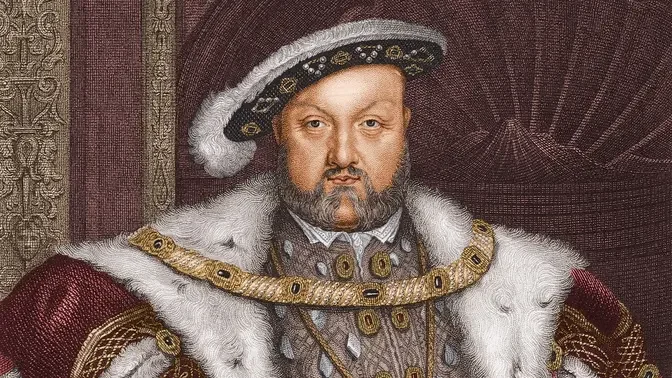
Catherine of Aragon, Anne Boleyn, Jane Seymour, Anne of Cleves, Catherine Howard and Catherine Parr.
All were married to the same man and two of them were killed by him.
But where are the bodies of the six wives of Henry VIII buried?
In today's video from History Calling, I'll take you on a tour of their resting places
and briefly explain to you what we know about their remains and why they are where they are.
You'll find out which wife is buried with Henry VIII and near Elizabeth II,
why there are six wives but only five gravesites,
who ended up in a communal grave and without a coffin and which wife's remains are missing.
I'll also tell you about the memorials to the six wives,
who erected them and how they have changed over the years.
Finally, we'll think about why none of the first three women's children,
Edward VI, Mary I and Elizabeth I, ever had their mother's bodies moved.
If you've been here for a while, you'll know that I have in-depth videos on the deaths,
burials and sometimes disinterments of these women.
These are all in my six wives playlist, which I'll leave linked on screen and below for you.
But this is designed to be a brief overview for the uninitiated
or for those who enjoy a quick recap of how the lives of these famous Queens of England ended.
I think it's also the first time I've done a video about all the wives at once,
which was part of the reason I liked the idea.
So let's get started.
I'm going to go through the wives in the order in which they died,
rather than the order in which they were Queens, which is slightly different.
But in both cases, we start with Catherine of Aragon.
Catherine was Henry's Spanish wife and former sister-in-law,
having first been married to his brother, Arthur Tudor, Prince of Wales.
And after he, Henry, abandoned her in order to marry Anne Boleyn and banished her from court,
Catherine died aged 50 on the 7th of January 1536 at Kimbolton Castle,
possibly of heart cancer, as a black mass was found on her heart during her autopsy.
Her funeral was held on the 29th of January, the very day that Anne Boleyn miscarried a boy,
and she was buried with the honours due only to a Dowager Princess of Wales in Peterborough Cathedral.
She was not placed near the high altar,
which was seen as an insult given that this was the place of greatest honour in the church,
but she is one of only two wives whose remains seem to have rested undisturbed since then,
though I did find one source suggesting that her coffin might have been briefly exposed,
but not opened in 1890. I couldn't verify if this was true though.
Her daughter Mary had intended to move her mother to a more prominent burial place,
but when Mary became Queen in 1553, she never got around to doing this.
Five years later, as she lay dying, she asked in her will that her successor,
who soon to be Elizabeth I, move her mother's remains so that the pair could lie together
in Westminster Abbey with a suitable monument over them. But Elizabeth did no such thing,
no doubt not wanting to draw attention to the plight of the woman her own mother had displaced,
and whose existence at the time of Elizabeth's birth meant that the girl's legitimacy
was seriously in question.
Speaking of Elizabeth's mother, let's now turn to Anne Boleyn, and I'm betting most,
if not all of us, already know what this unfortunate woman's cause of death was.
After having her found guilty of treason and adultery, including incest with her own brother,
Henry had her executed by sword on this spot outside the modern jewel house within the
She was around 35 years old.
No coffin was provided for his second wife, and instead, Anne's remains were placed inside a
chest originally used for arrows, and buried beneath the floor in front of the altar in
the nearby chapel of St Peter at Vincula, because like I said in relation to Catherine of Aragon,
the spot in front of the altar in a church was and is considered a place of honour,
and it is also where Anne's brother was buried after his own execution two days earlier.
The fact that even Anne got this position despite dying in disgrace really hammers
home what an insult it was to Catherine not to give her a similar honour in Peterborough Cathedral.
Something else which I think is worth mentioning about the Boleyn burials,
but which few people seem to consider, is how terrible the smell must have been.
Brother and sister were not in lead coffins, nor is it likely they had been embalmed.
Instead, they were in shallow graves and had been buried near the start of summer.
The stench must have been horrific as they decomposed.
Unfortunately for Anne, she has not rested in total peace in the centuries since her death
either. In fact, we know that she has been disinterred at least twice since then.
Before I dig in, pun intended, to the story of Anne's disinterment,
if you're enjoying this content and want more history, truer and otherwise,
please give this video a thumbs up and subscribe to my channel with the notification bell switched
on so that YouTube lets you know when I upload. For more from me, why not follow me on Instagram
too which is linked in the description box for you, as is my Patreon page.
The first known time Anne's bones were moved was in 1750, when a woman called Hannah Beresford
was buried in the same spot as the former queen. The reason we know about this disinterment,
and that Anne's remains had to have been moved when it occurred, is that she was disturbed again
in 1876 when many of the bones in front of the altar were lifted so that much needed restoration
work could be carried out on the sinking floor of the chapel. At that stage, Anne and Hannah's
bones were found and it was evident that Anne must have been disturbed at the time Hannah was
buried because Hannah's remains were found beneath Anne's despite the fact that Hannah died centuries
later. See my video on digging up Anne Boleyn for a lot more detail on this disinterment,
including a description of Anne's remains. The one question I will answer about them here
is whether they showed signs of decapitation because this is considered a good way of
The answer is no, and that is because not all of the bones were there. Possibly some had
disintegrated, possibly the relevant vertebrae was pulverised by the sword blow that killed her,
possibly it had been stolen as a souvenir at the time of the 1750 disinterment or at another date
because she could have been dug up at other times without there being a record of it.
The remains also weren't laid out in anatomical order, another question I often get,
because they were found heaped in a pile, which is hardly surprising given that they'd been dug
up before and also because of the very small space in front of the altar, which means piling
people up like this allows more body slash bones to be fitted in. Nevertheless, they were of a
woman of the correct age more or less and stature and were found in the exact place where records
indicated Anne had been placed, as you can see in this old floor plan showing the burials.
Her brother George, who was buried off to the side of her, was not disturbed as he was far
enough away from the sinking floor that his remains did not need to be moved.
Once repairs had been made, Anne's bones were placed in a lead box bearing her name,
her date of death and the date of her re-interment and reburied in the same place in 1877,
with concrete spread over the top to discourage future disinterments.
As for why Elizabeth I had never had her mother moved to a more salubrious location or even
memorialised in some way, I have always suspected that this was because the ever-pragmatic Gloriana
knew that drawing attention to her mother's death as a traitor and to the dubious legality of her
parents' marriage and her own legitimacy would do her no good and so decided to let the matter lie.
Moving on to wife number three, Jane Seymour. Jane married Henry a mere 11 days after Anne's
execution, but just as Anne had not outlived Catherine by very long, Jane did not outlive
Anne by a great deal either. After giving birth to her only child, Edward Prince of Wales,
the future Edward VI, on 12 October 1537, Jane died at Hampton Court Palace 12 days later of
postpartum complications. She was the only one of Henry's wives to die whilst still Queen of
England and she therefore had the most elaborate funeral of the lot. She was buried here in St
George's Chapel at Windsor Castle, the same place Queen Elizabeth II and Prince Philip
are interred by the way, on 13 November 1537 and though you aren't allowed to take photographs
inside the chapel, you can see the location of the vault in this old drawing. Jane does not
lie alone however. Instead, as the mother of his heir and the only wife he didn't repudiate or die
before, she has the honour, if you want to call it that, of being buried with Henry himself, who died
on the 28th of January 1547. See my video on whether he exploded after death for more on that episode.
In the vault with them are the unfortunate Charles I, who was executed in January 1649
and one of the many babies which his granddaughter Queen Anne Stuart lost in the late 1600s.
I also have a video on Anne's tragic childbearing record which I'll leave linked for you.
Henry had of course intended for his own and his third Queen's graves to be better marked
but he failed to take care of this during his own life and none of his children bothered either,
presumably having better things to spend their time and money on, which just shows that if you
want something done you have to do it yourself. The vault in which Jane lies obviously had to be
opened up each time a new coffin was put into it but those are not the only times she has been
disturbed. In 1813 the then unmarked grave was accidentally broken into by workmen and on the
1st of April that same year it was again entered by a group including the future George IV who
were seeking to locate the remains of Charles I. Each time Jane and Henry's coffins were seen
along with the others. Henry's had broken open by that point exposing his skeleton but Jane's and
the baby's remained sealed. The vault was opened again in 1888 but to the best of my knowledge
not since then. The next wife to die was Henry's fifth, Catherine Howard. After it emerged that
this young girl was perhaps not as pure shall we say as she had led her aging husband to believe
upon their marriage in July 1540, Catherine was arrested in early November 1541, stripped of her
title, imprisoned and eventually brought to the Tower of London in February 1542. There on the
13th of that month she was executed by axe, probably on the same spot as her first cousin
and predecessor as Queen Anne Boleyn. On the same day her lady-in-waiting Jane Boleyn by Countess
Rochford, the widow of Anne's brother George, suffered the same fate for having supposedly
assisted Catherine in her deception of the King. Now the eagle-eyed among you will have already
noticed where Catherine and indeed Jane were buried when I showed this floor plan of the
Chapel of St. Peter Advincula a few minutes ago. For just like Anne and George they were placed in
I have no idea if they were in any kind of coffin or box though. None are mentioned in the primary
source accounts of their deaths and I think we need to assume that we are looking at another
poorly done shallow burial which will have caused the chapel to reap for weeks, although the cold
weather at that time of year might have slowed the decay process for a time. This won't have
been helped by the fact that by February 1542 the Boleyns and Catherine weren't the only people
buried in this way in front of the altar. Henry had had his mother's cousin the elderly Margaret
Cole, Countess of Salisbury, killed in May 1541, basically because he was angry at her son but
couldn't get to him as he was living in exile, so she too was mouldering under the floor at this
stage. Now you might think that Catherine's remains must have been disinterred at least
once in the 1870s just as Anne's were but it's actually a little more complicated than that.
Yes, the spot where she was buried was dug up at that point and remains felt to be those of Lady
Salisbury and Lady Rochford were found but there was no sign of Catherine. This leads us to one of
three conclusions. The Victorians who dug up the floor of the chapel of St Peter at Vincula felt
that Catherine Howard's bones simply weren't there because they had broken down completely
and there was nothing left of her. This is entirely possible and it must be said that
there wasn't much left either of the other women buried next to her. The next option is that she
is still buried there and those carrying out the disinterment simply got the location of her
remains wrong and didn't end up disturbing her, just as her cousin George Boleyn, buried at the
opposite end of the altar, was not disturbed during the same dig. The third is that her
remains had already been removed at some unknown point in the past which I think is unlikely. Still,
what exactly happened to the bones of Henry VIII's fifth queen is a mystery which is unlikely to ever
be solved. The next wife to die was Henry's final spouse, Catherine Parr. She had married the king
in 1543, he was her third husband, and outlived him by about a year and a half. After Henry's
death in 1547, she quickly married for a fourth time to Thomas Seymour, brother of Queen Jane,
and by early 1548 she was pregnant with her first child. Tragically, just like Jane, she died of
childbirth complications in early September after delivering her daughter Mary at her home,
Sudley Castle. That little girl died as a toddler by the way. As a Dowager Queen, a large funeral
might have been expected. However, as the first member of the royal family to die in the reformed
faith and not in disgrace, a point was made of having a very stripped back and quiet affair.
Again, see my dedicated video on Catherine's death and burial for an in-depth look at this.
She was buried at Sudley Castle and in theory that should have been that. As my deep dive video
will also tell you though, it was not, and in fact the treatment of Catherine's remains between the
1780s and the 1810s is the worst of any English royal that I'm aware of. She was dug up and her
corpse, and what you're seeing here is an actual drawing of her real body, was abused multiple
times, including being basically torn apart by a bunch of drunks, and it was only in 1817 that
what was left of her was reinterred at St Mary's Chapel at Sudley for what has so far been the last
time. That brings us to the last wife to die, though not the last to have married Henry VIII.
I'm speaking of course about Anne of Cleves. Anne was briefly Henry's fourth consort from
January to July 1540 before he left her for Catherine Howard, but she remained in England
after the annulment of their marriage with the title of the king's sister. She then outlived
Henry, all his other wives, his son Edward, and made it into the reign of his daughter Mary,
before dying on the 16th of July 1557 at the age of about 41. There's a little bit of a debate
about when her birthday was. She expired at her London home, Chelsea Manor, and the primary
sources don't specify what her cause of death was, though I know some modern writers have speculated
that it might have been cancer. At the time of her death she was an avowed Catholic, just like
the then Queen, and Mary made sure her one-time stepmother had a large funeral which followed
Catholic rites, before her burial next to the altar in Westminster Abbey. From that day to this,
Anne has, to the best of my knowledge, remained completely undisturbed, and though her grave is
not one of the most ostentatious in the Abbey, she is buried in one of the most prestigious
buildings in the United Kingdom, and arguably in the world. When we look at how Henry's other
cast-off wives were treated, she's definitely done the best. Let's turn now to the memorials to these
women. Catherine of Aragon's tomb was originally enclosed by railings with an altar over it,
and the hearse which had held her body before its burial. These items seemed to have remained
in place until Oliver Cromwell's troops arrived and destroyed them in 1643. The grave was repaired
in 1725, and a small brass plate with Catherine's name and date of death was placed on the floor
above her remains. The last of the original monument was removed in 1792. The lettering
on this little plaque was almost gone by 1859 though. Then, in the 1880s, a fundraising campaign
started by a little girl also named Catherine gathered up enough money to have the monument
you see today installed, and there was also an annual celebration of her life in the cathedral
every 29th of January to mark the anniversary of her interment there. Mary of Tech, wife of George V,
also had the memorial improved in the 20th century by restoring Catherine's title of queen to her,
something Henry had of course taken from her in life. Anne Boleyn and Catherine Howard's graves
were both unmarked until the 1870s. After Anne was disinterred, memorial plaques for her and the many
others buried close to her were laid into the floor, including for Catherine, even though her
remains had not been located. They do also have other memorials though. On the wall next to the
Jane Boleyn has somehow been left out. And outside the chapel is a glass memorial unveiled in 2006
with a glass pillow in its centre and the names of those executed within the tower's grounds around
the outside, along with a poem. I have a video all about these memorials, which is also part of the
Six Wives playlist I mentioned at the start of this video, so again you can check that out at
your leisure. Jane Seymour's grave was only marked in 1837 when a black marble plaque was placed in
the floor of St George's Chapel, possibly slightly to the west of the actual vault in order to protect
its location or ensure the symmetry of the floor. This very simple marker reads, in block capitals,
in a vault beneath this marble slab are deposited the remains of Jane Seymour,
King Henry VIII, 1547, King Charles I, 1648, in our modern calendar he died in 1649,
and an infant child of Queen Anne. This memorial was placed here by command of King William IV,
1837. Catherine Parr did have a tomb marker put up soon after her death and it is likely the one
we see in this 1582 image, but it is long gone. It was an alabaster monument with a Latin inscription
written by her chaplain Dr Pankhurst, which is loosely translated here, the translator took some
liberties in order to make the whole thing rhyme. It read, in this new tomb the Royal Catherine lies,
flower of her sex, renowned, great and wise, a wife by every nuptial virtue known, and faithful partner
once of Henry's throne. To Seymour next, her plaited hand she yields, Seymour who Neptune's
trident justly wheels. From him a beauteous daughter blessed her arms, an infant copy of her
parents' charms. When now seven days this infant flower had bloomed, heaven in its wrath the mother's
soul resumed. After this monument was destroyed due to lack of care, and of course the multiple
times her remains were disturbed, the grave was not properly marked for centuries and it was only
in the 19th century that the monument you see today was erected. It was beautifully done though
in my humble opinion and she probably now has the best and most easily viewed grave marker out of
all the wives. Anne of Cleves grave was marked soon after her death as well, but her monument was never
finished. It is hard to see from the abbey floor nowadays as it is obscured by some later monuments
but it bears her initials A.C. and is decorated with a crown and skulls and crossed bones. You can
also see her coat of arms on the right hand side of it. According to Westminster Abbey's website it
quote was probably made by Theodore Javius of Cleves. It was only over 400 years later however
that the inscription was added which reads Anne of Cleves Queen of England born 1515 died 1557.
I hope you've enjoyed this all-in-one look at the afterlives of the six wives of Henry VIII.
Thank you to my patrons for their support. If you'd like to join them click on the link to
my Patreon site in the description box and also to those of you who donate using the
thanks button underneath videos. Your generosity helps to make such videos possible. Let me know
in the comment section which of these women's graves you have visited and or which you would
like to see the most. And until next time, keep learning.