
THE LIFE OF HENRY VIII, part 2 | The story of Anne Boleyn | Tudor monarchs' series | History Calling
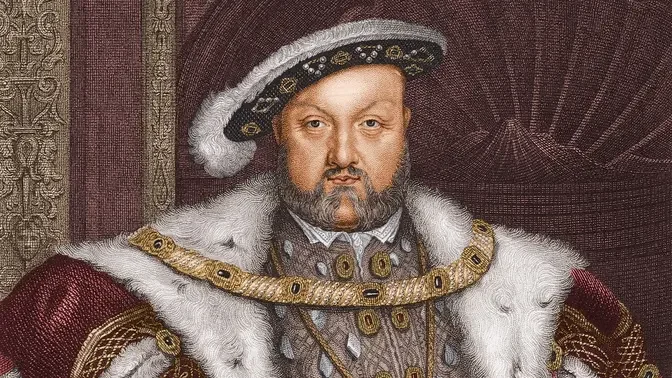
Hi everyone and welcome or welcome back to History Calling, where I bring you new history videos
every Friday. Today we're returning to the life of Henry VIII to look at the story of Anne Boleyn
and her relationship with the King. This video will cover their love affair from its beginnings,
including Henry's gooey love letters to Anne, one of which I'll be showing you,
through to his annulment from Catherine of Aragon, marriage to Anne, his response to the birth of
Elizabeth I, as she would later become, and their story's ultimately tragic end. I'll be sharing
details of Anne's trial for treason, adultery and incest, her final moments on the scaffold,
and the new evidence which only came to light in 2020, which proves how Henry methodically
planned the judicial murder of the woman he claimed to have loved. This is the fourth video
in my Tudor Monarch series and if you like the Tudors, I'd encourage you to have a look at the
other videos and at my Six Wives of Henry VIII series. I'll leave them linked on screen and in
the description box. There are also lots of links down there for books, movies, TV shows and
documentaries if you'd like to learn more about Henry and Anne. Don't forget to like, share and
comment on this video too, and subscribe to my channel with notifications switched on.
When we left Henry in the last video, he'd been on the throne and married to Catherine of Aragon
since 1509, but by the mid-1520s he still had no surviving son by her and no hope of getting one.
Instead they had one daughter, Princess Mary, born in 1516. This is where Anne Boleyn enters his
story. Anne had been a lady-in-waiting in Catherine's household since about 1522, so Henry must have
been aware of her at least as a background figure for some years. There is much debate amongst
scholars as to when he began pursuing her, but it was almost certainly no earlier than 1525 and
likely in early 1526. She's often painted as a femme fatale who bewitched Henry, but in fact he
was the one who ran after her and far from playing hard to get, Anne actually did make it so
challenging for the King to access her and treated him with such coolness that it would seem she was
genuinely uninterested in a relationship with him at this point. After Henry had expressed an interest
in her, she withdrew from court and returned here to her family's home at Hever Castle,
prompting the King to send her a series of remarkable love letters, which by an interesting
twist of fate have ended up in the Vatican archives, where you can view them using a link
I'll leave in the description box. Transcriptions are also available and I'll leave another link to
a free book you can look at if you'd like to read them all, as unfortunately there isn't time to go
through each one here. In these letters Henry comes off as a lovesick schoolboy, begging for Anne's
attention and drawing hearts about their initials at the bottom of some letters. As you can see from
the example here, he wrote some in French, though others are in English, and in a testament to his
interest in Anne, composed them in his own hand, despite being well known for hating to pick up a
pen. This one is particularly interesting as it's at this point that Henry asks Anne to become his
mistress. His infatuation with her is evident and he describes how long he has been pursuing her
and hints at her inscrutable behaviour. It reads,
On turning over in my mind the contents of your last letters, I have put myself into great agony,
not knowing how to interpret them, whether to my disadvantage, as you show in some places,
or to my advantage, as I understand them in some others, beseeching you earnestly to let me know
expressly your whole mind as to the love between us two. It is absolutely necessary for me to obtain
this answer, having been for above a whole year stricken with the dart of love, and not yet sure
whether I shall feel of finding a place in your heart and affection, which last point has prevented
me for some time past from calling you my mistress, because, if you only love me with an ordinary
love, that name is not suitable for you, because it denotes a singular love, which is far from
common. But if you please to do the office of a true, loyal mistress and friend, and to give up
yourself, body and heart to me, who will be and have been your most loyal servant, if your rigour
does not forbid me, I promise you that not only the name shall be given you, but also that I will
take you for my only mistress, casting off all others besides you out of my thoughts and affections,
and serve you only. I beseech you to give an entire answer to this, my rude letter, that I
may know on what and how far I may depend. And if it does not please you to answer me in writing,
appoint some place where I may have it by word of mouth, and I will go thither with all my heart.
No more for fear of tiring you. Written by the hand of him who would willingly remain yours, HR.
From Henry's point of view, Anne was making things difficult for him, refusing to become
his mistress and leaving him unsure of her affections, despite him pursuing her for over
a year. Even getting a response from her could be difficult. In another letter, the King complained
that, It has not pleased you to remember the promise you made me when I was last with you,
that is, to hear good news from you and to have an answer to my last letter.
By 1527, however, he had won her over, and he did it by offering marriage, rather than simply
a position as his mistress. To achieve this, however, he would need to annul his union with
Catherine of Aragon, a task which proved easier said than done. The first step in the annulment
process was in May 1527, when, behind closed doors and without Catherine's knowledge,
Henry had his favoured minister, the Chancellor, Cardinal Thomas Wolsey,
quietly call him to answer the charge that he was living in sin with his sister-in-law,
on account of the Queen's prior marriage to Henry's older brother, Prince Arthur Tudor.
Catherine and Henry's marriage had been allowed to proceed because the then Pope, Julius II,
had granted them a dispensation to wed. But Henry now argued that Julius had exceeded his powers
in doing so, and that his marriage to Catherine was incestuous. Catherine found out what was
happening in July 1527, and she immediately wrote to the current Pope, Clement VII, and her nephew,
Charles V, the Holy Roman Emperor, to insist that her marriage to Arthur had never even been
consummated, and so hadn't been fully valid. Catherine's family connections were to prove
a long-term thorn in Henry's side. Charles V's troops sacked Rome in May 1527, leaving Clement
a virtual prisoner and unwilling to bring the Emperor's ire down on him even further by annulling
his aunt's marriage. The Pope therefore stalled, sending a delegate, Cardinal Campeggio, to hear the
case in person in England in 1528. Campeggio dragged his feet, however, and only began to hear
evidence in May 1529. Then, on the 21st of June, came a famous encounter between Henry and Catherine
in the Parliament chamber in Blackfriars, when Catherine begged her embarrassed husband not to
throw away their marriage, and swore that she had been a virgin when he married her. She then made a
exit, never to return. The upshot of it all was that Campeggio decided he couldn't rule on the
matter, and he returned to the continent. Henry was enraged, and a scapegoat was needed. It was
Cardinal Wolsey, who was sacked as Chancellor, put under house arrest, and attacked with trumped-up
charges of illegal behaviour. He died at Leicester on the 29th of November 1530, on his way to be
questioned about his supposed crimes. He was replaced as Chancellor by Thomas More. Henry now
turned to the European universities for their opinions on the validity of his marriage, many of
which, after considerable bribery, found in his favour. He also began down the path which would
end with the English Reformation. Contrary to what some believe, Henry didn't break with Rome solely
because he wanted to sleep with and marry Anne. She was certainly the catalyst for the breach,
but he had expressed misgivings about papal power as early as 1515, when he argued that papal laws
only had force in England if the monarch allowed them. These thoughts became clearer in the late
1520s, as Rome continued to thwart him in his desire to be rid of Catherine, thereby threatening
his ego and his sense of power in his own country. Soon thoughts would become actions. Leaning on the
book The Obedience of the Christian Man, which was written by William Tyndale, published in October
1528, and given to the King by Anne, Henry argued in late 1530 that the Pope didn't have the authority
to consider Catherine's appeals to him concerning the validity of her second marriage. This, he said,
breached Henry's authority in his own realm, where he had no superior but God. Over the next two
years, this belief system crystallised even further as the Pope continued not to find in Henry's favour
with world-changing consequences. In the meantime, Anne continued her ascent. The imperial ambassador
wrote in late 1529 that
Her family benefited too, and in December Anne's father was made Earl of Ormond and Wiltshire,
while her brother George became Viscount Rochford, which was their father's subsidiary title.
Catherine was still living at court, however, and her presence caused problems for Henry and Anne.
When Henry argued with her over their annulment and his treatment of her, Catherine won the point,
and Anne told him that
Anne was also livid when she discovered that Catherine still made the King's shirts for him.
Clearly, their awkward ménage à trois couldn't continue. Henry saw Catherine for the last time
in July 1531, and she was banished from court and forbidden from seeing or communicating with
their daughter, Princess Mary. He even refused to accept her New Year's Day gift of a magnificent
golden cup in January 1532. On the 1st of September that year, at Windsor, Henry created Anne as
Marchioness of Pembroke in her own right, draping the mantle around her shoulders and setting the
coronet on her head himself. It was a noteworthy choice of title, as the earldom of Pembroke had
belonged to his great-uncle Jasper Tudor, who had spent 14 years in exile with the future Henry VII
and ultimately helped him to take the throne. The following month, the King and the new Marchioness
travelled to France to meet with King François I. At some point during this trip, and possibly
after a secret marriage ceremony on the 14th of November, they began sleeping together. By December,
Anne was pregnant, and there was another pre-dawn marriage ceremony in Whitehall Palace in late
January 1533, possibly on the 25th. She was recognised as Queen on the 12th of April, and the
new Archbishop of Canterbury, Thomas Cranmer, who would be a great supporter of Anne's, declared on
the 23rd of May that the marriage to Catherine was void. The former Queen was therefore reduced to
the Princess Dowager of Wales, and her daughter declared illegitimate. Anne's coronation took place
on the 1st of June at Westminster Abbey. Henry seemed to be on the verge of getting everything
he had ever wanted. All they had to do now was await the birth of what the King's astrologers
assured him would be a son. Anne went into labour and gave birth on the 7th of September 1533 at
Greenwich Palace, but the astrologers had been wrong. Rather than a son, the baby was a girl,
named Princess Elizabeth. While this wasn't welcome news to Henry, it also wasn't the
disaster that some have made out. The celebratory jousts were cancelled, but Elizabeth was still
given a fabulous christening three days after her birth. The couple also conceived again within
months, and this medal, which is the only contemporary image we have of Henry's second wife,
was produced in anticipation of the birth. Sometime in the summer of 1534, however, disaster struck,
and the Queen miscarried. This was undoubtedly a heavy blow, given that Henry had moved mountains
to marry Anne, and had done so in anticipation of the son he had longed for for nearly 25 years.
But still, the royal marriage was not doomed yet. What was done with was Henry's relationship with
Rome. The Pope declared his marriage to Catherine Vallid in March 1534, however, Henry was long
past caring. He was proclaimed Supreme Head of the Church in England by Parliament in November
that year, and in August 1535, Pope Paul III issued a decree of excommunication against him,
though it was suspended and ultimately not enacted until 1538, when Henry's title of
Defender of the Faith, which he'd received in 1521 for his defence of Catholicism against
Martin Luther's teachings, was also revoked. By 1535, the royal marriage was under strain.
Henry wasn't faithful to Anne, and even before the birth of Elizabeth, she'd rebuked him for
eyeing another woman, only to be told by him that she must shut her eyes and endure as her
betters had done. Two years later, he had an affair with her cousin, Mad Shelton. After the 1534
miscarriage, there was also a long gap of about 15 months, during which Anne did not fall pregnant
again, suggesting that the couple had trouble conceiving, or that they weren't sleeping
together as often. By the start of 1536, however, there was reason for him to be happy. Anne was
once again expecting, having conceived around mid-October, and on the 7th of January Catherine
of Aragon died, reducing his fears of war with Spain over his treatment of her. Upon hearing
the news, he and Anne appeared in yellow clothing, which has variously been interpreted as a sign of
their pleasure that Catherine was gone, or as a sign of respect, given that yellow was the colour
of mourning in her native Spain. Then came two blows in quick succession. First, Henry fell off
his horse whilst jousting at Greenwich on the 24th of January. One report says that he lay
unconscious for two hours, though it was written by a man then living on the continent and contradicts
the information given by sources actually on the spot in England, including the Imperial Ambassador
Eustace Chapuis, who said that the King was unharmed. Anne was frightened by the incident,
though, and blamed her worries over her husband's well-being for the more serious event which
occurred five days later, when, on the 29th, the day of Catherine's funeral, she miscarried a boy
at around fifteen weeks' gestation. This has commonly been seen as the beginning of the end
of the royal marriage, and Henry's response was indeed ominous. Far from comforting his wife,
he reportedly told her that he saw clearly that God did not wish to give him male children.
Anne, for her part, as well as citing her distress at his accident, added that
This comment is one of the first times we hear of Henry's new mistress, Jane Seymour,
a lady-in-waiting to the Queen whom Anne had recently found in her husband's lap.
I've looked at the progress of Henry and Jane's affair in my video on whether she stole the King
from his wife, so I'm not going to go into it in detail here, but I'll leave that video linked in
the description box within the Six Wives of Henry VIII playlist. Suffice to say that Anne was right
to be concerned. Jane treated Henry as she herself had done, refusing to become a mistress
and instead turning his mind to another marriage. Yet as late as the 18th of April, he was still
publicly committed to the Berlin Union, haranguing Ambassador Chapuis to have his master, Charles V,
recognise Anne as Queen, despite the fact that at that time Henry was supposed to be attempting a
reconciliation with the Emperor in order to extricate himself from a reliance on France as
ally. How then did he go from this to having his wife killed barely a month later?
There are a number of reasons why Henry sought an end to his marriage. Anne's lack of a son and
his interest in Jane Seymour are certainly on the list, but there was also the issue of Anne's
personality, which was strong and outgoing rather than demure and compliant. This had been exciting
in a mistress, but was less entertaining in a wife for a man who was used to getting his own way
and having his faults overlooked by his spouse rather than commented on. When he treated Catherine
badly, she had ignored it until it threatened her own and her daughter's position, and even then
she insisted that she loved him and would obey him in anything save the annulment of their union.
Anne was entirely different. She rowed with the King and let him away with little or nothing,
as her rebuke over his behaviour with the mystery woman in 1533 and Jane in 1536 show. For Henry,
the shine was well and truly off his second marriage. Eric Ives also blames Thomas Cromwell,
saying that Anne's views on what should be done with the soon-to-be-dissolved monasteries
differed from his. She wanted them converted into educational premises. He wanted them stripped and
the money to go to the King. This caused a rift which, combined with the damage we have just seen
her presence was doing to foreign policy with Spain, prompted Cromwell to seek her undoing.
It didn't help that Anne had threatened to have his head removed from his shoulders.
There needed to be some pretext for Henry to get rid of her, however. There were danger signs by
the 23rd of April when he failed to appoint Anne's brother, George Boleyn, Viscount Rochford, to the
Order of the Garter, instead giving the honour to Nicholas Carew, a friend of Jane Seymour.
Still, no one could have foreseen that the Queen had less than four weeks to live.
On the 29th of April, Anne made the first of two slip-ups that would be used to kill her.
When talking with Mark Smeaton, a court musician, she snapped at him for looking longingly at her,
saying, You may not look to have me speak to you as I should do to a nobleman,
because you are an inferior person. Smeaton replied, No, no, madam, a look sufficed me,
and thus fare you well. The following day, Anne was speaking with Henry Norris,
a great friend of the King's and an enemy of Cromwell. When Norris couldn't explain why he
hadn't married Anne's cousin, Mad Shelton, yet, Anne retorted that, You look for dead men's shoes,
for if aught came to the King but good, you would look to have me. Norris denied the charge
immediately, but Anne had made a fatal mistake for them both. It was a crime to imagine the
King's death, and when Henry found out, they quarrelled over it. The last time the King saw
his wife was on the first of May at the May Day Jousts, where all appeared normal. Mark Smeaton
had already been arrested and interrogated, however, after the story of his encounter with
the Queen a couple of days earlier had got out, and as soon as the Jousts were over, Henry left,
taking Henry Norris with him, who he questioned on the ride back to York Palace. Whatever Norris
said, it wasn't enough. Henry had him sent to the Tower the next day, where Smeaton was already
imprisoned, and where he soon confessed under torture to adultery with the Queen.
Anne herself was arrested on the 2nd of May, and taken to the Tower too. Her brother followed her
there the same day. She was terrified, and began talking through incidents which may have led her
to this fate. Her comments in the Tower led to the arrest of another man, named Francis Weston,
on the 3rd of May. Also imprisoned were Sir Richard Page, the poet Sir Thomas Wyatt, who Anne
had once had a flirtation with, and William Brereton, a fairly minor courtier. None but
Smeaton ever confessed to any wrongdoing. On the 15th of May, Anne was put through a show trial
at the Tower, on charges of adultery with these men, including incest with her brother, and treason
for planning the King's death, accusations which were likely entirely false. Historians have
demonstrated that she wasn't even present at a number of places these crimes were supposed to
have happened, but it didn't matter. The verdict was predetermined, as most of her co-accused,
save her brother George, who went on trial after her, had already been found guilty. She herself
was found guilty by a group of her peers, including Henry Percy, Earl of Northumberland,
who had once wanted to marry her. Her uncle, the Duke of Norfolk, sentenced her to die.
Her fellow accused, including George, who was condemned at his own trial,
were given the same sentence. On the 17th of May, the day these men were executed,
Henry had their marriage annulled and Princess Elizabeth declared illegitimate,
a move which was schizoid to use David Starkey's word, as Anne could hardly have committed adultery
against Henry if she had never been married to him in the first place. A previously overlooked
document, rediscovered in 2020, shows just how involved the King was in planning Anne's death.
It's a Tudor warrant book held at the National Archives in Kew, London, and in it Henry ordered
that though Anne had been, quote, a judge to death by burning a fire or decapitation,
out of pity he had decided that she would not be burnt. Instead, he said,
we, however, command that the head of the same Anne shall be cut off. And that is exactly what
happened. Henry sent for an expert swordsman from France to do the job, and on the 19th of May, 1536,
Anne was led out of her apartment in the Tower to a scaffold which had been erected outside
the building where the crown jewels are now kept. Henry himself was not in attendance,
though his brother-in-law Charles Brandon, Duke of Suffolk, and Henry's illegitimate son,
Henry Fitzroy, Duke of Richmond, were. One wonders if either reported Anne's final words back to the
King, during which she admitted no crime and sang Henry's praises. She then took off her headdress,
was blindfolded by her ladies, knelt down, and began her final prayers. The executioner
took her head off in one clean blue, and she was buried under the floor of the nearby chapel
of St. Peter at Vincula. So where was Henry during all of this? Well, he spent the day hunting,
while the woman he had once professed to love above all others was judicially murdered on his
orders. It's doubtful he even believed the charges against her. Chapuis wrote to his master that,
You never saw a prince nor man who bore his cuckold's horns more pleasantly.
I leave you to imagine the cause. This suggests that Henry didn't mind the official line being
that Anne had cheated on him, thereby making him what contemporaries called a cuckold,
because he knew that it wasn't true, and that those around him were aware that it was a lie too.
When it emerged years later that Catherine Howard had had relationships with other men,
he was genuinely taken by surprise, much more offended, and visibly upset.
Whatever Henry believed about Anne, the events of the first half of May 1536 brought an end to
the most momentous chapter of his life, and to perhaps the most famous love story ever.
Henry wasn't one to look back though, and in fact, as we'll see in the next video,
he moved forward with great speed. To learn more, and to find out how the life of Henry VIII
unfolded after Anne's death, make sure you join me for next week's video. In the meantime,
if you enjoyed this one, please remember to give it a thumbs up and subscribe to the channel.
Let me know in the comments section too why you think Henry turned on Anne and had her killed.
Was it her lack of a son, his relationship with Jane Seymour,
had he simply fallen out of love with her, or was it all Cromwell's fault?
Perhaps you disagree with me on Anne's innocence and think that she really did cheat on him.
I look forward to reading your comments. Until then, keep learning!