
Churchill’s Early Life - Andrew Roberts
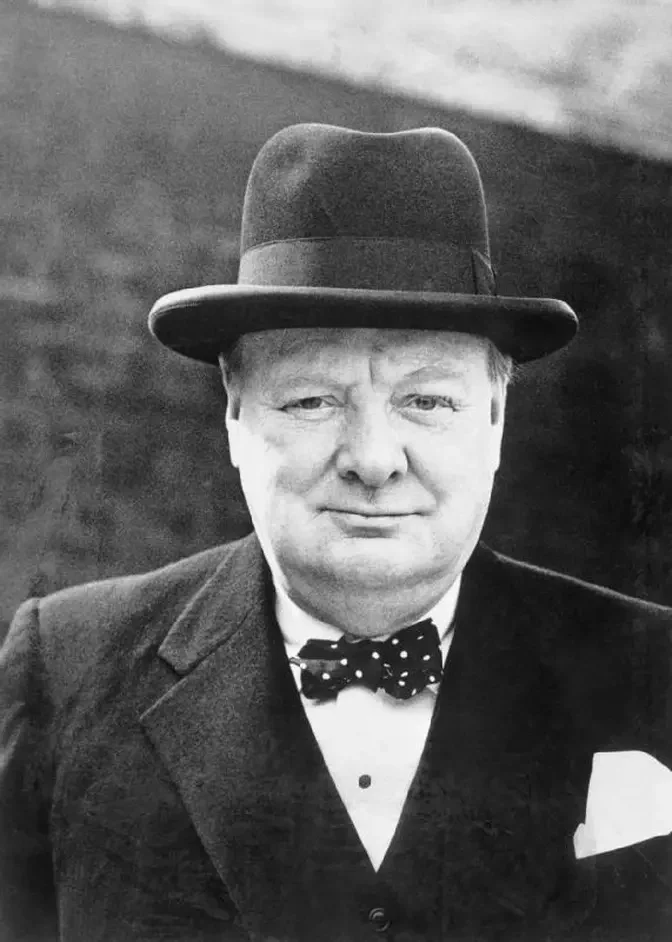
11 Video Views·May 24, 2023
Good afternoon. As Mr. Bell just said, my name is Katherine Sienkiewicz. I am from Richland,
Michigan, and it is my honor to introduce our speaker this afternoon. Andrew Roberts is a
historian and an honorary senior scholar at Gonville & Caius College, Cambridge. Dr. Roberts
is a fellow of the Royal Society of Literature, a trustee of the Margaret Thatcher Archive Trust,
and a director of the Harry Frank Guggenheim Foundation. He is the recipient of numerous
book awards, including the Wolfson History Prize, the Intercollegiate Studies Institute Prize,
the Emory Reeves Prize, the British Army Military Book of the Year Award,
and a History Prize from Foundation Napoleon. A regular guest on British and American television
and radio, Dr. Roberts writes for The Sunday Telegraph, The Spectator, Literary Review,
Mail on Sunday, and The Wall Street Journal. He is the author of several books, including
Eminent Churchillians, Hitler and Churchill, Secrets of Leadership,
A History of the English-Speaking Peoples Since 1900, Master and Commanders, How Four
Titans Won the War in the West, The Storm of War, A New History of the Second World War,
a book which reached number two on The Sunday Times bestseller list, and Napoleon, A Life,
which our speaker just informed me has just been auctioned by Harvey Weinstein for a TV series.
Please join me in welcoming Dr. Andrew Roberts. Ladies and gentlemen, it's a great honor to be
invited to address you today, and thank you very much indeed for those kind words.
It's perfectly true that my book got to number two in the bestseller list,
beaten only by a book about Michael Jackson. The title of my talk, Churchill's Early Life,
is a deliberately ambiguous, rather dexterous one, because it allows me not only to speak about his
youth, but also about his autobiography, My Early Life. The Times review of that book,
which appeared on the publication day, on the 20th of October 1930, mentioned not only the
charm and briskness of this book, but also its humor, headlong excitement, quiet irony, melancholy
regret for vanished customs and glories, love of sport, and the pleasures of friendship. Although
it also made the slightly snide point that the material is, of course, splendid, as Mr. Churchill
will agree. The child is the father of the man, wrote William Wordsworth. In many ways, this is
true of Winston Churchill, recalling that great day on the 10th of May, 1940, which, as was
mentioned, we've just celebrated the 75th anniversary of, the day in which he became Prime Minister.
But also, of course, the dreadful day that Hitler unleashed his blitzkrieg on the West.
Churchill wrote in his war memoirs, I felt as if I were walking with destiny and that all my
past life had been but a preparation for this hour and this trial. In a sense, what I would
like to do today is to look at his early life and to look at the way that it was indeed, his youth
was indeed a preparation for the hour and the trial of 1940. Because it showed again and again
the extraordinary leadership capacities that he had, the sheer character, the personality of the
man shines through again and again from the many different vicissitudes that he faced, not just
physical but also moral vicissitudes. Now clearly, this is no rags to riches story of the type so
beloved by modern day biopics, where an outsider from nowhere triumphs over the establishment or
anything like that. He was the grandson of a Duke and not just any old common or garden Duke,
he was the grandson of the Duke of Marlborough. And so, as I take you through his life, I'd like
you to keep in mind several things, many of them mentioned in that time's review in fact.
The sense of humor, the effect his family life or the lack of it has on his psychological development,
his powerful sense of not having much time, completely absurd as it turned out, in fact he
lived to be 90 but he didn't believe that he had that much time and so therefore he was always in
a tearing hurry. His extraordinary lust for adventure, his intense competitiveness
with his contemporaries and how incredibly accident prone he was with constant
near-death experiences. When you go to Dublin Castle, which I was there last week in fact,
you in the state apartments can see a very large room which is decorated with nothing but the
paintings of former Viceroys of Ireland, almost all of them British aristocrats. In fact, in the
10 years before and 10 years after Winston Churchill's grandfather, the 7th Duke of Marlborough
was a Viceroy of Ireland, the post was held by two Dukes, one Marquess and three Earls.
And Winston Churchill lived there from the age of two because his father, Lord Randolph Churchill,
was private secretary to his own father, the 7th Duke. And it was in a park in Dublin
around the age of four that Winston Churchill was thrown from a donkey in Ireland and concussed
when they thought they'd come across what they believed was a Fenian demonstration but in fact
turned out to be a route march of British troops. I was thrown off and had concussion of the brain,
he later wrote. This was my first introduction to Irish politics. It was his first introduction
but it was hardly life-threatening but there were going to be many more accidents to come.
One of the most famous passages in my early life concerns his mother, Jenny Jerome, the beautiful
daughter of a Brooklyn business tycoon, Leonard Jerome. My mother always seemed to me a fairy
princess, he wrote famously, a radiant being possessed of limitless riches and power. She
shone for me like the evening star. I loved her dearly but at a distance. The untrue word in that
was always she was not a radiant being much for him after he discovered that he and his brother
Jack had had their inheritance from their father misappropriated by Jenny Jerome. But instead
because she was so distant, affection and love and surrogate motherhood was provided by his
governess, Mrs Everest, a lady whose photograph he kept by his bed for the rest of his life.
And he also paid for the upkeep during his life of her grave which I was very proud at lunch today
to discover has been kept up after that by Richard and Barbara Langworth who are here in the audience
today. The first boarding school that he went to, St George's in Ascot, he actually started to attend
a month prior to his eighth birthday. So he went off to boarding school at the age of seven.
Ladies and gentlemen, this is not child abuse. I know it sounds like it but my father and
grandfather and great-grandfather went to boarding school at similar ages as did I
and so did my children. Ripping children from their parents at a tender and impressionable age
and handing them over to sexually questionable total strangers is not a prima facie case of
child abuse but something instead that is called the British education system.
Some of Churchill's earliest memories of St George's must be called into question,
not least because he kept referring to it as St James's in my early life. He made himself out to
be a dim child intellectually whereas his school reports actually showed that he shone at some
subjects like English and history. In Latin, however, his contemporaries did far better than
him which seems to have led to a slight sense of chippiness towards the academically gifted,
especially those who went on to read classics at Oxford and Cambridge. Faced with an inability to
grasp the first declension, he wrote, there was one thing I could do, I could learn by heart and
his ability to memorise huge amounts of verse and prose stayed with him for life and would
astonish contemporaries. Many of the occasions when he would quote reams of poetry or old musical
songs or speeches from plays and he'd do it from memory half a century after having learned them.
How I hated this school, he later wrote, and small wonder because in all the 12 years of his education
no one ever succeeded in making me write a Latin verse or learn any Greek except the alphabet
and at St George's, quote, two or three times a month the whole school was marshalled in the
library and one or more delinquents were hauled off to an adjoining apartment by the two head boys
and there flogged until they bled freely while the rest sat quaking listening to their screams.
Such beatings, usually but not always carried out without overtly sadistic undertones, were
immensely common in the British public school system and indeed carried on until the late 1970s
as my own parts of my own body can attest. I've always since noticed that when supporters of
capital punishment confidently attest it never did me any harm, my private judgment is always
I'll be the judge of that. Such beatings nearly broke Churchill's health entirely and after a
serious illness his parents took him away. In 1883, aged nine, he was transferred to a school in
Brighton kept by two ladies where he stayed for three years. He nearly died from an attack of
double pneumonia but overall he was much happier there where he could learn the things that
interested him in a happy environment, French, history, learning poetry by heart, riding,
swimming. In the chapel royal at Brighton, aged about 10, while the whole school turned to the
east when the Apostles' Creed was recited, Churchill thought that the low church, Mrs.
Everest, would consider that a popish practice and I conceived it my duty to testify against it.
I therefore stood solidly to my front. I was conscious of having created a sensation.
I prepared myself for martyrdom. However, when we got home no comment of any kind was made about my
behavior. I was almost disappointed and looked forward to the next occasion for a further
demonstration of my faith. He didn't get it because the following week this school was shown to pews
facing east-west rather than north-south but this was an early, sorry, was this an early indication
of Churchill's willingness to stand up for what he believed in if necessary totally alone
or was it a deliberate perversity combined with an element of showing off as implied by his sense of
disappointment at the lack of official response. Might the Anglican school not have responded
because they didn't want to get involved in accusations of Anglo-Catholic practices
with the Chancellor of the Exchequer's son within a decade of the highly controversial
Public Worship Regulation Act. These are matters for Churchill experts, let none say pedants,
such as Richard Langworth and Larry Arnn and myself to resolve. In 1888, aged 13, Churchill
entered Harrow less than 18 months after his father's sensational resignation as Chancellor
of the Exchequer. Because of his father's fame, when roll call was taken when he was in his first
year at Harrow with a name starting with S for Spencer Churchill and in the bottom form because
of his low examination marks in Greek and Latin, he came at the very end of the hundreds of boys
filing past the headmaster in the schoolyard. Quote, large numbers of visitors of both sexes
used to wait on the school steps in order to see me march by and I frequently used to hear the
reverend comment, why, he's the last of all. Such an humiliation could have had a devastating effect
on a lesser child, but for Churchill it was obviously a spur. He believed that by being put
in the lowest form at Harrow, it meant I gained an immense advantage over the cleverer boys,
they all went on to learn Latin and Greek and splendid things like that, but I was taught
English. The word splendid in that sentence was clearly meant sarcastically by the way,
though Churchill employed sarcasm far less in my early life in his other writings than its far
smarter cousin, rich English, high irony. His excellent English teacher, Robert Somerville,
taught him grammar. I learned it thoroughly, thus I got into my bones the essential structure of the
ordinary British sentence, which is a noble thing. Elsewhere he wrote, I would make them all learn
English, talking about school children, and then I would let the clever ones learn Latin as an
honour and Greek as a treat. He was joking again about the classics, later writing, they told me
how Mr Gladstone read Homer for fun, which I thought served him right. At Harrow, Churchill
won a prize for reciting no fewer than 1,200 lines of Macaulay's Leys of Ancient Rome without error.
This would have been possible only if he were utterly bound up with the tales they told,
tales of heroism in the ancient world. An important influence on his patriotism,
written by Harrow masters such as John Farmer, who wrote the music, and E. E. Bowen, who wrote
the lyrics, they were intended to link the pupil's present-day conduct and patriotism
to Harrow's and Britain's glorious past, articulating a strong continuum between them.
Thus the song Stet Fortuna Domus of 1891, which was first performed when Churchill was at the
school, has a stanza that goes, tonight we praise the former days in patriotic chorus,
and celebrate the good and great who trod the hill before us, where Sheridan and Peel began
in days of Whig and Tory, where Ashley vowed to serve the crowd, and Byron rose to glory.
In Giants, another song that Churchill sang, Harrowvians were specifically enjoined to remember
that the hero race may come and go, but doesn't exactly die, for all of we, whoever we may be,
come up to the giants of old, you see. Thus historical glory was not just something to
respect in awe, but to try to emulate and even to better. Churchill was not therefore just in
competition with his contemporaries, but he felt he was also in competition with Sheridan, Peel,
Ashley, and Byron. On leaving Harrow, his father agreed to let him go into the army.
For years, I thought my father, with his experience and flair, discerned in me the
qualities of military genius, but I was later told that he had only come to the conclusion
that I was not clever enough to go to the bar. Churchill had a collection of toy soldiers,
ultimately nearly 1,500 strong, and he'd long been fascinated by warfare. Moreover,
it was a way that he could leapfrog those of his contemporaries who were going to Oxford
and Cambridge. But back to his accidents. In January 1893, visiting his aunt, Lady Wimborne,
at Bournemouth, he attempted to jump a deep cleft, lost his hold, and fell 29 feet from
a bridge onto hard ground. He was unconscious for three days. In bed, nearly three months,
he suffered a ruptured kidney hemorrhage and broke a bone in his mid-back, which was only
discovered in an X-ray in 1962. For a year, I looked at life around a corner, he wrote.
It was lucky he looked at it at all and truly extraordinary that he had achieved all he did
by 1962 with an undiagnosed broken bone in his back. It was in 1893 that Churchill met Arthur
Balfour, Joseph Chamberlain, Edward Carson, Lord Rosebery, Herbert Asquith, and John Morley,
the great politicians of the late Victorian era. So soon as I was convalescent, I began to go to
the House of Commons and listen to the great debates, he wrote. He was present at the most
climactic debate of the entire 19th century, Gladstone's winding up of the second reading
of the Irish Home Rule Bill on the 21st of April, 1893. In retrospect, it's clear that the early
death of his father, aged only 46, meant that Churchill, who was 20 at the time, would be sure
to enter politics one day. In June 1893, he qualified for the Sandhurst cadetship in the
cavalry on his third attempt. In my early life, he considered what might have happened if he hadn't
gone to Sandhurst, making the excellent joke that, I might have gravitated to the bar and persons
might have been hanged through my defense, who now nurse their guilty secret complacency.
He entered the cavalry because it offered easier entry than the more intellectual or less
unintellectual infantry and artillery. Besides, as he wrote, the uniforms were much more magnificent.
His father was unimpressed and, quote, I received from him a long and very severe letter expressing
the bleakest view of my educational career, showing a marked lack of appreciation of my
success in examination and warning me of the danger in which I plainly lay of being a social
wastrel. It's hard to make Lord Randolph Churchill, ladies and gentlemen, out to be much more than a
harsh Victorian father. That summer, Churchill and his younger brother Jack went on a walking tour
of Switzerland and they climbed the Vetterhorn and the Monterosa Mountains. He also, not the
kind of thing that one does that social wastrels necessarily do, he was also nearly drowned at
Lake Lausanne when he and his brother Jack, who he curiously only refers to as a younger companion in
his autobiography, went swimming and a breeze picked up and then sailed away the boat faster
than he could swim towards it. Bang in the middle of Lake Lausanne, he was facing yet another brush
with death and this time he even gave it a color. I saw death as near as I believe I've ever seen
him, he later wrote. He was swimming in the water at our side, whispering from time to time in the
rising wind which continued to carry the boat away from us at about the same speed we could swim.
No help was near. Unaided, we could never reach the shore. I now swam for life. I scrambled in
and rode back for my companion who, though tired, had not apparently realized
the dull yellow glare of mortal peril that had so suddenly played around us.
In spring 1894, it became clear to everyone that his father was gravely ill. Of course,
no medical diagnosis of his illness was offered by Churchill in my early life who himself believed,
along with most other people at the time, that it was syphilis. Although several historians today
believe instead it was a rare disease of the brain. Of his father, he wrote in a line surely
as autobiographical as biographical, he embodied that forced caprice and charm which so often
springs from genius. In June, he said goodbye to his father as his father went off on a round
the world tour. He patted me on the knee in a gesture which, however simple, was perfectly
informing. I never saw him again except as a swiftly fading shadow. All my dreams of comradeship
with him, of entering parliament at his side and in his support were ended. They remained for me
only to pursue his aims and vindicate his memory. The previous November, Churchill had become 20
years old, writing later, 20 to 25, those are the years. Don't be content with things as they are.
You'll make all kinds of mistakes, but as long as you're generous and true and also fierce,
you cannot hurt the world or seriously distress her. She was made to be wooed and won by youth.
On the 20th of February, 1895, he was commissioned into the fourth queen's own
hussars as a second lieutenant. I had the ill luck to strain my tailor's muscle,
that's the sartorius muscle, it's the longest muscle in the body, it's the one that goes down
the thigh, on which one's grip on a horse depends. In consequence, I suffered tortures.
Galvanic treatment was then unknown. One simply had to go on tearing at a lacerated muscle with
the awful penalty of being thought a booby if one begged off even for a day. The physical courage,
ladies and gentlemen of Churchill, it equaled his moral courage, which is rare.
In the closing decade of the Victorian era, the empire had enjoyed so long a spell of almost
unbroken peace, he wrote, that medals and all they represented in experience and adventure
were becoming extremely scarce on the British army. As so often, it was the honesty of my early
life that gave ammunition to Churchill's detractors. He was accused of being a mere medal
hunter, with this sentence often held up as evidence, but the key wording is all they
represented in experience and adventure. War service was the path to distinction. He wasn't
rich enough to maintain hunters as well as polo ponies. His father, Lord Randolph, was the youngest
son of the Duke. Instead of being able to afford to do this, he took the decision to use his 10
weeks leave to visit the Cuban Civil War, joining the side of the Spanish Captain General,
Marshal Martinez Campos. He went there via New York, writing to his mother on the 10th of November,
what an extraordinary people the Americans are. Their hospitality is a revelation to me and they
make you feel at home and at ease in a way that I've never before experienced. It's good that
some things don't change. You might call it tomfoolery, he also wrote, to travel thousands
of miles with money one can ill afford to get up at four o'clock in the morning in the hope of
getting into a scrape in the company of perfect strangers is certainly hardly a rational proceeding.
The 30th of November was my 21st birthday and on that day, for the first time, I heard shots
fired in anger and heard bullets strike flesh or whistle through the air. That's half true,
in fact, it was the next day. On the day itself, he might have heard bullets fired in anger,
but he didn't hear them whistle through the air. There's a new book by Hans Klepack
about precisely this period in Churchill's life. Certainly, on the 1st of December, whilst eating
a chicken outside a place called Arroyo Blanco, which is right in the center of Cuba, which I
visited in fact in May of this year, Churchill heard a ragged volley rang out from the edge of
the forest. The horse immediately next to me, not my horse, gave a bound. It had been shot in the
ribs and as I watched these proceedings, I could not help reflecting that the bullet which had
struck the chestnut had certainly passed within a foot of my head. So, at any rate, I had been
under fire. That was something. Nevertheless, I began to take a more thoughtful view of our
enterprise than I had hitherto. That night, not only shots, but volleys resounded through the
night. A bullet ripped through the thatch of our tent, another wounded and orderly just outside.
I fortified myself by dwelling on the fact that the Spanish officer whose hammock was slung between
me and the enemy's fire was a man of substantial physique. Indeed, one might have called him fat.
I've never been prejudiced against fat men. At any rate, I didn't grudge this one his meals.
Of the fighting the next day, he said, there were sounds about us sometimes like a sigh,
sometimes like a whistle, and at other times like the buzz of an offended hornet.
He returned from Cuba with three things that stayed with him for life, his love of cigars,
of siestas, and being in the thick of wherever was the most important thing
happening at the time. In October 1896, at the Sassoon dock in Bombay Harbor in India,
modern-day Mumbai, he, sure enough, had another accident. We came across alongside a great stone
wall with dripping steps and iron rings for handholds, he later wrote. The boat rose and fell
four or five feet with the surges. I put out my hand and grasped at a ring, but before I could
get my feet on the steps, the boat swung away, giving my right shoulder a sharp and peculiar
wrench. I scrambled up all right, made a few remarks of a general nature, mostly beginning
with the early letters of the alphabet, hugged my shoulder, and soon thought no more about it.
Yet, in fact, his dislocated shoulder meant that I had sustained an injury which was to last me in
my life and which was to cripple me at polo, to prevent me ever playing tennis, and to be a grave
embarrassment to me in moments of peril, violence, and effort. Once it nearly went out through a
expansive gesture in the House of Commons. Yet, it wasn't all bad news, because had he been able to
use a sword at the Battle of Omdurman rather than a Mauser pistol, my story might not have got so
far in the telling. He philosophized in my early life, when you make a mistake, it may very easily
serve you better than the best advised decision. Life is a whole, and luck is a whole, and no part
of them can be separated from the rest. Extraordinarily, ladies and gentlemen, he wrote that in 1930,
the very year before he resigned from the Tory front bench, which allowed him to be out of office
during the wilderness years and thus unsullied by any collective responsibility for appeasement.
In the winter of 1896, the desire for learning came upon me. He liked the feel of words fitting
and falling into their places like pennies in a slot, he wrote. He hadn't been to Oxford or Cambridge,
but claims not to have been chippy about it. We never set much store by them or their affected
superiority, he said of people who did go to Oxford and Cambridge, remembering that they were only at
their books while we were commanding men and guarding the empire. Now I pity undergraduates
when I see what frivolous lives many of them lead in the midst of precious fleeting opportunity.
After all, a man's life must be nailed to the cross of either thought or action. I'm not convinced
about this, that he didn't mind about the affected superiority of people who went to Oxford and
Cambridge. There are so many slighted references to them. Nonetheless, his remark about guarding
the empire obviously did matter to him deeply, because you can't have Churchill without empire.
I was very pleased to see Larry Arnn in his excellent book, Churchill's Trial,
puts the empire in the middle there with war and peace, central areas of the book,
because Winston Churchill fought not just for Britain and also of course for democracy,
but also he fought for the empire. Although it's not very popular at the moment, the British
empire was absolutely epicentral to his entire outlook. All through the long glistening middle
hours of the Indian day, I devoured Gibbon, he wrote, and then after that Edward Gibbon's
autobiography, and then Macaulay. But Churchill was shocked by Macaulay's history primarily because
it was harsh about the first Duke of Marlborough. Was it from Gibbon that he got his religious
agnosticism, or from Wynwood Reid's book, The Martyrdom of Man, which argued that all religions
were essentially the same, and which denied the divinity of Jesus. The remark he made about church
going was that, at Harrow, there were three services every Sunday, besides morning and evening
prayers throughout the week. All this was very good. I accumulated in those years of so fine a
surplus in the book of observance that I have been drawing confidently upon it ever since.
In India, Churchill displayed what he called, actually it's extraordinary he was able to read
all this Gibbon and Macaulay and all the other people. He also read Schopenhauer and Leckie and
the great thinkers of the day, because he also suffered from what he called complete absorption
in with the game of polo. He played nevertheless than eight and more often ten or twelve chukkas
of polo a day, and never in the history of Indian polo had a cavalry regiment from southern India,
he was based in Bangalore in southern India, won the inter-regimental cup. Yet they won that,
and his regiment, the fourth desires won that, even though Churchill had to play with his arms
strapped to his side out of pain from his injury, the dislocated shoulder, which is truly extraordinary,
not least of course that he also scored the winning goal. He was staying at Goodwood Park,
which is one of the great stately homes of England, the house of the Duke of Richmond,
and he was on leave when he read of the Pathan revolt on the northwest frontier, and he immediately
got himself attached to the new force that was being got together there, the Malakand Field
Force, and it was there that he learned to drink whiskey. I've been brought up and trained to have
the utmost contempt for people who got drunk, except on very occasional exceptional occasions
and a few anniversaries, he wrote, and I would like to have had the boozing scholars of the
universities wheeled into line and properly chastised for their squalid misuse of what I
must ever regard as a great gift of the gods. Churchill was incredibly politically incorrect
to modern ears, it has to be said. There's a passage in my early life in which he says,
we had the very strong spirit of the die-hards and the young bloods of the enemy. They wanted to
shoot at us and we wanted to shoot at them. So a lot of people were killed, and on our side the
have had to be pensioned by the imperial government and others were badly wounded and hopped around
for the rest of their lives, and it was all very exciting and for those of us who didn't get killed
or hurt, very jolly. On a punitive expedition in the Malakand Field Force among the mud villages
of the Marmond Valley, Churchill found himself with five British officers and about 85 Sikh soldiers
when in an area that had seemed totally quiet, suddenly the mountainside sprang to life. Swords
flashed from behind rocks, bright flags waved here and there, a dozen widely scattered smoke
puffs broke from the ragged face in front of us. Loud explosions resounded close at hand from high
above us on the crag, 1,000, 2,000, 3,000 feet above us, white or blue figures appeared dropping
down the mountainside from ledge to ledge like monkeys down the branches of a tall tree. A shrill
cry arose from many points, and then moments later the British officer who was with him was spinning
round just behind me, his face a mass of blood, his right eye cut out. Yes, it was certainly an
adventure. It was a point of honour not to leave wounded men behind. Death by inches and hideous
mutilation are the invariable measure meted out to those who fall in battle into the hands of the
Pathan tribesmen. So in the course of saving this officer, this wounded officer, five Britons and
Sikhs, including Churchill, went back to bring him back, whereupon one of the Sikhs was shot
through the calf and Churchill got him back by dragging him along by his collar to safety.
Churchill had risked his life, therefore, to save the soldiers. In the same action,
the regimental adjutant was cut to pieces with a sword and Churchill was so keen to avenge him
that he almost got cut off by the enemy. I looked around. I was all alone with the enemy. Not a
friend was to be seen. I ran as fast as I could. There were bullets everywhere. I got to the first
knoll. Hurrah, the Sikhs were holding the lower one. Yet another close brush with death, ladies
and gentlemen, and the chance to show character and leadership, but also the judgment to know when
to run like hell. Such brushes with death were to be repeated regularly thereafter, not least in a
cavalry charge at the Battle of Omdurman, his attempt to save an ambushed train in the Boer
War, his escape from the Boer prisoner of war camp in Pretoria and so on and so on. Yet Churchill
didn't crave excitement for itself like some kind of extreme sports junkie today. Rather, he knew
that he needed the attention and medals that came with it in order to leapfrog his contemporaries,
especially the cleverer boys. If he was to attain his dream of vindicating his brilliant, stricken,
but distant and often disdainful father, he needed fame and he needed it on his own terms.
Humor, headlong excitement, quiet irony, melancholy regret for vanished cousins and
glories, love of sport, the pleasures of friendship. That anonymous Times reviewer of my early life was
uncannily accurate, both about the book itself and about what actuated Winston Churchill.
When he came to the premiership in May 1940, aged 65, it was as a fully formed leader,
possessed of all the attributes and personality traits necessary for this hour and this trial.
Extraordinarily though, almost all of these, were not of course the political experience that was
also necessary, he had attained before the absurdly young age of 25. Thank you very much indeed.
So we have plenty of time, about 20 minutes or so, for questions from anyone other than
Richard Langworth. If you put your hands up, this lady and this gentleman are going to give you the
microphone. Please don't feel constrained just to ask questions about his early life, I'll try and
ask questions about wider thing as well. I've read that book many times and the one
thing that puzzles me is Churchill has a younger brother and we never hear anything about the
younger brother. Tell us about Jack. Yes that's right, he is mentioned of course but he's not
a central figure and he did actually cut him out of that Lausanne incident and didn't mention that
it was his brother whose life he had put in danger by jumping off the boat. Jack was a brave
man in his own right, he fought in the Boer War, he was at Gallipoli and he was put into the,
he got onto the staff on the Western Front, he became a stockbroker, he loved his brother dearly,
they were extremely friendly and close but he was not, I think it's fair to say, an essential
figure in the Churchillian canon. He wasn't one of the true intimates in the way that Bracken or
Breverbrook or Prof Lindemann or any of those other people were and so it was a happy fraternal
feeling that he had towards his brother and that his brother had towards him. His brother was very
proud of his achievements but he didn't take advice for example from his brother but he was
good to his brother when it came to finances, family finances and everything, he was very
decent and honourable as you'd have expected. Hi, Alex Bookman, I'm a senior here at Hillsdale.
For many of us, Churchill is a hero, we have a statue of him obviously at Hillsdale. I was
wondering who did Churchill look up to in his early life, whether that be through reading and
was it I guess people in antiquity or even I guess his superiors during his time in the military?
Well of course the primary one was his father and he took many of his, much of his political
philosophy that he kept for the rest of his life from his father's concept. His father really was
the inventor of the concept of Tory democracy, trust the people and that was something that
Churchill stayed with Churchill very much for the rest of his life. He admired when he grew up,
he admired Benjamin Disraeli but he was only seven when Disraeli died. He remembered Disraeli's
death very well and mentions it in my early life. Really though it's the first Duke of Marlborough,
his great ancestor who was the victor in the War of Spanish Succession which was,
he was the greatest soldier along with the Duke of Wellington who's the greatest soldier in the
history of the British Army and so he was an ultimate hero for Winston Churchill and several
more, the Admiral Nelson and Drake who he was related to very distantly. These were the giants
of British military history. Also Oliver Cromwell, he tried to have a ship named after Oliver Cromwell
but failed when King George V wouldn't put up with it, understandably so considering that
Oliver Cromwell was a regicide but nonetheless it had been 300 years or so earlier.
He was very, very well versed in all of the lays of ancient Rome, the great ancients,
these were the stories that he grew up with and as I say he was able to recite 1200
lines of Macaulay's Ancient Rome. It's a wonderful, I do recommend it, I haven't read the whole thing
from cover to cover I admit but the bits that I have read and was forced to learn at school
are still pretty magnificent and moving. I was wondering if you could say something
about his marriage to Clementine. Yes, well it, thank you madam, it doesn't crop up except for the
last sentence of my early life where he said that he got married and lived happily ever after
but that's pretty true and that's what happened. He married a very remarkable
and impressive lady in Clementine, Churchill, who looked out for him. She didn't like all of
his friends which is perfectly understandable because several of them must have been extremely
difficult people to have got on with but nonetheless she provided the domestic stability that he
needed, love and affection for children and a home life in which he could, in which he knew
that he could sally forth out to the House of Commons night after night. Very regularly the
House of Commons wouldn't break up until midnight and so you know that kind of thing is incredibly
tough on family life but there's no indication that it was too tough on his. She was a very
impressive, remarkable woman during the Second World War. She helped the Red Cross aid to
Russia fund which helped the Red Cross aid to Russia fund which in fact she led it I think
which was important and all in all there isn't a sort of whiff of
negativity I think or let alone scandal about a very remarkable woman.
What role did Winston Churchill's grandparents play in his early life?
His grandparents played a pretty small role. The Seventh Duke was the
Viceroy of Ireland as I say so he was a sort of extremely grand figure but Richard will tell me
Churchill's age when the Duke died but I think he was fairly young wasn't he when the Duke died so
it wasn't too much of an effect but the next Duke, the Eighth Duke, Sonny became a great friend of,
was a great friend of Churchill's and of course Blenheim was a place that Churchill always felt
was almost a second home to him and it was at Blenheim that he proposed to Clementine to go
back to the earlier question but more importantly this Marlborough connection was vital to him for
two reasons. The first was that the Spencer Churchill name is one of the grandest and most
aristocratic in Britain and therefore gave him a standing, an automatic standing in society
which also gave him the kind of confidence that would be needed in order to take all these risks
and embark on all these adventures and the second thing was that because of the history of, to go
back to the question before that, his great ancestor the First Duke, this giant of British
military history, he also felt he had a lot to live up to and so it was a name in a sense rather
like that phrase about the Bonapartes, about Napoleon III, his name was both his making
and his undoing. Winston Churchill's name could have been, it was part of the making but also
could have been part of the undoing if he hadn't managed to live up to it as it is of course he
lived up to it and even put it in the shade. Good evening sir, my question is about Churchill's
personality, he's often described by several of his advisors as temperamental, I was just
wondering if you would comment on his own personal leadership style and how it affected his conduct
of the war. Yes he was indeed deeply temperamental, not least this is evidenced by the fact he kept
bursting into tears, he was the most lacrimose prime minister we've ever had, there are some
30 occasions during the Second World War when he is described as having tears in his eyes
and this is because he's a regency figure, he's not some staid late Victorian, he's actually a
throwback to a much grander and earlier past, actually at the funeral of Lord Nelson every
single one of the eight admirals that carried his coffin, they were all in tears, men allowed their
emotions to show in the regency period in a way that they simply didn't in the late Victorian
period, so yes he was temperamental, he could shout at meetings and bang his fist and
he would be immensely tough, he would keep his chiefs of staff up till two or three or sometimes
four o'clock in the morning and it was hard work for those around him but he was
trying to win a world war and so that's perfectly understandable, he was trying to get his way
and he used every part of his personality to do that, including his fabulous sense of humour.
There's one moment when Anthony Eden, his foreign secretary, was asking in a cabinet meeting
what they could possibly do about Turkey, this was in November 1943, they were desperate to try
and get Turkey into the war and Turkey was resolutely neutral and had been since the
beginning of the war four years earlier and the question was did they try to cajole Turkey,
did they try to threaten Turkey, did they try to bribe Turkey, how could they get Turkey into the war
and at the end of this very hard-fought cabinet meeting in which all the
different points of view were put forward with great gusto by the people who were presenting
them and Winston Churchill said tell Turkey that Christmas is coming.
Among those whom Churchill greatly admired, some of whom you spoke of earlier,
do you think he admired Napoleon?
Undoubtedly, he hugely admired Napoleon which is very unusual for an English Tory
of course, who basically English Tories think of Napoleon as another Philip II of Spain
kind of dictatorial figure who wants to invade us and therefore a bad thing.
Churchill, on the other hand, made endless references to Napoleon in the House of Commons
and in his speeches, none of them negative. In his private library, he has no fewer than 160
books about Napoleon that he had bound by his own leather binder. He wanted to write a biography of
Napoleon and in the 1930s, never got around to it, he wrote History of the English-Speaking
Peoples instead and he wanted also to write a film script about Napoleon which would have been
one of the fabulous things to have seen or in your case, maybe to have acted in, it would have been
really something. But no, he did admire Napoleon and one can see why. There are overlaps between
the personalities, the capacity for the compartmentalization of his mind. Larry
refers to this in his book, Churchill's Trial, the way in which Churchill was able to fasten onto
a problem and concentrating on it to the exclusion of everything else until that
problem was settled in his mind. It's something that also you see in Napoleon a great deal.
Winston Churchill was always considered such a great speaker but yet I had read that he had a
speech impediment, particularly when he was younger. What methods did he use to overcome that to really
become such a great orator? Well, he did have a sibilant emphasis where S's became SH's
when he was younger. You hear much, much less of it as his career progresses. This isn't because he
went to a speech therapist. There are some stories about him speaking with small
stones in his mouth. I haven't seen any corroborative evidence of that. Have you, Richard?
No. No, I think it's practice. It was just simply the extraordinary amount of time that he would
practice. He would memorize these great long speeches in his early years and then he would use
psalm form, it was called, the way that they were printed out, typed out on his sheets of paper,
little six by four inch cards that he would use. He would sometimes spend as many hours
practicing a speech as there were minutes in the speech. It's an extraordinary thing. He would
march backwards and forwards, often to the sound of marching music on the gramophone,
and would rewrite the speech right up until the last moment just before he stood up and gave it.
You can see the annotations to the speech in his handwriting at Churchill College, Cambridge. I
really do recommend you do that if you have a chance when next you're in England. He understood
in his only novel, Savrola, which was published in 1900, he wrote about the power of oratory,
how important the power of oratory was, and how it was capable of working for people even at the
lowest point when no one is following you, at least if they're still listening, you have a
chance. Of course, that chance was put to incredible effect in the campaign against
appeasement in the 1930s. Then again, of course, uniting the nation in 1940.
Standing with Alan Packwood, holding a document at Churchill College, Cambridge is indeed one of
the thrills of life. I have a question about destiny, and you mentioned Churchill's quote
from World War II, the night he became prime minister, felt as if I were walking with destiny.
He also told Merlin Evans when he was, I think, about 15 about his feeling of destiny. Do you
recall that one where he's a student? What about this destiny that Churchill felt? It was evidently
replete throughout his life. Could you speak to Churchill's vision and his feelings for destiny?
Yes, it's another very good question. He had a very powerful sense of his own destiny,
but I think, as I mentioned through Gibbon and Wynwood Reid and Leckie indeed, he was not a
Christian. He didn't believe in the divinity of Christ, but he did believe in fate, in providence,
and in an almighty. He refers to the old man with a capital H. He prayed to God when he was on the
battlefield. There was obviously a spiritual religious sense with regard to a divinity that
was out there, but when one looks at it, it doesn't seem that God had many other jobs except
for taking care of Winston Churchill. Yet, he never got to the point such as Adolf Hitler did
after the July Plot in 1944, where he felt that his own will could overcommand that of providence
or destiny. He knew that he was the servant of destiny rather than its master. This wasn't a
insane feeling at all, but it was one actually that I think that quite a few politicians,
probably even today, do have. I think it was important for him when in the First World War,
he just left a trench dugout in order to see his general. Moments after he left it, a German
whiz-bang, a high explosive shell hit the dugout he was standing in and killed everybody inside.
It decapitated his batman, etc. He put it down to providence. We have time for one more question.
Could you say something about Churchill's early interest or training in science or the lack
thereof, and whether that played a role in his close relationship with Professor
Lindemann regarding matters like the atom bomb, for example?
Yes. He was good at chemistry, actually, at Harrow. He discussed and was interested in physics,
and he read about physics, but wasn't examined in it or anything like that.
Very, very early on, I think it was in 1923 or 1927, he wrote about the importance of the
splitting of the atom and its possible military use. His interest in physics also, as you allude,
was at the heart of his friendship with the Oxford professor of physics, Professor Lindemann,
later Lord Charwell, who was far and away, during the war, far and away the closest of his friends
to him. I've just been to Chequers, the Prime Minister's country house, and the Prime Minister
very sweetly allowed me to spend a couple of hours looking at all the people, the names in
visitors' book of all the people who visited Chequers during the Second World War, and then
later after the war as well, but I was particularly interested in the 1940 to 45 period during his
first premiership. Lord Charwell turned up pretty much every single weekend that Winston Churchill
was there, far, far more than pretty much all of the other close advisors of his put together.
He couldn't but have had, he didn't have an influence on Churchill, nobody had an influence
on Churchill, Churchill made up his own mind about everything, but he certainly had an input that was
second to none, and they did discuss matters of physics which were so important during the Second
World War, when one thinks of the beams, the ray beams, the importance of radar, the, as you
mentioned, the atomic bomb, you know, Churchill had to be well up on all of these latest developments,
and he was. That was the last question, but I'd just like to repeat, especially for you
young people here, that fabulous line from my early life, and take it to heart please, where
he says, 20 to 25, those are the years, don't be content with things as they are, you'll make all
kind of mistakes, but as long as you're generous and true, and also fierce, you cannot hurt the
world or seriously distress her, she was made to be wooed and won by youth. Thank you very much indeed.