
What Churchill Thought About the Palestinians and Jews
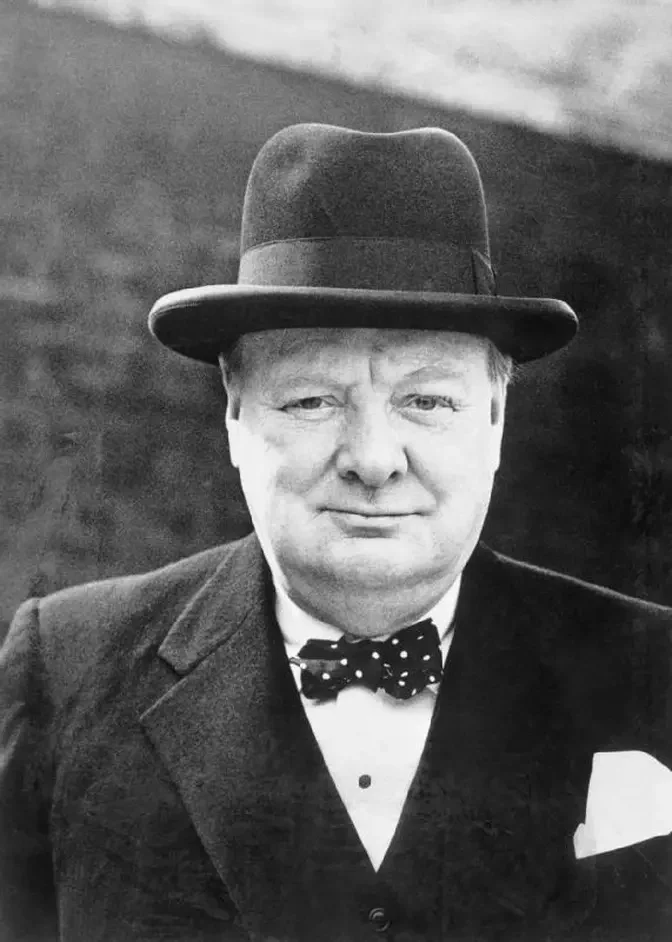
In this video I want to discuss Winston Churchill, Palestine and the Palestinians and the Jews.
Now Winston Churchill is a fascinating character historically. A few years ago the BBC
did a poll called 100 Greatest Britons and in this TV poll Winston Churchill came top of all
Britons throughout time. He beat Shakespeare and Darwin and Isaac Newton, Elizabeth the First,
Oliver Cromwell. He was number one. Of course he was Britain's Prime Minister during the Second
World War. He was actually Prime Minister twice and is a hero to many, many people.
But to other people he is a much more darker figure. And just recently I got a hold of this
interesting book, Winston Churchill, His Times, His Crimes by Tariq Ali. He's a British
writer and he's very critical and there's an awful lot of dirt unfortunately about
Winston Churchill that's not very widely known. And he says on the back cover, I think summing up
very well the way many people see him, the modern Churchill cult is out of control, closing down
historical debate and encouraging support for 21st century wars. The man has become a household
god for many, preserving an antiquated vision of Britain. Tariq Ali audits Churchill's crimes,
both globally and at home, and shows the celebrated wartime leader to be Britain's most
shameless imperialist. And this book covers many, many of his crimes, and some of them
Tariq Ramadan calls them war crimes. And indeed it seems to be an entirely appropriate description.
And I'm going to read though from a section of the book subtitled Churchill, Palestine and the Jews.
Now some of what I'm going to read is to modern ears, indeed to many people in the past,
highly offensive. So just as a health warning before you listen any further.
And one of the things he doesn't cover in too much detail in the book, I think,
is the bombing raids on Germany in the Second World War, where Churchill as the Prime Minister
authorised, indeed directed, that bomber Harris, you know, the head of the RAF,
target civilians, civilian cities, Berlin, Hamburg, Dresden, etc, for bombing. And over
a million Germans were men, women, children, civilians, were obliterated, burnt to death,
they were bombed. And this was a war crime, obviously. And actually, Britain did it to
Germany first. Germany didn't do it to us, despite what most people seem to think.
But the historical evidence suggests otherwise. And there's an interesting book also,
The Bombing War, Europe 1939-45, by Professor Richard Overy, Professor of History at Exeter
University, who meticulously documents how Britain came to decide fairly early on in the war,
that it would bomb German cities, targeting civilians. And Britain did this first. And then
Germany reciprocated and bombed London, Birmingham, Manchester, Liverpool, etc.
But most people don't know this. Now, of course, Churchill made this decision. So that's one of
his most famous or infamous war crimes. But there were others, and I'm not going to go through them
all, because there's quite a lot of them. But I just want to focus on his attitudes to the
Palestinians, to non-white people, this is a really key point, and to the Jews, and to Israel
and Palestine. Because what Churchill said, what he stood for, still matters today. He was cited,
Winston Churchill was mentioned in a recent TV interview, you might well have seen it, where the
interviewer, Piers Morgan, I think, cited him as one of the great, if not the greatest, British
heroes. And this uncritical, what tight Ramadan will call, you know, cult of Churchill, is why he
wrote this book. And the evidence is, to put it mildly, horrific. Anyway, this book is still
published last year, I think, and is still useful background reading to the current
attack on the Gaza, because Churchill's name is still used by many people to justify this.
Anyway, I'm just going to read the section then, Churchill, Palestine and the Jews, starting on page
357. It gives a bit of background to Churchill, historical context, and then we'll move on to
his views about non-white people, and why he thought it was perfectly justifiable to remove
Arabs, Blacks, and so on, from their land, for reasons which will become quite clear shortly.
So, Tariq Ramadan, sorry, Tariq Ramadan, Tariq Ali, writes as follows. In the post-First World
War period, in other words, after 1918, the states to be carved out of former German, Ottoman,
and Austro-Hungarian possessions, were characterised by the newly created League of
Nations, like the UN of the day, as being either advanced nations, brackets, white populations,
or nations that could not yet stand up for themselves, in other words, non-white populations,
and so required imperialist tutelage. They had to be looked after like children, in other words.
Within the latter category, a further distinction was made between those closest to self-rule
and those furthest away. In the Middle East, the top category included Palestine, Syria,
Lebanon, and Iraq. Hence, these were listed as states that would ultimately be granted
self-rule. Very kind of the West to grant them self-rule, of course. Palestine, on this description,
was not empty land, but a functioning province. Until self-rule was granted, these states would
be governed by mandates from the League of Nations, awarded to Britain and France. So,
these vast areas were awarded to European imperialist powers. The British had already created
Iraq, because many people don't realise that modern Iraq is created by Britain itself. It
didn't exist before. To this day, Lebanon remains what it was at the time of its birth,
the artificial creation of French colonialism. A coastal band of Greater Syria, sliced off
from its hinterland by Paris. Once it became clear that Syrian independence was inevitable,
the French wanted a colony of their own. Everyone has to have a colony in Europe, it seems.
A regional client dominated by a Marianite minority that had long been France's cat's
paw in the Eastern Mediterranean. Tariq Ali, his language is very poetic, actually.
Lebanon's confessional checkerboard has never been permitted an accurate census. In other words,
an accurate census of the population of Lebanon has never really happened, he says,
for fear of revealing that a substantial Muslim majority is denied due representation in the
political system. Sectarian tensions have never disappeared. The British demanded and got a
division of the Palestinian mandate into two parts. The new Jewish home, inverted commas,
and Palestine. Here was the first example of a colonial partition via an influx of white
settlers, in brackets, Ashkenazi Jews. The war of independence used by most official Israeli
historians to describe the 1947-49 conflict is a misnomer. At best, it could be applied to the
three years, 46 to 48, when Zionist interests clashed with the strategic needs of the British
empire in the region. Jewish terrorist attacks on the King David Hotel and the British casualties
brought Churchill close to a break with Zionism, but he hung on. The official declarations of
independence were the Balfour Declaration, famously in 1917, and the mandate of the League
of Nations in 1919. Without the consistent political, economic, and ideological support
of the British empire for a Zionist Jewish homeland for over 50 years, it is unlikely
that the foundations of Israel would have been laid and a state as it exists at present would
have come into existence, regardless of the Judeo-side. Judeo-side, I think he means the
Holocaust. So in other words, he's arguing that for 50 years, the British empire's support for
this Zionist project was absolutely essential. So Britain's role was that key, and Churchill's
role was that key. Churchill was strongly in favor of a Jewish homeland, but even before he was born,
the 7th Earl of Shaftesbury, an evangelical Christian, he was a Tory MP as well,
had in 1838 taken it upon himself to kick-start the process of sending European Jews off to
Palestine. This happened that early, 1838, and suggested as much to Palmerston, the then foreign
secretary, asking him to ensure great power protection. Old Testament pieties were mixed in
with Britain's own strategic needs. Addressing Parliament a few decades later, Shaftesbury,
helping to create the myth that the lands were depopulated, explained in further detail why a
new British colony was almost a necessity for the empire. So this is seen as a British colony,
this Jewish presence in Palestine. And he said, as a short quote from his speech,
Syria and Palestine will before long become very important. The country needs capital and
population. The Jews can give it both. And has not England a special interest in promoting such
restoration? It would be a blow to England if either of her two rivals should get hold of Syria.
Does not policy there exhort England to foster the nationality of the Jews and aid them to return?
To England, then, naturally belongs the role of favouring the settlement of Jews in Palestine,
end quote. So the British interest is to populate that part of the world. Tariq Ali continues,
as early as 1891, there's a particularly interesting paragraph this, and I'm glad
Tariq Ali has mentioned it. As early as 1891, the Zionist pioneer Asher Ginsburg,
who's a Jewish pioneer, visiting Jerusalem at a time when Jewish people as individuals
own less than 1% of the land. Can you imagine that? In 1891, Jews own less than 1% of the land.
Reported that, quote, throughout the country, it is difficult to find fields that are not
sowed, only sand dunes and stony mountains that are not fit to grow anything but fruit trees.
And this only after hard labour and great expense of clearing and reclamation. Only these are not
cultivated. So it's a picture of a Palestinian land that is heavily farmed. All of it,
virtually all of it, as much as humanly possible. This is the Zionist pioneer Asher Ginsburg in 1891.
Ginsburg provided a vivid description of settler racism and was farsighted in predicting its likely
outcome. So now we have a description in 1891 by a Jew himself of Jewish settler racism. And of
course, literally, as we watch this now, at this moment, we have that going on in the West Bank,
actively going on. We've seen this on countless news programs.
Ginsburg said, they treat the Arabs with hostility and cruelty, unscrupulously deprive them of their
rights, insult them without cause, and even boast of such deeds. And none opposes this despicable
and dangerous inclination. We who live abroad, in other words, in Europe in this case, are accustomed
to believe that almost all Eretz Israel, that's a Hebrew way of saying the land of Israel, is now
uninhabited desert. And whoever wishes can buy land there as he pleases. But this is not true,
he says. It is very difficult to find in the land cultivated fields that are not used for planting.
The Arab, like all Semites, is sharp minded and shrewd. For now, they do not consider our actions
as presenting a future danger to them. Isn't it interesting? Palestinians didn't think that this
was a threat to them. For now, they do. The Palestinians do not consider our actions,
the Jews, as presenting a further danger to them. But if the time comes that our people's life
in Eretz Israel, the land of Israel, will develop to a point where we are taking their place,
either slightly or significantly, the natives are not going to just step aside so easily."
Wow. So this was an incredibly farsighted prediction of the likely outcome of Jewish
settling in the land of Palestine. He accurately predicted this in 1891, what would happen in the
20th century. How amazingly prophetic that was. And then Tarek Ali goes on,
compare this to Theodor Herzl's diary entry four years later. Now Theodor Herzl, of course,
was an Austro-Hungarian Jewish journalist and political activist who was the father of modern
political Zionism. And he formed the Zionist organization and actively promoted Jewish
immigration into Palestine in order to form a Jewish state. So he is an absolutely key figure
in Zionism. And in Theodor Herzl's diary entry just four years later, in June 1895, we read where
he fantasizes on how the future Zionist state will be created. So this is the father of Zionism.
That's what he said. We shall have to spirit the penniless population across the border
by procuring employment for it in the transit countries while denying it any employment in our
own country. Both the process of expropriation and the removal of the poor must be carried out
discreetly and circumspectly. So right at the beginning, even before Israel existed, Zionism
envisaged the ethnic cleansing of the inhabitants of that land, the Palestinians.
Quite explicitly in 1895, Theodor Herzl fantasized the Jewish state would have to do that.
Both the process of expropriation and the removal of the poor must be carried out. So in other words,
don't let it be seen very openly. Try and do it a little bit secretly, but get rid of them. Get
these people out of their land. We want to live there instead. And that is from The Complete
Diaries of Theodor Herzl, Volume 1, page 88. To continue, at a cabinet meeting in 1919, Balfour,
this is the British foreign secretary, informed his colleagues that in implementing the declaration
that bore his name, the Balfour Declaration, there was no need to waste too much time,
Balfour said. In Palestine, we do not propose even to go through the form of consulting
the wishes of the present inhabitants, end quote. Let me read that again. This is Balfour,
the author of the famous Balfour Declaration, said in Palestine, we do not propose even to go
through the form of consulting. In other words, you know, the formality of talking to the
Palestinians, getting their views, getting their input, talking to them. We do not propose to go
through this formality. We do not to consult the wishes of the present inhabitants. So slightly
contingent there, it's just the present inhabitants, not the future inhabitants.
There was no need for this since, quote, all the four great powers are committed to Zionism,
he said. This was of far greater import, he said, than the desire and prejudices of the 700,000
Arabs. So what really matters was the four great powers, obviously Britain was one of them,
that's what really mattered. They were all committed to Zionism, much more important
than the prejudices, the views of 700,000 Arabs. Their views did not matter at all.
And I would suggest that is based purely or largely on racism, the white man, British Empire
versus the brown Arab. This is very white supremacist language. Churchill amplified this
further, comparing the Palestinian Arabs to aboriginals in Australia and Native Americans.
When I come here, I'm going to come in a second to a quote directly from Winston Churchill,
which is shocking to modern ears. Indeed, it shocked people in his time, by the way,
not just a modern sensitivity, as many say, well, Churchill's racism was commonplace in his day and
people didn't object. It was kind of conventional language. Some people didn't object, but many did
on historical record, many were outraged by what he said then. Anyway, Tariq Ali continues,
the intentions of Western imperialism were implicitly genocidal from the very beginning
of the process. So Tariq Ali is not fooled. Theodore Herzl's language is clearly genocidal
from the very beginning of the process, from the conception, from the ideological
thought itself was genocidal. It was the Palestinian resistance prior to and post
the Nakba that prevented such an occurrence. It was actually Palestinian resistance that
stopped the complete genocide, he says. Racism was always an integral part of Churchill's political
makeup. He made no bones about it, he didn't, he was completely open and shamed about it.
Unlike some of his colleagues in all the three parties who preferred to wear a mask,
so some kind of hid it behind a mask. He viewed Arabs as an inferior race compared to Europeans
of any stripe. In the case of Palestine, he accused the Arabs of behaving like, quote,
a dog in the manger. A view he spelt out in his evidence to the Peel Commission, set up in 1936
to report on the Palestinian uprising, then in motion, and which had paralyzed the country.
So this is actually a very famous paragraph I'm now going to read. Very, very offensive
then and now, but it tells us a lot about the British government's attitude, Churchill's
attitude to Palestine, Zionism, Israel, Arabs, other races, non-whites, it tells us a lot.
And this is the dominant view in his time. He wrote, quote, I do not agree that the dog
in the manger has the final right to the manger, even though he may have lain there
for a very long time. So even though, to decode it, even though the Palestinians may have lived
there for millennia, they have no right to it, just because they've been living there,
just because it's their land, they have no right to it, in his view. I do not admit that right,
he says. I do not admit, for instance, that a great wrong has been done to the Red Indians of
America, or the black people of Australia. I do not admit that a wrong has been done to these
people by the fact that a stronger race, a higher grade race, or at any rate, a more worldly wise
race, to put it that way, has come in and taken their place. End quote. And Tariq Ramadan
understandably says, this is the voice of white supremacy, a view that was reiterated,
interestingly, with remarkable clarity by Israel's foremost revisionist historian,
the former paratrooper, Benny Morris, over half a century later. Churchill would have been delighted
by such a display of candor, which admitted, this historian admitted, that the long denied
crimes and atrocities committed against the Palestinians in 1948, during the so-called
War of Independence. Today, this is the common sense of Jewish Israel from top to bottom,
the ultimate logic of the Balfour Declaration, and a distillation of Churchill's own views.
So Churchill's views, the Balfour's views, and summed up in that quote about the dog in the
manger, now permeate that society from top to bottom. This is the ideological structure
or substructure of the political life of that country. Detaching myths from realities in
Palestine became more and more difficult after the Balfour Declaration. The Palestinian Arabs
paid an exorbitant price and are continuing to do so. The myth still persists that Palestine was
almost uninhabited, that vast tracts of the promised land were thirsting for the new Jewish
settlers. The principal propagators of this lie were the Zionist leaders of the Yishuv
and their English backers. The fact that Palestinian historians continue to produce
books demonstrating that this was not the case, is in itself an indication of how deep
Zionist ideology remains within Israel and the diaspora. Churchill did not write a great deal
on his own attitudes to Zionism and Jewish people in general, but from what he did write,
it's clear that his views on the creation of Israel were not always consistent. His reasoning
veered from pure instrumentalism, it would be of use to the British Empire in the region
filled with such enemies, i.e. the Arabs, to civilizational racism, with anti-Bolshevism
playing its part as well. The Jews were an ancient race, the chosen people, and the
ipso facto superior to the Arabs. This view was spelt out in what appears to be Churchill's
lengthiest pronouncement on the subject, an article published on page five of the
Illustrated Sunday Herald in 1920. The title spelt out programmatic priorities enshrined in
the text. Zionism versus Bolshevism, a struggle for the soul of the Jewish people. Some people
like Jews and some do not, Churchill informs the reader, but no thoughtful man can doubt the fact
that beyond all question they are the most formidable and most remarkable race which has
ever appeared in the world." On one level, this was surprisingly generous, since he did not add
a qualifier that specified, after the English, of course, or words to that effect. More importantly,
the notion itself is nonsensical and a throwback to Old Testament literalism. Surely, Churchill
knew English history well enough. Why then no mention of the fact that the worst pogroms and
persecution of the Jews in old Europe had begun in England? German fascists would have been pleased
by the fact that in 1218, Henry III had announced a royal decree, the Edict of the Badge, which made
it compulsory for Jews to wear a marking badge, because that reminds us, of course, of the Nazi
Germany, where Jews had to wear a Star of David. But they were required to wear something similar
in the 13th century in England, amazingly. Sixty years later, pogroms carried out by thieving
barons led to the killing of over a thousand Jews, 500 in London alone. The so-called Edict
of Expulsion was issued by Edward I in 1290. All the Jews were rounded up and expelled,
their property looted, and the blood libel charge spread with a zeal that Goebbels would have envied.
A classic case of what's past is prologue. Some of the Jews fled to France. Others found a haven
in Muslim Spain, Andalusia, of course, where there were large and free Jewish communities
participating on every level of the state. I'm going to end there. I could go on. There's
much fascinating historical detail here. But that last sentence here, after the pogroms and
persecutions of Christian Europe, this is the height of the Middle Ages, when people were
God-fearing Christian folk and the church had power, total power, in England in the 12th and
13th century. Jews were persecuted, expelled, murdered in vast numbers. Some fled to France,
but many found a haven in the Muslim world, where they were large and free Jewish communities,
free in the Muslim world, participating on every level of the state. Isn't that interesting?
The contrast to the way Christian Europe treated the Jews and how the Muslim world
treated the Jews. Antisemitism in its proper historic definition is, I would argue, a Christian
virus. We even see it arguably in the New Testament, in the Gospel of John, for example,
where Jesus speaks about the Jews as if they were some kind of,
your father, Satan. You, Jews, your father is Satan. A very extreme language, which of course
was picked up later in the church as it became increasingly antisemitic in the third and fourth
centuries. The Muslim world is very different. They welcomed Jews and Islam, saved Jewry,
to quote from the title of a famous and celebrated article, which you can Google,
by an American professor, a Jewish professor, who acknowledged how vital the Islamic world
has been to save the Jews over the centuries. I only stress all this historical stuff,
because how different it is since 1948, when antisemitism, well, the relations between Jews
and Muslims have taken a very different turn because of the ethnic cleansing of Palestine
and the continued attacks on Palestinians up to today. It's just getting worse and worse,
obviously. We know all about this. So I do recommend this book, Winston Churchill,
his times, his crimes. He was guilty, it seems, of many terrible war crimes, crimes against humanity,
in fact. And many of them are listed in gruesome detail in this book. And his legacy endures and
influences politics today, attitudes today, towards the Arabs, towards the Palestinians,
and towards Zionism. So this really matters that we understand what on earth is going
on with this man, Winston Churchill. Anyway, enough said for now. Until next time.