
The Intimate Secrets Inside The Home Of Winston Churchill - Historic Britain - Absolute History
138 Video Views·Feb 15, 2023
Chartwell was home to a man who was indisputably one of the greatest Britons of the 20th century,
Sir Winston Churchill. He first moved to this picturesque valley overlooking the Weald of Kent
in 1924 with his wife Clementine and remained here across 40 momentous years.
As husband and father, as prolific writer and artist and as the powerful Prime Minister
who led Britain to victory in the Second World War.
And throughout this remarkable life and career, Chartwell remained a source of comfort and
pleasure for Churchill as his beloved family home. Restored to its 1930s prime, within its walls
we can get a fascinating insight into both his and British life. Coming up, a once-in-a-lifetime
opportunity to look at a historic Churchill speech. So these are the actual pieces of paper
that he held in his hand? Absolutely. A privileged look at his signature belongings never seen by the
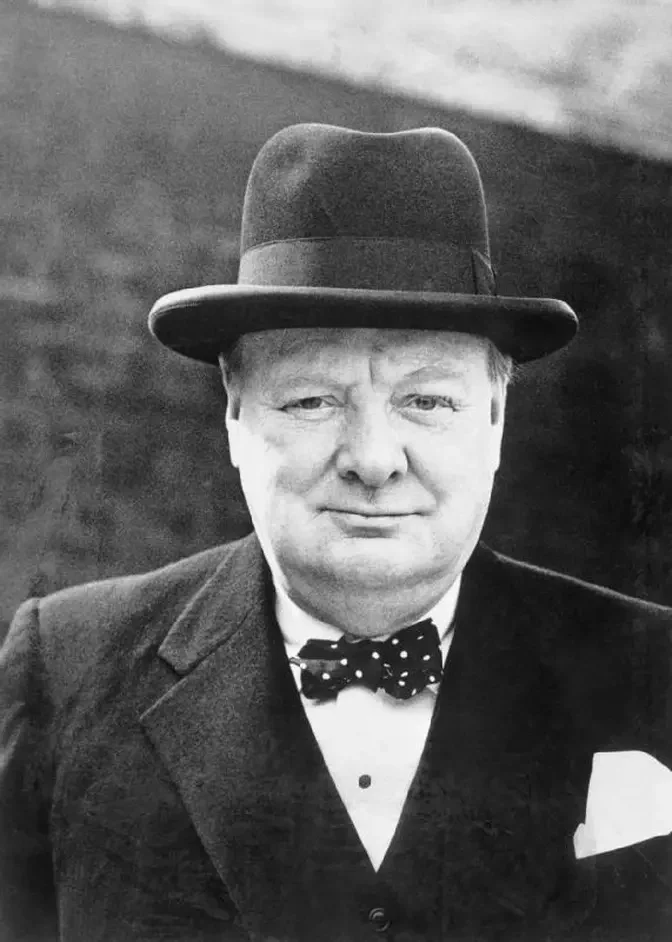
public. A really iconic part of Churchill's wardrobe. Oh my goodness, a bow tie. Come on
then, what else have we got in this Aladdin's cave? And an extraordinary insight into his most
passionate hobby. It's the home he loved depicted by his own hand, a really crucial point in his
life and the history of our country. Chartwell tells the story of a great man who led the nation
through turbulent times but also reveals how Churchill escaped the pressures of leadership.
Also tonight, Dan Jones uncovers the hidden base ordered by Churchill to defend our shores.
So now I can see it, you've got all these bunk beds down each side, that's absolutely amazing.
And Miriam O'Reilly unearths a World War II covert operation. It looks like a hobbit hole in the
woods. But first, I'm in the heart of the stunning Kent countryside at Chartwell, where I'm meeting
the Trust's Catherine Carter. What a way to say hello on a crisp snowy morning. You know, I don't
know of any house I'm visiting that has got so much sort of exciting atmosphere attached to it
that I can't get to wait inside, because I think it was Churchill's family home, that's key to me.
Oh definitely, so he moved here in the 20s, so quite a long time before the war, and spent the
of his life here, so it really was the family home that they had for 40 years. His four children
brought up here, and Chartwell's just such a wonderful playground for all of them.
He fell in love with it, didn't he? He did, from the moment he saw it, he absolutely loved Chartwell,
particularly the views, the views are what he loved most about this very special place.
Is it too much to say that this was the most important house in Europe at that time?
Not at all, I think that that phrase, the most important country house in Europe, really is very
true for Chartwell, and it really did become almost like another branch of the foreign office
here in Kent. It was that crucial to the conduct of the years leading up to the war. It seems to
me as though you're as excited about this place as I am. Absolutely. Where do we start to get a
feeling of the man, the flavour of the house, and his relationship with it? If I was going to send
you to one place, I think the study is where you should go. The heart of the heart, come on.
The house was frequented by family, friends, political dignitaries, and stars throughout
Churchill's time here, and these are all diligently recorded in Chartwell's visitor's book,
with famous names such as the Queen and Charlie Chaplin jumping off the page.
Alan Packwood is the director of the Churchill Archive. He's taking me to the study to uncover
a special and unique piece of British history. There's something hugely powerful about the
atmosphere in a room where history was made. Absolutely. This is the heart of the machine.
It's from this room that Churchill, in the 1930s, conducted his one-man campaign against the
government, but of course it was one man supported by one woman, and we mustn't forget Clementine.
Clementine was such a powerful force in his life, wasn't she? She was his rock, and actually
she ran this household around him, and that can't have been an easy task, but she was also
one of the few people who he would really listen to and who he trusted. The words of his speeches
would have first echoed through the walls of this room, wouldn't they? Absolutely. You can see him
sort of walking, I bet there's a truss down here, where he walked up and down with the cigar,
secretary sitting down over there. Would you like to see some of his speeches that I brought
from the archive? No, not, yes! History Hit is like Netflix, just for history fans,
with exclusive history documentaries covering some of the most famous people and events in history,
just for you. Whether you're looking to dive into life and crime in Victorian London,
or the forgotten history that deserves to be heard, History Hit has a documentary for you,
just a click away. We're committed to bringing history fans award-winning documentaries and
podcasts that you can't find anywhere else. Sign up now for a free trial, and Absolute History fans
get 50% off their first three months. Just be sure to use the code ABSOLUTEHISTORY at checkout.
These are the actual pages that Churchill read from. How often do these see the light of day?
Well, these are stored in the Churchill archive in Cambridge, they're locked in our secure
fireproof vault. It's very rare that we bring out the originals. These particular pages come from
the speech that he delivered in the House of Commons on the 5th of October 1938. So these are
written in Churchill's wilderness years. Chamberlain has just come back with peace in our time, and he
doesn't believe a word of it. That's absolutely right, this is Churchill's response to that crisis.
He has been warning about the dangers of appeasing Nazi Germany since 1933. Why didn't
they listen to him? Well, I think you have to remember, of course, that this country had been
through the horrors and the tragedy of the First World War, and the last thing that anyone wanted
was another conflict. This is classic Churchill oratory, isn't it? Never will you have a friendship
between the British democracy and the Nazi power. This is Churchill at his strongest, isn't it?
And look at how he sets it out on the page, so it's set out like poetry, to give him his rhythm,
to give him his pauses, to give him his emphasis. These punchy points, five years of futile good
intention, five years of eager search for line of least resistance, five years of uninterrupted
critique, five years neglected already. It makes the hands on the back of your neck, doesn't it?
What tragedies, what horrors, what crimes has Hitler, and all that Hitler stands for,
brought upon Europe and the world? Churchill wrote his speeches late into the evening,
so it made sense that his bedroom was just next door. Oh goodness, it really is only a
footstep away, isn't it? Absolutely. Straight into his bedroom. Yeah, the inner sanctum.
Out of the study, and here you are, portrait of his father above his head. Jenny, his mother.
This is a nest in a way, isn't it? Very much so, and of course in the mornings he would wake up,
and his preference was to work from bed, so his papers would be brought to him, and you can imagine
a secretary being summoned, and she would be sitting at the end of the bed here,
and taking down dictations as he worked through everything. And then after breakfast in bed,
into the bath. Yes, well about mid-morning when he'd finished working through his papers,
he would take a good and long bath, but of course being Churchill, he wouldn't stop working,
and the secretary might well remain in here, and you can imagine him dictating through the door.
And then of course you have lunch, and lunch in Chartwell isn't going to be a small scale affair,
you're going to be talking free courses, perhaps visitors and guests. And then the afternoon? Well
the afternoon, he might well retire for a nap, and he believed in doing that properly. He believed in
getting undressed, getting into his pyjamas, getting back into bed, and have a proper rest.
And that would fuel him for the rest of the day. Well then more work of course, leading into dinner.
Perhaps with more guests, you can imagine him trying out phrases from the speeches that he was
working on, talking politics, perhaps till quite late in the evening. He wouldn't retire to bed,
he would come back up into the study, and perhaps do a further two hours before finally coming
through and retiring. I mean he is doing in 24 hours what it would take the rest of us
one and a half or two days to do, which is perhaps why he said that a day away from Chartwell was a
day wasted. It is astonishing that he could run that regime over such a long life, and achieve
so much, but the secret is clearly the bed. Chartwell in Kent was the family home of Sir
Winston Churchill. It reveals a man with a steadfast passion for his work, and one who
cared deeply about Britain and its people. But it also shows off a personal side to Winston that was
equally accomplished and remarkably creative. This is displayed on the walls of Chartwell,
which are full of art, like Monet's stunning Pont de Londres, but if you look a little closer,
most of the canvases are actually works by Churchill himself.
Winston, the indomitable wartime Prime Minister, was also an artist.
And the Trust's Catherine Carter is taking me to Winston Churchill's private studio,
where he created many of his 500 works of art.
Oh, it's the playroom. This is obviously where he was most comfortable in his downtime.
Never seen so many paintings by Churchill in one place. How many paintings in here?
We have over 100 in here, and of course here around the house,
about 160, so about a third of the 500 or so he did in his life.
It's astonishing. Was this his private place then?
Yes, very much so. So he would come in here to escape the pressures and strains of Westminster
and political life, and this was really where he could seek comfort and lose himself in his oil
paints. How old was he when he started? He started painting at 40, so quite a late start.
He had various mentors. He was very fortunate to have a number of friends who were
very talented artists. Yeah, because he knew the likes of Munnings,
of Lavery. Not bad mentors, are they really? No, not at all. He was always trying to improve,
but he never thought of himself as a professional painter. He just
loved it so much. He wanted to be the best he could be at it.
Churchill's works capture his painting trips to the south of France,
and his substantial output offers a kaleidoscope of colours that reflect the joy he gained from his
hobby. When you look around the walls, it's like taking a tour of the world, isn't it?
But quite a lot also of Chartwell of the Garden. Now there's a view I recognise.
Yes, this is View of Chartwell, and it's painted by Churchill in 1938, so it's the year before
the outbreak of the Second World War. We are to the north of the estate at the top of a hill,
looking down across the landscape and out towards the Weald of Kent.
1938, a very difficult time for him, a crucial time.
Crucial indeed. Politically, he is in the wilderness, he is campaigning against
appeasement with Nazi Germany, largely unheard, and he's starting to see this campaign of
aggression in terms of their foreign policy coming to fruition. It's genuinely a frightening prospect.
If war breaks out, the English Channel is just beyond the horizon there.
In a way, he's staring across at increasingly occupied Europe and Nazi Germany. I mean,
he's literally on the brink of the British Isles here, isn't he?
So in 1938, Austria has been annexed, and also there's increasing aggression against
Czechoslovakia, so it's all happening just as he predicted. And if he is right,
if an invasion of Britain is going to occur, this little corner of England that he sees,
looking out beyond the Weald towards our coast, would no longer be as he knew and loved it.
That makes this an incredibly powerful painting.
Painting was escapism for Churchill, and Chartwell as a whole is full of personal
reflections that give us a greater insight into what he was like as a person. And today,
I'm lucky to be meeting someone who can share intimate knowledge of the man himself,
Churchill's granddaughter, Celia Sands. Celia, what are your memories of Chartwell?
I have wonderful memories of Chartwell, because it was like a second home for me when I was a
child. We used to come an awful lot, and we spent Christmases here. This was where
I spent more time than anything. What was Winston like as a grandfather?
He was lovely. I think he was determined that his family life would be
cosy, and I think his best thing was to sit around the dining room table here,
and to look around and see as many of his children and grandchildren there as possible.
It seems as though this was a place where he really could relax. Was this his relaxing base,
as it were?
Oh, absolutely, yes. I mean, I used to run in in the morning and see him having his breakfast in
bed, and with the cat curled up next to him, Rufus the poodle running around, a secretary
probably taking dictation, and all the newspapers strewn over the bed, and Toby the budgerigar
swooping in to share the breakfast.
You travelled with your grandfather a lot as well. Tell me about that.
I was really lucky, because I was a grandchild, an available grandchild of an appropriate age,
and so I did go with him on various journeys. I mean, we'd go on painting trips or drives,
just sit on the terrace of the Hotel de Paris in Monte Carlo, which was where we went always in
the south of France, and he would be peaceful and affectionate.
His painting clearly was, for him, a great source of solace.
I think it wasn't just a solace. It was his stress buster. He loved it. He used to like
to go on holidays that were bathable and paintable. This was the time that he really
could switch off and forget any of the troubles.
Churchill's time here was a welcome relief away from the stresses of political life.
At the end of the 1930s, as Churchill feared, the country was poised for war,
and Chartwell risked exposure to German bombs.
I'm getting access to a secret part of the house, not open to the public,
which shows the real threat its occupants faced.
They tell me that, although this looks like a normal National Trust office, who am I to argue,
behind the printer, there is something really rather special. Is this behind the printer?
Oh, this is stepping back in time. This is an air raid shelter underneath the house.
Blast-proof door. And this, what's it called? It's Anderson Shelter. It's made of corrugated iron.
And here it is, with one, two, three, four, five, six, eight sleeping berths,
and this corrugated iron roof on it, which supposedly stopped debris from falling on you.
Air vents, so you could breathe. I had no idea that there was an air raid shelter underneath
Chartwell. In a way, it sort of anchors Churchill even more fiercely to his people, doesn't it?
Because this is what people in suburban streets up and down the country were going into every
night during the air raid, and waiting till the bombs had stopped falling. Quite chilling.
By 1940, the threat of war in Europe had become reality.
The nation turned to Churchill to lead them in the fight against Hitler's forces.
One of his first acts as the new Prime Minister was to shore up Britain's defences. Dan Jones
has headed down to the White Cliffs of Dover to discover the unbelievable story behind how he did
it. Winston Churchill was Prime Minister during the Second World War, and people often call him
the greatest Briton of all time. Now, one of the reasons for that is that during the darkest days
of the war, he would appear in person on the British coastline, taking a hands-on interest
in the national defence. On Churchill's orders, guns were stationed on the clifftops to defend
the channel, and tunnels were built beneath as a base for the gunners and their support staff.
They were only uncovered in 2012, when the Trust's John Barker headed up their excavation.
Pretty spectacular spot, isn't it? It is beautiful.
Give me a sense of what this whole area would have looked like back at the time of the Second
World War. There would have been barbed wire all over the place, and behind us, there would have
been three six-inch guns. They've got a range of about 14 miles. It would have taken you almost
all the way to France. Yeah, well over halfway. In 1940, work began on building tunnels 23 metres
below the coastline, which means descending 125 steps to reach them. These tunnels are
incredible. They just seem to go on for miles and miles and miles. How much of them is that?
There's 10 interconnecting tunnels down here, over three and a half thousand square foot.
The tunnels were dug by the Royal Engineers, and they actually completed it within 100 days.
A hundred days gives you the idea of how urgent a shelter was needed.
And how did they actually dig these? Because, you know, looking at the walls,
it looks like they were just physically torn out of the rock.
These were all dug by hand, so in some places you can see some drill marks,
and in other places you can see picks where they would have tidied the surface up.
That's amazing. Let's go and see some more of them.
The fan bay tunnels had five large metal-lined chambers providing bomb-proof shelter.
So this is obviously completely different from those last chalk-hewn tunnels we were in. What
happened in here? This is accommodation. We discovered a sketch which was done by a war
artist. This is actually this tunnel in 1941. That's absolutely amazing. Right, so now I can
see it. You've got all these bunk beds down each side, and there are just so many men.
What were conditions like? Cramped, it would have been quite busy,
hot, probably quite smelly as well. Wow, what an amazing image.
So it's still really damp down here. I mean, there's water dripping from the ceiling.
Was it like that during the Second World War? The fan bay did always have a problem with
condensation and water ingress, so eventually the troops ended up sleeping on the surface.
So this became a refuge just for during air raids and counter-bombardments.
I can't imagine spending night after night under attack in the cold and dark here.
All over the walls there are these amazing traces of humanity where people have scratched their name
as graffiti into the soft chalk, and the one I like the best is just here. It's just this stick
man running while there's a bomb or a shell flying over his head. That just touches me. This is the
human experience of being down here in these tunnels while the war is going on
23 metres above you on the earth's surface. The network is so extensive that excavation
was no easy task, as volunteer Gordon Wise found out. Gordon, you were down here when
these tunnels were rediscovered and cleared. What was it like? It's very much what you see today,
except there was a lot of dirt over the floor. Spended about three and a half thousand man
hours down here over 18 months, and it was all hand digging. Moved about 110 tonnes
of spoil during that time. Kidding, that must have been back-breaking.
Yes, very back-breaking. As the tunnels were forgotten for so long,
they're a perfectly preserved time capsule of day-to-day military life.
There must have been some pretty interesting stuff down here.
All sorts of stuff, as you can see here. I mean, electrical fittings and coal arches that were
discarded. A whole load of other bits and pieces that you can see in the bucket. One of my favourites
is this one here. This is a massively blown up version of it, but it's a Paul's Coupon.
Oh, of course it is. And what it does, it leads us back to the 9th of February, 1943.
So this is really from the height of the war. That's correct. So there must have been a soldier
down here filling the Paul's Coupon in with nothing else to do other than listen to the
shells raining down above him. And he tucked it up between the steel arch and the steel sheeting,
and obviously forgot about it. We discovered it 70-odd years later.
So he never managed to send it in? No, but this wasn't a winning coupon.
It wasn't a winning coupon. It was just as well he didn't send it off.
Fantastic. Indeed.
Thanks, Gordon.
This shelter was essential to keep the guns going 24 hours a day to defend the channel,
all thanks to one man's vision.
The fan bay tunnels were a real testament to the genius of Winston Churchill,
but I think their rediscovery and excavation allows us to pay tribute to the brave men and
women who ventured 23 metres under the ground to protect this coastline during their country's
darkest hour.
Churchill's ability to snuff out danger was one of the many reasons why he was
such a valued and much-loved wartime leader.
Chartwell, in Kent, was the family home of Sir Winston Churchill
during 40 of the most eventful years in British history.
With the onset of the Second World War, it was deemed too well-known and too exposed to air
attack, and the family relocated to London.
But Chartwell does hold some of Churchill's most iconic possessions from this defining period
in a secret storeroom not open to the public.
I love these secret passageways and rooms that nobody goes in.
Muniment, room B.
Oh, gosh, so these are the appurtenances of life?
It's a collection, so there are some everyday objects and some awards and that sort of thing,
but really sometimes the everyday ones are the most special.
They make us feel that we're like Churchill, don't they, if he's got things like ours.
Go on, lead on, show me what we've got.
What's in there? Oh, now, can I guess what's in here?
Well, what do you think it might be?
From the shape, I have a clue.
Oh, look, huge.
Of course, they're all falling apart now, aren't they?
They are, they are very, very fragile,
but we're very lucky to have a handful of his original cigars here at Chartwell.
Well, come on then, what else have we got in this Aladdin's cave?
If we look just down here, we have a really iconic part of Churchill's wardrobe.
Right, oh, my goodness.
Oh, do you know, I'm really disappointed because it's ready tied.
Yes, it did save him some time.
A bow tie, with, as they say, signs of wear, which is rather...
Yes, you can tell this has been dined in, you might say.
But he often did wear that, navy blue or black and white spotted, didn't he?
Oh, yes, it was almost his uniform.
He would be most commonly seen out in his navy polka-dotted tie.
Just to be close to it's special, I don't know why, but there we are.
What now? Oh, this is bigger.
Here we have, along a similar theme...
Can I open this one?
You certainly can.
It's like Christmas.
Oh, oh, now, I remember seeing this is a tall bowler.
It's taller than normal a coke hat or a bowler.
Churchill was commonly associated with having a very wide variety of hats
across his different roles and positions in government.
How astonishing, what a treat.
I could spend days in here, I think, just going through absolutely every parcel.
Big box, can I go in here?
Yes, of course.
Oh, my goodness.
Anybody over the age of 60-odd, 70 maybe, will know what this is.
It's a siren suit.
Well, we call them onesies nowadays.
He had them in velvet.
So, yes, Churchill had these designed so he could quickly pop them on over his pyjamas
in the event of an air raid or an urgent meeting in the middle of the night
and they became a staple part of his loungewear, you could say.
It's loungewear.
It's very...
You can feel it must have been very comfortable.
This is wonderfully silky velvet.
Very, very good quality garment.
He was a man, wasn't he, who liked the finer things in life.
I'm going to do some more exploring, is that right?
Our memory of Churchill is dominated by his time as the famous wartime Prime Minister.
But I'm just as fascinated by his many hobbies.
These even extended to him becoming an accomplished bricklayer.
And the grounds of Chartwell are full of his handiwork,
including this stout red brick wall,
where builder Steve Candy is waiting to tell me how he did it.
Hello, Steve.
Alan, pleased to meet you.
Nice to see you.
Yeah.
It's a pretty substantial wall, isn't it?
It is.
It's not the most obvious hobby for a world leader, is it?
He was a man of many talents,
but bricklaying isn't the first thing you think of when you remember Churchill.
But it was his hobby and he was quite serious about it, apparently.
You're a professional. How good was he?
He was an enthusiastic and fairly proficient amateur.
Right.
They say he could do 90 bricks an hour.
Yeah, I looked at that.
I'm not sure he would have kept it up for eight hours a day, though.
That's pretty good going.
It says the greater part of this wall was built between the years 1925 and 1932
by Winston with his own hands.
He did have helpers.
Yeah.
Apparently two of the garden staff and he did have one professional bricklayer,
but I'm not sure which bit the professional bricklayer did and which Winston did.
Apparently, yes, a greater majority.
And because he loved his children, he also built that.
A little summer house.
Which is a little summer house for his daughters.
That clearly was his outlet.
Yeah, it must have given him relief from the pressures of office of state.
And he liked working with his hands.
It was obviously his passion.
We've actually got some work going on at the moment.
If you want to come have a look and maybe have a little go.
The prospect of helping to sustain a Winston Churchill wall is irresistible.
Let's go.
The wall in question encloses the kitchen garden,
which in season provided fresh vegetables for the Chartwell table.
These are the guys.
Gentlemen, good morning.
Good morning.
Nice to see you.
Good morning.
Hiya.
Are you going to trust me with this?
Definitely.
This grout goes in along that line there.
Yes, if you can get it as far as possible.
Yeah, and then we'll push it to the back.
All right.
And it's approximately just under a metre long.
Okay, deal with that.
Look at this.
Winston will be proud of me.
You move right to the corner.
Right to the corner.
Don't skimp it.
So because this wall is leaning out, this is all part of stopping it going any further?
Basically, it's reinstating structural integrity across the cracks
and bonding the brick panel to the brick pier.
So I am the man who gave structural integrity to Winston Churchill's wall.
Yes.
I like that.
Push that back.
Right to the back of the slot.
All right.
It's about 40, 50mm deep.
Oh, it is deep, isn't it?
Yeah.
How am I doing?
Yeah, not bad for a first attempt.
Not bad.
But don't call us.
We'll call you.
Churchill's many talents stand proud throughout Chartwell,
and it's obvious that this house was a much-loved space for both him and his family.
His granddaughter Celia was a caring companion for Winston as he conducted his busy life.
We have a picture of you here with him in the back of a car.
This picture, it was clearly not cold because I'm not wearing a coat,
but, of course, he felt the cold.
Here's the cigar.
The cigar was always there.
As he left the house, he would have the cigar lit
because people expected him to be puffing away at the cigar.
But it was very much part of him.
Your grandmother, Clementine, was an indomitable sort.
It was a tough marriage for Clementine, wasn't it?
Well, of course it was, yes,
because he was a difficult man to be married to.
I mean, everything centered around him.
And she was someone who was very highly strong,
and so she found life quite a strain because he was racing through life,
and everything was going at full speed
because he was once described as a young man in a hurry.
But he was a man in a hurry all his life,
and he was always pursuing his destiny,
which, of course, came rather late.
But she was an extraordinary wife.
If you could put your finger on exactly what made him the man he was,
as his granddaughter, what would you say it was?
Courage.
He had the courage, when he believed in something,
to carry through with it and not to be worried by what other people said.
He felt he had this destiny, so he had a purpose.
Chartwell, Winston Churchill's home in Kent,
was dust-sheeted and closed up during the dark days of the Second World War.
Churchill was now in London, which was subject to sustained bombing raids.
And this was the base where, as Prime Minister,
he drew up top-secret plans to establish a deadly last line of defence
to be used only in the event of the unthinkable, an invasion.
Miriam O'Reilly is heading to Oxfordshire to unearth this astonishing story.
With German forces advancing across Europe,
the threat of an imminent Nazi invasion was very real.
Shrouded in secrecy, plans were put in place to train a covert army,
capable, if the need arose, of taking on an enemy invader,
right here on British soil.
Coleshill in West Oxfordshire is where this hidden army
received their secret training in the dark arts of guerrilla warfare.
War historian Bill King was among the team
whose vital detective work helped uncover what happened here.
Looking over to my right, there isn't a lot to see at the moment, is there?
Not really, Miriam.
What you're looking at now is the site plan of a beautiful Jacobean mansion.
This was the site of the headquarters of Winston Churchill's secret army,
the auxiliary units of World War II.
The secret army were a guerrilla force primed to spring into action
if Britain was invaded.
Coleshill was a mansion requisitioned to serve as their training camp.
Clearly, the house is no longer here.
What happened to it?
Well, the house burned down in late 1952.
The house was the headquarters,
but the training took place out here in the countryside, all around us.
Can we see where they trained?
There's quite a lot of evidence still around,
but you've got to know where to look.
Churchill's auxiliary army was made up of men who hadn't gone to war.
These were working men who knew the land
and were vital to the running of the country.
They were agricultural workers.
They were farmers.
They were gamekeepers.
They were skilled people in their own rights,
and they were doing important jobs.
In the event of an invasion,
these men were to transform from civilians
and conceal themselves within hidden bunkers
scattered across the countryside.
From these secret hideouts,
they planned to launch guerrilla attacks against the enemy.
Bill is keen to show me a bunker he helped discover on site,
used by the secret army during training.
It looks like a hobbit hole in the woods.
Well, yes, it does,
but it really is something different.
It's an operational base.
When did you find it?
1992.
We heard that a badger set had collapsed,
and we thought this was an opportunity to go and explore.
We knew that there were supposed to be
a number of these operational bases constructed,
but nobody ever found one before.
This is the first one to have been discovered nationally.
How exciting.
Yes.
Consequently, we slid down here on a bed of leaves on our backs,
and we found an Aladdin's cave inside the operational base.
Would you like to see inside?
I'd love to see inside.
Thank you.
Well, we haven't quite slid down the leaves,
but they have made it a bit difficult to get in.
Not quite.
My first reaction is that it's very claustrophobic in here,
and very small.
Well, yes, it is,
especially when you think you're going to put
eight or nine people down here,
you'll know men are going to occupy this space.
Over on the wall here, we have these, which are...
This is one of the original cots as we found it inside.
This is a bunk bed,
and these hinge down from the wall from these brackets here.
So how many men sleeping in here?
Well, probably about eight at a time.
It's a tight squeeze.
It's a very tight squeeze.
Were the Germans to take control of Britain,
the army was trained to mobilise and cause as much disruption,
sabotage and killing as they could.
Down the centre line here, there would have been quite a long table,
which would have been used for planning.
They knew what their targets were going to be.
They would have selected maybe four or five prime targets,
a railway bridge, a road bridge over a stream, those kind of things.
The training regime here was tough, and it had to be.
These men were to transform from civilians
into hardened, trained killers as a guard against invasion.
What sort of weaponry would they have been given?
Well, the first and foremost one is this.
It's a .38 Smith & Wesson revolver.
Gosh.
And so here on the holster, we have six rounds of .38 ammunition and a pushknife.
This is the one that really is the clandestine warfare weapon.
And this is lethal.
It is. It was intended to be lethal.
With another bunker unearthed recently on the grounds of Coleshill,
even today, many more operational bases remain hidden and undiscovered.
An army of civilian volunteers was Churchill's idea of a last-ditch attempt
to wrench victory back from the jaws of defeat.
As it turned out, the army never had to be mobilised,
and many of them took their experiences with them to the grave.
In May 1945, the war was over,
and the heroic efforts of the British troops across Europe could finally come to an end.
And this beloved family home could be liberated
as Churchill had led Britain to victory in Europe.
With the war over, it was safe to return to Chartwell,
and Churchill could enjoy family life and his personal adventures once more.
Was your grandfather good company on travels?
Did you feel that you were a valued companion?
Well, he liked to have someone with him.
As I grew up, he grew older.
On one occasion, he fell in the Hotel de Paris and broke his hip.
And I was with him with his private secretary, Anthony Montague Bryan, in the hotel.
And he was taken to hospital.
And Anthony and I walked to the hospital together,
and Anthony said, you know, Celia, he's not going to make it.
So we got to the hospital.
He dismissed all the medical staff and turned to Anthony,
and he said, I want to die in England.
So we got back to the hotel.
Anthony rung Downing Street and spoke to Harold Macmillan,
who immediately ordered a VC10 for the RAF, an ambulance plane, to come and collect him.
And all I could do is sit and hold his hand and hope and pray that we would make it.
And he did look terribly frail.
But we arrived at Heathrow, and so as he was lowered to the ground,
and he looked, and he smiled, and he gave them a V sign,
and they clapped, and we knew he was going to be all right.
But he was all right, but never quite the same again.
How do you look back on your childhood with Winston Churchill?
Very fondly.
I mean, I have lovely memories of him,
always warmth, affection and humour coming from him.
I had a lovely time here.
And this was a really relaxing place to be.
It was so nice.
And my memories here are all happiness.
Whether armed with his mighty pen, his paintbrush, or even his bricklayer's trowel,
Winston Churchill was a considerable force of nature.
He'll be remembered for steering Britain through its darkest hour
and inspiring the nation with both his leadership and his courage.
But Chartwell has revealed a man of many passions,
and one who made this home a refuge from his formidable life on the British front line.