

Johann Christian Heinrich Rinck (1770-1846) - Weihnachts Kantate, Op.73
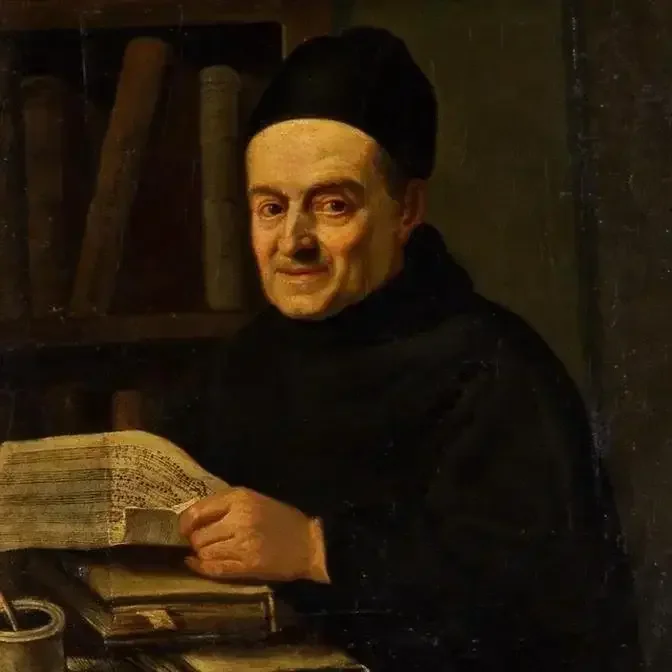
★ Follow music ► https://www.instagram.com/reciclassicat/
Composer: Johann Christian Heinrich Rinck (1770-1846)
Work: Weihnachts Kantate, Op.73
Performers: Petеr SchoII (organ); CoIIegium VocaIe Siеgen; UIrich Stotzеl (conductor)
Relief: Anónimo - Adoración de los pastores (c.1860)
Further info: https://www.amazon.co.uk/dp/B000XHB7ES
Listen free: http://open.spotify.com/album/0PxumfNKmasDfn9e1FEjON
---
Johann Christian Heinrich Rinck
(Elgersburg, 18 February 1770 - Darmstadt, 7 August 1846)
German organist and composer. He studied first with Abicht, J.A. Junghanss and H.C. Kirchner, but received his most important musical training in Erfurt from J.C. Kittel, a former pupil of Bach, from 1786 to 1789. In 1790 he became municipal organist of Giessen. He moved to Darmstadt in 1805 as organist, Kantor and teacher at the music school, and he was also a member of Grand Duke Ludwig’s Hofkapelle. In Darmstadt he met such figures as Abbé Vogler and Gottfried Weber. He became court organist in 1813. Rinck was celebrated as a teacher throughout Germany, and because of him Darmstadt became a centre for aspiring organists. Among his pupils were Charles Hallé, F.C. Kühmstedt, Joseph Mainzer, C.A. and W. Mangold and C.F. Pohl. Rinck was also regarded as an authority abroad, although he seldom left Darmstadt. He was awarded an honorary doctorate from Giessen in 1840. Rinck’s compositions are mainly for the organ. They include many collections of chorale preludes as well as instructive works such as the Praktische Orgelschule op.55, the Vorschule für angehende Organisten op.82 and the seven-volume Der Choralfreund oder Studien für Choralspielen opp.101–27. Rinck was influential in the development of the chorale prelude in the early 19th century, and his Theoretisch-Praktische Anleitung zum Orgelspielen op.124 was translated into French, English and Italian during his lifetime. His prime concern was to write in a manner suitable for liturgical use, and the moderation of his artistic methods was esteemed by his contemporaries. Rinck also wrote instructional works, waltzes and variations for the piano, two masses, motets, and much unpublished instrumental music, probably written for the musicians of the Darmstadt Hofkapelle, which lies between the Classical and the Biedermeier style. Rinck had close connections with the publishers Schott in Mainz, which issued his main organ works and which owned the journal Cäcilia, to which he contributed music criticism; he also prepared the piano score of Beethoven’s Missa solemnis for Schott. In the middle of the 19th century Rinck’s library, which contained important 18th-century manuscripts as well as his own compositions, was sold to America and given to Yale University. #ClassicalMusic