
Johann Gottfried Piefke - Düppeler-Schanzen-Sturm-Marsch (1865)
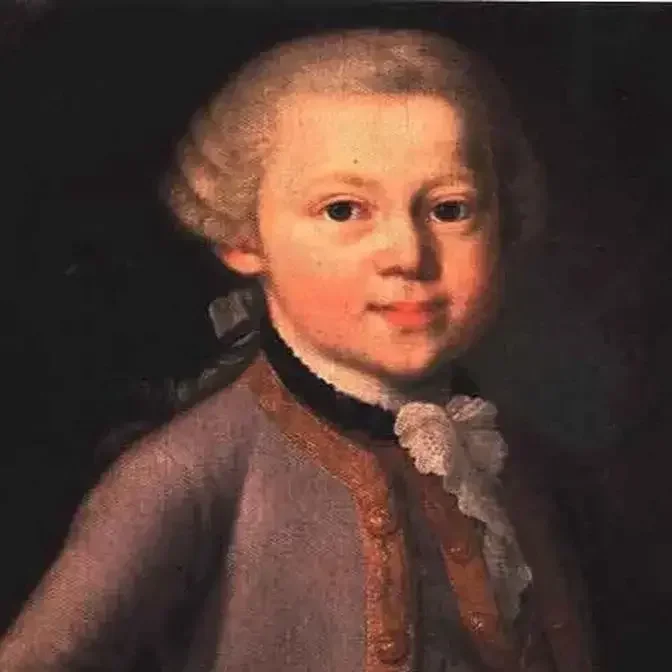
Johann Gottfried Piefke (9 September 1815 † 25 January 1884) was a Prussian military musician and composer. His best-known works are the Düppeler-Schanzen-Marsch, the Königgrätzer Marsch and Prussia's Gloria. After the Battle of Königgrätz in 1866, his name became a pejorative term for Prussians and North Germans in Austria and Bavaria.
Please support my channel:
https://ko-fi.com/bartjebartmans
Die Düppel-Stürmer (1865) Two Marches
No. 2 Düppeler-Schanzen-Sturm-Marsch
(Fortification Storm March)
Japan Maritime Self-Defense Force Band of Tokyo
The March was written to commemorate the Battle of Dybbøl which was the key battle of the Second Schleswig War and occurred on the morning of 18 April 1864 following a siege starting on 7 April. Denmark suffered a severe defeat against Prussia, which decided the war. Dybbøl was also a battlefield in the First Schleswig War.
Piefke was born in 1815 as the son of the organist and town musician Johann Piefke and his wife Dorothea. On 1 May 1835 he began his military service as an oboist in the Leib-Grenadier-Regiment "König Friedrich Wilhelm III". (1st Brandenburg) No. 8 in Frankfurt (Oder) and on 1 September 1838 he went to the Hochschule für Musik in Berlin. There he had a love affair with the Princess of Trachenberg. As a staff oboist, with the rank of sergeant, he returned to his regiment in the III Army Corps on 1 June 1843. Together with parts of his regiment, later also called the "Brezelgarde" by the Berliners, Piefke came to Berlin in 1852. There he developed his talent as a musician; both the experts and his audience paid tribute to him for this. On 23 June 1859 he was awarded the title of Royal Music Director. Six years later, on March 20, 1865, Wilhelm I awarded him the title of Director of the entire music choirs of the III Army Corps, created especially for Piefke. Piefke's military rank, however, remained a regular sergeant.
By 1860, Piefke had returned to Frankfurt, again due to military requirements. Here he married a daughter of the Frankfurt victuals dealer Johann Carl Hankewitz. In 1864 he took part in the war against Denmark. During the storming of the Düppel redoubts, he is said to have given the signal to attack, conducting with his sword. In 1866 he took part in the war against Austria. On July 31, 1866, a large parade took place on the Marchfeld near Gänserndorf, about 20 kilometers northeast of Vienna. When entering the city, both Johann Gottfried Piefke and his 1.90 m tall brother Rudolf (1835–1900) marched at the head of the music corps. In response, the Viennese are said to have exclaimed "The Piefkes are coming!", which later became the Austrian Landsmannschaft term for the German in general. However, this connection has not been proven. During the Franco-German War of 1870/71, Piefke fell ill during the siege of Metz; he was not able to return to his unit until 1871.
He arranged Franz Liszt's symphonic poem – Tasso for military band and may also have similarly arranged some of Liszt's marches.