
Johann Schrammel - Weana G'müath, Waltz, Op. 112 (1890)
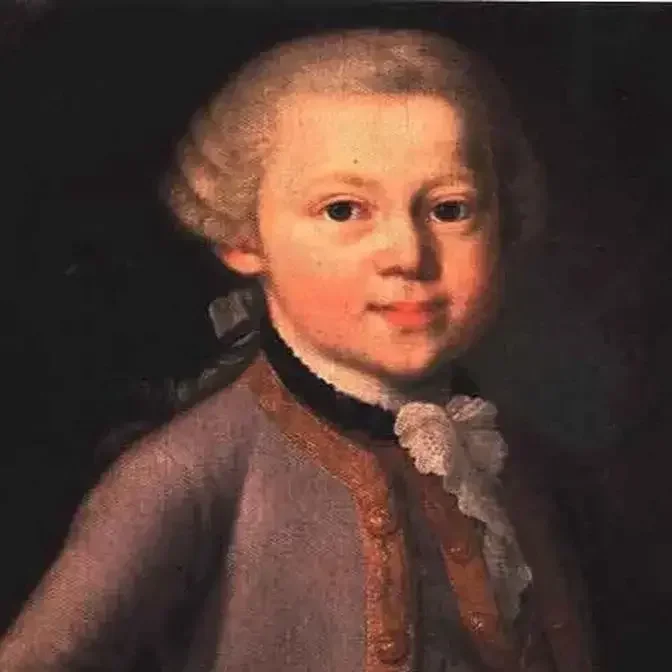
Johann Schrammel (22 May 1850 – 17 June 1893) was an Austrian composer, musician and folk singer. In 1878, together with his brother Josef Schrammel and guitarist Draskovits, he founded a trio called "D'Nußdorfer". In 1879, Draskovits was replaced by Anton Strohmayer. In the same year, the trio became the famous Schrammel Quartet with the addition of clarinetist Georg Dänzer. The quartet gained great popularity with its way of playing folk Viennese music and thus became the founder of the Schrammelmusik named after it.
Please support my channel on
https://Ko-fi.com/bartjebartmans
Weana G'müath (Viennese Spirit), Waltz, Op. 112 (1890)
Ensemble Die Wiener
“Weana G’müath” is a Yiddish phrase meaning “Viennese spirit” or “Viennese soul,” and it is the title of Johann Schrammel’s famous waltz, Op. 112. and is often performed in both piano and orchestral settings. The title captures the essence of Viennese musical tradition — a blend of elegance, charm, and rhythmic vitality — and has become a nickname for the piece in the classical and dance music world.
Schrammelmusik is a style of Viennese folk music originating in the late nineteenth century and still performed in Austria. The style is named for the prolific folk composers Johann and Josef Schrammel.
In 1878, the brothers Johann Schrammel (1850–1893) and Josef Schrammel (1852-1895), musicians, violinists and composers from Vienna, Austria, formed an ensemble with guitarist Anton Strohmayer, son of the celebrated composer Alois Strohmayer. The Schrammel brothers played two violins, accompanied by Strohmayer on a double-necked contraguitar. Inspired by both urbane and rustic traditions, the three musicians performed folk songs, marches, and dance music, most often for audiences at wine taverns (Heurigen) and inns around Vienna. At first the trio called themselves the "Nussdorfers" after the village of Nussdorf where they often performed.
In 1884 clarinetist Georg Dänzer [de] joined the group, which soon enjoyed phenomenal success under the name "Schrammel Brothers Specialities Quartet" (Specialitäten Quartett Gebrüder Schrammel). The ensemble was invited to perform in palaces and mansions as "Schrammel euphoria" gripped the Viennese elite. So great was the Schrammel brothers' popularity that some earlier folk music forms, such as the Wienerlied dialect song, came to be known as Schrammelmusik as well. The Schrammels' popularity eventually extended throughout Europe and in 1893 they were invited to perform at the World's Columbian Exposition in Chicago.
The Schrammels composed more than 200 songs and music pieces in just seven years. Johann Schrammel died in 1893, followed two years later by Josef. Each brother was 43 years old at his death, and both died of nephritis.
A typical Schrammelmusik ensemble consists of two violins or fiddles, a double-necked contraguitar, and a G clarinet (also known in Austria as a picksüßes Hölzl). Often a button accordion, called a Schrammelharmonika, is included.
Performers strive for a melancholy, "crying", but melodious sound. The style is influenced by folk music from Austria, Hungary, Slovenia, Moravia and Bavaria.
Several of Vienna's composers of formal music have also been Schrammelmusik enthusiasts, including Johann Strauss, Johannes Brahms, and Arnold Schönberg.