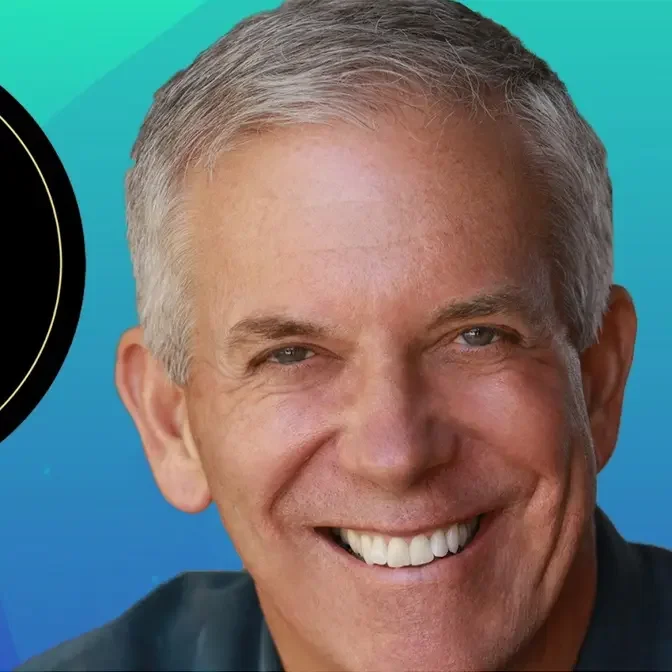
The California Gold Rush had some amazing pioneer women. Andrea Anderson is a podcaster and author from Sonora, CA that has chronicled their stories. Andrea starts her journey by a researching her own family that goes back generations in Sonora. She quickly uncovered stories like that of Josefa Segovia , a famously hung woman, Luzena Wilson who got rich cooking for the miners , a woman who became America's first African- American millionaire and Charley Parkhurst a famous tough, presumed male stagecoach driver who was discovered to be a woman while being prepared for burial.
Andrea also give us some tips on genealogy research and one of her favorite tools is Find a grave.
“The Best of California with Pat Pattison” is a fast-paced half hour TV show that explores the natural wonder, people, history and mysteries of the California Lifestyle. California native and TV Host Pat Pattison explores the state’s nooks and crannies from the historic backlots of Hollywood, famous California Cuisine all the way to the mansions of the Gold Rush and Silicon Valley.
Find Andrea's podcast "Queens of the Mines" wherever you get your podcasts and her book of the same name on Amazon.
San Luis Obispo, Santa Barbara, Santa Maria on the Central Coast CW 5 Sundays 12:30pm Palm Spring on the CW5 Sundays 12:30pm
Hi, it's Pat Patterson with Pat Patterson's Best of California, and I'm very excited to be
interviewing somebody that's going to tell us all about the history of women in the gold rush,
Andrea Anderson. Good to have you here. Thank you, Pat. I'm happy to be here.
Yeah. First of all, I have to acknowledge something about you. Do you know what it is?
I don't. Think about your name and think about my name.
Oh, yeah. Yes.
We are in a very elite club of people that have double names. Pete Ederson, Robert Robertson.
I'm assuming had you been a boy, you'd be Andy Anderson, right?
Probably, yeah.
So AA, PP, it's a thing. I always notice it when I fight people. Good to be here with you.
So you have an amazing history. Tell me a little bit about, first of all, where you are,
you're in Sonora, and just how you got interested in this whole world through your family.
Well, I live in Sonora, California, born and raised, and that's where Wood Creek
runs through Sonora, California. Woods Creek is where one of the more prolific gold discoveries
were in 1951 in California. And I actually have traced my family back to my four times
great-grandmother, who was from Nicaragua. Her name was Harriet Novice. In the obituaries,
in the newspapers, they called her Old Lady Novice, and they considered her one of the
pioneering women of the area during the gold rush.
So right there in the area you're still living in?
Yes.
Wow.
Well, I mean, it's a little bit over. I'm in Sonora, and she was in Ptolemy Hill,
but there's lots of records and stuff that showed her in Sonora also at the time.
Yeah. Well, in those city definitions weren't that-
No. It was just all gold country back then.
It was all woods. And in terms of when you kind of, and I should say, I didn't say in
the introduction, you have a podcast that you do. Tell us about the podcast.
I do. I have a podcast and a book under the same name, and it's called Queens of the Mines.
And the book and the first season of the podcast focus on 10 women's stories who were in
California, either who had first come to California during the gold rush days, or in the case of some
indigenous women who were already here.
Sure.
And so I try to find different stories to represent all the different people that were
here at the time. And a lot of them are stories that we haven't really heard or have been
highlighted in the past. And I went looking for those, trying to figure out what it was like for
my own family in the time.
Isn't that fascinating?
The women in my family.
Wow. And that's, I mean, I don't know how unique it is up there to have
these gold rush families, you know, be still in the area. But in terms of your own family
and how you, you know, you grew, did you grow up with these stories or did you?
No, I didn't know about these stories until I started doing the research.
You know, I've had the same experience. My family moved to Los Angeles in the 1880s,
and it was just a blank slate until I started digging. So I think part of it is we have so
much access to these records now. It was just too much work.
Absolutely. Yeah. I got really into genealogy and started doing all that stuff. And I was using
those skills to help me research these women who I was looking up and then
started finding my own stories as well.
Isn't that great? What was the first story you found? I mean,
what tweaked the interest to dig deeper?
So my favorite story and the first story I found was of a woman named Yosefa Sohovia.
Wow.
She was from, or she was living in Downeyville.
That's another double name, I think. I'm not sure what that sounds like.
No, no, no. J, Yosefa Sohovia.
Ah, okay.
But yeah, so she was living in Downeyville, and she had come from Sonora, Mexico
with the original group of settling miners that had come up during the gold rush.
And she actually came through here, through Sonora. There's some legends of her in Sonora,
some of our underground, literally underground tunnels and systems underneath our town.
She has a part of that, but she had gone to Downeyville and was working as a barmaid.
And she was maybe one of 25 women of a town of maybe 5,000 men.
And she was a Mexican woman, which was even more rare at the time there.
And she was actually
abused by one of the men in the town and took action and took revenge and murdered him
and was hung within an hour of doing so in the town.
And it's kind of just this crazy story that shows how
there was little value put on women and people of color at the time.
I mean, to think to murder, you have 5,000 men, you only have 25 women,
and you're going to hang one of those women. It's just, it's outrageous.
The whole state quickly condemned the act, and people got in trouble.
But there's a lot of mystery to the story, too.
I mean, I don't even know if this is appropriate to talk about.
But her skull was dug up about 20 years later and used by a group, a club,
secret club in California to drink out of for rituals.
That's amazing.
Legend has it.
I mean, maybe a year after I wrote the story and told the story,
I found out about a year later that the legend is that that skull is buried in Sonora.
Underneath our streets.
Not surprising that there would be many,
many stories about what you might dig up out there in the gold country.
And so this amazing story, just to put us in historic perspective,
1849, obviously, is the discovery of gold in California.
California had been Spanish, owned by the Spanish, who came in and took it.
Right up until the gold rush, too.
Took it from the indigenous people.
You know, there's just a, you know, we think in terms of, I think in terms at least,
and I've read quite a bit about this era, just how, you know, from the Native Americans
into the Spanish era, which was really a placeholder where they built the missions
to just kind of keep everybody else out, really, and ran the missions.
And then the Mexican independence and taking over this area.
And then President Polk and the Mexican-American War, which was kind of a land grab,
you know, not to get too controversial here.
Mass of the country, yeah.
Yeah, and Fremont came in.
And so this amazing, who knows if it was a coincidence or not,
the fact that gold was discovered almost immediately after.
Yeah, like a month later, yeah.
But anyway, we won't get into those controversies.
I do get into those controversies in the book, though.
I do get into it.
Okay, well, that's good to know.
That's good to know.
And where can people get the book?
So I have that on tape.
The easiest way for someone to get it is to order it off of Amazon.
Amazon, okay, great.
Yep, it's on Amazon, Queens of the Minds.
There is a Kindle version, a paperback version, a hardback.
And within the next month, the audible, the audio book will be available.
I look forward to getting it.
And so this period of time, you literally have millions of people,
hundreds of thousands, millions come swarming into California from all parts of the world.
America's largest migration.
Is it really?
Yeah.
And so I think people sometimes that are here in California,
you know, think of this as, you know, this is the United States and ever thus.
But one of the reasons California has so much diversity is that it was founded in the gold rush.
It was people coming from, you know, South America, people coming from Asia,
you know, it was this huge, huge migration of people.
Yeah.
And around that time, the indigenous, there is, oh, sorry, my coffee popped this one off.
Around the time the indigenous were speaking up to,
I think, 90 different languages in California at that time.
And then Spanish was next, was right there.
So when California, I'm sure you know this,
I don't know if everyone knows when California was made a state,
it was actually written in the first constitution in California
that all laws must be printed in Spanish and English.
I remember, yeah.
Spanish was the first language, you know.
So California was made to be bilingual from the very beginning, you know.
And the other little piece about that too,
here again, I'm not an exact historian,
is that California became a state faster than any states ever become a state.
It was fast-tracked in while all these other territories have been sitting there waiting.
And, oh, no, we got gold.
That's a story.
Oh, yeah.
I mean, it was within weeks, weeks of the gold rush.
I mean, it all happened all at once.
So then the following year, so it would be 1851.
It was California's, the first independence day where California was included.
Right.
In the United States.
And that's the day that that story happened with Josefa Sohovia.
Yeah.
So back to these amazing pioneer women.
Who's another story you can tell us about, Andrea?
Well, there's more on the, coming in on the wagon train side, there's Lusina Wilson.
So she came in, she was the second white woman to arrive in Sacramento.
Right.
During the gold rush.
And Lusina Wilson had the domestic skills that were not out here with all the men.
The men did not want to cook.
They didn't want to clean.
They didn't want to, you know, they didn't have those skills.
That's not what they were doing at the time.
That's a dick.
Yeah.
So this woman, Lusina, she shows up in Sacramento and the first man
to see her cooking at her campfire for her family.
She was, she had come with her husband, her brother, his family, some of her boys.
He offered her $5 for one biscuit.
I mean, we're looking at like, oh, like a hundred, over a hundred dollars.
Like that would be comparable to today.
Right.
And then doubled the money just for a loaf of bread.
And at the time, her husband, Mason, he was not finding any gold.
He was having no luck.
He was bummed out because he had hauled his whole family across the country to do this.
And he was worried to come home after being gone on a few day excursion
to tell his wife that he had no luck.
Right.
When he got home, he realized there's like 30 men sitting down there being fed,
and they all paid a couple bucks a person.
You know, she's making good money.
And that was her third, fourth seating of the day.
So, you know, he was trying with his pan, but she was there with her pan.
Yeah, that's great.
Making it big.
And just the determination and what these women have gone through.
I think her hotels and restaurants burnt down maybe two or three times in the process,
but she always just picked it right up and got it right back to where it was.
She has this quote.
Let me see if I can say it right.
And I now I try to remember that when things like this happened to me,
it was the nest egg was gone, but the bird who laid the egg,
the will and power to work was still there.
Oh, wow.
The nest was gone, but she still had the bird.
So she just keeps laying those eggs.
Isn't that great?
And I just think it's a neat story.
And just, I mean, it showed how the value of a woman at that time,
even though they weren't, you know, they weren't here.
I wanted to cut in and just say I'm interviewing Andrea Anderson,
who has a book, Queens of the Minds, and a podcast, Queens of the Minds.
Now, where do we get the podcast, Andrea?
The podcast is available anywhere you can listen to podcasts.
So Apple Podcasts, Amazon Music, Spotify.
I think you can even go on YouTube and it's on YouTube.
Okay, great, great.
Because this is such a fascinating history.
I mean, the proportion of women to men, is it even calculable?
Is it less than a percent?
What we can calculate is the proportion of white women to men,
because they were not documenting women of color.
They weren't documenting the indigenous Mexican women,
any black women who had came in.
So they were looking at the whole state of California
at the very beginning of the gold rush, three percent white women.
Three percent, okay.
And that grew over the entire gold rush to eight percent.
Wow, and of course, one of the dynamics of the gold rush,
you mentioned Sonora had 85,000 people at one point.
Was it Downingville or Sonora?
Sonora, Sonora and Columbia.
Yeah, we were almost the capital.
Yeah, right.
Columbia was almost the capital.
And is it that big now?
Well, I mean, it's that big now, but in comparison.
Yeah.
You know, it is a bigger, the numbers have grown for sure.
But just in comparison, if you look at that number,
at that time in San Francisco, there was probably 800 people.
Yeah.
Getting closer to hundreds of thousands.
San Francisco had 800.
Yeah.
So that's, I mean, it was all booming up there.
And then Sacramento, that happened.
And then that's where they ended up putting the capital.
But it was almost the capital here.
Yeah, right.
I know that story.
That's an amazing story, because we've done a segment.
We'll do a link to our segment about Columbia.
Do that someday.
Tell us some specific steps you took on your genealogy,
like websites, Ancestry.
What was helpful?
I started with Ancestry.com, just because I had,
I was just doing the generalized idea.
And then I actually started taking lots of courses
to learn all that.
But I'll tell you right now, the best tool,
if I could give anyone just one tool to get familiar with
and look into, is that findagrave.com.
Isn't that amazing?
Yes.
It's so good.
And I actually use it for certain episodes
where I kind of do an audio tour,
where you put your headphones in starting at the gate.
Right.
Certain gold rush.
And I tell you where to go.
And then I tell you the stories of the people
that are actually buried there.
What a great idea.
And I've done that with Find a Grave.
And you could search names.
You could search by cemetery.
You could search by town and area.
It gives you dates.
The big deal was it gives you dates.
Yep.
And what I like to do
when I go on to a certain cemetery,
I do the sort.
So I sort it out to the people
who were buried there first.
So I'm not looking throughout.
I like to go as far back as I can.
Doing the pioneers.
Yeah.
And that's actually where the book starts,
is in one of our local cemeteries.
Oh, okay.
Great.
And then what other things did you find helpful?
Find a Grave, Ancestry,
anything else you could give us tips on?
Just our local newspaper archives.
Because we did have a newspaper here at that time.
We had the Sonora Herald,
which was, interestingly enough,
the person who owned it,
he was an abolitionist from back east.
Yeah.
And him and his wife came here.
So they were printing the newspaper
and doing everything.
But secretly, they were also printing out
all of this abolition handbills and information
and getting that sent out.
But nobody knew that
that was all being done here in Sonora.
And so tell us just,
we're going to wrap up here a little bit.
Tell us another favorite story
about an uplifting story.
Is there one about a woman?
I know.
I'm sorry.
No, no.
These are great.
Don't get me wrong.
I know, I know.
I did try to find women,
you know, people who had such an impact, but.
Well, just like we're talking about,
you can't change history.
If it turned out bad, it turned out bad, you know.
Yeah.
Well, there's Mary Ellen Pleasant,
who was California's first black millionaire.
Okay.
She was a, had come,
a freed slave came to California.
Started helping other freed black people
who are moving to California to work and be free.
Started getting them those jobs too.
And pretty soon they all started listening
to the business tips
and started learning how to really make money
and how to do these moves.
And so all this.
The Women's Investment Club, the original.
Right, so they'd all come back to Mary Ellen
and tell her what the dirt was,
the tea that they heard that day.
And so she started putting all her money
into the right spots.
And she ended up with Charlie Parkhurst,
who was actually a stagecoach driver,
born a woman,
decided, you know,
you don't have the opportunities as a woman
that a man would receive in the wild west.
So decided to live their life as a man.
Heard that story, yeah.
And became the most famous stagecoach drivers.
We have Madame Moustache,
who was a French 21 dealer,
Viet Anh Uyen,
dealing blackjack
and French woman with a moustache,
a beautiful woman with a moustache.
But she was not only the first female professional gambler,
but she was the first professional gambler in California.
And if somebody wanted to come up and visit
some of the things that you're talking about right now,
come to Sonora, come to Columbia,
what are things that people can actually go see?
Well, Columbia, California is the best one in my opinion.
Because it's preserved, yeah.
Yeah, it's preserved beautifully.
That's my stomping grounds.
And that's where everyone there is all San Lumbia.
Yeah, but Columbia and then Nevada City.
Nevada City, yeah.
And we've been up there and yeah, we'll do more.
So Andrea, this has been so great.
Thank you for your time.
Thank you, Pat.
And we'll show your information, where to get your book,
how to get the podcast and more to follow with Andrea.
We'll be up to see her.
All right, thank you so much.
You bet.
Thank you.
Talk to you soon.
All right, sounds good.