
Trout Fishing, Dry-Baking & Camp Cooking on the 5" & Gen2 Nano Firebox Stoves.
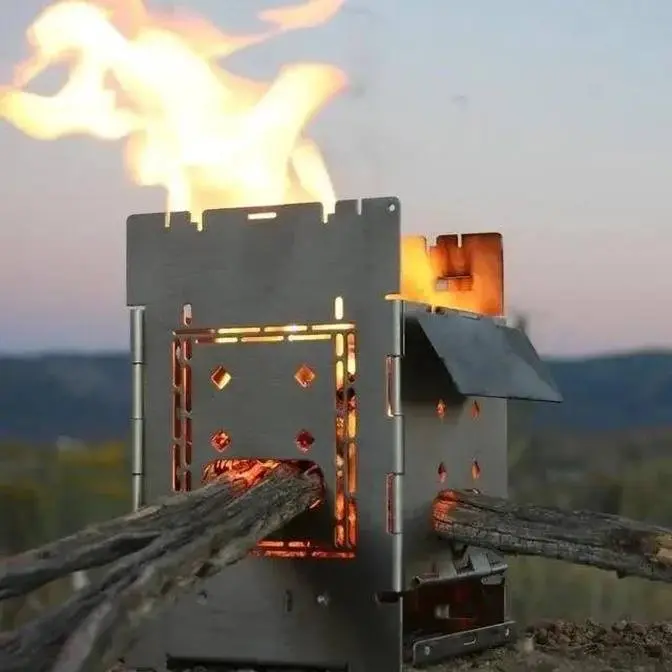
2 Video Views·Dec 6, 2014
Trout Fishing, Dry-Baking & Camp Cooking on the 5" & Gen2 Nano Firebox Stoves.
Contact us: [email protected]
Purchase products here: https://www.fireboxstove.com/index.php?route=common/home
Perry Peacock (wildernessinnovation) treated me to a wonderful time trout fishing from his canoe on Maple Lake and camping where we did some serious camp cooking including some dry baking!
We used both the 5' Folding Firebox and the Gen2 Nano Camp Stoves, cooking trout and potatoes for dinner and bacon, eggs and potatoes for breakfast.
As for fuels, we used wood, butane propane gas and alcohol in a Trangia Spirit Burner.
Check out Perrys Channel: https://www.youtube.com/user/wildernessinnovation
Hello, Steve here. Hey, special treat. I'm going camping with Perry Peacock and we're going to do
a little fishing. We've got this canoe here behind us and we're going to see if we can catch us some
dinner. There he is. It's fishing time. Heck yeah. Nothing better than fishing. Yeah, eating the fish
is better. Yeah, cooking it and eating it. Absolutely. This should be good times. I really
appreciate you bringing me up here Perry. Hey, no problem. I love coming and it's good to have
an excuse to come. Heck yeah. Let's get out there and see what we can catch. There we go.
I don't even have a net. Perry's got one already. We just got here. I haven't even gotten my...
Well, so hopefully I get it in the boat without losing them. Oh, that's a pan size for sure.
Absolutely. That's a dinner. Well, on this lake a lot of them are going to be small. Yeah. So that's
actually a decent size for here. Here we go. Steve's got him one. Let's see if I can get it
in here. There we go. There we go. Happy times man. There's dinner. There we go. We're not going
to be hungry tonight, right? No. All right. Rainbows and sunsets at the same time. There you go. Perfect.
Perry just caught another one. That's three to one. I'm getting skunked. Oh, that's a pretty nice one.
Oh yeah, that's the best one. Yeah, look at that. Yeah, see he got the hook all the way in.
Here, I have a pair of pliers right here. Knock him on the head a little bit.
We'll edit that out. Edit that out for the kids. Yeah, this is a family show Perry. Do you want
this? Do you want these pliers? How big he is. Here's another one. Perry's slaying them. Is that keepable?
Sure is a nice night. Yeah. You know, I have some other videos where I don't catch very many
fish. Oh, that's a nice one. Look at that. You got a whole pile of fish. You're going to be eating fish
for a week. More than that. You don't know how much we like fish. I'm afraid it's actually focusing
on my reel rather than on the water, but it might be kind of a cool shot actually.
Come on baby. Come on. Oh, that's okay. I got it now. Oh, it's just a little guy.
I can get it in. I've got such a long leader here. Well, here's the closing scene for our
fishing this evening. It's dusk and it's time to go into camp. We both got tangles on our lines,
so we decided this is the time to call it. This is kind of a tip. I don't know how many other
people do this. Probably lots of people, but these are dehydrated potatoes and I just go buy the
cheapest au gratin potatoes. I think these were Hungry Jack or Hungry, I don't remember.
Anyway, I think they're only $1 or $1.50. This is just two boxes of them,
so just rehydrate these, brown them up, and they're delicious. Get out all reliable here.
You know, I've had a lot of different fireboxes over the last couple of years. Sometimes I'll
use one for a little while and then give it away or something, but I know that this is the one that
I did my original testing in because when I was doing that sawdust test where I filled it with
sawdust mixed with wood pellets and then I had the toilet paper roll in the middle, I was tamping
that sawdust down and I was tamping it so hard that I actually bent the fire grate, so I can tell
this is that one because I just bent it back. I still have mine. I don't know if my original
is with me today or not. It was back before all the grates and everything went on it. Oh yeah,
before we had any of the attachments. Didn't have any of the little notches for those. Yeah.
All right, so I'm going to pre-load this baby up, packed full, so we'll have good hot coals
for when we're just finishing off the fish, but because I'm going to have to rehydrate those
potatoes, I want it to go ahead and just be nice and hot right in the beginning. Yeah,
I'm not going to fill this up too full or I won't have enough room. Remember the video I did in the
winter where I cooked the trout on that, scraped the snow off that log, put the firebox on the
log and cooked the trout? Yeah, I do remember that. I filled the stove like, I don't know,
probably four inches higher than the top of it. Oh yeah. And I lit it and let that all burn down
until I had like just hot coals. I think I was like two and a half inches thick of just red hot
coals. Oh yeah. And then I cooked the whole trout, heated up a bunch of water and everything for
hot drink and all that sort of stuff. Nice. I did it all on just one charge of the stove.
Oh, that's awesome. But that was all maple, kind of like this, maple sticks. Yeah, that's kind of
the challenge when I'm just doing, you know, my videos out on our property with the sagebrush and
trying to grill or something. The sagebrush just does not produce good hot coals. I mean, they're
good, they just don't last long. Yeah. Quick burning. So let's see if I can get this going
with just these sticks. A little bit of a breeze. Come on baby. Looks like it wants to. It wants to.
There's not quite enough heat. All I have is one stick going so far. Like it's catching,
it's catching. There, now it's building a little heat. We'll have to baby it for just a second
longer and we'll be good. Beautiful fire. It is, it is always beautiful.
That's the nice thing about selling stoves, is you get to take advantage of
everybody's love for fire, right? Absolutely. It's a good thing. Everybody loves a fire.
Yeah, Ben and I used that, the nano stove, when we made kind of a lean-to shelter in the winter.
We pulled the stove back underneath the lean-to. Oh yeah. It was kind of snowing and a little bit
of rain, but mostly snow, kind of a light wet snow. So we just pulled it back under the lean-to
just enough and once we got the stove going, it didn't smoke much, you know. So we just pulled
it back in there and we just sat down, cooked up a bunch of hot chocolate and cooked up some,
I can't remember, noodles or rice or something we made. There's something nice about being cozy when
you're cooking. Because you can move with a stove like this, you can move the fire to where your
shelter is, you know. Yeah. Like usually we would start it out in the open so you can get your big
flame up done. Yeah. And then once it's stabilized, bring it back inside your shelter and now
everything's cool, you know. You've got a nice little fire to do your cooking on. You just sit
back and relax. This pan set here, Perry, is kind of a prototype of something I'd like to
be able to produce. So what I want to have is, people have seen me use these square pans
to get all this stuff out of here, but I want to have a two pan set this square size and I'm just
have them either be able to nest like this to be able to have a kit or have kind of an oven. Yeah,
or have them be able to nest like this but have the one pan shouldered so that they
nest perfectly this way and as a kit so you can actually fill them with, you know, your kit items,
you know, this way. And then you can use one, so I'll show you how it works so well because I just
love cooking this particular meal, actually. Well, and it's obvious I like to eat.
Well, so do I, especially when... I've actually lost some weight, but I still like to eat.
Yeah, me too. Me too. That's what makes it hard to keep that girlish figure. It's hard because
when you go out camping, you know, you're out in the woods, it's like, well, of course you want to
eat. The food tastes so good. I did that trek where I went three days without eating. The thing
I miss the most is, I miss the food, but mostly I just miss being able to cook. Oh, yeah. There's
something about having, you know, a stove and cooking some things and that sort of stuff,
you know. Yeah, it is fun. It's something that makes camping kind of interesting, so
that was something I, psychologically, I missed that more than the actual
food in my stomach. We probably don't need as many potatoes for morning because we have eggs
and bacon, so I think that's probably... You think that's too much? Those are going to swell
up quite a bit. Yeah, that'll be good. All right, so now that the potatoes are in there and I've
got a pretty good layer of water, I'm going to go ahead and just cover those up. Let's see,
and this doesn't fit perfect because this is just my rig, but that'll hold the steam in there,
and then I have a pot grabber to be able to, you know, hold it. Oh, I love those things. Those
are nice, aren't they? Handy little pot grabber dude. So, and that little wood is... This is
actually working. This maple doesn't burn, doesn't flare up as much. No. So, this is actually going
to give us a nice cooking temperature right from the beginning instead of, you know, with pine,
it really flares up, you get it really hot, and then it burns down. This will be a nice steady
heat. Yeah, this is going to be a really nice steady temperature. Which is cool having twigs
because, you know, normally most woods that you're burning twigs, they go really quick. Yeah. Well,
this stuff is, you know, it lasts a little bit. Burns a little slower. Yeah. Yeah, for sure. Well,
I'll shut this down and bring you guys back in when we're a little closer. Okay, so we decided
to flip this over because we're going to need the space of the bigger pan. So, I'm just going to
flip that. I lost a little bit of water, but not too much.
You could be in the circus, man. That was good. Yeah.
Pretty graceful, huh? Yeah. And then once these are fork tender, then I just go ahead and put the
fish in. Can we get the fish? Okay, I'll grab them. And then there's still some water on the
bottom of the pan. And so, that'll help the fish kind of steam for a second. Yeah, go ahead and
put them in there. And we'll let them, we're going to do two or three.
Think we can eat three? Oh, yeah. I think we can too. Well, we ended up catching eight fish.
So, that's pretty good. Oh, yeah. That's just, that's just right. So, that's good stuff there.
So, now we'll let that steam for a second, which will help us
peel the bone out of the meat and peel the skin off of the fish. And then we'll put some
butter in there and brown it all up. Okay, so now that most of the moisture has cooked out of this
food, the fire is actually reduced in temperature as well. So, it's really perfect timing because
now we don't want it to be nearly as hot because there's just not nearly as much moisture to
absorb that heat. So, now there's still quite a bit of water in here. Well, I think I better
start getting some butter in here or we're going to have, we're going to start burning our spuds.
Oh, no, we're good. Oh, yeah. Look at that. Coming right apart. Beautiful. Look at that.
That's what we were waiting for. We're talking automatic fillet here.
And then I'll just turn that over and try to get the other side to do the same.
Now, if you cook this too long, then the bones start falling apart too. Yeah,
then you got the bones in there. Yeah. That's the way my wife likes to do it.
Yep. Pull it off of one side and off the other and you're practically bone free. Practically.
There's just some in the very front where you cut the head off, but I think this is ready to go.
Well, I'm drooling, so we're going to have a puddle on the ground here if we don't eat soon.
Well, do you want to brown this up a little more or should we go ahead and eat?
I'm good however you want to do it. It looks like it's starting to brown, but
if you want a little more, I mean, we got some good heat under there to do that with.
Yeah. The problem is, is this pan is sticking just a little bit. So, everything I brown
stays on the pan. Look at all that beautiful brownness down there. It's just stuck. Too
bad that bigger pan wasn't the non-stick one. Yeah, I know. Okay, so we have dinner finished
up here. This is our fish and fish and potatoes and I've kind of stirred it so much it's all
broken up, but there's big chunks of fish. You can see that's a big chunk of fish.
So, this is some nice trout. There's another big chunk there. So, and we're putting it into
tortillas to make it easy to eat. That's what you call edible dinnerware.
Well, let's see. I'm not following the action here with my other hand. No dishwashing involved.
Give that a try. You want a little more? Well, that's good for that. I have enough tortillas
for two each. That fills that shell really nice. We'll take a bite of that, Perry, and see what
you think. Does it need more seasoning? Salt and pepper? No. Pretty good? Primo. Very good.
Awesome. That is nice. Awesome. So, we'll eat this up. Okay, we're going to heat up some water
for some hot chocolate. Oh yeah, there we go. Got a water bottle inside the cup holder there.
Got some nice flames going. That thing will be boiling in no time. Yeah, I love that. I'm ready
for some hot chocolate. Look, we got a pretty good breeze and yet look how much that heat and
everything is still being retained in there. Yeah, I think it's going well enough. I might
be able to, yeah, now I can close it and it's not smoking. Look at that. The whole inside is nothing
but glowing coals and flames and even with a fairly good wind out here. Yeah, that should heat
up pretty fast. Oh, that's nice. Oh, that's going to be good. I'm ready for some hot chocolate too.
I can hear a little stirring in there already. The good old stainless steel makes a lot of noise.
Okay, the water's boiling. Have you tried these pot holders with these? I haven't tried them with
those things. Yeah, they work really well. I've really liked them. I've used my pot holders for
all kinds of stuff. Yeah, they're really a lot more handy than you think. Well, we should taste
this and see if it is rich enough. I'll just put that back in and let it stay hot. That's what I
like about using that like that is that, you know, you can have some water in there, you can let it
die down a little, just keep a little coals in there. Yeah, it'll keep it hot. You know,
if you need to top off your drink a little with some hot. It'll certainly be hot enough. You're
not having to heat up a whole other thing. It's just sitting there ready for you. Staying ready.
I hope that's, I hope that's enough hot chocolate in there. We'll make it work. I always underestimate
how much you need because I had a whole bunch of it when I was loading it up. Looks like,
is that a caddis fly right there? It looks like a caddis. I don't have my glasses on.
I have some of those. From what I can tell, it kind of looks like it. I have some of those in my fly.
Well, the fish must like them. Yeah, maybe we'll have to try them tomorrow. Bon appetit.
Little hot chocolate. It's just about right. Oh yeah, it's just a little bit weak, huh? Yeah,
it's not bad. Not bad. Okay, so it's morning and we're setting up. We're going to do some
cooking this morning and I brought up the prototype of the leather case for the Nano.
I think it turned out really nice. So this is a carbon felt I've used quite a bit and this is
also my prototype for the next generation or the second generation of Nano. So this Nano actually
has the holes here and there's holes on all four sides and this is the one I just drilled by hand
and made the prototype out of an existing Nano. But let me show you what that does.
You can see the pins here, how they're actually nested in to the folded Nano.
So the way that works is there's a little tab here that holds the fire grate and that actually
prevents these from being able to fall out. So even if you work at it and try to get these out,
you know that there's just not room for them to come out until you actually open up the Nano
and then you can just, you know, and then you just lift them out. So there you have your pins.
So let me show you what that does. I'm just doing all this holding this in the air
so it's a little bit more challenging but I think I'll be able to show you pretty well.
But these pins, the special shape not only allows it to nest but it also makes it so these pins
won't just fall right out of their position once you get them into their position. So
these holes aren't perfect. Like I said, I just hand drilled, you know, this prototype.
But you go ahead and this one actually will only go from the other direction because my holes
aren't perfect. This goes from this direction. But you can see the shape of that pin, the gravity
pulls that bent piece down and then that makes it so they don't just fall out. So you pick up your
stove or move your stove, they don't just fall out onto the ground. And in this case we've got
a bunch of leaves and stuff. You could, you know, you could lose something in here pretty easily.
So that's nice to keep those from falling out. And let me show you the position that creates for
the Trangia. So that creates a higher position for the Trangia. Let me just take the lid off of
this so I can show you a little better. So that sits up nice and high in the Trangia.
And so that'll give you a really efficient blue flame, which depending upon what you're doing,
it also gives you a little bit of a lower temperature. So this offers the third position
for the Trangia in the Nano. You have all the way on the floor, then you can rest it on the lid,
which some people are concerned about the heat, but it doesn't really get very hot at all.
It's really not a concern about, you know, damaging your o-ring or anything. It's just not,
it's not at all hot under the Trangia. So the next position is sitting on the cap,
and then the third highest position is this position. And this position actually allows
full range use of your simmering. So this simmering can be in any position and it overlaps
the sides of the Nano, so there's no obstruction for being able to use that simmering any way you
like. Now there's one more thing that these pins give us, the ability to use the Trangia
gas burner attachment. And I'm actually going to use this this morning, but I'll show you how this
works. So you've got this stainless steel braided hose, and then you've got the valve on the end.
So you run this valve end in, and you put it through, put it, let me see if I'm, if I'm in
frame here. So you put this through the hole, kind of give it a little rotation as it goes through,
and that allows it to, I'm trying to do this with one hand and it's kind of challenging,
but you get this, there it goes. So that goes, I probably totally went out of frame,
but anyway, so you run the valve through, and then you bring the attachment down,
and then it actually snaps right into position. And then it's held into position very securely,
so it won't come out of there unless you flex these edges, and then you can take it out.
So it spring snaps into position, which is nice. And then you just hook that up to your gas,
and you're cooking on gas. I'm going to get some potatoes cooking. I'm using a bigger pan,
so I'm just going to stance the Nano a little bit. So it really puts out a lot of heat.
So if you want to, you can really crank this up and get water boiling really fast.
But I'm going to, it's still going, so I'm going to turn the temperature down a little bit.
One really nice thing about this Trangia gas attachment is it has a wide range of temperatures.
You can really throttle it down for a really low temperature, or like I showed you before,
it has a really high temperature. So I'm going to set the firebox up. We had it set up with the
cup, with the boil plate in it last night. And so I'm going to go ahead and just empty this out.
It's got ashes in it and whatnot. I'll get it all cleared out and loaded up, and we'll cook some
bacon over here on this little bit of fertilizer for the forest.
You know, people are worried about their ashes, but it's, you know, people put ashes on their
garden because it's really good fertilizer, so I don't know why they're terribly concerned about it.
I mean, I agree, you don't want to leave a big black, a bunch of coals and whatever else,
but sprinkling some ashes certainly isn't doing the forest any harm.
Okay, so I'm actually going to pre-load this up and
I'm going to put these bigger sticks down at the bottom. They'll give us some really nice hot coals.
Got some perfect diameter things here. Perry has his camera set up as well, so you'll be able to
watch this on his channel and on my channel. We'll have a little bit of a different take on each,
I think. Absolutely, but what I'm going to do this morning is decide to make some cornbread,
and we're going to do it oven style. So what I've got is the nanostove down here,
and inside the nanostove, which fits in there really nicely, is the transient alcohol burner,
and what we're going to do is use that as our heat source. I could also use, of course,
wood as you've seen before, where I fuel it with wood and that sort of thing, but to do this,
this is kind of a slick way. We actually did this at a show about a year ago, and we were making
actually yeast muffins with the same idea. We had fresh muffins coming out about every 15 minutes,
and it worked really well. So we used the stove here as our heat source,
and it works really nicely, and with these legs on the stove turn out for a wider pot,
and this is a three-quart stainless steel pot. And what I do with that is, inside the pot I have
three stones, you can see the size of them, and what they act...they act like a thermal
sink. So they capture the heat that we put off initially from this stove underneath there,
and then we'll put our cornbread mix inside this stainless steel cup. That'll sit on top of those
rocks, and then when we put the lid on, what we've done is we've turned this three-quart pot into
literally an oven. And we start the fire right on the top and let it burn down, and that
gives us some really nice hot coals, but then the heat is very usable through the whole cycle. So
I'll put the pan...as soon as this gets going a little more than that, I'll put the pan on it and
go ahead and start utilizing that heat. Okay, I've got my bacon all laid out on my pan. From what I
understand, you're supposed to put bacon on a cold pan, so there we go. We'll get the bacon cooking
here. This...this is about...I can't...I can't leave my hand on here without burning it, so
we're pretty...we're pretty warm...pretty hot in here. So I'm going to pull the lid off and grab
this stainless steel cup out of here, put the lid back on. I just...I like to preheat that. Hopefully
you can see it there. I just got this porcelain bowl that I...we're making do with what we have
here. I just happen to have this cornbread mix in there, so I think I'm going to pour it...I
don't know how much...probably a third full, and then we'll cook that. Since I haven't done this
before, I'm not sure...I don't want to get it...I'm afraid if I get it...if I pour it too deep, maybe
it won't cook in the middle, so I'm hoping that that right there will be about right. So go ahead
and get that in here. Put our lid back on. So I have not added any fuel to this. This is that
same load of fuel, just that preload, and it's giving me just a really nice cooking temperature,
and as the moisture goes out of the food, the temperature goes down on the fire,
and everything works in perfect time, and...oh, it's starting to rise. It's cooking. Yeah,
it's looking good. See, he's got the big rocks down there, and for a little thermal mass, and
that's going to be delicious. I'm excited to try that. Okay, so my bacon is pretty well done,
and my fire is down to hot coals, so now it's just...I mean, there's just a couple of pieces...I
don't know, I might be out of frame here...there's a couple of pieces here that are...that just need
to be crisped up a little bit, and so that...a little bit of hot coals is just the perfect
temperature to do that for me. I've got my gas turned on over here, and I've got a little bit
of the bacon grease in here, and I'm going to just brown those spuds up a little bit,
and I've got that kind of set at a fairly low temperature, because I just want those to brown
up nicely. You can see this...this bacon really turned out nice, and so we're going to put all
these ingredients together and have ourselves a really nice breakfast. I was hoping we don't
have to pry it out of here. Oh, there it comes. That doesn't look burned at all. It's not burned.
I get stuck a little bit in the bottom. It's probably too deep of a cup and straight sides,
so it's probably...but it's not burnt on the bottom at all. It is fully cooked. And it is
cooked all the way through, so we'll slice this off a little something. I mean cornbread,
you should just hear it. There you go, Steve. Thank you. And this is a sweet cornbread. I
really love it. It's hot. It's like eating cake. Yeah, that is delicious. There you go,
so I mean... We got to call that a success. Hey, I have some butter over here. Oh, that'd be good.
Yeah, he's got some sweet butter. But so see, you can turn your firebox stove, your nano stove,
or anything into an oven just by using a large pot like this. I mean it's a...it's a great...it's
a great additional way to use your stove. It's a great additional way to use your stove is to
turn it into an oven. And it does take a little bit of playing around with it to kind of get it
dialed in just right, but a little bit of practice. But anyway, bon appétit, I'm telling you what.
This is awesome. Yeah, thanks, Perry. One thing in the South I learned, I love cornbread.
Oh, it's good stuff. And here again you had places that some made sweet cornbread, some was
very bread-like, you know, I mean not sweet at all. Uh-huh. Some of it was really soft like cake,
some was hard like a brick practically. Uh-huh. Anyway, so the stones, they give us some
elevation and they give us a thermal mass, so we have some retained heat in there.
And so that kind of helps us. Once you get started with this, you can do
a series of these things over and over, and it's very easy to do and to take care of.
Because your rocks are already hot. Your rocks are already hot, your pot's already hot, your oven,
you're ready to rock and roll. The flame's going to be the hottest thing. Yeah. Yeah, I don't...
That rubber's not going to be affected by the heat of the rim in here.
I'll dump the rest of that cornbread down in here. All right, I'm gonna let that all melt,
let those eggs cook. Put the lid on and we'll let that cook and we'll have us a second one.
There's our master baker.
Baking us up. I don't know about that. Baking us up some cornbread this morning.
Okay, let's see what we got here. I'm excited, man. I've already been eating bacon and cornbread.
Look at that. Well, this bacon is going to need some, maybe a little persuading.
The nice thing is this makes a nice meal that's actually simple to do.
Well, I'm going to turn this over so you can see how brown the potatoes got.
Oh yeah, look at that. Dump the whole thing. That's nice. I like them like that. Brown is a
little bit crispy, a little bit chewy on the bottom. Yeah, that is nice. Well, I think we're
going to have more than we can eat here. That makes a nice big burrito. Yeah, that's a heck
of a breakfast burrito right there. All right. Absolutely good to go. We'll give you guys the
close-up shot here. Bacon, potatoes, eggs, cheese.
Heck yeah. And we had cornbread muffins for dessert. Heck yeah. We already had it.
Delicious. That's the way to live. We make our own rules out here camping.
That's a good combination. I make breakfast burritos a lot, but usually not with the
potatoes. Yeah. So I think we're going to call this the end of our camping trip and
say goodbye. But I sure appreciate you guys watching. Here's Perry Peacock. Check out his
channel, Wilderness Innovation. He's got some really great stuff on there. A real true expert
in survival. You know, this is the real deal right here, Perry Peacock. So thank you everybody for
watching. Take care. We're going to have to go home and jog around the track or something to
burn off all the calories because we really ate well on this trip. Steve's a good cook.
It was good times. I really enjoyed Perry's company and we had a lot of fun.
Thank you all for watching. Bye-bye.