
Academic Paintings
Academic Paintings
Academic painting developed around organized artistic training and the study of the human figure, composition, and earlier works of art. Students drew from antique casts and living models, learning to construct bodies before arranging them within biblical, mythological, and historical narratives. Charles-Joseph Natoire's drawing The Life Class at the French Royal Academy of Painting and Sculpture shows a teacher correcting a pupil while other students work from posed models. Portraiture also connected academic painters with private and public patrons, while exhibitions offered opportunities for commissions and recognition. Cabanel's The Birth of Venus combines a classical subject, smoothly modeled flesh, and a polished surface, qualities also associated with Bouguereau's figure painting. These institutions supported varied practices across Europe, so academic painting encompasses different subjects and methods rather than one uniform visual formula.
Latest UpdatesLIVE


Shorts


Painters at the Royal Academy
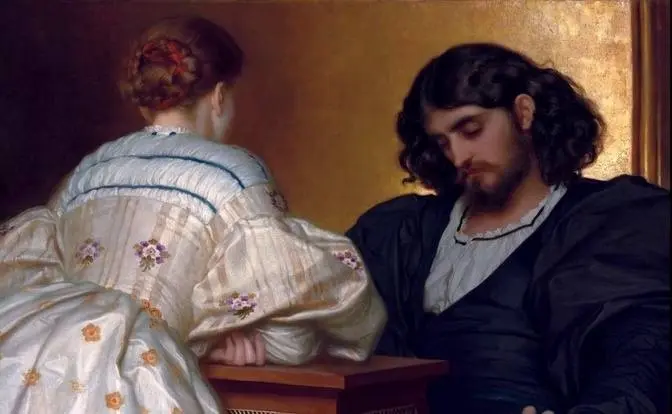
The Royal Academy in London linked artistic practice with exhibition and professional training. Millais, Frederic Leighton, Lawrence Alma-Tadema, and John William Waterhouse became full Royal Academicians in 1863, 1868, 1879, and 1895, respectively. Within that institution, their subjects ranged from portraiture to classical antiquity and literary narrative.

 36 followers

 9 followers

 2 followers
 2 followers

 320 followers




View All
All featured content under Academic Paintings


