
Prepping the Garden for Fall/Garden Style nw
10 Video Views·Oct 2, 2024
Temperatures are dropping and signs of Fall have arrived. I'll give you some simple tips on how to start preparing your garden for Fall & Winter.
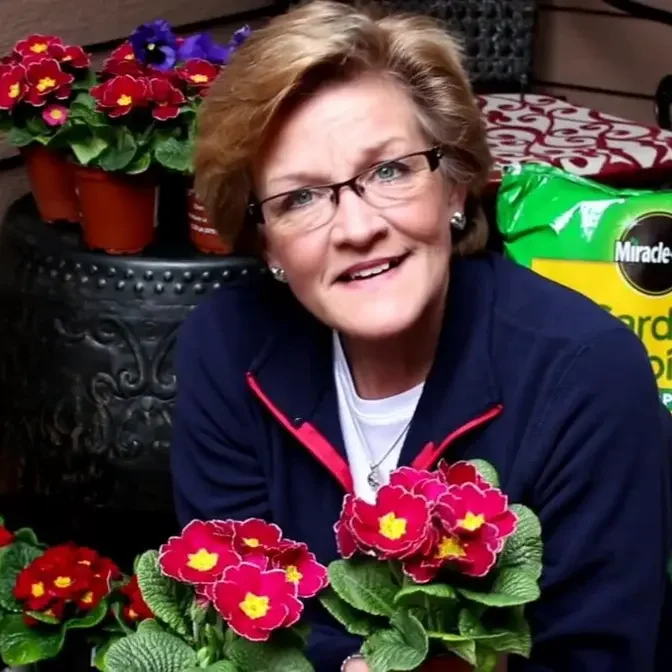
Your host and Nursery owner: Debbie Cassidy
Zone 8 in the Pacific Northwest
[email protected]
Sunnycrestnursery.com
Code: CTJLT6GWVZWHZTLH, RKC3Y9SHDJ5MXTME
Hi everybody, Debbie here with GardenStyle.
So here we are, we're about to approach
October.
I cannot believe how fast the summer
went by.
And I'll get into that here in just a
minute, as to why I haven't been around in
a while.
But hard to believe we've got trees turning
here already.
You're already starting to see lots of
signs of fall coming.
For the first time this coming week, our
overnight temperatures are going to be
going down into the 40s.
So that's a sure signal it's time to get
our gardens ready for old man winter.
Believe it or not.
So I'm going to go over some of the basic
things that you folks probably should be
doing now to start getting ready
for wintertime.
Prepping the gardens, getting some trimming
done, planting bulbs,
lots of planting that we can still do,
being we're here in Zone 8 in the
Northwest.
The soil is plenty warm enough, so
this is a perfect time to start planting
certain things like trees and shrubs,
especially your foundation plants,
things that you look at all year round.
And the cool part about doing the majority
of your planting, especially for
conifers, any of your broadleaf
evergreens, anything like that, fall
is the best time to put them in the ground.
It's even better than spring.
And that way they have all winter long
to get their roots established.
So by the time you get to summer the
following year, you're not babying
them quite as much and they can actually
get through the summer a lot easier than
they would if they were planted in the
spring.
It's only because they have six to eight
months to get their roots in.
So you might not see a whole
lot of growth or things going on on top,
but I can guarantee you that here in the
Northwest, when our ground doesn't freeze,
there's all kinds of action going on
underneath.
And that's your roots getting in and
getting established.
It definitely helps having Mother Nature
help us out by keeping things watered.
And that's definitely not going to be an
issue here in the next month or so.
Now, depending on where you live,
here in my zone, in Zone 8, we can
usually expect our first frost usually
by the end of October, beginning of
November.
And I'm not seeing us getting close to
that yet. The 40s is definitely my
signal at nighttime that it's
time to do things like cleaning up the
annuals out of your pots.
I know my annuals from this last summer
are looking pretty tired.
They're worn out.
It's time to start tearing them out.
I'm not going to be replacing any of them
this year. I'm just going to let the pots
lay.
I usually put a fine layer
of compost on the tops of all my
containers and hold them
over until the following spring.
And then I'll add new soil to them as I
go to plant some of my new annuals.
But I am going to be busy doing things
like trimming my hydrangeas, for
example. Now, I've been through them
once already this past
month. I've trimmed off all the old
blooms.
But now I'm going to cut them down even
further.
And that's usually a pretty safe thing
to do.
Regardless of what type of hydrangea you
have, if you do the majority of your
trimming in the fall, especially right
after they're done blooming, you're
pretty safe to get blooms the following
year.
You just have to be careful with
certain varieties of hydrangeas that
you're not cutting all the way down
into the wood.
You know, don't cut them down to six
inches above the ground.
That'd be crazy.
What I do is I take about a third
of the shrub down.
And then by the following year, you
don't have all that trimming and
cleaning up to do in the springtime.
So hydrangeas, for sure, are one of the
items that I like to get trimmed and
ready to go before wintertime.
Now, things like your rosebushes,
I recommend you don't touch them.
Leave them alone.
What I have done with my rosebushes is
I let them go to bud, which means when
all the flowers fall off, you start to
see the little round bulbous part of
it, which is usually where they like to
make their seeds.
Leave those on the plants, as that
kind of sends them a signal to start
slowing down and going to sleep and
start to go dormant for the wintertime.
I try not to do any trimming
right now on any of my trees
or shrubs, because you're going to
encourage that new growth.
We've still got a week coming up here
where we're going to be in the upper
60s, low 70s.
And that just encourages growth.
You don't want all that new, brand new
growth getting exposed to that first
frost, which comes in about three or
four weeks.
It also tells them it's time to go
dormant.
So no more trimming.
Save that for early spring.
But things like your hydrangeas, a lot
of your deciduous type shrubs, they're
going to go dormant anyway.
So you're not going to see a whole lot
of new growth coming out of them, which
is why I just recommend taking a third
off rather than packing them all the way
to the ground.
Save that for the early spring when
you know they're actively growing
again and they can make up for it real
quickly.
I also like to get a lot of that type
of cleanup and stuff done right now.
So it cuts down on diseases,
especially funguses, that sort of
thing. If you have plants that have had
a fungus problem, like I have some
perennials, for instance, they got
powdery mildew over the summertime.
Those types of things I like to trim
down and I like to dispose of those
diseased parts.
So if you have plants with diseases like
that, rather than
treating them, you might as well just go
ahead and cut them down, especially with
perennials.
My bee balm this year got it bad.
Real bad case of powdery mildew, didn't
matter how much I treated them.
And honestly, when you run into plants
like that, that
seemed to catch, you know, powdery
mildew or some sort of fungus year
after year, it just might be
time to replace them and get a variety
that's a little more resistant
to those types of things.
I always make a note of that when
I'm having issues over and over again
every year with plants that just
continue to keep getting diseases,
especially funguses, which is a big
thing that we deal with here in the
Northwest.
So it's some other things that I'm
doing is I'm starting to walk the
garden.
I'm looking for exposed roots or
anything that might be exposed above
the ground, and I'm starting to cover
those with a light coating of mulch.
Now, I use a fine bark mulch in all of
my beds, but you can certainly use a
fine leaf mulch, you know, start
mowing the leaves that are sitting on
your lawn, which, by the way, you
don't want to let them sit on your
lawn. If you've got a lot of deciduous
trees, make sure to mow up those
leaves, chop them up and use them as
mulch, throw them back into the garden
and cover the root zones of your
plants.
Now, of course, if you have a fine bark
mulch or something like that, you
don't want them going all the way up
to the stem of the plant.
Leave a little more room there so they
have room to breathe.
But for the most part, that mulch acts
like a lovely little blanket during
the wintertime and will help protect
your root zones.
It also dissipates the water so they're
not sitting in water.
Just mulch is a good thing all the way
around.
So that's something else I'm looking to
do out in the garden.
Any kind of hardscaping, I'm actually
going to have a load of new gravel
brought in for all my pathways
and everything and freshen them up.
Of course, I'm continuing to yank out
annuals and plants that I know aren't
going to make it through the winter.
And just start raking and cleaning up
the beds.
And that way, little critters and
funguses and things like that don't
have places to hide during the
wintertime.
Now, some other things you can do to
prep for winter is, of course,
check all your tools.
Make sure your tools are clean before
you put them away.
Sharpen them.
That sort of thing. Things just start
to slow down.
Now, we're going a whole week and a
half here without any rain whatsoever.
So don't forget the water.
Just because it's cooler at night
doesn't necessarily mean that
everything is getting the water that
it needs.
You don't have to water as often.
Hallelujah.
I'm really grateful for
the break there.
But I am coming out after two or three
days and just looking in the driest
areas of the garden.
You guys know what those areas are.
They're getting full sun all day long.
Make sure they're still being watered.
Try not to let them dry out and let
them get stressed out before we start
slowing down and going into
the winter months.
But as far as planting goes, I highly
recommend that any trees or shrubs
that you've been wanting to put into
the garden, now is the time.
Get into your nursery and purchase
them.
A lot of your nurseries have a lot of
things on clearance or
on sale because they want to clean
them out too. They don't want to have
to overwinter all of these plants.
I know at my own nursery we're looking
to clean house as much as possible
so we can get down to the core plants
that we can carry through the
wintertime.
So you can find some awesome bargains
out there right now.
On trees, shrubs and of course perennials.
Now spring bulbs have already started
rolling in as well as garlic,
shallots.
Those are all things you can start
planting now for
a harvest next season.
So again, go
visit your nurseries, get the tulips,
your daffodils, hyacinths, garlic,
all those sorts of things are
really good items that you can start
putting in the ground right now.
And take advantage of this beautiful
weather that we've got coming up this
coming week.
Because before you know it, it's going to be
pouring rain.
We won't be able to get outside quite as
often.
Now, a little explanation
as to why I haven't been here.
I've actually taken the last two or
three months off.
Had some family issues I had to deal
with.
My mother, who's currently living with
me right now, she's 88 years old.
She's been in and out of the hospital.
She's had to be in rehab.
So that's taken a lot of extra time
and just decided, let's just
take a couple, two or three months off
from the videos.
Let's take care of mom.
But mom's doing great.
She's doing better now than she ever
has. So that's really good news.
And it was well worth it.
I've also been quite busy at the
nursery.
We, for those of you who've been
following me for a while, we lost our
greenhouse this last winter to a real
heavy snow.
It only took six inches of real wet,
heavy snow and the poor thing just
collapsed. It was like a hoop house.
But now we have this beautiful
new greenhouse, which I am about to
take you on a tour with.
I'm here at home right now, but I'm
going to be buzzing out to the
nursery real quick and give
you a visual as to what our new
greenhouse looks like.
We finally got it completed this
week.
Tomorrow we're in the process of
putting all the gravel into it.
It was built on a slope, so we've had
to build it up in the back so that
it's level.
But I'm thrilled that that's almost
done and then we're going to slowly
start migrating our most tender
plants into the greenhouse
and tuck them in for the winter.
So anxious to show you that.
I lost my kitty this last summer
and that's never going to be fun.
He was in with us for quite a while
and we finally, finally
decided to go to kitty heaven.
So I've been mourning that this
past week. This was just about a week
ago when we lost him.
Just the sweetest cat ever.
But you know how it is when you lose
a pet. It just takes a little while
to get used to that
void that we have in our family.
So anyway, enough
of that.
What else can we do in the garden
to prepare for winter?
Old Man Winter.
Well, of course, any containers that
you may have, especially terracotta
containers, you want to make sure to
empty out all the soil, clean them
and put them away.
Do not leave them outside during
the wintertime.
Clay and terracotta pots just don't
hold up very well.
I have bird baths here throughout all
my gardens.
There are glazed bird baths, so I make
sure to empty them out.
I clean them and flip them upside
down. And that way, when it rains,
they're not going to fill up with
water again.
And if they freeze, that's when they
start to crack.
All that water starts to expand
during the wintertime when it gets
really cold.
So make sure to pay attention to your
bird baths, anything glazed like
that. Just flip them upside down.
I have glazed pots throughout
my entire outdoors here.
Glazed pots everywhere.
And as soon as I empty them out, then
they should be fine.
They should hold up just fine.
Any house plants, tender plants that
you might still have sitting outside,
I recommend you get them in now,
especially as we're starting to get
into the 40s.
Now's the time to find that perfect
spot inside the house and start
pulling them indoors.
Of course, I'm going to be taking
down cushions and putting away the
umbrellas and, you know,
getting things ready for wintertime.
And most importantly, don't want to
forget this. Don't forget the
birdies.
From now through wintertime,
they start to get really hungry as
the food supply starts to dwindle.
There's not as many berries and nuts
and things out there for them to
dig themselves into.
So take care of
the birdies.
Clean the feeders.
We have hummingbirds that stay with
us year round, little rufous
hummingbirds.
So I'm always sure to clean their
little feeders and make sure that
they have plenty of nectar
to get them through the wintertime.
All right, you guys, let's go see
the greenhouse.
So I made it down here to the
nursery and I'll
kind of flash you some pictures of
before, during and after
and then show you the finished
product here for
our brand new greenhouse, which
we're very excited about.
We're finally getting the gravel put
in today.
And I'm going to do a quick flip
around here so you
can see it.
And we'll probably get Chance in the
picture as well.
There she is in all her glory.
And I'm thrilled because this
particular one also has
roll up sides so you can ventilate
it during the summertime.
So we're just about there.
All we got to do now,
let's get the gravel moved,
fill in the back back here.
And the next video,
I'll show you the finished product.
After this, we put weed block down,
bring in the benches, bring in the
plants and get them
hunkered in for winter.
So a couple of the things I wanted
to mention before I sign
off here is perennials
especially.
I'm going to flip around my camera
here in my own garden and
show you some of the things that I
do to prep my perennials for
the fall.
So, for instance, things are
definitely starting to slow down,
but these are some things that I
start to do.
Rather than cutting things back like
this, this is a Hellenium,
I let them go to seed.
And I'm not in any real big
hurry to start cutting them back.
I just like to let things die back.
But in this case, for instance,
the Bee Balm I was telling you
about, it's just covered
in powdery mildew.
So these are the types of things
that I'm going to cut all the way
down to the ground and clean
that up. I've got a big patch
of them right here.
But something else I also wanted to
mention were
things like Echinacea.
I'm letting them just go to seed.
The birds absolutely love them
during the wintertime.
Same with
little Black-Eyed Susans you see
there, Rebecchias, those I'll start
letting go to seed.
But further down, I get a lot of
questions regarding Dahlias.
Now, I never pull my Dahlia
YouTubers out.
But the secret behind
Dahlias, look at this.
This is what I love about Dahlias,
is they just keep blooming
their ever-loving hearts out.
Look at that.
All the way till the first frost.
So that kind of gives you a hint.
They're looking a little sad,
but I let them stand until
the first frost, till they're
completely died, you know,
died down to the ground.
I'll cut off all the extra debris.
And I'm blessed with a lot of pine
needles in my yard.
So I use those as a mulch and I just
put a big pile of them on the top
and they survive the winter just
fine.
But I also mounded up a lot of
these bulbs, the Dahlia bulbs,
for good drainage.
And that's really the ticket to
getting your tubers to survive
during a northwest winter
is keeping them from getting too
wet and then starting to rot.
So mound them up a little bit
for really good drainage.
Let them die back after
the first frost.
And then I clean them up and
put a nice layer of pine needles
and mulch on top.
As you can see, things like
the Gara, I've got lots of geraniums
and one of my favorites down here,
asters, are the ones
that just keep on blooming until the
first frost. So I don't bother
them at all.
I'll wait until they die back and
then I'll cut them back at that
point.
Or just wait until the spring
before I cut anything
back. These guys are starting to
lean out over towards the lawn.
So most likely I'll be cutting them
back, but I just let
them go to seed.
You can see there some of these are
already starting to do that.
And enjoy the flowers for as long as
I possibly can.
OK, you guys, so that's
about it for my garden prep
for fall.
The only thing I haven't mentioned
yet is your lawn.
You want to give it one last feeding
before wintertime.
This is the perfect time to start
thatching and,
you know, pulling plugs to
refresh the lawn and get more air
down into the roots as well as
food.
So that's what I'll be doing this
coming week is getting the lawn
prepared so that it greens up real
nicely next spring.
Other than that, you know,
things are starting to wind down a
little bit. I don't have to water
quite as much, which is fabulous.
I'm just going to keep up with a few
weeds, start raking up the
gardens a little bit, and of course,
do some edging.
I want to do one last sharp edge
along all the beds before
wintertime so I don't have a ton of
grass creeping in during
the wintertime.
I swear the grass grows year round
here, especially in the winter when
it's getting plenty of water.
All right, you guys, it's good to be
back.
It's a stunning day today.
It's probably going to get up into
the upper 60s, low 70s.
It was 48 degrees this morning when
I left the house, so on
goes the fleece.
Getting warmed up already.
But I love the change of seasons.
And hopefully my next video, I can
show you some more as to what's going
on here in the yard.
Meanwhile, if you hang in there at the
end of this video, I'm going to add
some pictures of
some of my favorite things during this
last summer so you can get an idea
what some of my containers look like
and what the garden looked like during
the summer, being I wasn't here to
talk to you guys.
Meanwhile, hope you have a fabulous
October and we'll talk soon.
Bye for now.