
Guilfoyle Quits; AI Can Replicate Itself In Your Home; Woman Predicted Soviet Fall, Now In Treasury
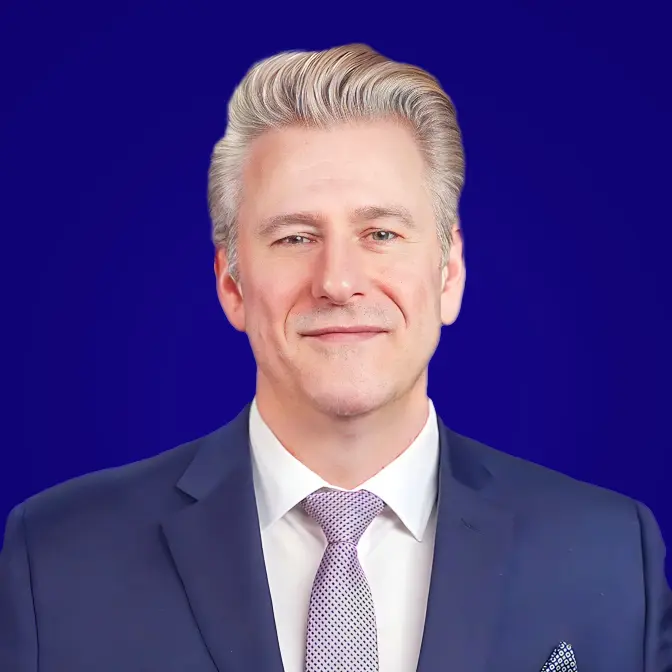
📍#KatieZacharia Holds First #WhiteHouse Briefing as #KimberlyGuilfoyle Resigns as U.S. Ambassador to Greece
📍#Anthropic Warns #AI Models Could Soon Self-Replicate Across #SmartDevices
📍All About #ScottBessent Hiring #JudyShelton, The Woman Predicted Soviet Fall, Is This Why?
📍#India Protests Escalate Over #VoterRolls as #RahulGandhi Takes Fight to Supreme Court
AI GeneratedMay contain errors
Hello, all you freedom-loving people. The new White House press secretary took
the podium while the U.S. ambassador to Greece was on her way out.
Meanwhile, AI could soon start making copies of itself inside your home,
and the Treasury just hired a woman who predicted the Soviet Union's collapse.
So, what does she see coming for China? Okay, let's get into it.
The White House asked the U.S. ambassador to Greece, Kimberly Guilfoyle,
to resign, and that news came from the new press secretary, Katie Zacharias,
at her very first briefing today. Zacharias stepped up to the podium today,
just one day after starting her new role at the White House.
Zacharias opened by saying that she was honored to serve President Trump
and that her job is to keep amplifying President Trump's agenda.
Now, from inside the White House,
Zacharias' first briefing lasted only less than 15 minutes,
with only five and a half minutes that were set aside for questions from reporters.
Zacharias took questions from just three reporters before bringing the briefing
to a close. She told the press corps that any other questions can go straight
to President Trump as he boards Marine One for a campaign trip to Alaska.
And one of those three questions produced the biggest news of the day.
The Daily Mail reporter asked whether the administration had set
a timeline for a possible dismissal of Kimberly Guilfoyle
and whether replacements were already being considered.
In response, Zacharias said that the White House had asked Guilfoyle to resign,
calling her a wonderful asset to the team and wishing her well.
That question came after several recent reports alleged misconduct by Guilfoyle.
This included claims that she asked a GOP donor to pay off her credit card bill.
Then, after the press briefing, Kimberly Guilfoyle confirmed her departure on next,
saying that her time as ambassador was coming to an end.
Guilfoyle thanked President Trump and Secretary of State Marco Rubio,
and she said that her commitment to President Trump
and the America First movement will never end.
Guilfoyle also denied the allegations against her, calling them false.
She said that she intends to vigorously defend her name,
her reputation, and her integrity.
Those allegations center on a Wall Street Journal report last week,
which said that Guilfoyle asked former GOP congressional candidate Eric Deeters
for $100,000 to pay off her American Express card ahead of her confirmation hearing.
But Deeters declined to pay.
He said that he did not have the money to spare at the time.
Deeters said that he believes that President Trump had to fire Guilfoyle.
He described the situation as a bad look for the administration, and reportedly,
the growing scandal frustrated Secretary Rubio, who was in Greece last week
to deliver a speech in Athens, and he attended several events alongside Guilfoyle.
While boarding Marine One, President Trump weighed in on the matter.
He said that Guilfoyle had been doing a good job,
but that he did not like what he was reading.
President, you were Guilfoyle. She was almost a member of your family.
How surprised were you to learn about these allegations?
She was a member of my family. She, I guess, dated my son a long time ago. No, she.
She wasn't great. She was doing a good job, but we didn't like what we were reading.
Also, President Trump said that he thought Zachariah did very well.
And White House communications director Stephen Chung
also called her uniquely qualified for the role.
Yesterday, Anthropic published a research report warning
that small AI models could replicate themselves on consumer-grade Internet
of Things devices such as smart ovens and Android TV sets within a few months,
and this would be possible without the need for data centers or human assistance.
This type of AI has no central shutdown point,
so it's very difficult to shut down completely. In one test,
the researchers ran a small AI model across 15 off-brand Android television sets.
These types of devices often have weak security,
which could allow a model to infiltrate them.
The researchers said the model in the test was able to propagate another model
in the testing, which suggests that future small models of the same capability
level could also complete the network enumeration, the payload delivery,
and the interference stand-up steps of the replication process.
Larger models could also come into play by being split into pieces
and run across multiple devices. Anthropic said in practice,
an AI worm wouldn't necessarily consist of just one model or strategy.
A swarm of different models deployed on different types of hardware using a variety
of replication schemes might represent a more realistic worst-case scenario attack.
They recommended strengthening the protections for such devices,
particularly as AI becomes more advanced. But Anthropic said
the company acknowledged that there is not yet a fully rogue replicator.
However, agents are becoming increasingly capable
of completing the individual steps in the replication chain
and passing on their adaptations to future copies of themselves.
Judy Shelton has been appointed as a counselor to Treasury Secretary Scott Bessent.
So why is this important?
This is because she is one of the few remaining defenders of the gold standard
today, and she has consistently advocated for pegging the U.S. dollar to gold.
She believes that money should not merely be a number backed by government credit,
but should have an objective basis of value.
Only in this way can we fundamentally prevent the government
from propping up its massive fiscal deficit by printing money recklessly.
Governments around the world, especially those in developed Western nations,
are currently deeply in debt.
In this context, Shelton's advisory role is particularly noteworthy.
In mainstream economic circles, Shelton is regarded as extremely unorthodox.
However, in the eyes of conservatives and some hard asset investors,
her views serve as a profound warning against the unchecked devaluation
of modern fiat currencies, the frequency bouts of inflation, and the debt crises.
And President Trump holds Shelton in high regard.
During President Trump's first term, Shelton served on the president's
transition team, and she was later appointed as the U.S. executive director
of the European Bank for Reconstruction and Development. In July of 2019,
President Trump nominated Shelton to serve on the Federal Reserve Board,
but a total of 130 economists, including seven Nobel laureates in economics,
signed a joint letter opposing the nomination.
So the nomination ultimately failed to pass the Senate.
However, the Senate appointment of Shelton does not require Senate confirmation,
and the Trump administration certainly had
its own reasons for Bessent to hire Judy Shelton.
President Trump has long been a harsh critic of the Federal Reserve,
calling it an independent kingdom and accusing it of stifling the economy.
President Trump has mocked his decision-making process as akin to the blind men
and the elephant in a bureaucratic setting. Now, this appointment is effectively
a way for Shelton to gain indirect access to the Treasury Department.
She will serve as a powerful tool for both the White House
and the Treasury Department, enabling the Treasury to devise
a monetary diplomacy strategy that does not rely on the Federal Reserve
and to regain the initiative on exchange rate and tariff policies.
And this appointment has another purpose
that is aimed specifically at the Chinese Communist Party.
So do you know how Shelton became famous overnight?
In 1989, two years before the collapse of the Soviet Union,
she published the book *The Coming Soviet Crash*.
By analyzing the Soviet Union's fiscal deficit and massive foreign debt,
she accurately predicted the collapse of the Soviet economic system in her book.
At the time, the prevailing view in the West was that the Soviet Union was a massive
and structurally stable superpower.
However, Shelton pointed out that first hyperinflation and massive
fiscal deficits had long since dealt a severe blow to the Soviet economy,
but official Kremlin statistics had long concealed these actual shortfalls.
Second, Gorbachev's policy of openness
and economic reform served to some extent as a pretext for securing capital,
technology, and consumer goods from the Western world, reflecting
the Soviet Union's desperate need for a lifeline from the West at the time.
At the time, she recommended that U.S. policy makers utilize
their considerable financial leverage to control the flow
of international capital rather than footing the bill for an irreparable system.
The mainstream economic community derided her, though,
as a pseudo scientist who doesn't understand complex mathematical economic models
and a far right ideological fanatic. But history played a huge joke.
In 1991, the Soviet Union really did collapse exactly as Shelton had predicted.
Her book has become one of the essential classics for studying the economic warfare
of the Cold War and the causes of the Soviet Union's collapse.
In fact, top secret internal documents from the former Soviet Union Central Bank,
the Soviet Ministry of Finance, and the State Statistics Committee,
which were gradually released following the collapse of the Soviet Union,
reveal that the Soviet economy had already collapsed completely at that time.
By 1989 to 1990, the Soviet Union's actual physical deficit had soared to between 10
and 14 percent of GDP, far exceeding the limits that any modern economy could bear.
After 1988, the Soviet Union's money supply grew at an exponential rate,
leading to the collapse of the ruble's credibility.
Even more alarming is that between 1989 and 1991,
the gold reserves of the Soviet Union's foreign economic bank plummeted
from over 2,000 metric tons to virtually nothing. In fact, by 1991,
the Soviet Union had already defaulted on all of its external debts.
These are the areas that the CIA, the World Bank,
and mainstream Western economists failed to grasp.
Right now, relations between China and the U.S. are worse than during the Cold War.
Many observers believe that the CCP is on the brink of collapse.
Of course, these views have been around for many years,
and at this point, the Trump administration needs a financial expert
who is insightful and who can provide calm and professional advice.
The Treasury said in a statement that Shelton will advise Besant on currency policy
with a particular focus on evaluating financial conditions in China.
So we're all looking forward to see how Shelton will use her profound insight
into centralized systems to dissect China's financial sector,
which is already rife with crises.
Since the beginning of this month,
large-scale public protests have erupted in India. The protests were sparked
by dissatisfaction with the Indian authorities' policy on revising the voter rolls.
Last year, the Modi administration established a policy
for voter roll verification policy known as the special intensive revision.
Approximately 130 million names have been removed from the voter rolls
as a result of this policy, including 28 million deceased individuals,
63 million people who have moved, and 30 million people who could not be contacted.
India's opposition parties, the Indian National Congress (the INC)
and the Congress Janata Party (the CJP), believe that the government's policy
on revising the voter rolls favors Prime Minister Modi's party, the BJP.
This is because the voters
who were removed from the rolls disproportionately affected Muslim
and minority voters who are generally less likely to support the ruling BJP.
Coincidentally, last month, the Indian Express published a report on the revision
of the voter rolls and internal concerns within the Election Commission.
The report revealed that two deputies to Chief Election Commissioner Ganesh
Kumar raised a number of internal concerns regarding voter roll revisions,
registration procedures, and digital systems. Although critics say that the process
is politically motivated and it risks disfranchising eligible voters,
the Election Commission denied showing favoritism toward any political party,
stating that voters who were mistakenly removed
from the electoral register can re-register. The ruling BJP, meanwhile, accused
the opposition of attempting to undermine the country's democratic institutions
by raising baseless questions about the legitimacy of the electoral process.
Therefore, opposition parties and supporters
of the CJP party youth movement have taken to the streets almost daily
this month to demand the resignation of Election Commission Chief Kumar.
Last weekend, Delhi police detained more than 2,000 protesters,
including the leader of the CJP.
At the time, these young people attempted to hold a protest march,
but they were stopped by a large number of security personnel.
On Sunday, the INC announced that it would hold a march the following day
to the Supreme Court to submit a memorandum to the Chief Justice demanding
an end to the BJP's vote stealing and urging Kumar to resign.
According to sources within the INC,
Chief Justice Surya Kant rejected the INC's request for a meeting via email.
The Chief Justice stated that INC leader Rahul Gandhi
and his delegation should file a petition with the court through legal channels.
Since the court has already taken up the matter,
it should be resolved through judicial proceedings.
Authorities closed six metro stations in the capital on Monday
and warned of traffic disruptions.
However, the opposition parties marched to the Supreme Court on Monday anyway.
Several opposition lawmakers and thousands of supporters marched through the capital
and submitted a petition to the Chief Justice. Opposition leader Rahul Gandhi
of the Congress Party is the scion of India's most influential political dynasty.
He is seeking to turn the protests into a broader challenge to Modi.
Gandhi appeared among the demonstrators riding in an open-top bus,
waving a copy of the Indian Constitution.
Thousands of supporters of his political party, student activists,
and other protesters followed close behind. And that's a wrap for this episode.
Thank you so much for your support of Front Page.
Please remember to leave a comment below the video or just an American flag emoji.
This is really helping us to be seen all around the world. The more people
who watch Front Page, the more freedom-loving people the world will have.
Please hit the like button and hit the notification bell after subscribing,
and please share this video with your friends and family
because everybody deserves to know the truth.