
George Washington Carver’s Struggle for an Education
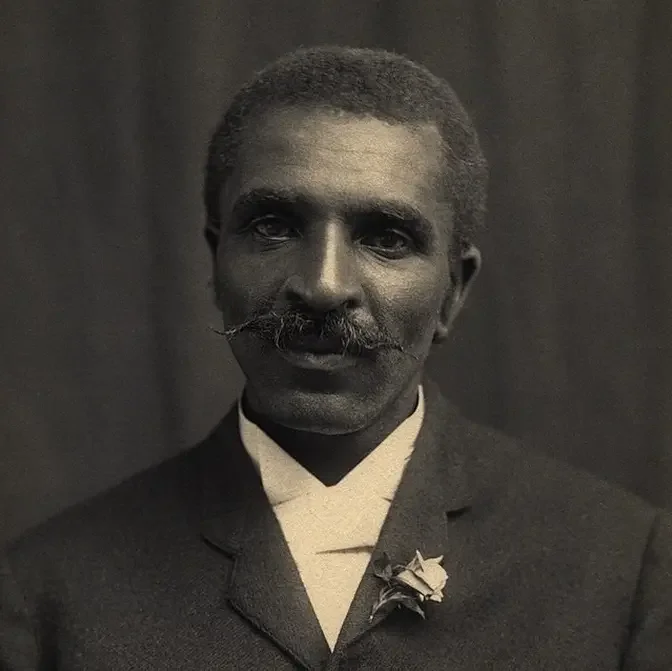
51 Video Views·Jan 29, 2023
The Carvers did their best to provide George with some education,
but by the time he was around 12 years old,
his curiosity could no longer be contained.
There was a school for blacks in Neosho, a town eight miles away.
George set out alone and on foot to achieve an education.
It represents powerful psychological resiliency.
What motivates a young person, 10, 12 years old,
to leave where he resides and walk eight miles to a school
is not only the site from which he originated his education,
it's the site that actually represents the initiation
of what I call his path to freedom.
And that's the anchor.
That's the beginning of the incredible story that is called Carver.
When George arrived in Neosho, Andrew and Mariah Watkins,
a childless black couple, agreed to take him in
as long as he was willing to help with the chores.
Even though George lived with the Watkins only a short period of time,
Mariah seemed to have made a powerful impression on him.
She was a midwife in the community
and had a great knowledge of plants and their medicinal powers,
which appealed to George and inspired his lifelong conviction
illnesses could be cured through the proper use of plants
and the products extracted from them.
Mariah's strong faith also influenced George,
and she was the first person he met who urged him
to use his genius to serve their people.
George's teacher, Neosho, was unable to give him
the level of education that he desired.
So when a couple stopped at the Watkins' home
on their way to Fort Scott, Kansas, he hitched a ride.
He made friends, many of them white,
but he was never far from the shadow of racism.
In Fort Scott, he witnessed the lynching of a black man
and left town immediately.
Later, he was admitted to Highland College in Kansas,
only to be turned away when officials saw the color of his skin.
Those kinds of things could drive you into, you know, a cave.
You could just, like, back up and say,
I just can't face this, but he didn't.
He just kept driving forward and facing the harsh realities ahead.
And it's so interesting because towards the end of his life,
when he was hired to be a spokesman for interracial cooperation,
and what an impact he made on so many people
that went on to impact others and impact others.
And all those experiences he had, the encounters
and the racial barriers, struggles, prejudice,
and yet keeping one foot going in front of the other.
One thing that I can appreciate from Carver is that,
as an African American, is that all the things that Carver went through,
leaving here and experiencing hate, and he did experience hate,
that Carver was never bitter.
And that's something that I definitely can appreciate,
even in our society today, which some things that Carver went through
are still very relevant today as well.
And sometimes I look on Carver's life story
as an example of how I can be a better person as well.
He didn't take the tragedies of life,
the disappointments of life, to define him.
And he had things happening so much, so many things,
that you're like, how in the world did he even ever want to do anything,
much less do something?
Why would he want to help somebody else
if he wasn't getting some of the things that he thought he should have?