
George Washington Carver for Kids | Learn all about his incredible life and story
95 Video Views·Jan 22, 2023
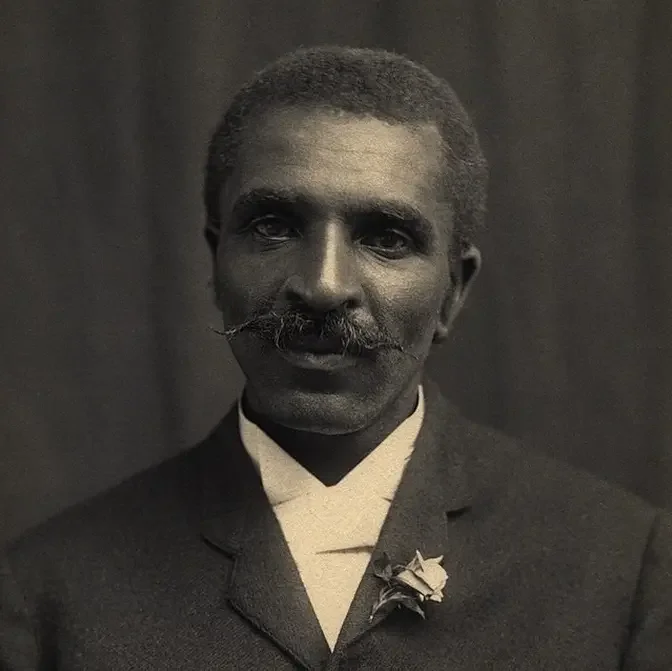
George Washington Carver. Some refer to him as the peanut man, the plant doctor,
or the farmer's friend. Throughout his life, George Washington Carver made many important
scientific and educational contributions to the world. Let's travel back in time,
all the way to the 1800s, to learn about the plant doctor, George Washington Carver.
George Washington Carver was born in 1864 on a farm in Missouri. The farm was owned by a man
named Moses Carver, who used the labor of enslaved people to farm his land. Both of George's parents
were enslaved, so his exact birthday isn't known. When George was just a tiny baby,
something wild happened. George, one of his sisters, and mom were all kidnapped
by Confederate raiders and taken to Kentucky. George was eventually found, and he returned
to the Carver farm, where he and his older brother, James, were raised by Moses Carver
and his wife, Susan. As a young boy, George didn't work in the fields like other boys his age.
Instead, he was taught how to work in the kitchen garden, how to tend to plants,
and how to make herbal medicines. George loved doing this work, and he was really good at it,
too. He began to experiment with chemicals that helped plants grow, things like natural pesticides,
fungicides, and soil conditioners. George soon started creating his own special mixtures
and combinations that helped him grow healthier plants, and the word spread to other local farmers
who started calling George the plant doctor because he knew exactly what types of chemicals
different plants needed to survive and thrive. He made quite a name for himself at a young age
because of his new and interesting ideas. At age 11, George left the farm to attend an
all-black school in a town called Neosho, and when he was about 13 years old, George moved to
Kansas to attend high school. He graduated when he was 16 and made plans to attend college.
George was an excellent student and earned a full scholarship to Highland
Presbyterian College in Kansas. Unfortunately, he was turned away the first day because he was black,
even though he was very discouraged, he never gave up. In 1888, 24-year-old George
enrolled as the first black student at Simpson College in Iowa. George first studied art and
piano before switching to botany, which is the study of plants. He transferred to Iowa State
Agricultural College, now known as Iowa State University, where he earned a bachelor's and
master's degree. George decided to stay and teach at Iowa State. While teaching there, Booker T.
Washington, a well-known leader in the black community, invited George to teach agriculture
at the Tuskegee Institute. The Tuskegee Institute was one of the first black colleges in America.
George accepted the job and began teaching agriculture. He taught there for 47 years,
developing the agricultural department into a strong research center that would be modeled
by many other universities throughout the country. George's main goal was to teach generations of
black students new farming techniques, like crop rotation, so they could be self-sufficient and
thrive as a community. Cotton was one of the main crops grown in the South, but growing cotton in
the same place year after year wasn't good for the soil, so the cotton wouldn't grow as well.
George discovered that if farmers grew cotton one year and the next year grew something else,
like sweet potatoes or soybeans, not only would the soil be healthier, but they'd have more crops
to sell. Another major problem for cotton growers was a pest called the boll weevil, which would eat
the cotton crop. George discovered that boll weevils didn't like peanuts, so he told farmers
to plant them instead. But farmers were worried that they wouldn't be able to make much money from
a peanut crop, so George solved that problem by coming up with hundreds of new things that could
be made from peanuts. Things like cooking oil, clothing dyes, plastics, and even fuel for cars.
That's why he's sometimes called the peanut man. Through crop rotation and innovation, George helped
farmers make crops profitable. That gave the southern farmers new hope, and they became successful
using Carver's methods. Soon, throughout the South, Carver became known as the farmer's friend.
Eventually, the work he did became known throughout the world. George Washington Carver died on January
5, 1943. His life savings of $60,000 was used to create the George Washington Carver Institute
for Agriculture at Tuskegee. There is a monument dedicated to Carver in Diamond, Missouri.
There are many other schools, scholarships, and honors named after him as well. And January 5
is known as George Washington Carver Recognition Day. Now that our brains are full of fun facts,
let's review what we've learned. True or false? George Washington Carver's exact birth date is
unknown. True! What is one of George's nicknames? Did you remember Peanut Man or Plant Doctor
or the Farmer's Friend? Good job! George Washington Carver Recognition Day happens during which month?
January! True or false? One of George's main goals was to help black farmers be self-sufficient
and succeed. True! Great job, innovators! Though he was faced with lots of challenges,
George Washington Carver persisted and went on to become one of the most prominent names
in American history. He used his skills to help other people and has inspired generations.
Let's be like George and never give up. Hope you had fun learning with us. Visit us at
learnbright.org for thousands of free resources and turnkey solutions for teachers and homeschoolers.