
George Washington Carver: An Uncommon Way | Full Movie | Ken Carpenter
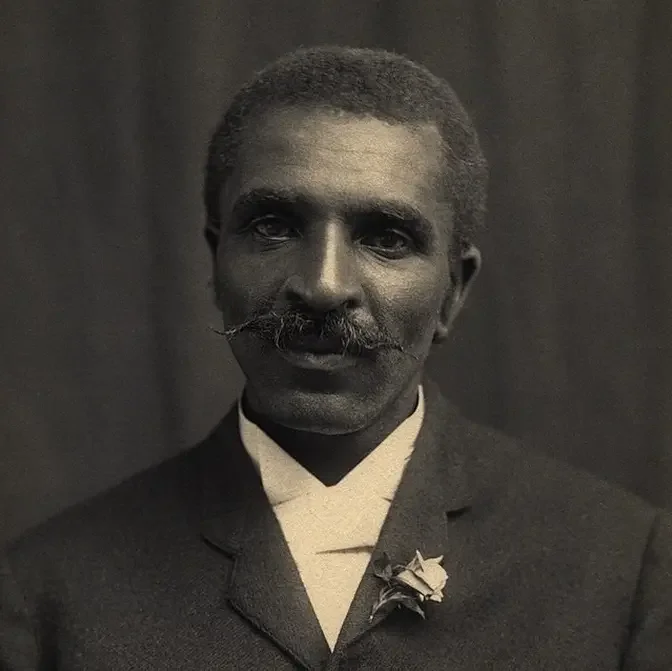
173 Video Views·Jan 28, 2023
When you do the common things in life in an uncommon way, it commands the attention of
the world.
Those words of George Washington Carver bear humble tribute to a life that saw the extraordinary,
where many see the mundane.
The lifetime he spent exploring order, beauty, and truth is often remembered for a singular
contribution to American agriculture.
Peanuts made George Washington Carver a national figure.
George Washington Carver caught the public imagination because he was making all those products out of peanuts.
Someone once asked him if he thought the peanut was the most important work he had done.
He said no. So it's the one that makes him the most famous.
But did you know that he created 500 colors from the Alabama clay?
Exploring the world of George Washington Carver reveals his love of music and art, creativity in the scientific realm,
as well as his symbolic place on the landscape of American race relations.
The fact is he was one of the keystones in the whole process of emancipation and the whole process of
bringing black people to equality in our culture and in our legal system.
Textbooks today focus primarily on the outward achievements of George Washington Carver.
His inventions, his vision for sustainable agriculture.
That was just a small part of the man.
And in fact, it was more the outward fruit of something far greater within.
In recognizing his great achievements, we must not miss who this man was.
Carver's journey began during the most volatile era in American history.
His mother Mary was a slave.
George was born July 12, 1864.
The Civil War was still raging and there was a chaos in that part of Missouri.
The border with Kansas was about 20 miles away from the farm.
It's called Bleeding Kansas.
There were thieves and robbers and raiders taking advantage of the chaos of the war.
Mary and her two sons, Jim and George, were owned by Moses Carver, a Missouri farmer.
When George was about eight months old, the chaos came to the farm.
A group of raiders came and took him and his mother.
While the bushwhackers were abducting Mary and baby George,
Moses Carver was able to hide away George's older brother, Jim.
The morning after the raid, Moses Carver took off on a horse
and went eight miles to the town of Neosho.
There was a Union Army headquarters there.
Moses Carver hired a scout named John Bentley from the Union Army to try to track them down.
And the story goes that he found baby George that had been left behind somewhere on the edge of Arkansas,
brought the sick baby back.
He had whooping cough, was very ill.
We never knew what happened to George's mother.
One of Carver's early accomplishments was just surviving childhood.
His father, he never knew.
His mother was never seen again.
Baby George was returned to the homestead of Moses Carver.
Moses was a naturalist, known for a strong work ethic and an abiding faith.
He was also a reluctant slave owner,
having taken ownership of Mary, George's mother, as repayment for a defaulting debt.
He later wrote,
I hope heaven does not judge me too harshly for this action.
When Mary was lost, there are Moses and Susan with these two boys,
whom they decided to raise as if they were family.
George was growing up on a working farm.
Day-to-day life would have been a family,
raising cattle and horses and goats and sheep,
honeybees, apple and other fruit trees,
lots of corn, oats, some wheat, flax,
a lot of crops.
It would have been a life of lots of hard work.
He was sickly as a child, and so he grew up knowing about loss
and about struggle and about challenge.
And also because he was sickly as a child, that also freed him up.
And he didn't have some of the requirements that, say, his older brother Jim had.
Jim was strong, his brother.
Jim would go help out, but George couldn't.
Because he was weak and frail,
he didn't do the kind of chores that most farm boys did.
He ended up staying around the house,
and so instead of learning milking and plowing and fence building,
he learned laundry and cooking and housekeeping
and other kinds of skills that, in fact,
came to be of great service to him later in his life.
As Carver's strength grew, he was increasingly exposed
to what would become a defining aspect of his entire life.
George was discovering his love for the outdoors.
In his spare time, he loved to go outdoors.
He spent time in the woods, through the prairies, the fields.
He enjoyed exploring nature.
He often had to fetch water at the spring,
which was right below the site where the house was.
He would linger at the creek for a long time.
He just loved to walk around and study
and wonder about everything that he saw,
what makes all these things.
How did all these things come into existence?
He was a profound little boy.
At an early age, Carver found that beyond just admiring nature,
he wanted to engage it in a hands-on way.
He found that he loved plants,
so he began a garden that he kept secret, a secret garden.
And some of the neighbors would bring their sick plants to George,
even as a young child, and he would plant them
and nurse them and take care of them
and learn that he had a green thumb.
He was just particularly good with plants.
Of course, from that, he had many, many, many questions
from the plant life and just from nature around him.
It drove him to really desire an education.
Soon, George became known to his neighbors as the plant doctor.
His desire to learn and understand more was growing.
The nearest place for meetings in the Diamond area
was a place called Locust Grove.
There was a building there that was used as a church
on Wednesdays and Sundays and as a school the rest of the week.
As a black child, George was welcomed at church
on Wednesday and Sunday,
but he wasn't allowed to go to school there.
A deeply disappointed George
turned to the resources he had available.
He had one book.
It was a spelling book, one of those old Webster's,
blue-backed spellers,
and he learned to read some from that.
He got everything he could out of what was available,
but that was almost nothing.
Mr. and Mrs. Carver were perfectly willing for the boys
to attend school with the white children,
but because of the racism that existed in the 1870s
when he attempted to go to school,
he found he had to move away from home.
So at age 13, George took off.
He basically took a piece of cloth
and put his favorite rocks that he collected as a boy
and his speller and a pair of jeans
and tied them up and carried them to Neosho.
He walked the 8 miles.
When we look at George Carver's life,
I think we have to consider that
perhaps from time to time,
maybe he was extraordinarily blessed,
and maybe he was inspired,
and maybe he was watched over
because he successfully made that journey to Neosho.
But not only that, he met the right folks.
So he went straight for the school,
found it,
and it was about as big as his birth cabin,
about 14 feet square.
Must have been late in the day.
So what he did was to go into a property next door
and crept into a little shed on the next property.
It was owned by a black couple.
After a few days in that shed,
this woman went out to her shed and found him there.
She saw him and asked him what he was doing.
He told her, and she found out he didn't have a place to stay.
So she said that if he worked hard in school
and helped out around the house,
he could live with her and her husband.
Her name was Mariah Watkins,
and she was very religious,
and she was a midwife's helper,
took care of children,
doctoring and nursing all around.
It was quite informal, but she was a good nurse.
Because she was a midwife,
she had a lot of interest in plants and herbs
for their healing properties.
So George really caught into that
because it gave him a chance to learn more
about things he was already interested in.
And she recognized his passion for and expertise,
even at that age, in plants.
Mrs. Watkins was one of the people
that encouraged him spiritually.
She was the person who gave him his first Bible,
the Bible he carried with him the rest of his life
and read from every day.
Aunt Mariah also told George a story
about an old slave woman called Libby.
Libby had learned how to read during slavery days,
and when freedom came, she made it her job
to go out and teach all of the newly emancipated slaves
how to read.
Aunt Mariah told George that he needed to go out
and be a Libby to their people, to our people.
Although George was learning a lot from Aunt Mariah at home,
the tiny, overcrowded Neosho Colored School
failed to satisfy George's growing thirst for knowledge.
The problem with that school was that the teacher,
although as well-intentioned as he was,
couldn't really answer all those questions
that George had about nature.
So in the spring of that year,
a black couple stopped at Mariah and Andrew Watkins' house,
and they were on their way to live in Fort Scott, Kansas,
which is about 70 miles northwest of Neosho.
They told George that he could come if he wanted to.
He was still 13, and he took the offer.
George became part of a great migration
of tens of thousands of free blacks
from all over the South to Kansas,
where the promise was that they could settle in peace.
He moved there filled with anticipation, filled with hope,
thinking at last he'd have an opportunity
to get this higher education that he so desperately wanted.
Although Carver had been discriminated against,
he had never been exposed to the kind of violence
that was becoming more and more commonplace
in Reconstruction-era America.
He was working.
He found a family that he was cooking for in Fort Scott,
and he was going to another school,
another black school in Fort Scott,
and seemed to be doing well.
After he had been in Fort Scott for some time,
there was a lynching.
Emotions in Fort Scott erupted
when a black man was accused of violating a 12-year-old white girl.
White people in town had no desire for a trial
or no desire for gathering evidence or a jury of any kind.
They just wanted him dead.
So 1,000 people convened in a huge mob.
This crowd took this man, overtook the jail of the sheriff,
took the man out of jail, beat him.
They dragged him down Judson Street by his feet
with a rope tied to him right past George's house.
He saw it.
He saw these people screaming.
They hanged him from the lamppost and set him on fire.
George didn't wait or follow the crowd.
He got out of there that night.
He was on a train and gone.
The story was brought back up to him again in about the 1930s
where he was giving a report or talking about it,
and in the 1930s he said that event in 1879
still haunted him to that very day.
He went to several little towns, Taola or Latha.
He stayed in some of these little towns for a year, two years.
His motive was simply to become educated,
but he was always struggling.
I mean, he had nothing.
Here he is, he was all alone in the world,
and he just had to make his own way.
For the next seven years, Carver wandered throughout the region.
At about 21 years old,
George managed to complete the equivalent of a high school education.
Finally, his greatest desire was now within reach.
He had been accepted by a little place called Highland College.
This was a lifelong dream come true.
He was so excited.
He took the train to Highland, got off,
reported to the president of the college to get his assignments,
and they said,
When we accepted you, we didn't realize you were a Negro.
Highland does not accept Negroes.
And that was the end of it.
It was the biggest disappointment of his life.
Abandoning his aspirations for a college education,
Carver headed to the west Kansas frontier to try his hand at homesteading.
George became a sodbuster.
He became a soddie, as they called him, out in western Kansas,
where a person could receive 160 acres of land for free.
He borrowed a plow and the horses
and dug the blades down into the soil
and stacked up those big bricks of sod.
He began lecturing the small community there about plants,
developed his interest in painting.
He would paint on anything.
He would paint on newspapers.
He would paint on tin cans.
He would paint on anything he could find because he was so interested in it.
So he was filled with this desire to paint and to express himself.
People said it was the best maintained sod shanty they'd ever seen
because he had all this beauty in there.
He just became, really, a leading citizen of this little community.
He was often written up in the paper.
He was kind of a celebrity, really.
The homesteading experience was teaching George
very practical lessons about the particular challenges of farming.
He was starting to get more of a sense of a mission in life.
He was starting to get the idea that he wanted to help his people,
that he wanted to help the poorest of his people,
to climb the golden ladder, as he put it.
The arid high plains of Beeler, Kansas, however,
proved ultimately inhospitable to farming.
George relinquished his land claim and returned east,
landing in tiny Winterset, Iowa.
He found a church that he started to attend.
And at this church he met a family, Dr. and Mrs. Milholland,
and they became instant friends.
They were the ones who encouraged him to go on to college.
The shock and disappointment of being rejected at Highland
had finally passed, and he was ready to give it another try.
A nearby town of Indianola, Iowa, there was a college,
Simpson College, so he applied, and they welcomed him with open arms.
He was in his element at last.
He felt in a way that he was home.
Though the only black student on campus, Carver found acceptance.
While his desire to help others was growing,
he wasn't yet sure how that would happen.
A re-inspired Carver eagerly enrolled in art and piano classes.
George had an art teacher named Etta Budd,
who really admired his abilities and admired his passion.
She was so impressed with the specimens he brought in to paint.
These were things he had collected.
Sometimes he had grafted them or grown them.
Her father was a professor at Iowa Agricultural College,
and she began to think George ought to transfer his interest
from painting plants into studying them.
She believed that it would be very difficult, if not impossible,
for a black person to make a living as an artist
just because there would be this prejudice against buying his paintings.
So as tough as it was, I'm sure, for her to say
and as it was for George to hear,
Miss Budd recommended to George that he trade his paintbrush
for the smock of a scientist or of a botanist and enroll at Iowa.
And that's what he did.
Iowa Agricultural College was one of the leading agricultural schools in the country.
He was the only black student on campus.
At Simpson, George had been able to come into the community
and come into the student body very easily.
It was a smooth transition for him, even as the only black student.
At Iowa, things were different.
A lot of the students were coming from the South.
A lot of these students had never seen a black individual before,
and I believe it was extremely, extremely rough for him.
The kitchen staff wouldn't serve him dinner in the dining room.
He had to eat in the basement with the janitors.
When he was to be assigned a dorm room,
there were two students to a room, and who was going to sleep with the black guy?
And so one of the professors actually offered his office as a room for him to live in.
In spite of the racially charged climate,
Carver patiently acclimated into the all-white student body
while diligently advancing his education.
His excellence and graciousness resulted in his widespread acceptance and admiration.
He became a very popular student, worked out with the football team,
joined the German club, wrote for the school yearbook.
In fact, in 1894, he even wrote the class poem.
He was a member of the student cadet corps.
He was part of an honor guard that escorted the governor when he came to visit.
1894, he graduated from Iowa State, the first black to graduate from Iowa State.
After graduating, George stayed to pursue his master's degree
under the wing of renowned plant disease scientist L.J. Pamel.
He taught freshman courses in botany and worked in the herbarium.
Carver was valued and in demand at Iowa Agricultural College.
But George, a resolute man of faith,
was becoming convinced that he was being called to other service.
As his graduation from graduate school drew near,
George was offered an opportunity to enroll in the Ph.D. program and join the faculty.
They wanted to keep him there.
He had also gotten an offer, though, to teach at Alcorn A&M in Mississippi.
This was appealing to him because it was a black college.
Then along came an offer from another school called Tuskegee in Alabama.
Carver was intrigued with reports of trails being blazed in South Alabama
at the already renowned Tuskegee.
Willing to set aside other alluring offers with great anticipation,
Carver embarked on his initial journey into the Deep South.
He was a bit taken aback.
He said, everything looked poor.
The ground looked poor. The cattle looked poor.
The people looked poor. The soil looked poor.
Although Tuskegee had been founded 15 years earlier in 1881,
Carver encountered an environment that was still in a formative state.
The conditions would initially test his character.
But in short order, he came to see that at the very heart of the Tuskegee experience
was an infectious resourcefulness.
The bricks were made by students.
They're handmade bricks.
The wood was cut from forest land that the university owned.
It was milled on the university land, and it was built by students.
Carver had been persuaded to join the effort at Tuskegee
by one of the brightest visionary minds of the era,
the energetic Booker T. Washington.
The coupling of these two strong personalities was not always harmonious.
They clashed on allocation of resources and other similar matters,
but each carried strong admiration for the other.
Washington drove everyone at school just like he drove himself,
which was hard and all the time.
Most everybody else took it in stride as part of the process
of being a teacher or being a student at Tuskegee.
While the two of them were passionate in their desire to help blacks and educate them,
Carver and Washington were very different people.
This difference caused a lot of friction.
Carver skipped his own graduation from graduate school
to get to Tuskegee in time for classes to start.
He had thought he was coming there to have a fully equipped laboratory
to continue with his research into botany and perhaps to continue with his painting,
but when he arrived there, he found none of these things.
Imagine how George would have felt.
He left this very fine, very well-equipped institution,
and he went to a place where they were still working on it.
Tuskegee was a very practical place.
It was a place where real world things had to be done,
and people had to get them done.
And Carver was put into an environment he had never been in before.
He was put in an environment where he had to do mundane things like counting chickens
and putting whitewash on the fences
and seeing to the everyday tasks that had to be done in the area that he was in charge of.
It took Carver a while to get adjusted to this, to the extent he ever got adjusted.
Carver's frustration over the lack of resources was assuaged
by the vision being cast by Washington,
Encouraged to do so by Washington,
Carver began in earnest to harness his own natural resourcefulness.
They went out to the junkyards, and they went door to door
to get old cast-off things that might be converted into laboratory equipment.
If he needed some glassware, he would pick up a whiskey bottle.
He would soak the bottle in ice water, then tie a string around it.
He would set the string on fire.
It would break the bottle into two pieces, and he would have a funnel and a beaker.
Carver was quickly captured by the unique opportunities present at Tuskegee.
The ideal of Tuskegee was to help everyone become more self-sufficient.
When Booker T. Washington came here to Tuskegee,
one of the first things that he did was he went out into the community to introduce himself.
Got to know the farmer.
Booker T. Washington encouraged all of his teachers to go out into these rural areas.
Carver was a part of it. Carver would take a horse and go out into these rural communities on Sundays
and see how these folks were living and offered them advice.
Washington encouraged Carver to develop a very practical written guide for local agrarians.
The result was a tool that became a welcome asset for people working the land around Tuskegee.
One of the most useful things that Carver did in his time at Tuskegee
was publish what were called experimental agricultural bulletins.
And they're wonderful little bulletins on preserving foods, canning foods.
About planting, about fertilizer, about storage.
What Carver was able to do is explain them in simple, step-by-step components
that the one horse farmer could understand and could apply.
The reception to the pamphlets Carver created gave flight to the vision of another method
for equipping area farmers with the knowledge they needed to become increasingly self-sufficient.
Carver actually sketched what the wagon should look like.
Booker T. Washington secured funds from a wealthy New Yorker by the name of Morris Jessup.
This was basically a portable classroom, a wagon on wheels that was pulled by a mule
that was actually taken out into the field where the farmers were
and could demonstrate to them techniques and bring them seed samples, bring them diagrams.
They wanted to improve the quality of lives of people.
And it wasn't just the black sharecroppers, it was the white sharecroppers.
There wasn't any distinction with Booker T. Washington or Carver
on who would benefit from the knowledge of the Institute.
They wanted to help people.
While Carver was pouring into the lives of local farmers,
his love for the created order found in science was especially evident to his students.
His mind would go like a ticking of a clock, interested in everything.
He called for me one Saturday and wanted me to go with him and to bring my camera.
And I did, and we walked through the woods about 15 miles.
And he was talking to the plants, he would break a twig and get the nectar out of it
and say, this is bitter, no, no, no, this is not it, this is not it.
He loved the beauty of the earth and God's handiwork in all things.
Carver's renown as a scientist grew, but he did have his detractors.
In November of 1924, the New York Times published an article entitled
Men of Science Never Talk That Way,
criticizing Carver's statements about God and science.
Carver was undeterred.
Unlike most scientific people, Carver did not depend on the scientific method
or any kind of formalized procedures.
He depended a lot on his intuition and also what he called divine inspiration.
He believed that God would unlock the secrets of creation
to people who asked for them, who looked for them.
I've heard him say that he had visions, and they were so plain
that he would get out of bed and make notation of what he had dreamed.
For Carver, the worlds of science and creation were beautifully and inexorably linked.
Dr. Carver was a man of devout faith.
You can't read his letters, his correspondence,
pick up on his radio interviews without having him speak of God in his life.
He put that in the forefront of his lectures, actually.
A student asked him if he wouldn't start leading a Bible study.
At first, about 50 students would turn up for it.
Then, as word spread, more and more students would come,
so that after a while, students would jam 150 people into this room.
People would stand outside the windows when there wasn't enough room.
In a letter to a friend, Carver wrote this about his students.
Oh, how I want them to get the fullest measure of happiness and success out of life.
I want them to see the Great Creator in the smallest
and apparently the most insignificant things about them.
How I long for each one to walk and talk with the Great Creator
through the things He has created.
My life was changed completely by meeting Dr. Carver.
When I got there at Tuskegee, we got into conversation.
He wanted to know everything about my home life.
Why did I come to Tuskegee?
Carver pushed his students toward academic excellence.
He said, 99% of failures come from people who have the habit of making excuses.
But more important to him was the list he compiled of eight cardinal virtues
for his students to emulate and strive toward.
Be clean, both inside and out.
Neither look up to the rich, nor down on the poor.
Lose, if need be, without squealing.
Win, without bragging.
Always be considerate of women, children, and older people.
Be too brave to lie.
Be too generous to cheat.
Take your share of the world, and let others take theirs.
George, I believe, always knew the importance of mentors.
He saw them in his own life,
and he knew the effect that they could have on the lives of any number of individuals.
Carver had a knack about him of picking out young men
that seemed like they might have potential,
because if you go back and look at all of the individuals
he worked with all across the nation from the YMCA,
he would write to them.
He always started his letter off, because I got one at home,
My Dear Boy.
It's not my letter, it's my dad's letter.
But all of them, and I thought it was something special when I wrote it.
I said, Hey, he said, My Dear Boy.
But he wrote that to all of those that he saw something in and he began to work with.
When you think about where Carver came from,
he grew up, he was, you know, it was just him.
And he went on, he didn't have a family around him,
and I think wherever he went, he pretty much was adopted and he adopted people.
I think he tried to provide them a family atmosphere.
Carver's commitment to edify his students with life wisdom was untiring.
He wrote,
There is no shortcut to achievement.
Life requires thorough preparation.
Veneer isn't worth anything.
He told them,
It's not the style of clothes one wears,
neither the kind of automobile one drives,
nor the amount of money one has in the bank that counts.
These mean nothing.
It is simply service that measures success.
His earnest challenge to them?
Fear of something is at the root of hate for others.
And hate within will eventually destroy the hater.
He corresponded with these young men years and years and years.
It really became like a father-son relationship in many ways.
The students at Tuskegee remembered him all their lives
as one of the primary influences in their life
that molded their future and further careers
just by what he told them, the counsel that he gave them.
I've spent a lot of time with Dr. Carver just talking.
And he would say,
Help your neighbor.
Who is your neighbor?
He would say,
Anyone that need help, that's your neighbor.
This was some advice that Carver wrote once.
When our thoughts, which bring actions,
are filled with hate against anyone, Negro or white,
we are in a living hell.
That is as real as hell will ever be.
While hate for our fellow man puts us in a living hell,
holding good thoughts for them
brings us an opposite state of living,
one of happiness, success, peace.
We are then in heaven.
As Carver's scientific contributions accumulated,
another, perhaps greater gift, his charismatic enthusiasm,
found an unexpected platform.
The YMCA was working with
the Commission on Interracial Cooperation.
So they were partnering together
to try to help with racial tension.
And so they hired George Washington Carver,
and he began to speak to these groups of young people.
Most of the time, these were white young people.
Carver was invited to speak at a place called Blue Ridge.
There was some concern
over what the audience would think
of a black person coming to speak.
There was all Southern white boys,
and they were not expecting,
some of them really weren't happy
that he was allowed to speak to them.
He got up to speak, and he was there to speak about race relations,
but instead he spoke about nature and science
and observation and discovery
and all the things that were on his heart.
I mean, his race relations speech was himself.
It was his example. He didn't have to say anything.
These young men didn't understand,
but when it was all said and done,
he'd actually taught them about people learning to get along together
and interracial harmony.
There was a beat of absolute silence,
and then the place erupted in applause.
All these young Clemson boys
and young college students, all white,
rushed to congratulate him, rushed to shake his hand,
rushed to ask him questions,
so that what had been a concern on the part of the organizers
turned out to be a triumph.
Carver understood that two significant challenges
faced Southern farmers in the early 20th century.
First, after countless decades
raising the harsh and demanding
but lucrative crops of cotton and tobacco,
Southern fields were depleted of much-needed nutrients.
Additionally, a variety of beetle,
measuring on the average only 6 millimeters in length,
had migrated from Mexico across the Rio Grande River in 1892,
eventually reaching Alabama in 1915.
Ultimately, the nation's cotton crop would be decimated.
The boll weevil was making its way to his part of the South,
and he knew that in time that would be a problem.
For years, Carver had been trying to come up
with another cash crop other than cotton.
He came up with several.
One of them was the peanut, one was the sweet potato.
He also looked at soybeans.
He looked at black-eyed peas.
All of these were easy to grow, easy on the soil.
They could be a cash crop, and they were also very versatile.
What he wanted to do was find as many uses for these crops as possible
so that people would be more inclined to grow them.
Peanuts became the most promising
because he found the most different uses.
It was almost like the more he looked, the more he saw.
Anticipating the boll weevil's ravaging sweep,
Carver had developed a characteristically practical remedy for the South.
He wasn't pursuing a simple bandage to the problem,
but instead a comprehensive solution that would sustain the livelihood of farmers.
Carver was summoned to present his findings in Washington, D.C.,
where an unexpected reception awaited him.
In January of 1921,
Carver appeared before the House Ways and Means Committee
that was considering a tariff on imported peanuts.
He had been hired by the peanut growers to come and basically be a lobbyist.
So here is this old guy hunched over with this big box under his arm,
walking into the meeting room with the House Ways and Means Committee.
He sits down, and they say,
You've got ten minutes to tell us what you want to tell us.
He started telling them about how valuable peanuts were,
how versatile they were,
how they were a great crop because they replenished the soil,
which didn't require much attention,
which could be sold readily, which was good for animal feed.
You could make everything from talcum powder to rope to paint to anything else from it.
They extended his ten minutes again,
and they extended his ten minutes again,
and finally one of them said,
Brother, take all the time you want.
These members of the House were mesmerized by this little old man.
He became known from then on, really, as the peanut man.
Notoriety and fame came swiftly.
America was captivated by the many dimensions of Carver.
He was heralded as a great botanist, educator, and inventor,
and for his poetry, painting, mentoring, his frugality,
and his efforts to improve racial relations.
With this broad sort of Renaissance-like experience,
Time Magazine even called him the Black Da Vinci.
Three American presidents, Theodore Roosevelt, Calvin Coolidge, and Franklin Roosevelt,
made it a priority to meet personally with Carver.
Late in his life, Carver and Henry Ford became good friends.
Thomas Edison offered Carver a job at his laboratory.
There are different stories, but probably Edison offered Carver $100,000 a year
to come to work at his laboratory.
Carver turned it down.
He said, No, his people need him, and the South needed him,
and he wants to remain in the South.
Years later, as Carver's health began to fail,
his friend Henry Ford installed an elevator in Carver's home
so that he would no longer have to climb stairs.
In January of 1943, Carver was trying to open the door.
He slipped on ice and fell, and he never really recovered his health after that.
He sort of slipped into a deep sleep and never woke up.
At his passing, there was a nationwide outpouring of thanks and celebration
and acknowledgement of all he had been, not only to black people,
but just as a great American.
The legacy of George Washington Carver has far-reaching impact today.
Everyone thought I was crazy.
I'm known as the seed lady.
I advocate organics in the hood.
I am the queen of ghetto green.
I brought organics to the hood in South Los Angeles in the 80s.
I've always been very concerned about the health and nutrition of my community,
and I've planted many gardens.
As a matter of fact, 5,000 in 34 years with the help of a lot of people.
That is something that I truly was inspired by Dr. Carver to do.
I'm a proud alumnus of Tuskegee.
I walked the paths that Dr. Carver walked.
I communed in the same areas he communed in and at his graveside.
I really feel a really deep connection with this man, his life, and what he meant.
Welcome to the Carver Food Park.
This is 30 garden beds, a big rose garden.
You have a greenhouse, and getting involved in the greening of your community,
that's what people do here and have been for the last 18 years.
Any number of ways you might look at great men, Dr. Carver was a great man.
His life tells us how we ought to be.
George Washington Carver had a lot of obstacles in his lifetime,
and as a child especially, he had a lot of roadblocks.
When he got to the thicket, he had the machete.
He cut down so we all could travel and come behind him.
Many people strive for purpose in their life,
and we can look at Dr. Carver's life as a role model.
He identified things that he could do,
the qualities that he had that he could bring to the table,
and then worked at it diligently.
He gave everything to his work,
and he did it to leave it for all of us.
I appreciate the man himself,
and I appreciate that he spent helping mankind,
not blacks or brown or white.
When somebody says that he was a great scientist,
look at it as God used him as an instrument
through which he could help mankind.
One of the easiest lessons that we can take away from George Washington Carver
is the lesson that it simply comes from inspiration.
The story is inspirational.
He was an American hero. He was a hero for us all.