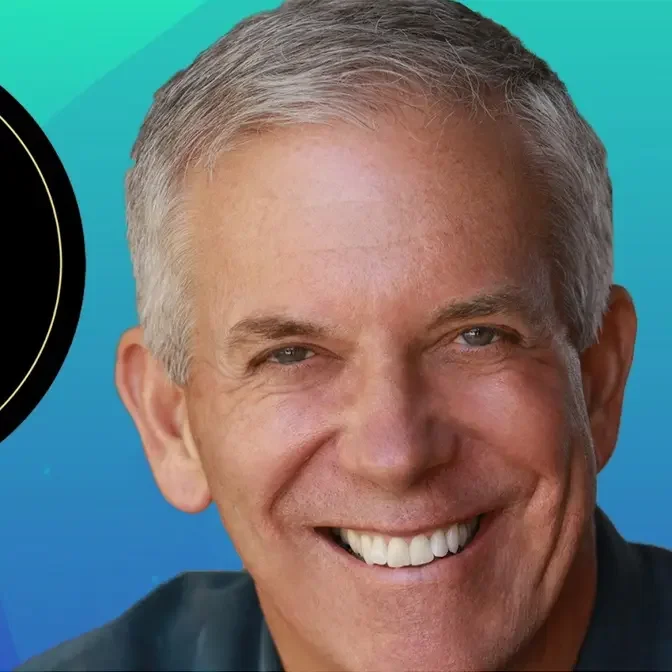
I get to talk with former Dodger GM and the architect of the team that won the 1988 World Series, Fred Claire. We meet with City of Hope's Dr. Stephen Forman, M.D. and talk about Fred's treatment at the City of Hope.
“The Best of California with Pat Pattison” is a fast-paced half hour TV show that explores the natural wonder, people, history and mysteries of the California Lifestyle. California native and TV Host Pat Pattison explores the state’s nooks and crannies from the historic backlots of Hollywood, famous California Cuisine all the way to the mansions of the Gold Rush and Silicon Valley.
Watch us in: Los Angeles KAZA (MeTV) Ch. 54 Sundays 7:30am Palms Springs FOX 11 at 11pm Eureka NBC 3 11:30pm Fresno MyTV 53 Sundays 2pm
Welcome to Pat Patterson's Best of California.
This episode, the best of the San Gabriel Valley
and Pasadena.
I'm with Fred Clare, former GM of the Dodgers.
We're at the City of Hope.
We're gonna talk to Fred about his journey here.
We're gonna go to the Rose Bowl.
We're gonna talk about one of your favorites,
Jackie Robinson and Mack Robinson,
the history of sports here in Pasadena.
All the incredible things centered around Fred's story
and sports here in the San Gabriel Valley.
So Fred, let's get going.
Great to be with you.
I'm Pat Patterson and I love California.
It began in 1913 as a small tuberculosis
tent colony in Duarte,
a place built on compassion when few others offered.
Today, City of Hope stands as one of the leading innovators
of cancer and diabetes research here in Duarte,
where groundbreaking science
and human kindness come together.
From its humble beginnings to its life-saving innovations,
it remains a beacon of hope for families everywhere.
We met with Dr. Stephen Forman and Fred Clare
here on the City of Hope campus in Duarte.
I'm so excited.
We are at City of Hope, Duarte.
I'm with Fred Clare, former General Manager of the Dodgers
and Dr. Stephen Forman,
Professor of Oncology and Hematology, City of Hope.
And we're gonna talk a little bit about Fred's journey
that he put in this wonderful book, Extra Innings.
Gentlemen, thanks for being here.
This is so great.
Dr. Forman, tell me a little bit about Fred's case,
if you would, if you could kind of set it up a little bit.
He had a particular type of cancer
of the head and neck area.
Yeah.
And we have particular surgical skills
and cancer skills in managing that.
And he has been on his own journey
that we've gone along with him.
Wherever he goes, we go.
Is your area blood cancers?
That's a specialty here at City of Hope?
Yeah, among many other specialties,
treatment of blood cancers, transplant,
developing immune therapies.
Fred is actually on an immune therapy right now.
And to give our viewers background,
Fred, you were GM of the Dodgers
back when you put together the team
that won the 1988 World Series.
And I know you're a rabid Dodger fan, doctor.
And so tell me about the initial connection you two had
around the number 42.
I think the first time that we met,
Sherwin and I met Dr. Forman, was in his office.
And he asked a very significant question.
The question was, what does the number 42 mean to you?
And I said, that's an easy question
because that is the number of the great Jackie Robinson.
And he responded by saying,
this year will be the 42nd year
of our bone marrow transplant programs.
One of the most inspirational programs
I have ever been involved with or witnessed.
And Dr. Forman invited Sherwin and I to be his guests.
And we were.
And now we're coming upon this year,
the 50th bone marrow transplant program.
And the lives that have been saved
by people helping others,
sometimes unknown to one another
until the most meaningful life-saving adventure
of their lives is truly inspiring, inspirational
and should never be forgotten.
And the history of City of Hope,
I'm so amazed at how big a campus this is
here in Dougherty.
And Fred said it started with a couple of tents.
So we're gonna talk a little bit about the history.
And oh, we have a visitor.
How are you gentlemen?
I'm Robert Stone.
Good to see you.
Robert, good to meet you.
Good to meet you.
How are you?
So good to see you.
Good to see you, Robert.
Dr. Forman, you're not gonna get up and hug me.
I understand that.
Well, I'm sorry to interrupt,
but I heard you were on campus
and I wanted to say hello and welcome.
I have a wonderful story for you today
that encapsulates what you mean to us.
I was with a patient's family this morning,
right before I came here,
and your name came up.
Somebody was about to undergo therapy
and said she was scared,
but that they'd read your book.
Oh, man.
And that your book talking about a team coming together
gave her peace.
And I just thought it was ironic that you were here.
I wanna tell you how much you mean, Fred.
Well, that means so much to me.
That's the real meaning of the book,
was to help, hopefully, inspire and help others.
So I appreciate that.
And we just happen to have this on hand.
So that's from Fred.
That is for Fred?
That's from Fred to you.
Oh.
Bingo.
I'm gonna have to, the head's gotten too big.
I'm gonna have to make it a little smaller.
I can tell you, Fred, Steve knows this.
So I've been a lifelong Dodger fan.
I'm a season ticket holder
and my parents before me were season ticket holders
and I loved the Dodgers.
My favorite team in the history of sports as a fan
was the 1988 team that you put together.
And so before I even met you,
I admired and owed you a debt of gratitude.
Well, that team was put together,
I must say, and hopefully not a reach,
much like the team at City of Hope
because what I really looked for in that team
in my first four years as general manager
was character.
The individuals who had just went beyond
in a call of duty and came together
in one truly remarkable year.
And one of the leaders, of course, Kirk Gibson,
who today, typical of Kirk,
is leading another team in his facilities
to fight Parkinson's.
And so it really is a full circle
of having the right people in the right positions.
And I remember that's why you were brought in
because of your character and integrity.
The team reflected his character and integrity
and determination that we've learned.
I've gotten the chance to know Fred over the years
and I've seen it.
And the only question I've had over time,
and it was the wrong question, Fred,
was does Dr. Foreman play the Kirk Gibson
or the Oral Hirscheiser role?
And the reason it's the wrong question
is I wanna know whether Kirk Gibson
or Oral Hirscheiser played the Dr. Foreman role
because that's more important.
Well, the closest thing is the combination.
Actually, in today's world, Dr. Foreman is the old Tommy
of the baseball world.
That is well said.
Because he can pitch and he can hit
and he can do everything.
And just as important, in City of Hope,
he has a international part of what it's all about.
Well, I don't wanna interrupt the good work
that you're gonna do.
I wanted to stop by.
Thanks for letting me interrupt, Fred.
Thanks for all that you do.
It's so good to see you.
You get a hug.
What the hell?
Yeah, I love you.
Thank you.
Okay, thank you.
I'll see you soon.
Thanks again.
So let's key off of what Mr. Stone was talking about,
what you were talking about.
How has this team, you know,
this is a show about California.
What's unique about California
in terms of putting together a team like that
at City of Hope?
One of the things that I love about Los Angeles
is just the diversity of who's here.
Ethnicity, race, education.
To what extent it's California,
I think we think openly and lovingly.
And I think being in this state
where so much creativity occurs
and in a town which is a center of creativity,
just kind of makes it all work.
In this town, they make movies and TV shows
and we make miracles as best we can.
You've been on the front line of cancer research
all of your career.
What are some of the developments you've seen
that kind of blow your mind?
I've been around long enough
to have seen a lot of remarkable things
that have been developed across the spectrum,
whether it's hematology, oncology, or surgery,
radiation therapy.
But every one of those innovations,
when we see that it worked,
I think of somebody who with the same disease
had we known then what we know now
would be benefiting from it.
And I think that's why we work as hard as we do,
because we're in a hurry,
because it can't wait.
But as a transplant and the lives we've saved that way,
CAR T-cell therapy,
where we genetically modify immune cells
to fight the cancer has been life-saving
for so many people.
Which, for our viewers,
is where you actually pull out the white blood cells
and re-engineer them and send them back in.
I think of them as little spaceships
that are just shooting the cancer cells.
We basically genetically engineer them,
grow them up, and put them back.
And we're doing this now successfully
in leukemia and lymphoma and myeloma.
And now we're applying it to all types of cancers,
including brain tumors.
And we have a big project going on
for head and neck cancer that we're developing,
also that we have some pretty bold ideas about
that we want to test.
And on a personal note,
my late wife was treated here,
but she was treated at your Pasadena campus
for breast cancer.
There's other locations, right?
Didn't you just open a hospital
down in Orange County, I believe?
So part of Mr. Stone's leadership has been
in seeing City of Hope as more than just a local,
regional place where people come.
And so we have expanded to have offices
all around the Southern Caliber area,
like South Pasadena.
And the idea is that we will go where you are.
You don't have to always come right here.
So between those offices, the new hospital in Irvine
and the center there that allows people in Orange County
to get care locally,
because he wants to drive an hour to get chemo
and then drive an hour home.
Wonderful that Pasadena for that.
And then as part of that vision that he
and others have had to expand outside
of the Southern California area
so that there are now programs and hospitals
that are City of Hope in Atlanta and Chicago and Phoenix.
And that's just a start to think of us
as a national presence to help people
wherever they might be.
Saving lives and doing all this incredible research
is very important, but as importantly,
what's the season look like, Fred, coming up?
Well, we are both great baseball fans
and just the enjoyment of the game.
Dr. Foreman has made a real point
on the importance of baseball,
which really is more important than the game itself.
Relates the importance to the gathering.
The metaphor of the team.
And cancer, well, the team,
but also cancer patients coming together
with families and friends to celebrate.
So winning or losing happens every day,
but the impact and the ability that the game has
to unite families and the enjoyment is very meaningful.
As you're talking, I envision the teams,
the winner and the loser, high-fiving each other
and going, well, we'll go back at it tomorrow,
but we'll see if this continues.
Well, there's very much of a team concept
in every way at City of Hope.
I've said this once or twice before,
walking into City of Hope is the closest feeling,
I've ever had to walking into the Dodger Clubhouse,
which I did for 30 years.
And the reason for that is that we are there,
the patients are there as a team.
And you feel that, you look at other patients,
some very young, old, some in wheelchairs,
some on stretchers.
We realize, all of us, all involved,
that we are fighting a common opponent.
That opponent is cancer.
And so we, I feel that.
And that's why I feel so blessed
each time I walk in the City of Hope,
because for me, it's the closest thing I have to home.
And so it's very, very meaningful.
So Dr. Stephen Forman, thank you so much for your time.
Fred Clair, Dodger legend, general manager,
88 World Series, thank you so much,
just for your attitude and everything you do,
the role model that you are.
Extra Innings is the book.
Thank you, City of Hope, for having us.
I'm Pat Patterson, best of California, talk to you soon.
I'm here at the Cancer Support Community
of the San Gabriel Valley with CEO Patricia Ostler.
Patricia, thank you so much.
Oh, thank you, Liza.
Well, Patricia, this community has been very important
for me and my family.
Can you tell us a little bit about what you guys do?
We provide psychosocial support.
For example, support groups facilitated
by licensed clinicians, educational workshops
put on by oncologists and other medical experts,
healthy lifestyle classes, one-on-one counseling.
And what we know and what the hospitals know
is that to receive stellar cancer care, you need both.
You need the medical treatment at the hospital
and you need the supportive care that we provide.
And importantly, everything we give is free of charge,
not only to patients, but to caregivers, to children,
to survivors, to those who are bereaved
having lost someone to cancer.
So it's pretty important, the work we're doing.
And many of our participants say, you are our lifeline.
I don't know what I would have done
without Cancer Support Community.
Now, my personal connection here
is that I took advantage of a lot of your classes
while I was going through my mother's diagnosis.
And the watercolor class, the yoga classes,
they were really something I was able to look forward to
and to have a fellow community of people
that knew exactly what I was going through.
Exactly.
Nobody really knows what it's like to face cancer
other than others who are facing cancer.
So we're very proud of what we're doing.
We're pleased because we know we're making a difference.
And how do we know that?
We measure our outcomes.
We ask our participants, are we reducing your distress?
Are we reducing your anxiety?
And the answer is a whopping yes.
I really thank you, Patricia, for having us come in today
and everything you've done.
I'm so excited we're in Pasadena
and we're at the Pasadena Civic Auditorium.
I'm with Kristen McGrath, Executive Director
of Visit Pasadena.
I love your city.
My mom grew up here.
Liza lives here.
And tell me what you love about Pasadena.
What do you got going on?
Welcome to Pasadena.
We're so excited you're here.
2026 is going to be a really exciting time in Pasadena.
We're celebrating the 100th anniversary of Route 66.
Wow.
And Colorado Boulevard is part of that historic route.
That's incredible.
And I know most people think in terms of the Rose Bowl
and the Rose Parade,
what other things can people visit
when they're here in Pasadena?
Sure.
So we're really well known for January 1,
but we have something going on 365 days a year.
We are a great destination for shopping and dining
and our cultural attractions.
And just the beauty of the mountains.
Absolutely.
We are located in the,
we're nestled in the foothills of the San Gabriel Mountains.
We're just 10 miles from downtown LA.
Super accessible by LA's metro.
And a rich history, sports history.
Sports history, but also arts and culture history.
We're standing in front of the Civic Auditorium
and this is the place where Michael Jackson
debuted the moonwalk at Motown 25.
Wow, that's incredible.
That's incredible.
And food.
I mean, I know there's just an abundance
of culinary curiosities.
There really are.
All different kinds of cuisine.
We're actually home for the Panda Inn,
which is the same family that brought you Panda Express
all over the country.
But Panda Inn is their upscale dining.
That's incredible.
And learning institutions.
I know Cal Tech, Arts Center, School of Design.
So we're really innovative community.
And what is your favorite thing to do here?
I think one of my favorite things to do
is just to walk through Playhouse Village,
maybe see a show, go shopping.
Canterbury Records is one of the oldest music stores,
record stores in LA.
And it's right near Roman Bookstore,
which is again, an institution.
One of the few independent bookstores anywhere anymore.
That's right.
Well, Kristen, thank you so much.
You got to check out visitpasadena.com.
And when you are in Southern California,
you got to check out this not only historic,
but fun city.
Talk to you soon.
So I'm here with Bill Plaschke,
LA Times sports columnist for 38 years.
Yeah, a long time.
Wow.
We're getting old, Bill.
Anyway.
I'm getting old.
I'm getting old too.
So we're here talking about Fred Clare,
former GM of the Dodgers.
And we're talking about Pasadena.
And we're also talking about the San Gabriel Valley,
the sports legacy here.
Bill, if you had to sum up Fred Clare in LA and the Dodgers,
what would it be?
I think Fred Clare was the most amazing executive
in this town's history.
He saved the Dodgers.
The Dodgers were done in this town.
Their general manager said some awful stuff
about racist stuff.
He got fired.
Fans were picketing.
The team was terrible.
Nobody was coming to the games.
And Fred Clare, a former sports writer
who's worked in marketing for the team,
took over.
Everybody said, Fred who?
Right.
What's this guy doing?
He's building the core of the team
that won the 1988 World Championship.
Right.
That was Fred's team.
Yeah.
Fred did that.
Yeah.
And that saved the Dodgers.
That kept Tom Lasorda employed for eight more years.
He brought the fans back.
He set the stage for the dynasty that's today.
So it's not an overstatement to say that Fred Clare
saved the Dodgers.
Right.
Fred's suffering from throat cancer now.
And I know you have Parkinson's.
Yeah.
Tell me a little bit about your connection
in terms of help.
Well, when Fred was first sick,
I wrote a story over a call on him
how tough he was, how strong he was.
He returned that strength.
And I wrote a story saying I had Parkinson's.
Yeah.
He came back for me and was there for me.
Wow.
Texted me all the time.
Wow.
And then my mother-in-law got cancer.
He sent her up to the City of Hope.
Wow.
She got cured.
Fred's like a miracle worker now.
Yeah.
He's like the godfather of the Dodgers.
The Dodgers are all, the old Dodgers,
they all call him for advice.
They call him for help.
Wow.
He just keeps their memory alive.
Right.
Fred's awesome.
I'm just, it's just,
I've covered a lot of people in this town.
It's an honor to go cover Fred.
It's a true honor and a privilege
to have no one else been covering him.
Yeah.
So Fred, thank you.
We love you.
We love you, man.
Thank you, Bill Plasky.
Thank you.
Yeah.
Appreciate it.
Fred Clare, former GM of the Dodgers.
We were just here at this amazing, amazing ceremony.
Tell me your involvement with Whittier College.
Well, my involvement with Whittier
goes back nearly 60 years.
Wow.
When I joined the Whittier Daily News,
my first job out of San Jose State.
But it has continued on.
I was honored to receive an honorary doctorate
in Humane Letters.
Do I have to call you Dr. Clare now?
No, you don't have to.
Okay, okay.
In 2024.
Wow.
And then I got to know the president of Whittier College,
Dr. Dillon.
We noted that they didn't have a sports management program.
I wanted to help the student.
Wow.
And we have initiated a sports management program
that is now being taught by Tim Meade, doing a wonderful job.
And so I feel very close to Whittier College.
When I received the honorary doctorate,
I spoke to the commencement class
and I saw that there was great diversity in the students.
And I said to the class,
I'm not sure how many times this has been done,
any of you students who want to meet with me,
if I can help you with your career,
I'll give you my number.
You can reach me.
You come to my office in Pasadena
and we will sit down and talk about your career.
I didn't know whether I would have 200 or two,
but we had nearly 30 students that I visited with.
So it's all a matter of trying to do what I can do
to give back to the students
and help them in an area where I've been blessed
with so many wonderful opportunities in sports.
That's great.
So another part of the best of San Gabriel Valley,
even though we're in Whittier,
we're going to spread it out
because of this wonderful man, Fred Clark.
Thanks, Fred.
Thanks, Tim.
Okay.
This is where it all begins.
The corner of Orange Grove and Colorado Boulevard,
Pasadena.
The Rose Parade,
the quintessential California event
that everybody should go to in person at least once.
Here are some tips to make that easy.
So tip number one, just go.
Everybody's afraid to come down here,
but you got to just do it.
So the next tip is you got to decide,
are you an overnight camper,
a reserve seat type,
or a stealth in and out?
We're going to show you how to do that towards the end.
Here's the information on reserve seating.
You see them being built.
They put these up every year.
It's like building a football stadium every year.
My next tip for you guys is to travel light.
If you're traveling with an infant or a toddler,
leave the strollers at home.
So the next tip,
comfortable shoes with support.
A lot of walking.
So Liza, is it time to reveal our secret way
to go to the Rose Parade and still sleep in?
Yeah, I love sleeping in.
So we're at Paloma and Altadena.
This is usually where all of the band buses are,
all the marching bands,
all the cheerleaders,
making sure that they are doing the right stretches.
And that part's really fun
because you kind of get to see a behind the scenes thing
while you're going down this street.
We're reaching the end of Paloma Street.
And here we are at Sierra Madre Boulevard.
This is exactly where the parade is going to be passing by.
All right, the next tip, you guys,
is once you come down Sierra Madre Boulevard,
you're going to figure out
where you're going to stand or sit.
I like to be on this side.
Some folks like to be a little bit more crowded on this side.
I know it looks open and available right now,
but I will not be able to do anything like this
come parade day.
None of this, none of that, none of this.
Next tip, not a lot of bathroom facilities.
So go before you come,
particularly if you're a man of a certain age.
So by far, one of the best tips, go Metro.
Use the Gold Line.
Take it to the Del Mar Station.
You walk two blocks north to the parade.
So I hope you enjoyed that look
at San Gabriel Valley, Pasadena,
the amazing sports legacy here,
Fred Clair and his story, the City of Hope.
What a wonderful place this is.
I'm Pat Pattison.
The best of California.
Talk to you soon.
What's the best in your California city?
Go to our website, bestofcal.tv
and tell us about it.
We'll come cover you.