
Franz Schubert - Piano Quintet in A major, D. 667 “The Trout” (c. 1819)
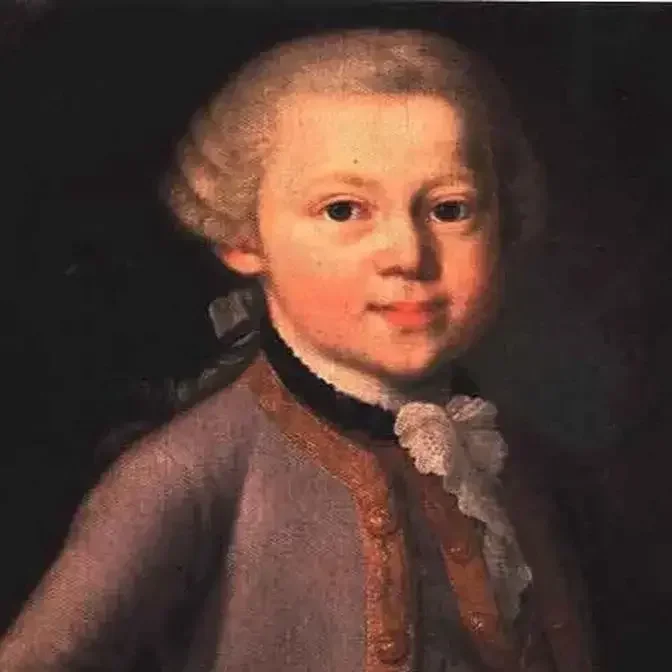
Franz Peter Schubert (31 January 1797 – 19 November 1828) was an Austrian composer of the late Classical and early Romantic eras. Despite his short lifetime, Schubert left behind a vast oeuvre, including 600 secular vocal works (mainly Lieder), seven complete symphonies, sacred music, operas, incidental music and a large body of piano and chamber music. The Piano Quintet in A major, D. 667 (Trout Quintet), the Symphony No. 8, D. 759 (Unfinished Symphony), the three last piano sonatas, D. 958-960, and his song cycles Die schöne Müllerin and Winterreise are some of his most important works.
Please support my channel:
https://ko-fi.com/bartjebartmans
Uploaded with special permission by Producer/Editor Peter Watchorn
https://www.musicaomnia.org
Quintet in A major for piano, violin, viola, cello and bass
“The Trout” Op. 114 (D.667)
Dedication: Sylvester Paumgartner
1. Allegro vivace (0:00)
2. Andante (13:46)
3. Scherzo (Presto) (20:55)
4. Die Forelle op. 32 (D. 550) (25:52)
4a. Thema "Die Forelle" (Andantino) & six variations (28:11)
5. Finale (Allegro giusto) (36:22)
The Atlantis Ensemble:
Jaap Schröder (violin)
Peter Bucknell (viola)
Enid Sutherland (cello)
Anne Trout (bass)
Penelope Crawford
(fortepiano – Conrad Graf, Wien, 1835)
Max van Egmond (baritone) (4)
Details by Susan Youens
Vogl and Schubert stayed at the home of a wealthy, enthusiastic amateur cellist named Sylvester Paumgartner, who promptly commissioned a quintet from his guest. For the commission, Schubert took as his model Johann Nepomuk Hummel’s (1778-1837) Quintet in E-flat, op. 87,
likewise scored for the unusual ensemble of fortepiano, violin, viola, cello, and double bass, and fashioned a fourth movement in the form of a theme-andvariations set based on “Die Forelle,” a song that, according to legend, Paumgartner especially liked. The resulting work in five moments has been described as the epitome of Biedermeier Hausmusik, a composition intended for domestic music-making (but the members
of the household had better be accomplished performers), a piece from the sunny side of life. Certainly hearing it raises spirits right away, but whatever its genial surfaces, Schubert’s ambition is evident even before he decided in the 1820s to challenge Beethoven on his older contemporary’s turf of large-scale instrumental composition. In every movement except the third-movement Scherzo, Schubert devises sextuplet figures that do not duplicate the famous “trout” figuration from the song—until the final
variation of the theme-and-variations set—but subtly link one movement to
another.
Mrs. Crawford plays Conrad Graf ’s Grand Piano, Opus 2148
The grand piano was found in Sweden by Edward Swenson of Trumansburg, NY, who, with the help of his colleague Robert Murphy, spent two years restoring it. The beauty of the cabinet work and the extensive gilded brass decoration suggest that the instrument may have been made for a noble family. Although unplayable at the time of its discovery, the instrument still had most of its original strings, tuning pins, leather hammers, and dampers. The piano is triple-strung (three strings per hammer) throughout most of its six-and-a-halfoctave range. The case design and label suggest that the piano was built around 1835, toward the end of Graf's middle period of work, just before he won the gold medal in the first Austrian industrial products exhibition. (From December of 1835 on, the soundboards of his instruments bore printed and signed labels celebrating this triumph.) Most of Graf's piano of this period, Opus 2148 included, were equipped with four pedals: one to raise the dampers, one to shift the keyboard so that the hammers struck only one or two, rather than all three strings, and two “moderator” pedals, which placed a single or double strip of felt between the hammers and string, creating a soft and unusual timbre.
Edward E. Swenson
(Trumansburg, NY) #ClassicalMusic