

Mátyás Seiber - Permutations for Wind Quintet (1958)
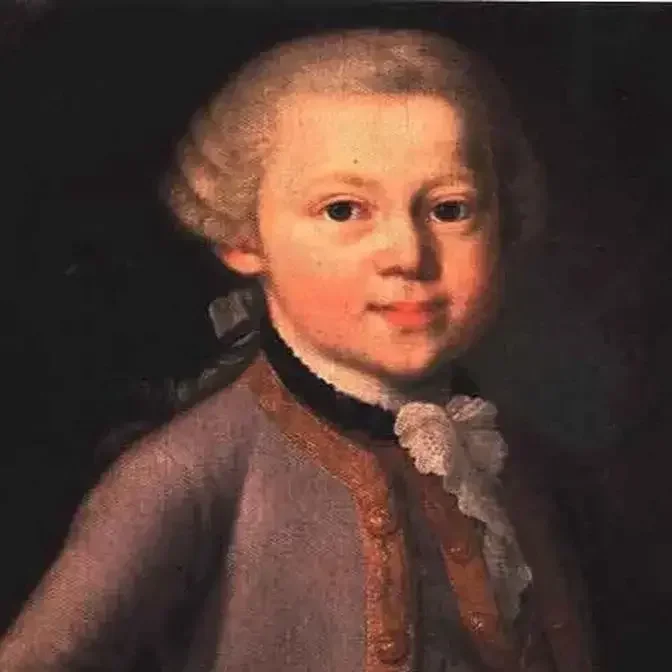
Mátyás György Seiber (sometimes given as Matthis Seyber; 4 May 1905 – 24 September 1960) was a Hungarian-born British composer who lived and worked in the United Kingdom from 1935 onwards. His work linked many diverse musical influences, from the Hungarian tradition of Bartók and Kodály, to Schoenberg and serial music, to jazz, folk song, and lighter music.
Please support my channel:
https://ko-fi.com/bartjebartmans
Permutazioni a Cinque (1958) for flute, oboe, clarinet, bassoon, horn
Commissioned by Virtuoso Chamber Ensemble
The London Wind Quintet
Gareth Morris, flute; Sidney Sutcliffe, oboe; Bernard Walton, clarinet; Alan Civil, horn; Gwydion Brooke, bassoon.
Mátyás Seiber’s Permutazioni per Cinque (1958) for flute, oboe, clarinet, bassoon, and horn is a striking stylistic departure from his earlier, more intense works such as the Third String Quartet. It shifts from a “post-Bergian” seriousness to a “post-Webernian” lightness, embracing a divertimento character with bright colors, rhythmic bounce, and a playful giocoso mood.
The piece is often seen as a turning point in Seiber’s career. While he maintained his polyglot versatility, Permutazioni shows a move away from the dense, expressive textures of his earlier years toward the brevity of motifs and the “dialogue of sound and silence” characteristic of Webern’s late style. This approach recalls the 1950s “post-Webern” era, where composers explored concise, highly structured musical ideas.
Motivic brevity: All principal motifs are short and repeated, creating a sense of rhythmic play and textural variety.
Form: The work avoids the large-scale, quasi-symphonic forms of earlier works, instead employing a more compact, quasi-Stravinskian approach to structure.
Instrumentation: The wind quintet allows for clear articulation and color contrasts, supporting the work’s light, rhythmic character.
Rhythm and articulation: The “chirpy rhythmic bounce” suggests a focus on articulation and rhythmic vitality, with frequent dynamic contrasts and sudden silences.
Scholars note that Permutazioni reflects Seiber’s engagement with the younger generation’s compositional innovations, particularly Webern’s economy of material. However, Seiber reinterprets these ideas through his own voice, avoiding mere imitation www.n-ism.org. This work may have foreshadowed further developments had Seiber lived longer, as suggested by Hugh Wood.
For Seiber, even a small-scale divertimento was treated with full compositional care. Permutazioni per Cinque thus stands as both a stylistic experiment and a reflection of his adaptability, showing how he could absorb contemporary trends while retaining his distinctive voice.