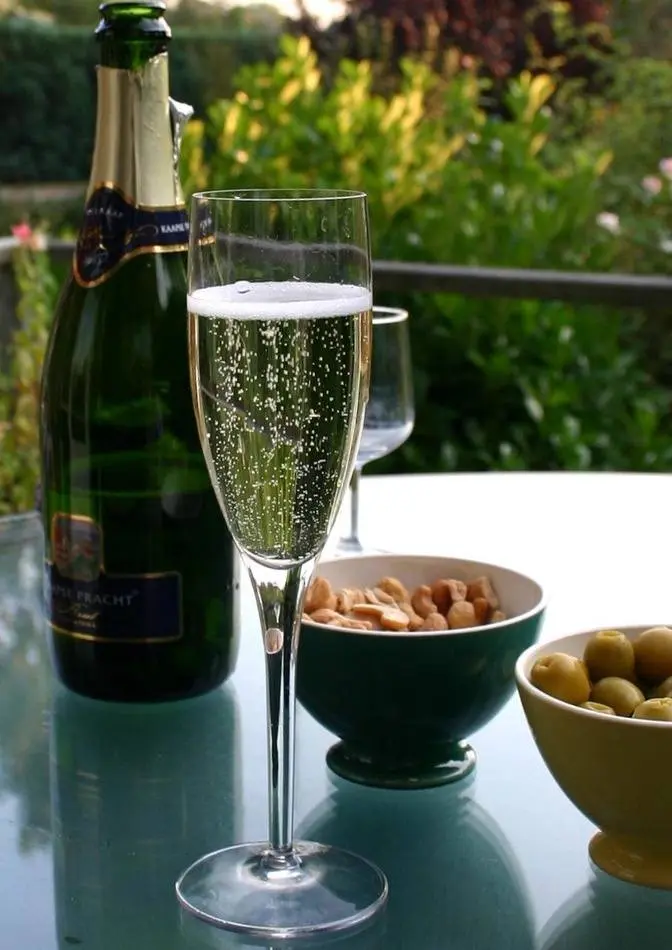
I think one of my big mistakes in life was to teach my son-in-law about Champagne and Sparkling wine. My depletion rate has doubled.
The intrigue for me to speak with Arnaud Werrich is hard to describe. I am fascinated with wine of course, but immigration as well. Who would pick their lives up to move to a new country to start a new career. I am jealous of this type of courage.
Arnaud isn’t just another winemaker crossing the ocean, chasing the “California dream.” He’s a scientist thrust into a world where centuries-old French mastery collides with New World rebellion—a tension that simmers in every bottle he produces. Does the Anderson Valley’s wild, fog-kissed landscape really have what it takes to rival Champagne, or is it a daring gamble that only nostalgia and romance can prop up? As Arnaud tells it, French tradition can be both an anchor and a shackle: the rules are clear back home, but on California soil, the future is written by those brave enough to experiment.
You’ll hear the friction between luxury and authenticity, the old guard of family-driven wineries and the crushing volume of global brands. Sparkling wine, once accessible and communal, now competes in a market distracted by fleeting trends—wine in a can, non-alcoholic fizz, and tourism feeding on lavish lifestyles rather than love of the land. Even the climate itself has become an antagonist, pushing vineyards toward crisis and innovation as Mother Nature rewrites the script.
This episode bubbles over with questions that demand answers.
Can a wine made in California truly capture the soul and mystique of Champagne, or will it always be an imitation in the eyes of the world?
As climate change creeps into every corner of the vineyard, how far can tradition stretch before something essential is lost?
Is luxury in wine defined by legacy, price, or the promise of sustainability—and who decides?
Will the next generation fall in love with wine, or abandon it for the next flash-in-the-pan beverage trend?
In a culture obsessed with exclusivity, can camaraderie and genuine connection survive, or is the wine table destined to become just another status symbol?
Listen in to follow every unresolved tension as Arnaud uncorks the answers—one story, one glass at a time.
Arnaud, General Manager of Roederer Estate, discusses the establishment and evolution of the winery in California's Anderson Valley. The conversation covers the technical requirements for sparkling wine, the challenges of climate change, the shift toward sustainable luxury for younger generations, and the contrast between the approachable nature of Anderson Valley and the commercialization of Napa Valley.
Champagne as a whole, I mean, sparkling wine, there's something less intimidating than for
example red wines where you have to know your appellation, you have to know more your chateaus
or your terroir, versus champagne has a little bit of that feeling of like
it is a fun product, right? I don't have to know all about it, but what I like is the look of the
bottle. I just like the sound of holding the bottle. I like the fact of enjoying it with friends
Sit back and grab a glass. It's Wine Talks with Paul Kay.
Hey, welcome to Wine Talks with Paul Kay and we are in studio today in beautiful Southern
California having a conversation with Arnaud, I'm going to say it, I'm going to say it, which way
should I say it? The German way, the French way? The English way, that's way easier to remember.
Are you the director of the Rotor Estate in Anderson Valley, is that what you call it?
I would not call myself the director, but no general manager, I'm the GM.
It's interesting because in France it would have been the director, but in America we have
different nomenclature for different positions, but like somebody in France that runs the entire
winery, overlooks the winemaking, overlooks the administration. So in Champagne you have that
very specific title, it's called Chef de Cave, which is the master of the cellar, which is very
Champagne in its meaning. You're really in charge of everything that happens in the winery, but also
sometimes it expands into the vineyard. So that's very much the style of the house of Louis Rodere
and Rodere in general. The Chef de Cave has that master control over everything. Is that where you
started? Actually I did not start in Champagne, I'm an alumni of the same school as Jean-Baptiste
Le Cayon and also Jean-Claude Roseau also went to Montpellier, so that's the connection.
My predecessor at Rotor Estate was also an alumni of that school and was a professor, so
he would always take interns from that school, kind of give a chance to the younger generation
to start in the business. And I was one of those interns, taking my backpack and going to
California to discover the wine world in 1993. I made my first steps into the Anderson Valley
in California, so that's how I got started. I find that personally really fascinating,
because I've had a lot of French winemakers on the show, you know, Monsieur Guillaume from
Tétangé, he's up in Willamette Valley, you know, it's just to have the French culture,
to grow up in the French culture, Alsatian culture in your case, and come to America,
and then spend a lifetime here making wine, I find that a fascinating transition. Was that
hard for you to do, or it was sort of an explorative thing in the beginning, or you
knew you were coming here to make wine? No, quite frankly I didn't know I was going to stay. I
had to come back to France, just because for usual, you need to get your paperwork straight,
so it's not always as easy as that. Yeah, we don't want you here unless you're legit, okay.
So in 93, I was supposed to stay just another six months, and then take an internship and then go
back. I was supposed to go to Germany after that. I used to speak German, which I don't anymore.
Now I speak Spanish, so I had to learn. But the short story is like, yeah, it was supposed to be
a short discovery of California in 93. If you remember, in the late 80s, the phylloxera crisis
was taking a foothold in Napa, and basically the vineyards were starting to fail. The reason was,
the phylloxera was actually spreading across those vineyards. When I came in 93, it was part of my
background, it's like my viticulture background, from my Master of Science. It's like, okay,
as an intern, let's go out in the vineyard and try to find if we have phylloxera in the vineyard.
And that's how it got started, because I found that we had phylloxera in the vineyard, and we
had to start a whole plan on how to mitigate the spread of the phylloxera and start replanting.
So my six-month internship ended up a two-year internship. It got expanded until I had to make
a choice to either stay or leave. So you didn't come here to make wine then, you came here
as a Master of Science student to help with understanding phylloxera and the vineyard
disease? Yeah, exactly. So it was really to discover the world. In the 90s, obviously,
the new world had already been discovered. There was a lot of wineries that moved to the
gold rush of the winemaking to California. That's over.
Yeah, that's over, exactly. But back in the 90s, it was still happening. So I think it was
discovering, having that open-mindedness to discover what was happening outside of France.
I think that was my... And that's kind of the intrigue for me. My father's an immigrant,
came from Cairo, seeking a different life, fleeing not oppression, but fleeing a difficult
political situation. Culturally, it's so different. I found this with many of the
representatives that sold me wine over the years that were from France, particularly the women that
were leaving to find something new to do and to escape, I think, not the patriarch society,
but to escape the embedded society, the stoic, we're here, this is our history, this is who we
are, to come to really what would be new world. Even today, America has this sort of mystique
about its newness. I think I took the opportunity. So I left in 1995, went back to France and worked
for a totally different company for five years, but I kept the connection with the family. So
Jean-Claude Rousseau and I were exchanging our usual New Year's Christmas cards. Hey,
Jean-Claude, how are you? Best wishes for the New Year. And one year he replied to me,
thanks for your best wishes. By the way, what are you doing right now? And I was like, well,
I'm doing this. And quite frankly, I would like to maybe move on or go back to the winemaking.
And that's when he said, well, your predecessor, Michel Salle, he's actually trying to
retire from being the salamaster, no, sorry, the chef de cave at the winemaker at
Horloyd Estates. Would you be interested at applying for the job? And I say, yes, I'm going
to do that. And I came back in 2000. And the opportunity was, I was in my thirties and I don't
think I would ever add a such an opportunity in Champagne to take over the reign of something
as large, as interesting as taking over Horloyd Estates. Because in your thirties in France,
you're still considered as like, you have not made enough proof.
But this is California, this is America. And then I said, it was a startup. It was a startup that
really created from scratch in California. So there's also the very bold, interesting startup
feeling mentalities. Like you needed somebody that was willing, wanted, and did that energy
and would work together in the nineties on that phylloxera crisis. So I was not totally
an unknown person to him either. I correct myself. It was Monsieur Guam is with Louis Jadot,
up in the Walnut Valley, but why the Anderson Valley? I frankly have never been to the Anderson
Valley to taste wine as part of my career. I don't know why, and I need now having this
conversation, we'll come and see you. But what is it about the Anderson Valley? Is it,
we mentioned early off camera that it doesn't have limestone. So it's not a Champagne clone,
but there makes sparkling wine. Stromsberg is famous for going to China in 1968 with Richard
Nixon, sparkling wine from Napa Valley. What is it about the Anderson Valley that was so
attractive to the French to do this? So, Paul, you officially invited to come to the Anderson
Valley. That's the end of the podcast. Thank you. It's officially, it's on camera. So,
no, the reason there was multiple reasons of why, you know, they picked the Anderson Valley.
First of all, in fact, except if you go in the central coast, there's not really a lot of
limestone in California. If you want to establish a vineyard, that would be similar. But what the
family was trying to do is trying to find something where you could get something as
close as Champagne as possible in terms of how you get to the wine itself. So if you look at
what Champagne is about, it's, you know, it's inland, it's far away from the ocean. But it's,
you know, it's a 46 north latitude and Anderson Valley is 39. So how does that work? It's because
you're close to the Pacific Ocean. So north coast of California, Mendocino County, Anderson Valley
is within the Mendocino County. The ocean is pretty cold. So that fog, there's that marine
air that comes in every day, cools down the grapes. And there's, I think there's one number
that caught Jean-Claude's eyes that the average yearly temperature in the Anderson Valley is about
53 Fahrenheit versus Champagne is about 51 Fahrenheit. And those numbers date from about 30
years ago. So it's a global warming. I'm pretty sure all of those numbers crept up a little bit.
So it means you were, yes, Anderson Valley is a tad warmer than Champagne, but it's cool enough
that you can get that ripening length that Pinot Noir and Chardonnay actually, you know,
can thrive to, to make a nice crisp acid driven base wine from which you can make, you know, a
metal Champagnois, you know, sparkling wine. And I think that's, that's what they wanted to do.
And back then, so that was in the eighties, there were a couple of wineries already established,
namely. But it could only have been a couple. I mean, right. But he tasted wine from them and
actually liked the style. He said like, this is something that I like as a style. So now our
vineyards had been making wine since the seventies in the Anderson Valley. And he happened to taste
some of the wine they made and said like, well, if they can do this very likely, then we'll be
able to grow the grapes to make something that would work for sparkling wine. You know, that's
interesting because up until maybe, I don't know, maybe it was the nineties, maybe it was the early
2000. I mean, wine still had the best boutique feel about it. Of course, there were the gallows
around and the large houses still, but there was still this uniqueness. Certainly the judgment of
Paris had a lot to do with that of, of wine clearly in the Anderson Valley in the seventies,
eighties, nineties, even two thousands, it was driven by the boutique houses for the passion
about wine, not to try and make as much as possible and sell for as cheap as possible.
It still feels like that there. And is that part of the Rotor's attraction to the area? That's
still that, um, let's say hometown, but boutique champagne house.
So there's a very hippie feel to the Anderson Valley and Minnesota County and Jean-Claude was
definitely not a hippie, but a French hippie. I don't know. I would not describe him that way,
but no, he, he had a bold vision, maybe a little rebellious. Yeah. And, and he didn't mind going
to the Anderson Valley because mainstream, all the wineries went to Napa because it felt
established and known. And I don't think he wanted to do something the same as the others. Anderson
Valley felt a departure. And he told me, and I think he must have said that to other people as
well. It's like, if he had done it for the money, he would have, he should have chosen Napa. But
because of the quality of the product, he really thinks he made the right choice to go to Anderson
Valley because it was difficult at first. It was a not very known appellation. In fact, when he
bought the land in 1982, Anderson Valley didn't exist as a Navy. It got actually established as
a Navy in 1983. So the year, the year later. Um, so he, he really believed that he made the right
choice for the quality of what could be made in the place. So he didn't make it for the money,
even though at some point, you know, he must have a scratch. He says like, why did I do this?
Well, of course it takes time. It was a real startup feeling. There was really no starting
something from scratch and really establishing it. It took some time. It took 10 years to really
establish Rotary State as a, you know, the new kid on the block that knows how to make, you know,
method Champenoise, you know, in a, in a, in a fantastic way from the Anderson Valley.
I would think that anybody that got into the wine business then and soon after is scratching their
head today as to why they did this unless they got this established brand going on. Let's go
back for a little bit. I want, I want, I want to set the stage for the listeners a little bit
because my father, you know, there he is in the picture there was always talked about the romance
of the French culture and the French wine. He spoke French, um, and Champagne, the district
seems to be able to grab this romanticism, romanticism about wine, despite the volumes.
In other words, we're going to talk about it now. Um, I was looking at, uh, a list of
Champagne makers and the volumes of wine they make, and it was by supplier. So it was, it wasn't as
granular as necessarily the house, but I mean, let's, let's put on the table. You've got something
like Veuve Clicquot, which is, there's the book there, Madam T. Larmazio's book. It's an interesting
story, 25 million bottles. But from the branding standpoint, something like that, people just think
this is, I'm drinking Champagne. I'm drinking the concept of Champagne, not the dream, right? Yeah.
The dream of Champagne, but in reality is Rotor Estate, Tétangé, um, uh, you know, some of the
other smaller houses in that, that small, but there's, there's certainly family driven and
more boutiques. How does that happen? Do we know how do you combat that? How do you look at a
Rotor Estate from Anderson Valley and say, look, we've got it also. And it's a little more romantic.
The that's the I'm French. So I'm, I'm, I'm so amazed at how they were able to create Champagne
as such a powerful brand. And it's the work of generations of wineries and winemakers.
Of, of the, the fantastic marketing at creating that dream about the brand, um,
as a luxury product that must have. So it's extremely powerful. It, it, it, it vehicles
the idea that, you know, if you want to have something exceptional on a fantastic day of your
life, your wedding, your anniversary, something like that, it has to be Champagne. And it worked
because now in the imaginary of people, this is what you must have. So in, in, in my humble way,
no, I am making a sparkling wine, so not Champagne. I'm not in the region of Champagne,
but I'm using all of the tools of the trade that would be like, it looks like Champagne,
feels like Champagne, but it is a sparkling wine from California.
But you're, you're fighting, you're, you're up against them with the L'Hermitage, which
you have a hundred points, which is unbelievable wine. And we discussed it when we were tasting
the wines just now, which is I sent the structure of the wine and that's all the wines I've tasted
a hundred thousand wines. It was kind of where I figured out where my palate is,
is the, how things are structured is less about the flavors, but more about how that
feels in your mouth and the transitions. It was very much French.
Yes.
So the terroir is very much.
And this is a virtue, our DNA, we're owned by a French family.
Yeah.
No, my predecessor and myself were both no French winemakers. So there is a little bit of that,
no touch that you want to bring as the understanding of how to make the wine.
And I might have said that also earlier is that the, when California and actually the way to make
the wine, how to select the lots of wine is to actually make it not too Californian. So that's
very interesting. I'm in California, I'm trying to make something not Californian. This is the
idea is like to make something very classic. There would be no traditional method in spirit,
in the making that if you were to taste blind, you would not be able to find if it's actually
from Champagne or not. And, and I think that was the point from the beginning,
it says rotor on the label. So that kind of the promise of you buying something from a known
label, a known family that embodies and shows a taste profile.
How much intervention or daily intervention, weekly, monthly,
does the French counterpart have with?
No, it's not daily, but we're in contact, you know, on a regular basis, you know,
my predecessor, myself, you know, with the winemaking team at, at Rotor. Why? Because
again, it says Rotor on the label. So we have to, to be held to the standard of what the Rotor
family expects, you know, of, of, of wine. So Jean-Baptiste, the chef de cave, you know,
comes in once or twice a year, we taste together. I call that, you know, my, my annual booster shot
of, of the house style, right? Because it's, you know, if you're in Champagne,
That would make sense.
Everybody around you, you know, dreams, you know, thinks, speaks Champagne all the time,
because Champagne is a very large region. If you're near Sun Valley, basically you're,
you're very few people around you that actually, you know, are in the same,
you know, project of making, you know, sparkling wine.
You know, that's a very compelling part of what we do is that camaraderie,
the exchange from what we get to have these conversations like we are right now.
And I try to use this podcast to invite people into that feeling because I was thinking about
yesterday about the consumer wines, consumer driven without the consumer, we have nothing.
And so we have to market, then we have to brand, and you've got $25 million of
nuclear coal coming, you know, being manufactured, but it's not to take away from the idea that this
is a wonderful trade. And you as a consumer can digest as much as you want.
You can decide that you want to learn about nuclear coal and go there, you can decide
you're going to go up to Anderson Valley and taste wine at Rotor Estate, or you can just say,
I really like this and leave it at that. Right. And I want people to feel what you feel.
I think champagne as a whole, I mean, sparkling wine, there's something less intimidating than,
for example, red wines where you have to know your appellation, you have to know more your chateaus
and all your terroirs versus champagne has a little bit of that feeling of like,
it is a fun product, right? I don't have to know all about it. But what I like is the look of the
bottle. I just like the sound of holding the bottle. I like the fact of enjoying it with
friends because you said camaraderie exchange. Sometimes I say the best food pairing you can
have with a bottle of sparkling wine and champagne is friends. Just bring friends over and have a
bottle with them. That's a good way to exchange a good bottle of wine. Do you think we should
drink champagne every day? I would think so. Maybe the Surgeon General would not accept that
marking on the back of the label. Let's go to the practicality of it all. Champagne
has suffered in this last few years with consumption, the alcohol trade in general,
wine is down. I've talked to restauranteurs here in Los Angeles, some of their bottle sales are off
50%. How is the region, A, is that affecting Anderson Valley, the Rotary's brand, and then
how is the region dealing with this? Overall, nobody's spared by that move of the healthy move,
which I totally agree and I would think I'm part of it. We all pay attention to what we
eat and drink every day. Obviously, we are impacted, our sales are down.
This is not a product with a high percent of alcohol in the wine. I always try to promote
this is not alcohol first, this is wine first. The French way to do it is you have a bottle of
wine at the table, so you're having a meal, lunch or dinner with wine. It's part of having bread
at the table. This is not something you just drink by yourself or by itself. I always try to
talk about it that way. It's not about the alcohol. Yes, there's alcohol, but it's the acidity,
all of the other components that make the wine a fantastic food pairing companion.
I wonder if that's the reason. My romantic opinion of wine is never going away. Of course,
it's been around thousands and thousands of years. It has ebbs and flows. There's always some kind of
contemporary marketing, there's packaging, there's bottles in chambers, sparkling
strawberry wine. All kinds of different things have come and gone. I've had people sit in the
chair you're sitting at purporting to put wine in a pouch. That just certainly takes away from
the concept of what wine should be and is, which is your definition of what you just said. It's
always on the table, it's always part of the meal, it's part of the culture of living.
And I think if wine is too intimidating, you might cut yourself off from the next generation
that would want to dab into drinking wine, but they can't because they don't have the knowledge.
And then suddenly, you know, you cut yourself off from them. So if there's a way to make the
wine approachable, interesting, fun, not intimidating. Put bubbles in it and serve it
at an anniversary. Obviously, there's something that you don't want to do. Sparkling wine in a
pouch would definitely not work. But if you can have a small format, have bottles, have something
that's kind of fun, it's kind of cute. And then if people can try it because there's the cuteness
effect and then they end up trying wine and feeling that actually it's good and then they
enjoy it, then that's the consumer, how you get them to stick around and keep drinking wine.
Can you imagine I had a, and this is a true story, not that long ago, maybe it was a year ago,
I tasted a method Champagnois in a can.
Yeah, I mean, it's very possible.
How do you do that? How do you just scourge a can?
You have to transfer. So it's like, you know, in Champagne, obviously,
I don't think it was, you know, Champagne, you can't do that, but you have to bottle and age
the wine in that bottle, but everywhere else in the world, you don't have that regulation. So you
can actually ferment in a bottle, so method Champagnois, and then you transfer.
Maybe she did that. I thought maybe she just left all the leaves and the stuff and it's floating
around in the can.
Yeah, I don't think you can, because you have to disgorge and I don't see how you could do it.
You, you, you ferment in the bottle magnum and then you, you, you transfer, you know,
from those bottles. And so it's method Champagnois sometime on the yeast, but it's in a can. So it's,
it's practical.
And I just don't find that attractive. Like I can't see my, maybe that goes back to your
definition where you're sitting at dinnertime with your family and you go, you know, that
doesn't really work in the grand scheme of things.
Maybe it's for pregame drinking, something like that.
You know, in the, in the 1700s, uh, the late 1700s, there was a 15 year, you know, cold
snap, right? There was a climate change and effectively climate change. How is the industry
dealing with that in Champagne? I know it's affecting it there. I know how much it affects
you in Anderson Valley, but, uh, cause California doesn't seem to have been affected as much
as the European vineyards, but do we see this as just part of that cycle or are we preparing
ourselves for a larger, longer change in the climate?
So I have only a, I would say a 30 year view of what's happening. But in 30 years, I've
seen some changes, you know, I've seen that the Anderson Valley has a little less fog.
So the, what used to be the, the fog, you know, kind of cooling down things, slowing
down that maturity. And it's only, you can pick and you have enough time to pick your
fruits within those three, four weeks, because fog helps you to mitigate that, you know,
California sunshine. And what some years, you know, that fog is, you know, is missing
or not every day. And then, you know, well, and then suddenly that harvest becomes like
a race, you know, to, uh, to pick as fast as you can before you get to know too much
ripeness. And I see that, you know, happening in California, you were talking about the
first events, you know, that's the beauty of the new world. The new world established
itself on new land and land was inexpensive. So you could actually have enough space for
other things than just the vineyards. So the intensity of the vineyard planting allowed
to also have like reservoirs to store water, places we can put pumping stations. So if
you could do this, you know, most of California has those systems where you can actually frost
protect by sprinklers, uh, which is the most effective way to, to protect yourself against
frost. But if you go some places like Burgundy of Champagne, the intensity of the vineyard
is, is massive. So depilation is covered a hundred percent. Wherever you can plant a
vineyard, actually grow something of quality, it's planted. So there's not much more space
for this infrastructure, which is piping, pumping, and storage of water. And I think
now you see that, you know, the effect of it can be important because if you don't have
a way to mitigate those frost events, you know, you don't have the space to do this.
You're limited to just, you know, wind fans or, or those, you know, called the, the bougie,
you know, the, those, the warming, those.
But I'm wondering like how, my, my personal opinion is this is just part of the earth
cycle and we're going to go to a cold, you know, freeze at some point, you know, it's
just going to change. But let's say that's not the case, you know, the resistance, certainly
in Burgundy, you know, we're not going to try to grow other grapes and in Bordeaux,
they're trying some other grapes, but I can't see, you know, Tariqa Nassi now inside a bottle
of feed. Right. And so when's it going to, if it, if it does snap, when it was like,
oh my goodness, we need to make some dramatic changes, which leads to this concept, which
is you've been there 30 years. I've heard, you know, I'll just say, we can't, we won't
even know what a region can do for a hundred years based on the, you know, the infinite
number of combinations of weather and soil changes.
So you have ways in vineyard management, you know, and that's, that's my background. You
have ways to, between now and the next 50 years, the next cycle, we're going to have
to replant your vineyard because it's going to be a cycle. Your next replanting, this
is when you will scratch your head. It's like, okay, am I now ready to switch varietals?
In between you can mitigate some of the issue. And then it's a lot about canopy management.
Canopy management is creating shading or creating air movements, getting cooler,
wetter than you need more air movement. Otherwise we might develop so much rot that you will
never able to get, you know, any, any, any grapes in anymore, or no, you want to protect
yourself from sunburn. And it's something, for example, that's been fairly typical in
California, there's sunshine in California. So protecting ourselves from sunburn was something
that we had to do. And Champagne is somewhat learning it. It happened basically two years
ago that, you know, there was, you can have a heat wave, you know, and maybe it has going
to happen this year as well. It's pretty hot right now in Europe. So you have to mitigate
those events by doing some canopy management that would be typical of California. Now you
have to basically stop those same concepts in Champagne as well, creating enough shading
so that when a heat, you know, comes, you actually protect your grapes from that sunburn.
Sounds like maybe the French learned something from the California lifestyle here.
Right. So Jean-Baptiste, the chef de cave at Louis-Renard, by the fact of coming and
visiting and has been involved for the same, you know, over 30 years with the estate in
California, you know, has, I'm pretty sure, learned and seen things that we had to do
in the California climate that can give him ideas of what it could be possible to do in
Champagne as, as a way to mitigate what's going on, on, on some of those years.
Shifting gears a little bit. I had a gentleman sitting there named Zaya Yunan, who's now,
he's not going to take on LVMH, but he wants to create a luxury brand of everything. Cigars,
whiskey, wine, Champagne. He's just got this fascination. As an immigrant at 13 years old,
he came from Iran and he fled. I mean, literally fled and now has attracted to,
with his wealth to this idea of a luxury brand. And certainly Champagne was always considered
a luxury brand, even though I don't necessarily agree it needs to be, but you know, luxury right
now doesn't seem to be in the forefront of the generation. Gen Zs, they don't seem to be part
of it. My daughter and my son-in-law think that they're entitled to luxury brands like Champagne.
I told you that earlier, I taught them how to drink Champagne and now I'm just, I'm suffering
greatly from my, my inventory. But does the industry see luxury as being threatened right
now by some of these generations? But, and on the flip side of that comment is, I mean,
Chanel just bought a winery in Napa. So there seems to be some investment in the luxury brands
into wine and Champagne right now. Yeah. I would hope, and we are working towards it,
that basically the ultimate luxury would be that the products by itself has that zero impact.
It's so luxurious that basically you're trying everything around it to make, to make that
product to be non-impactful because of the choice of the technique, the technology,
the recycling or something like that. So, and obviously that would justify the higher price
because you actually, that is a, it would be like, you know, fully, fully circular type of, you know,
of system. So that would be my hopes and expectation. We're doing some of that at the
winery. You're going to lightweight bottles, you're trying to use material that you can recycle.
You know, we use labels, foils, you know, boxes, all of, all of these, you can make choices where
they're sourced from, where they're coming from. And then maybe I diverge a little bit on the,
on the part of the luxury, but I think this is maybe the expectation from the,
from the next generation. I am a hundred percent solar, so I'm, I'm a hundred percent solar since
last year that, you know, my, my impact would be zero on the term of, of, of energy. So.
I love that. I didn't think of that before, but what if luxury meant that?
That would be fantastic. And I think that would help the new generation basically embrace the
luxurious way of life, which would mean it's a, it's a, it's a zero impact. So obviously maybe
it's a pipe dream, but. No, I think that's a really interesting concept. I never thought
of that before because we went to the fancy food show in Las in Vegas a couple of years ago. We
used to go every year when we sold things and you know, the preeminent beverage theme was non-alk,
non-alk distilled spirits, non-alk wine, non-alk sparkler, non-alk Prosecco. I mean,
and they're terrible. You can't drink them. And there's, I don't think, I don't think there's any
way to make them drinkable, you know, from a technical standpoint, you can't take the alcohol
out and put it back water. And they're coming with new methods of de-alkalization and it's just,
I don't get the point of it. You know, if you want to drink a sparkling wine and have a soda
water with something, you know, instead of trying to fake it, but maybe in that, that might be a
nouveau thing to do for a generation. But what if that nouveau thing to do was to drink something
sustainable or drink something that's zero carbon footprint or whatever the definition of luxury
becomes, maybe even in the clothesline, et cetera, you know, when it comes to clothes,
do you think that our industry spends too much time thinking, talking to itself and not talking
to the consumer? Like you're out now on this trip, you're, you're seeing consumers, you're
doing dinners and things. Yeah. Yeah, absolutely. No, I'm, I'm in, in LA, you know, obviously visiting
long-time customers and discovering new and new customers. So it's always that nice exchange of,
about the wine and, and the expectation. And then you see that, you know, days you have everything
from a knowledge that's really high, that's, you know, of everything to the new consumer or new,
that doesn't know much about, you know, the product, you know, itself. So you have that,
you know, discussion that can span, you know, basically the whole array of, of the winemaking
from like, okay, this is winemaking 101 to, to like very specific questions. And at the end,
you know, it's all about, you know, why am I buying this? Why would I enjoy that product?
Because it actually is a very nice compliment to some kind of food. Because again, we were talking
about it earlier, you know, why, why do you have restaurants? Because you want to go and enjoy the
ambiance or the, or because you have with friends or with no, no, your girlfriend, your dates,
your future wife, you know, you know, your, your kids. And if this is an exchange time,
wine is part of it. So again, not making intimidating, but many more of a way of,
of exchanging. And then the wine, sometimes it's a discussion points. Like you, people have been
talking about wine. We are talking about wine. Yeah. People have written about wine. People
in the Romans, the Greeks have written poems about wine and how great it is. So the exchange,
you know, about it has been all going on. So maybe we don't want to talk about sports,
but what about talking about wine as a way to break, you know, break the ice?
That's a good way to put it because the irony of wine, and we've talked about this,
you've talked a little bit, the, the intimidation of wine and the conversation about
terroir and grapes and different appellations of the world does intimidate people. It is
intimidating, but almost invariably, whether I'm with friends who drink consumptions of wine,
you know, have a cellar, maybe two complete novices. It does always come around wine and
it's not intimidating at that point. It is just a conversation that people want to know.
They just don't want to be pressured into knowing, but my dinner time conversations
almost always involve a conversation about wine, whether it's with a rookie novice wine drinker or
an experienced one. And then you said something that just triggered a thought, which is so
elementary, but it's so real that there's always novices always, always, always the cycle of
humanity will always create somebody new that we need to speak to.
Right. And so it's, it's a continuous education. And to that point, that's part of my visits,
kind of educating, educating about who you are as a brand, educating about what the wine is about.
It's method Chabonois, method Chabonois is difficult. It's like, well, how do you do this?
Well, how did it come to that? You have pressure in that bottle. How do you do this? So the,
even the concept, the, the, the mechanics, the physics of it is kind of exciting. So you,
sometimes people like it for the technical, the technical prowess of doing it. And sometimes just
like, it tastes really good. Let's have a glass together. I think that's a interesting point.
And I, I think that the consumption, I'm looking at some of these questions here, but
there's a friend, a very good friend of mine makes sparkling wine in Armenia.
And his name is like the scare. And I think he's one of the most brilliant winemakers in the world.
And he's been all over the world, making wine. And he, he went home to his homeland. He was,
wasn't born in Armenia, born in Syria, but he makes, and it's kind of interesting. He went there
and decided he was gonna make sparkling wine, which would be insane to go to a region.
No, one's heard of where most of the grapes no one's ever heard of entirely. And then felt like
he needed to create champagne from penal, orange, Chardonnay and Pinot Meunier. And he planted
them and realized that, you know, I don't really need to do that. I should probably make sparkling
wine out of my own indigenous grapes. So now he makes sparkler out of Voskhot and Congo. No,
that's right. The reason I brought it up was they just had the Concours Mondial de Bruxelles
there, and it was an amazing spectacle. I missed it. Unfortunately, I wanted to go, but I couldn't
go. And here's this burgeoning region of the world, new Appalachian, new grapes, and people
from all over the wine world got to come to Yerevan, Armenia and experience the Armenian culture
and the wine, and of course, judge worldwide wines. And I'm wondering about this constant
evolution of Appalachians and places to go, things to see, the wine trade in general as a
tourism type thing. How is the tourism in Anderson Valley?
This is very much the defining factor of the Anderson Valley. It's a very rural part of
California. And what creates actually the wine business to be thriving over there is because
it's the corridor for people from the Bay Area to come to the coast, to Mendocino, Fort Bragg,
you know, and enjoy the beauty of the coast. So as they travel through the Anderson Valley,
they see the beauty of Anderson Valley, and they see the vineyards, and they see the wineries
dotting the road along there. So yes, it's that communion between, I think, the beauty of the
space. If you go around the world and you look at vineyards, it seems like the vineyards are always
located in pretty beautiful part of the world. Some steepness. Well, because in the old days,
the old timers, they would plant the flat land because this is where you could get the crop,
you could grow your food, wheat, barley, something like that. And whenever you would have
some steepness, rocky soil, what would grow there? Olive trees and grapes. So the less
rich part of the land would be dedicated to those other crops that could be hardy enough
to grow there as a use of the space. But if you look at it now, it's actually usually dramatic
spaces, landscape, and shape. And I think it's very appealing to people. So if you go do
vine tourism, you end up going to places that are actually gorgeous. I mean, you can go to
Germany and the Mosel Valley, like my God, or the Douro in Portugal. Look at how they have
amazingly created those terraces and those spaces to use such steepness and location.
You've seen 30 years is a huge career, particularly what you've seen in the trade
change, the dramatic change in 30 years. And one of them is tourism. Napa Valley,
when I tell people I'm going to Napa Valley, we're probably going to go in a couple of weeks.
It's really expensive. And you used to be able to taste wine for nominal fee, sometimes no fee.
And now just to walk in the winery is $85 to $100 to taste something. And then, of course,
you get discounted if you buy more. And the wine brands, if you and I start a winery in Napa
tomorrow together, we buy a vineyard, we can't sell it for less than $200 a bottle, $180 a bottle,
just to break even. Where's the Anderson Valley in that range? Is it sort of like Napa 20 years ago,
where you could go have a good time, it's reasonably priced, visit some wineries and
have a rural experience rather than this luxurious lifestyle experience?
Yeah. So the Anderson Valley, and maybe that was part of your very first questions,
why Jean-Claude and Roderick came to the Anderson Valley. Back then in the 80s,
the land was really cheap. So if you were creating something from scratch and you didn't want to
expose yourself to a financial burden, buying cheaper land was key.
Are the French cheap people? Let's say there's always the value you pay attention to. And I
think that's also part of the DNA of the family is they are very wise and they don't like to
overpay for things. So they can definitely buy something, but it's all about the value you get.
And I think that's why the family has been in business for 250 years. They've been
wise with their investments. So if I drive a hotels, availability, a reasonable price.
Yeah. So Anderson Valley is not very pricey. It has a little bit of that hippie feeling that
it's had for a long time and land is getting more expensive. It's California, unfortunately,
but no, it's not as expensive as Napa. And there's no big, five-star luxury hotel in
the Anderson Valley. You have nice family run like the Boonville Hotel or the Madrone's that
kind of like fun, but no good looking. So it's kind of like, you know, a visit, you know,
out of the beaten path of what, you know, the one world Napa Sonoma where, you know,
20, 30 years ago when it was more approachable and easier to get to and enjoy. So yeah. Anderson
Valley is, is kind of like different in feeling. You can't go to Napa without, if you want to stay
in a regular decent hotel, it's $7,800 a night. And then, like I said, the tastes are expensive.
Then forget the food. I mean, you go to Bouchon or French laundry or the press or any of these
fancy restaurants and you're out, you know, $200 a person. I find it unapproachable. Somebody told
me this, somebody chasing the lifestyle of Napa, a retired media president, you know, stumbled in
this idea, wanted to make wine. Now he's realizing it's business is really hard to do. And you've
come up with an angle, but he was saying that in Napa tourism is way down. If you talk to,
for instance, you know, one of the famed wineries, Gurgis Estates, Violet Gurgis will tell you our
tasting room traffic is off 30%. You know, that's a pretty big number. And they're saying it's
because no one's reacting to the tourism fall because the cost of labor is so high in California
that we'd rather run skeleton crews at 30% occupancy of the hotel than a full crew at 100%
occupancy. It's cheaper the other way. And so we keep our prices up so less people come. So then
now the taste room, so it's this whole pull through effect. And I, I really believe that
the wine business industry, and this is our last thought because we're out of time, needs to get
back to the experience of wine. Yes. If people don't, cannot travel and visit and experience the
place, you're cutting yourself off from your next generation of aficionado and consumers.
Right. You want to bring people. So Anderson Valley has actually, you know, a little state
park that's called Handywoods. You can come and just know, have, know, plant your tent or your
RV and you don't have to pay $300 a night in a hotel. If you want just experience the basic
discovery of what the Valley can do. So you have, I mean, I'm not saying that this is the magic,
you know, option, but you can go and just know, plant your tents, you know, in the local, you know,
campground or in state park and, and, and enjoy wine around. Well, I think that's the key, right?
You know, we want to relax. And then when we come home to our regular busy lives and we open a bottle
of L'Hermitage or Rotor State Anderson Valley, we remember that moment. Yes. That time that Arnaud
came out to the tasting room and sat with us and we tasted one. I'm going to ask you a question.
Since I have a French winemaker here, this is a book. This is our last thought. Dr. E.A. Murray,
this book from 1974, uh, wine is the best medicine. The original version was in French. I have a copy
of that, but I can't make head or tail of it. So I'm going to give you a human ailment and I'm
cure that element. Okay. And then you're going to, it's kind of like the master of wine test
in that it is a, um, it's more like the reason you chose, uh, the, the answer, not necessarily,
uh, the end, the right answer. Right. Okay. So here's the question. If you had coronary disease,
you could have a burgundy, a dry champagne or a young Beaujolais to help your coronary troubles.
And there's also a dosage when it comes to this. Now, nobody gets this. Nobody ever gets it right
past the fact that I gave you three choices. You have a 33% chance of getting it right. That's the
average accuracy in this. So what would you have burgundy, dry champagne, or young Beaujolais
to cure your coronary troubles? All right. So I am biased. I'm going to go for champagne,
but I'm highly biased. Well, you're right. But the question is why? Oh, the why?
For me, I'm feeling this as obviously champagne by design as, you know, low alcohol.
But you're a scientist by trade sort of, right? There's a scientific reason. There's a chemical
reason. Right. Carbon dioxide. No, it's kind of, you know, as a way also to basically, you know,
refresh yourself, refresh, you know, some of that carbon dioxide goes, you know,
into the bloodstream. So you know, through the calcium carbonate, I'm pretty sure that,
you know, you must not create in your blood and something like that. So that,
and how much did you have? What's the dosage? Oh, the dosage. Um, a doctor can have it every day.
Dr. Arnaud says, well, the answer according to Dr. Murray is that you should have two
glasses before a meal. So that's effectively a bottle a day almost. And the reason is the
which consequently, um, strengthens the cardiac systole and thus consequently affect better
oxygenation of the heart. All right. But you were right. So that's, you were a part of that 33%.
I passed the test, but no, it feels like, you know, sparkling wine is a, is a,
just for the acidity of it. And I think, you know, it's something that always I would,
I would tell people just have a glass of wine before a meal because the acidity of the wine
makes actually yourself, your stomach ready for, to enjoy the next, the next dish.
It's kind of like, it's true. It's kind of like creates where you can see that by the cleanser,
you can see, you can see your stomach and like being ready to kind of like, Oh, it's moving.
It's like, Oh yes, bring me the food. Right. It's been an honor having you here. And I wish
a good day and a good travel home, uh, back to the Anderson Valley. And we will definitely come
see you and take advantage of this lifestyle. That's that's a retro to the wine trade,
which is really great. Yes. It was a pleasure. No, having me on your show. Thank you. Cheers.