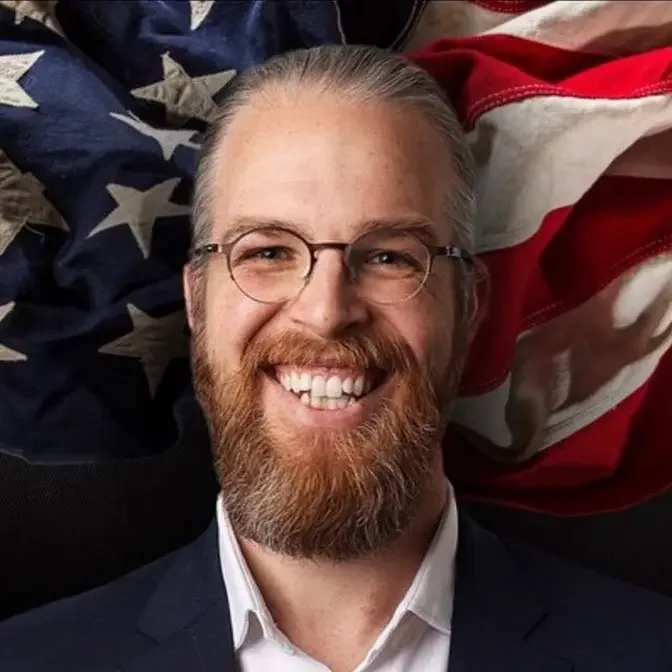
Most people have their entire net worth sitting in a phone screen, trusting a system that was never designed to protect them. Mark Wilburn joins me to pull back the curtain on the three games being played inside the stock market, why the one most Americans are playing is the most dangerous, and how to use the market like a surgeon rather than a gambler.
Register for Mark's free five-day trading bootcamp before May 18 and learn how to protect and grow your wealth no matter which way the market moves at mia-bootcamp.com.
Call (866) 686-1359 or visit http://TNUSA.COM/MIA for your FREE discovery call with Tax Network USA. Don’t let the IRS be the first to act.
For high quality storable foods and seeds, visit http://heavensharvest.com and use promo code SETH to save 15% on your order.
To learn more about investing in gold & silver, visit http://goldwithseth.com, or call 626-654-1906
Kimchi One from Brightcore – Improve your health, improve your life. 25% Off with code: MANINAMERICA at https://mybrightcore.com/maninamerica Or dial (888) 575-6488 for up to 50% OFF and Free Shipping – ONLY when you call!
To learn more about Red Light Therapy, visit http://myredlight.com and use promo code SETH to save.
Seth Holhouse and Mark Wilburn discuss achieving sovereignty through a combination of financial literacy and self-sufficiency. They critique the modern debt-based financial system and advocate for homesteading and strategic market trading as tools to escape systemic dependence and secure a resilient, independent lifestyle.
Welcome to Man in America, a voice of reason in a world gone mad. I'm your host, Seth Holhouse.
So I want you to listen carefully today because when the world order shifts, money moves fast,
and right now it's moving big time. So you probably notice as I do, the financial system
is rigged. It always has been. It was built by the same banking families who've spent centuries
enslaving nations through debt and usury. The dollar is being debased in real time. The CBDC
threat is not some far off conspiracy. It's at the front door. This is why I keep this silver
on my desk as a reminder, right, that this is real money, not their paper, not their digits in
a database they can freeze with a keystroke. But here's the thing. Most of us watching the show,
we know this game is rigged. What we don't know, though, is how to fight back inside that system
while we still have time, how to take what they built to control us and turn it around,
right, how to use their own machine to fund the kind of life that we talk about.
So the homestead, the independence, the sovereignty. And so that's why I've got
someone joining me today who's going to show you exactly how to do that. And make sure you stick
around because at the end of the conversation, he's going to share with you how you can get
access to a free training that he's putting on starting May 18th. You're not going to want to
miss it, right? So this is the Zero to Trading Bootcamp. It's a five-day live virtual event
that's free, okay, literally free. The link is in the description or you can also scan that QR code.
And so my guest today is Mark Wilburn. So he's the president of Neo's Capital and the author of
Understanding the Matthew Effect, unlocking the mystery behind why the rich get richer.
Now, I'll be honest with you. When Mark first came on my show last time, I was a little bit
skeptical because maybe you know how I feel about Wall Street. I don't trust them.
But Mark actually changed how I think about this. And I believe he's going to do the same thing with
you because Mark's not one of them. He homeschools his kids. He just moved his family onto more
acreage to start his own homestead. He lives the way that I do. But he also understands exactly how
this rig system works from the inside. And he's going to show you how to use it against the system
itself. And his track record speaks for itself, right? He called Tesla. He called AMD. He called
Meta. He saw Bitcoin rallying into the highs and he warned people to take profits before the crash.
It's not luck. It's pattern recognition that's built over years. And so again, starting May 18
through the 23rd, he's hosting this free five-day virtual training event called Zero to Trading
Bootcamp. So whether you're a total beginner or you've been at this for a while and want to level
up, this is the place to be. So he's going to show you exactly what's working in the market
and how you can take advantage of it. Okay, so let's go ahead and jump in this discussion with
Mark. So we're talking about the markets, talking about a lot of these indicators that there is a
pretty significant crash and correction coming, why the bankers don't want you to know about that,
and of course, what we can do about all this. Okay? So please enjoy the interview with Mark.
Mark Wilburn, man, it's good to have you back on. It's been a couple of months and I'm really
looking forward to getting into this discussion with you. Thanks for being here. Of course, man.
It's always an honor to be on here with you. I really enjoy our conversations like pre, post,
and all in between that we get to have together. We got a lot of synergistic things going on
between us. Yeah, certainly. It was kind of fun because before we started recording, we're getting
into homesteading and kind of off-grid living, which to me, that's the solution, right? I'm not
relying on changing things at the federal level or anything like that. It's just build resilience.
I know that you've recently moved your family down to Florida from Georgia. You've got yourself
some land that you can start doing something with. Actually, before we jump into kind of more
details on stocks and finance, let's start there actually, because that's a really important part
of this overall story. Yeah, man. We're a little disheveled. Like I was talking to you earlier,
we literally just moved our family of six from Georgia to Florida, which for a lot of people
doesn't sound like a big move because it's only one state away, but we went to South Florida.
So it was like eight and a half hour move. But we jumped on a house with five acres and pond,
and we're actually buying the adjacent 10 acres, the lady that lives in front of us.
So our house just sits off the road, which I love because we're not right off a busy intersection.
She's looking to sell her house the next couple of years, so we want to pick that up and kind
of have that family homestead compound so all of our kids could have houses here
if they wanted to one day. And so we're getting into the well water solar powered
as much as we possibly can, having chickens, growing a garden, getting cows. I told my wife
I don't have a tractor yet, so I'd really like to just get some goats, fence it in real well,
get some goats, let them take care of the back 40, you know, because they'll eat pretty much
anything. But I do, I think homesteading is a huge piece to what people want to accomplish.
I think it's about getting back to how I say it's getting back to how God wanted us to live.
It's just living off the land. And it's amazing when you see the abundance that
is in nature, right? Because you see, it's even, we're looking at our gardens,
literally this morning, my wife's gardening all morning, and we're seeing that all these plants
we had last year, we've got new little tomatoes popping up and basil plants popping up. And
it just, it's like, it wants, the earth wants to feed you. It wants to create food for you
in abundance, especially when you're doing it small scale and you can have control over your
soil, your seeds and everything. I mean, it's just great. And we had goats, we got rid of them
because we didn't have the right property for goats and kind of how we had them. But goats are
just like, there you go, there's God's lawnmower, right? If you've got a field just full of,
it doesn't matter, poison ivy or thorny bushes or whatever it is, between goats and pigs,
they will create a beautiful forest floor for you. They'll clear an entire field.
And so yeah, we don't have the land for cows, but maybe we'll get pigs in the future. And we've got
chickens. We actually just hatched another 10 little baby chicks. So we've got a mother running
around with little baby chickens and it's just, yeah, it's great. The one thing that you've got
that I'm really jealous of is a spring fed pond. Like that's the thing that, you know, we're on
well water. It's actually really good quality well water, but having access to a pond, let alone
a spring fed pond, especially in Florida, right? Where you do get droughts down there and everything
that is, that's liquid gold come right out of the ground. Oh man, we're in the middle of a drought
right now in the Braden, Sarasota area. And our pond has not receded hardly at all. And so I'll
be dropping by some manmade ponds, you know, and you can just see the water level dip, dip, dip.
And it's, it's actually nicely stocked. The kids, my oldest has been, I've taken them fishing a
couple of times, but now all the kids love to go fishing. And so they all have like the little
Mickey Mouse rod and reel. They'll throw it out there and catch a fish and they'll run up to my
office window and be like, dad, dad, come help me take it off. Cause you know, they're, they're
little, they don't know how to do all that yet. And so my 10, my 10 year olds helping teach them
how to do it too. And to me it's, it's that experience. It's getting kids off TV screens,
getting out into nature, learning these skills that growing up in the eighties and early nineties,
we got to experience. And so I'm, we're loving it. We're absolutely loving it.
Well, it's also good because like, there's a lot of fun in it and there's a lot of joy,
but the reality is if things go sideways, you've got resilience. And I think that's
one of the key points is that, you know, we've got, we've got buckets and buckets of stored
food that we haven't touched for, you know, since we've kind of put them together five years ago.
But if we need them, we have them, right? If we need seeds, we've got a whole seed vault that
my wife put together. We have them. I think that's the, a big part of it is that, I mean,
kind of my own perspective is I do think that we're living really in kind of what you call
the days of Noah. I mean, we're living in a time where I think that the blackness that's kind of
covered the earth is dense and it's real. I think people can sense it. And I think that there's a
lot of plans to, you know, whether it's create, you know, man, you know, kind of create artificial
famine to create, you know, financial collapse, you know, to usher people into some sort of,
you know, universal basic income or some sort of digital currency. These are all real threats.
And it's, I think for a lot of Americans, there's this normalcy bias that, well,
it's always been this way. So it always will be this way. And I think that that's something that
has been forgotten because really, you know, my great grandmother, she lived through the
great depression and she's long past now, but I remember talking to her when I was a kid and
she was explaining how she lived. And when we visited, she always had a root cellar full
of vegetables. She had a huge garden. She knew how to fish. She knew how to hunt.
And these are his basic skills, but she wouldn't have looked at that and said, I'm a prepper,
right? That was just how they lived. You know, people, you know, we, America used to be an
agrarian country where you had farms, small farms everywhere, but now we've become really vulnerable.
And I think one of the big areas that we have become especially vulnerable is when it comes
to money. I think for most people, their wealth is sitting in, you know, some numbers on a phone,
right? This is like, oh, okay, that's my wealth. Oh, my portfolio has gone up, you know, 7% in
the last three months or this. And that's why I'm always been a big fan of just, you know,
this clanky old silver, right? Because, you know, like this is real, to me, this is real money.
And so I've been, I think very, I've had a very pretty negative bias towards the stock market
and towards a lot of these things because, A, I haven't understood them as well, but I also look
at it and I've always thought, I don't want to mess with it because I'd rather just have my
money and my wealth in my land and in my food and my brass I've, you know, kind of slowly accumulated.
And, but, you know, after our last interview, you helped to change some of that perspective
in kind of looking at the markets and saying, okay, well, yeah, you don't want to just,
you don't want to take all your assets and think it's going to be this lifeboat that's
always going to be there, right? But you can still use it in ways that you kind of
are almost like surgical with it. You go in, you can do really well with it, but you get out,
right? And so that really, you know, our last discussion really helped to reframe my thinking
on this. But why don't you just kind of, for people who may have missed our last show,
just kind of, I guess, frame this for us. Like how do you look at the markets? How do you look
at the stock market? Because you're, you have a long history of, you know, being very accurate
with predicting stock risings, you know, things are kind of crashing and you're oftentimes ahead
of it. And so when you look at the market, how is that different from my perspective,
which is like, ah, this is this big, scary beast that's always going to try to eat me if I play
with it. So I'll just avoid it. Did you know that in the last few centuries, over half a million
bells have been destroyed. There were literally bell graveyards. Now the textbooks tell us that
this was to use the metal, but if you've ever gone down this rabbit hole, you discover that
the sounds that these bells made had amazing healing properties. There are even claims that
certain regions with lots of these bells, church bells, et cetera, were mostly untouched by the
Now your doctor might call you a conspiracy nut for thinking that, but even modern science
recognizing the healing power of sound. So check out this study from the NIH. Doctors used sound
therapy on chronic back pain and they found quote significant reductions in pain sensation and pain
related disability. But here's the best part. You don't need some fancy expensive sound equipment
to find relief. So a woman named Linda Bamber Olson created something called the wave watch.
So this little device has over 1200 frequencies that you can use for everything from joint pain
to brain fog to insomnia. So I've got one and I've been using it for about six months. This is it
right here. And I can tell you honestly that it works. Like if I'm feeling sickly or have some
kind of coming on, it's the first thing I'll reach for. And honestly, I start feeling better within
minutes. And that's literally my firsthand experience with it. Even my little kids love
wearing it. And here's how much Linda believes in this watch. So if you get one and you don't
notice any improvements, you can send it back for a full refund within 30 days. No questions asked.
So do something for yourself and for your family and get a wave watch for yourself today. Just go
to wavewatch.com slash set or just use the promo code Seth to save 15% on your purchase. Again,
that's wavewatch.com slash Seth, or you just use promo code Seth to save 15% on your purchase.
And those details are in the description below. So when I look at this, there's actually three
different games that are being played. And most people don't understand what game they're engaging.
So there was a great quote that I heard Michael Jordan, or those attributed to Michael Jordan,
that if I know the rules of the game, I can always figure out a way to win.
And most people, when it comes to stock market, they don't understand the rules.
So for a lot of us growing up, we heard, take your money, put it in a 401k, invest forever,
and you'll be fine. And then we saw people retiring in 2006, 2007, 2008, the market drops
because of the crisis. And they thought, hey, I'm sitting pretty. I've got three to four,
5 million net worth here. It can accumulate X, Y, Z. They get to retirement age where they have
to start pulling the money out to live on, and it's 60% down. And all of a sudden,
that reality hits them of, I don't have what I thought I was going to have. You've got utensils
like the 401k that the government has created. And essentially, you're playing Russian roulette
with the government now because it's tax deferred, not tax free. So like a Roth IRA is a tax free
vehicle. A 401k is a tax deferred, which means when you pull it out, you'll still pay taxes.
So what happens if the government changes taxes like they did during World War II? And I think we
talked about that on the last show, how they made that drastic shift of who they considered wealthy
at the highest tax bracket from $5 million to $200,000. And so they can change those rules.
And I'm kind of like you, I don't want all of my eggs in that particular basket. I believe that
real wealth is a combination of having assets. And Bible Ecclesiastes talks about having seven
streams of income, essentially. But having your assets in those seven places where it is in your
land, it is in your fields, and your growth, it is in silver and gold and precious metals.
But also to me, the stock market plays a role in that vehicle, along with some other things. So
the way I look at the stock market is the rules that people are playing are long-term investing,
swing trading, and day trading. So when we hear the talking heads on TV like the Jim Cramers who
come out and they're like, oh, I really like NVIDIA. We don't know the timeframe that they're
telling us that at. He may like NVIDIA over the next 10 years. You're getting into NVIDIA and it
drops 30%, 40%. And you're like, oh, Jim Cramer did me wrong again. Or whoever your favorite,
insert favorite financial analyst. They did me wrong again. Their outlook was just significantly
longer than what you were expecting. So when we teach people what we're looking at, because most
people when they come to NEOS and they're learning this, they're looking to accomplish medium to
longer term goals. And so we set people up and explain when I get into a trade,
this is the goal of this trade. This is a proper reality, a proper expectation of getting in here
to make 8%, 9%, 10%, 15%, maybe 20% if it does really, really well. A great example, this is
Tesla. We got in recently about $380 and we had what I call price targets. And so our first price
target was up at about $400 and then $420, then $430. And we hit all three of those price targets
and were able to take our money out. After that, Tesla dropped about 6% or 7% a couple of days ago,
just in a single day. And so that scares people if they're buying at those highs.
I had a gentleman, a friend of mine was talking to a guy who was buying a company called MU.
And it's a chip manufacturer. It's gone absolutely crazy. And he's buying at $700 a share. Well,
we were buying this thing at $100 a share and $300 a share, and I'm selling at $700 a share.
There's no way I'd be buying that. So it comes down to understanding the terms of the game.
Do I understand and do I have a proper expectation of what this can create for me? Because when you
have the proper expectation, now you can engage it. And it's not near as risky, because we teach
you how to set parameters around the trade. So if it does really well, you take the profit here.
If it doesn't, you stop out with a small stop loss, like you get out with a very small loss.
And we teach you how to keep those winners more than your losers. So we teach you what game to
play for what you're looking to accomplish. And I think that's what a lot of people miss
the market. Oh, I would say certainly. Well, a few points. One is that you were talking about
2006, 7, 8 and the crash. And maybe this is part of the reason why I've got this
aversion to the stock market. Because when I was young, my dad, he followed the exact path that
you're taught to follow. He went and he got a degree. He got a good job in the 80s, got a good
job for AT&T, which was this big, stable company. Then he was with Lucent, because AT&T acquired
Lucent Technologies. And anyway, going into 2000, 2001, his entire 401k was sitting in, I think,
Lucent stock. And so I remember as a little kid, I have distinctly these memories of my parents
talking to my mom saying, Ed, just sell, just take a loss and just sell. And he said, well,
no, I think it's going to come back up. I think it's going to come back up. And this was back
again, 2000. And that was his life savings. His nest egg was sitting in his 401k, which was sitting
in primarily Lucent Technologies. And so in year 2000, his 401k went from 100,000 down to about
20,000. And he finally sold it at 20,000. And again, that's the equivalent of nowadays,
that's probably the equivalent of going from $500,000 down to 50,000. I mean, it was a major
drop. And I remember seeing all the stress it caused my parents, but he was just following
what he was told to do. And that's the thing is that, like you mentioned, the education,
we're never, especially in public school, you're not taught anything about finance. You're not
taught how to balance a checkbook. You're not taught about credit card interest rates,
let alone are you taught anything about the stock market. And I think for a lot of people,
they might have a hobby and they can learn it. But for a lot of people, they just have their
advisor at their TD bank or Vanguard that's managing their portfolios. And they just go
in there and that person's going to say, well, we're going to move some of your assets over into
these stocks. They're doing pretty well. And maybe they're giving you a 10% return, but
it's almost like you're going to the doctor and you're saying, I don't feel well and just
prescribe something for me. And they're like, okay, here's a script. Just take these three pills
and that's it. Whereas I think that what you're doing is, I guess, very similar to what my wife
are doing with medicine is that we're learning how to heal our own bodies. We're learning how
the system works. We're learning the information and the knowledge that has been pulled out of the
public consciousness. So now when we're sick or our kids are sick, we're looking at it and saying,
okay, hey, we have this oregano oil or we've got CDS or we have these other things that we use
because we've learned a lot of these systems. And so I feel like that what you're doing
is very similar to that is you're teaching, not from the perspective of going again to your
trained med school doctor or your financial advisor, that's just trained to sell you the
system. You're teaching people how to understand the system and how to actually use and profit
from the system. Is that right? A hundred percent. A hundred percent. What we want to do is,
there is a system to play. Whether you like it or not, most people are active in it. And to me,
having a 401k is better than anything. But understanding something based on the movement
of the stock rather than I feel like it's going to go up or I feel like this is going to go,
right? I don't trade on feelings. In fact, I tell people one of the greatest assets you can have as
a trader is controlling your emotions and not trading on feelings, actually using logic. Because
when you get into the realm of finance and money, a lot of times your, I call it your soul man,
your emotional man tries to take over and you make really, really bad decisions because you're
emotionally triggered. What we want to do is bring people out of that and ask,
why do you want to do that? And so in our trainings, a lot of times we'll have people go,
hey, let's look at a stock. You know, what do you guys want us to look at? We'll look at something
that a student brings into it. And I say, why do you like this? Well, my buddy told me about it,
or I heard this was going up. Okay, well let's analyze it. And so we teach you how to actually
diagnose a stock to see if it is an option that meets your criteria. And then if it is,
you can take the trade. But then again, you still have your safety net, if you're wrong,
on small loss, if you're right, you're making significantly more money than you would be.
There is that process and that's what we like teaching people.
Robert Leonard So basically, as I understand,
it's like you're really kind of teaching, kind of lifting the veil of the markets. And so one
question that I do have is, from a lot of the indicators that I'm seeing, right now we are
absolutely in a bubble. I think we're kind of like an everything bubble, right? It's not just
like say the 2008 real estate or mortgage bubble. I feel like that the whole system has become a
bubble. It's almost like they're solving the bubble by just pumping more air into the bubble
and thinking that, well, maybe it's going to pop eventually. And I do think, I mean,
there's a lot of people talking about this. It does seem like that this kind of pop is coming.
No one knows the exact timeline, whether it's six months or a couple of years from now.
But that's also been one of the big things that's concerned me is what happens when that
bubble pops. But I also know that when we have these big corrections in the market,
that there's a lot of the smart people that see it coming, that's when they make all their money.
That's the thing. There's this idea like, oh yeah, that's when everyone loses their money.
Everyone that just kind of follows what their advisor is telling them,
they lose their money. But there's also the other people, I think, that are
more, I'm guessing, like what your perspective is that that's where they make the money.
And so how are you watching for these indicators that there's going to be some sort of correction?
And how do you handle that? How do you position yourself in that situation so that you can come
not just on top, but really coming out really successful amidst a big downturn?
No, that's an awesome question. One of the things that we teach people is how to profit
as the market goes down. So there's different instruments that are created,
where if the market drops, you can still make money. And you can buy what's called an inverse
ETF. And so it's literally buying shares, and it's just opposite of the market. So if the
ETF goes up in value, you can do put options. There's any number of ways that you can make
money as the market drops. And we show you how to do those, and do them in a safe, responsible
manner. The other side to that, too, is kind of like you, I do believe we're in a bubble,
because the market's moving in what I call a parabolic move. If you look from March 31st,
which is kind of our low to today, the market's up 15%, 16% in just a month and a half.
You've got stocks like Intel that are up 130%. You've got other companies like SanDisk that's
up over 1,000% in the last 10 months, which is just insane, because it's a data storage
type play. And that's what everybody's going after right now. That's an unsustainable move.
So if you look at society, this is one of the things I look at. And I think we share this
common view of, if you go back and look through scripture, God gives you patterns and designs of
how things should be. Not that they are that way now, but this is how they should be. Which is one
reason I'm really looking forward to your book, Live Like Noah, right? It's coming out, I'm
really looking forward to that one. But in scripture, he gives the Israelites the concept
of the Sabbath, where you have six days of work, one day of rest. And so if you actually looked at
that and you kind of charted it out, you'd have six days of work, one day of rest. Six days of work,
one day of rest. And that rest is a pullback. And so in our society, that's essentially what we do.
We have five days where we go to work, two days of a weekend rest. Five days where we go to work,
two days of a weekend rest. And then every few months, you have a holiday. So you have a bigger
rest. And when you begin to scale that, you can see that something growing, it's normal to have a
rest. That's what fall and winter are all about. It's the rest of the plant so that it gets its
nutrients in its roots, it gets a better established root system, and then it grows stronger in the
spring. So it produces more fruit in the summer. This is why you do husbandry, if you would.
You trim back plants so that they grow bigger and better and stronger the next fruitful year. And so
a healthy stock market actually looks like it has rest. What we've been seeing is a parabolic move
growth. That is unsustainable. When that happens, you typically get a similar parabolic move to the
downside. So you'll have something that moves up really strong, and then you have a strong pullback.
Silver is a great example. Early this year, silver went from $50 to $120, and then it dropped all the
So people who are in a short-term game mindset were buying at $80, $90. When it dropped to $60,
they were freaking out. They felt great when it hit $100, but then when it dropped to $60,
they're kind of freaked out because now they're down 25%. And yet now it's all the way back to
$80 already. It kind of gets back to the game that you're playing. But what does normal healthy growth
look like? One of the things that we're seeing is a, the parabolic move. Number two thing that
I'm really seeing here is Warren Buffett, one of the best investors in our generation,
maybe of all time, sitting on the largest stockpile of cash in Berkshire history. Now,
he's not the acting CEO, but he does have a voice in the running of the company. He's not
completely gone. And so otherwise he wouldn't have been at the shareholders meeting as a keynote.
Having said that, why are they on the largest stockpile of cash and not actively buying if
this is a real legitimate bull market start? You've got Michael Burry who's calling, he's saying this
looks really similar to the 2000 tech bubble that we saw. And so those are two of the greatest
investors in our generation saying similar things to what you're mentioning. That gives me caution.
And so it's not that we don't participate, it's just that we participate with caution
and a strict set of rules around that participation. So I'm not looking for these
long-term gains going into all-time highs on certain stocks. I'm looking for those shorter
term moves that can still fund the homestead, that can still fund the other projects that
we're looking for, lifestyle, homestead, food, all the things that I'm looking to do. And so
learning that different system of trading is critical, in my opinion, to get ahead in the
markets. And so here's actually, I pulled up, just take a look at this. This is Dow Jones
since it's 1986. And you can look at this, you look at this now and think about the tech bubble,
or sorry, the dot-com crash of 2001. Now it looks like it is a little blip.
I mean, even looking at 2008, the 2008 crash was just, it seems like it was just a little
speed bump. It's like, oh, okay, this fell a little bit from roughly 14,000 down to around
8,000 or 7,000. So obviously it was a big drip comparatively, or a big drop. But you mentioned
this parabolic move and it's like, holy smokes, you look at what's going on here.
Obviously we know that around when COVID hit, we had a big drop there, went down to 19,000 from
say 28 or so. But if you look at just, I mean, just look at the past decade and a half back from
say 2010, when the Dow Jones was at say around $10,000. And now it's at $50,000,
yet there hasn't been any significant correction. It's like if what you said is correct, which I
really believe, I think it's just the nature of just matter, right? Every force has an equal and
opposite reaction, right? Every action, it opposes, there's a balance to things. Just looking
at this, it's like, okay, what does the correction look like? Because this does not look healthy
to have this much just kind of shooting up growth. And again, it's like the bubble that we could see
popping from this, I mean, I think it could be literally the greatest wipe out of wealth
that the world has ever seen, considering that it's not just the Dow Jones,
this is every global economy is reflected in what we're seeing right here.
Right. And if we took that to scale, so go back and look at the real estate crash that
dropped about 50%, you look at the COVID drop that dropped close to 40 something percent.
Now let's scale that and say that we dropped from 50,000 all the way down to 25.
How much damage does that do to the average person's 401k? Because what we haven't brought
into this discussion is inflation. And so just because the market has a big correction like that
doesn't mean that the price of food corrects like that. It just means that your buying power
drops that much more and that your retirement drops that much more. And so learning how to
protect yourself in that environment so that if slash when that event happens, like you said,
it could be six months from now, it could be something that happens from the war going on
in Iran. It can be something that happens at the next presidential election. It can be something
that happens 10 years. But whenever that large does happen, knowing how to protect yourself from
it and profit from it so that your fiscal net worth, I like using that terminology, your fiscal
net worth doesn't drop but actually increases. That's a powerful tool to have in your tool belt.
And so again, this is some of the things that we're going to be teaching people
what to look for and how to look at it in our upcoming food count that you mentioned earlier.
Yeah. So actually, so tell me about that because we've got a QR code here. There's a URL, which
I'll make sure that's in the description below. And so now what's kind of odd here is that it's
free, right? This is a five day and this is the kind of, you know, I see these things all over
the place. And typically if you're looking at a five day event, you know, it could be 500 bucks.
It could be a couple thousand dollars. I mean, so this is free though. So you kind of walk me
through this. It almost seems a little bit too good to be true, right? It's a great event, man.
So the way it's structured, Seth, is it's one hour a day for five days. And on the sixth day,
we actually have a bonus day where we help people set up their brokerage, give you kind of rules of
engagement so that you have action steps moving forward. So it's one hour a day for five days.
There is a VIP upgrade that's $97 if you wanted to do that. It's an extra hour and there is a
money back guarantee associated with it. You can read all about that on the website if you want to
upgrade. And a lot of people do because they get so much value out of the free general session.
But our goal is to put this knowledge in so many people's hands. You know, I heard you on an
interview that one of the things you guys moved for was to be part of a community because, you
know, you can't homestead by yourself, right? If you get enough marauders coming at you,
they're going to overtake you. But if you have a community of people, they can help protect
others. What we want to do is get this information out to as many people as possible
and help the community at large. You know, you and I have talked a lot about how much
common beliefs we have, how much synergy there is between what your family's doing,
what our family's doing, and which I would believe your listeners are doing as well.
And so I believe there's a responsibility to put this type of education and make it
available to the people who want it. Now, if they don't want it, that's completely fine.
Trading is not for everybody. Learning the skill set is not for everybody.
Just like off-grid living is not for everybody. But for the people who want to learn how to do it,
to augment their income, create extra money so that you could potentially afford the off-grid
life, which is one of the things that we're doing with our trading and investing right now
as well, we want to make it as accessible as possible. Because if we did have a $2,000
price tag just for this free five-day event, there's a lot of people who thought, man,
I'm really interested. I just don't have that right now. That's not in my budget at the moment.
So if we can get it to as many people as possible, then in my opinion, it helps more people
to move forward with that skill. Which is really amazing. And I feel like it's so
reflective of kind of how I've done things too, because even when I'm looking at preparedness,
right? So if I can help even 1,000 people, because actually, the example before that big
winter storm hit, right, the big ice storm, I put together a free guide. It was the winter
survival guide I put together. And it was just, it wasn't anything complex, but it was
really basic fundamentals of how to make sure that you don't die if there's three inches of ice and
you lose power for two weeks in sub-zero temperatures. Because a lot of people freeze
to death. It was things as simple as getting a basic tent and some sleeping bags and pitching
it and what your most inner kind of most room in your home. And we gave it out. I think we had
probably over 5,000 people that downloaded this free guide. Because I'm thinking that if I can
help these people get through this, then I've done what I can do. And it was also interesting
that if you think the kind of people that are attracted to this discussion, to what you're
doing, to what I'm doing, I think these are the kinds of people that if I could pick and choose,
it's like if I'm building an arc, these are the people I think that should be on the arc,
the people that really see through it. They're standing up to government tyranny. They're
standing up for virtue and for value and for God and country. And so, yeah, it's pretty incredible
what you're doing. So they pull up the website. So the direct link, which it'll be in the
description, is mia-bootcamp.com, which will take you here. So that's the URL, again, which will be
in the description, mia-bootcamp.com. And then also we have the banner as well. So you can also
scan the QR code. And so this event is starting May 18th, right? So this is really, it's only a
couple of days away. And yeah, I encourage people just to go check it out. It's five hours,
five days, really easy to kind of schedule that. If someone misses one of those hours or one of
those windows, if they sign up, will they still get access to it? Or is it only for people who
are there live during those time windows? That's an awesome question. Yeah. So we send out the
replays every single day around 6 p.m. because like you know, you've got to render the videos
and do the edits and all the things. And so we get those videos sent out about 6 p.m. every single
day and you can watch the replay for up to a week. And so not only do you get it, you get a
full, digest it and go through it as many times as you want to. We have a lot of people who come
to the bootcamp, they attend live and then they watch the replay and then they'll watch it again
because it does legitimately have a ton of information. We could easily sell this as a
course for $2,000 plus as a standalone course because you will walk out with significantly
more confidence being able to engage the markets. So it's very much worth your time just to register
and jump into it because you'll get the replays. You'll get access to those replays for an
additional week because I think the next Friday is when they come down. So like, you know, whatever
the last day is of the bootcamp on that Friday, you get to the next Friday before the replays
come down. And we do that just because life hits people. If something can get in the way,
we find that it simply gets in the way. And so this gives you the opportunity to not have an
excuse and make the education accessible if you so desire. That's brilliant, man. Well, again,
I'll bring that QR code back up one more time. And again, the website mia-bootcamp.com. And
Mark, thank you for coming on and thank you for giving us your time. I'd love to be able to sit
next to a fire until the wee hours of the morning with you and just chat about so many things. I'm
already thinking about, okay, PTO generators for diesel tractors and solar and flow jacks for the
well. And there's so much that we could be talking about. But yeah, thank you for doing what you're
doing. It's very aligned with what I see as my mission. And so I appreciate you, again, giving
us your time and putting this together for people. It's really, really helpful. And I thank
you for everything you're doing, man. It's a pleasure to be on here with you and have that
conversation. If you're ever in Florida, look me up. Let me know. We'll definitely make that
fireside chat. Or if I come to New York, I'll hit you up too. Yeah, there you go. There you go.
All right, man. Well, take care and God bless you. Yes, sir. You too.