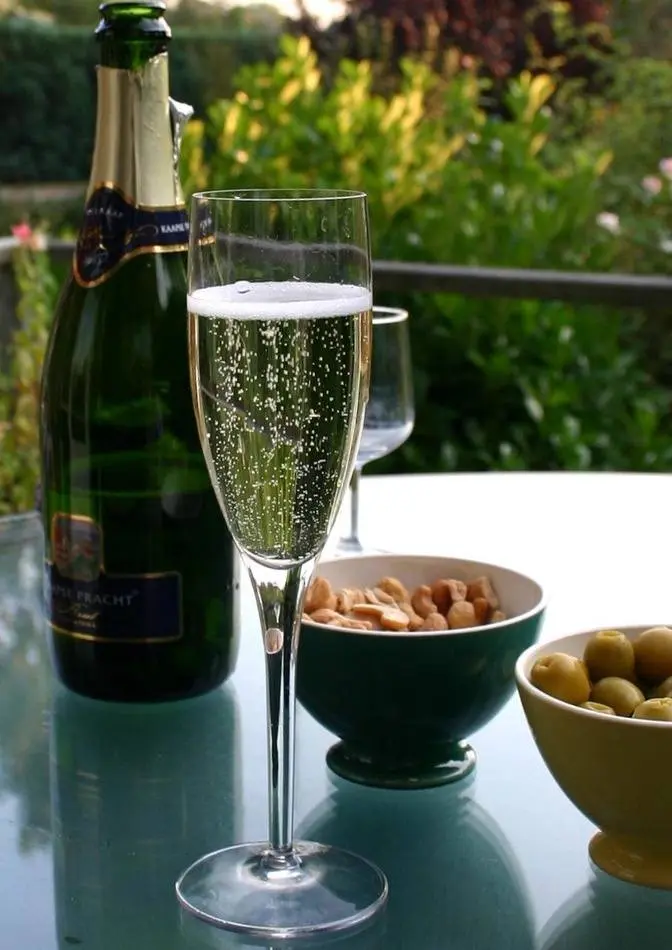
We all know and love grand marques, Champagne houses like Bollinger, Taittinger and Ruinart that have earned worldwide recognition for consistently delivering high-quality bubbles. But I want to encourage you to try smaller artisanal Champagne houses - those that have either chosen to make their own wine instead of selling grapes to larger estates or have always done it.
📚 Some of my favorite WINE BOOKS: 📓 Flawless: Understanding Faults in Wine by Jamie Goode: https://amzn.to/3eb7AYP 📒 Understanding Wine Technology: The Science of Wine Explained by David Bird: https://amzn.to/3e2qBNb 📕 Authentic Wine: Toward Natural and Sustainable Winemaking (by Jamie Goode): https://amzn.to/3ygtuAC 📘 The Oxford Companion to Wine (by Jancis Robinson): https://amzn.to/3ryy0H6 📙Wine Grapes: A Complete Guide to 1,368 Vine Varieties, Including Their Origins and Flavours (by Jancis Robinson, Julia Harding and Jose Vouillamoz): https://amzn.to/3RCAheM 📗 A Life Uncorked (by Hugh Johnson): https://amzn.to/3M5yeyQ 📓 Drinking with the Valkyries (by Andrew Jefford): https://amzn.to/45mGBOG
As an Amazon Associate I earn from qualifying purchases.
Photos of winemakers
**CONTENTS OF THIS VIDEO: 0:00 Introduction 2:13 Egly-Ouriet 3:26 Laherte-Freres 4:28 Chartogne-Taillet 5:45 Larmandier-Bernier 6:44 Agrapart
Hi everybody, this is Agnes from No Sediment and today let's explore five amazing,
like really amazing, artisanal champagne houses you should seek out and pop open.
I am sure we all know and love Grand Marx. Those champagne houses that have earned
worldwide recognition for consistently delivering high quality bubbles. Names like Bollinger,
Tétangé, Rounard and Bélicard Salmon, they all make beautiful champagne, all have great stories
to tell and distinctive style to offer. However, increasingly we see emergence of smaller
producers, some who only make champagne from vineyards they own, commonly known as grower
champagnes. If this comes as a surprise to you, yes, the reality is that the majority of champagne
houses and certainly the most renowned ones will buy grapes from grape growers to satisfy the
demand and then vinify and bottle these champagnes under their own labels. It is not necessarily
something bad, as often these are decades-long contracts based on trust and respect. But today
I am here to encourage you to try these smaller artisanal champagne houses. Those that have either
chosen to make their own wine instead of selling grapes to larger estates or have always done it.
I want to emphasize that you can identify them by finding a code on the bottle and all the growers
should have RM on the label signifying Recoltant Manipulant as opposed to NM which stands for
Négociant Manipulant. However, given that vineyards are sometimes co-owned by siblings
or multiple family members who bottle their wines under one label, some of these estates may not
feature RM on the label even though they exercise full control over their vineyards. So here are my
current top five small grower champagnes that you can pop open with your family or friends,
business partners or wine club members or whoever you want to share this great experience with.
Egli Ore has always held a special place in my heart and now that it has achieved cult status,
nobody doubts its quality. The majority of Francis Egli vineyards are located in Ambonnet
with some in Bouzy and Verzenet as well, which means this estate is more focused on red grape
varieties of champagne. They value ripeness of the fruit and harvest their grapes quite late.
Egli vinifies portions of their grapes in old oak barrels, a practice not always favored by
wine critics of champagne. However, this translates into rich and intensely concentrated
champagnes with enormous complexity. Additionally, he chooses to limit the dosage between one to four
grams per liter, making the champagnes toward bone-dry style. Given this estate's current
esteemed status, these are not going to be cheap or easy to obtain champagnes,
but I truly think they are worth it. They are structured, long-lasting and long-living
champagnes. I sometimes even describe them as vinos as the mousse only adds yet another texture
to otherwise concentrated palate. Laert Frere is a lesser-known estate that hasn't reached
worldwide recognition yet, but I have fallen in love with them anyways. It actually has a
long history in the region, dating back to 1889 and currently is run by the 7th generation Aurelien
Laert. They follow organic and biodynamic practices in their vineyards and allow terroir to shine
through in their wines. The majority of their wines will be fermented in old neutral oak casks
with each plot treated separately. I have tasted this estate next to other well-regarded champagne
houses and it excels. Laert Frere makes beautifully elegant, delicate champagnes that show precision,
a chalky and almost nervy minerality, yet remain inviting and open. By the way, this is one of those
estates that will not have RM on the label, simply because the vineyards are owned by multiple family
members. Chartogne Taillette is a champagne house that might be hard to come by. Yet, if you do, I advise
to get your hands on it, no questions asked. It is led by the young and immensely talented Alexandre
Chartogne, who took over the estate in 2006, when he was only 23 years old. He has worked with Anselm
Solos, one of the most important and influential winemakers in Champagne, whose status as a cult
winemaker in the region is beyond doubt. As for Chartogne Taillette, I am in love with his regular
non-vintage Cuvée Saint-Anne, which is quite reasonably priced, given its status. However,
the absolute best offerings are his single vineyards, with one of my favorite being Les
Berres, which is, hear me out, made from often considered lesser grape variety of Champagne,
Mounier. The wines in this vineyard are old and still on their original rootstock, making truly
gorgeous champagnes. I have been fortunate enough to taste this wine on several occasions,
and the intensity, concentration, and depth of the fruit are of the highest standard. Yet,
it still possesses elegance and finesse. L'Armagné Bernier is located in Côte de Blanc and is
naturally closely linked with Chardonnay grape. They own vineyards in some of the best sites of
The winemaker Pierre L'Armagné also strives for ripeness in his wines, and that translates
into plump and opulent yet highly elegant and elevated style of champagnes. I appreciate how
their winemaking approach varies with each vintage, as opposed to following a standardized
approach year after year. Many wine enthusiasts admire their bone-dry Terre de Vertus, but my
personal favorite is their Le Chemin d'Avis, sourced from vineyards that used to be blended
in their Longitude wine. Now vinified separately, it truly shows the potential of these wines.
Intense, concentrated, long-lasting, and truly exceptional champagnes.
Agrapa is another great estate, widely appreciated for its clean, precise, and terroir-driven wines.
Agrapa has plots in some of the best vineyards in Côte de Blanc, such as Auger,
Cramon, and Avis, and is the owner of some of the oldest wines in the Champagne region.
Emphasizing the uniqueness of each soil type, Agrapa vinifies each plot separately. He strives
for ripeness and will ferment his wines in old or really old oak barrels, and yet his wines are
always so precise and crystalline-like. As with many growers, these champagnes also feature no
or very little dosage, making them bone-dry and steely in style. One of their most famous
champagnes is Binus, a 100% Chardonnay, sourced from a single vineyard and named after a horse
that works their vineyards. So be adventurous, try something new, and these 5 Champagne houses
is a safe place to start. And if you want to know more about grower champagnes in general,
make sure to watch this video.