
The 10 Worst Champagnes to Buy in the US And 4 Sommeliers Actually Drink
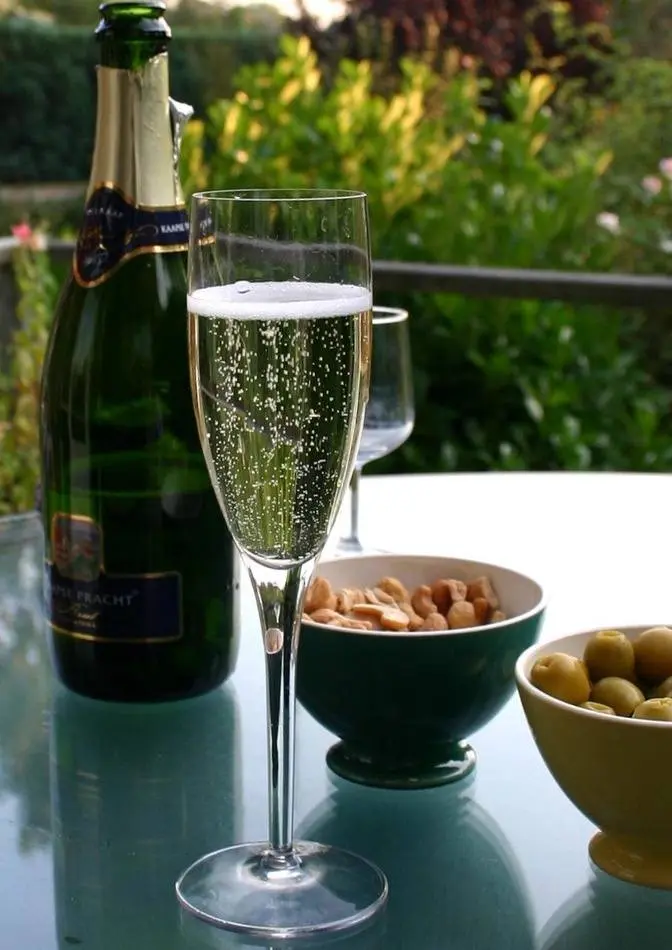
Famous champagnes aren't just overpriced, they're calculated financial traps.
You are paying a massive mythology tax for marketing, not wine.
Today, we put the sparkling wine industry on trial.
We will expose engineered sugar hangovers classified by the TTB,
decades of legal identity theft aggressively fought by the CIVC,
and chemical degradation, gout de lumière,
clinically documented by the University of Reims Champagne Ardennes.
We will name the bottles wasting your money,
and reveal the exact grower champagnes sommeliers actually drink.
Drop your go-to bottle below.
By the end, you'll never buy it again.
Let's start at number 10.
Number 10.
Andre E & J Gallo Winery
Number 10.
Andre, owned by the E & J Gallo Winery.
This is the $6 bottle fueling cheap brunches across America.
The psychological trap is simple.
Consumers see the word champagne and a foil-wrapped cork,
assuming they bought wine.
The immediate red flag is the severe headache hitting before the bottle is even empty.
This is a chemical inevitability.
The Alcohol and Tobacco Tax and Trade Bureau, TTB,
does not classify this liquid under the méthode traditionnelle.
Per current industrial standards,
Andre relies on the Charmin method and direct carbonation,
injecting CO2 into bulk liquid like a factory soda,
to mask the flaws of industrial grapes.
E & J Gallo Winery engineers this beverage with a massive payload,
upwards of 50 plus grams per liter of residual sugar, R.S.
Here is the forensic breakdown of what that dosage does to your body.
When you consume alcohol paired with 50 plus grams per liter of residual sugar,
your liver's enzymes are entirely depleted.
The metabolic breakdown of ethanol stalls out,
trapping a highly toxic byproduct in your bloodstream.
Acetaldehyde
Acetaldehyde is a documented neurotoxin.
The artificial macro-bubbles from the carbonation process act as a biological accelerant,
forcing the acetaldehyde and sugar directly into your stomach lining.
This triggers a violent glycemic spike, resulting in the debilitating sugar hangover.
You are drinking a carbonated neurotoxin delivery system.
Andre gives you a hangover because of the sheer volume of engineered sugar.
But our next bottle gives the French government a headache because of a 100-year-old legal heist.
Number 9.
Corbel California Champagne
Number 9.
Corbel California Champagne
Consumers trust this bottle because it sits on every supermarket shelf in America,
and bearing the most prestigious word in the wine world.
The trap is semantic.
You think you are buying an affordable piece of French heritage.
You are actually buying a masterclass in legal loopholes and chemical compensation.
The Comité Interprofessionnel du Vin de Champagne, CIVC,
has relentlessly fought this specific deception for decades.
How is it legal?
A historical heist.
Under the 2006 U.S.-EU wine agreement,
the United States exploited a grandfather clause codified in 26 U.S. Code Section 5388c.
This explicitly allowed American producers who were already misappropriating the name
prior to the 2006 agreement to keep using it, provided they tacked on a geographic origin.
It is government-sanctioned identity theft.
But the deception goes beyond the label.
It extends into the vat.
Real champagne derives its crisp,
structural backbone from the freezing climate and chimeridgian chalk soils of northern France.
Corbel is grown in the warm California sun.
Heat spikes the alcohol but destroys the natural acid
to artificially replicate the bite of a genuine French bottle.
Producers must rely on chemical acidification.
They dump industrial tartaric acid into the tanks to fake the tension that nature failed to provide.
You are drinking an imitation built in a lab protected by a courtroom.
Corbel is legally pretending to be champagne.
But what happens when real, actual champagne from France has to pretend it tastes good?
They use a different kind of camouflage.
Consumers trust this bottle because it is the inescapable default of celebration.
The psychological trap is its absolute consistency.
But the immediate red flag for any forensic palate is the complete absence of individuality.
It tastes like a boardroom consensus, not an agricultural product.
The evidence for this standardization is locked in its legal classification.
Moet & Chandon, a titan within the LVMH, Moet-Hennessy-Louis Vuitton portfolio,
operates strictly under the Negocion Manipulant NM designation.
They are corporate aggregators buying grapes from thousands of uneven vineyards across the region.
According to current annual production data audited by Drinks International,
this industrial engine floods the global market with an estimated 30 million bottles a year.
How do you force 30 million bottles of wildly fluctuating raw material to taste identical?
You weaponize sugar to mask the astringency and bitter flaws of mass-harvested unexceptional grapes.
The producers deploy a heavy chemical intervention.
Right before corking, they inject 7 to 9 grams per liter of liqueur d'expedition, the dosage.
This syrup acts as an equalizer.
It systematically suffocates any genuine expression of the soil,
artificially smoothing over the rough edges of volume farming.
You are not paying for the complex terroir of France.
You are paying for a carefully engineered sugar mask designed to offend no one.
Moet makes you pay for the sugar masking.
But their sister brand?
They make you pay for the paint on the label.
The psychological trap here is visual conditioning.
Consumers in the US market trust this bottle because that bright label is a shortcut for
middle-class arrival.
You carry it into a room, and people assume you spent real money.
You did spend real money, but not on the agriculture inside the glass.
This is the ultimate case of the marketing overhead tax.
As a crown jewel of the LVMH empire, Veuve Clicquot has executed a relentless,
decades-long marketing strategy built on lifestyle association, not viticulture.
When you buy this bottle, you are personally funding their massive experiential advertising
budget, including highly manicured luxury events like the Polo Classic at Liberty State Park in
the US.
They have even legally weaponized their packaging, securing an exclusive trademark on the exact
shade of Pantone 137C.
To sustain this global illusion of luxury, the wine itself must be mass-produced and
rigidly standardized.
Operating strictly under the negotiant-manipulant NM system, the brand leans heavily on a vast
industrial-scale library of reserve wines.
This aggressive blending mechanism systematically erases any unique vintage expression or terroir,
prioritizing brand consistency over agricultural character.
The exorbitant retail price is completely decoupled from the liquid's intrinsic value.
You are paying a premium to hold a federally trademarked billboard.
Veuve weaponized the color yellow, but our number six pick proves that the color pink
is even more expensive, and mathematically less justified.
Number six.
Laurent Perrier Cuvée Rosé.
Number six.
Laurent Perrier Cuvée Rosé.
The psychological trap here is entirely visual.
Consumers trust this bottle because it signals curated elegance and romance before the cork
is even pulled.
The immediate red flag?
You are paying a massive, unearned financial penalty simply because the liquid inside the
glass is pink.
This is the champagne industry's most lucrative and legally accepted form of price gouging.
Under strict AOC champagne regulations, the Laurent Perrier group produces this specific
cuvée utilizing the Seigneur method, or maceration.
By leaving the clear juice in contact with the dark skins of Pinot Noir grapes, they
extract that famous luxurious color.
While this technique requires specific cellar management, the forensic economic reality
is brutal.
Since its inception, this bottle has commanded a staggering 20% to 40% retail premium over
its standard brute counterparts across the U.S. market.
That extreme markup is not a reflection of enhanced microbiological complexity or superior
terroir.
It is a calculated exploitation of category perception.
The producers know that the visual psychology of rosé carries an inherent, built-in pricing
power.
They are charging you for the emotional weight of the color, effectively imposing a pink
tax on the consumer.
The wine itself is competent, but the financial equation is fundamentally broken.
You are funding aesthetics, not agriculture.
The pink tax is purely psychological.
But at number five, the packaging isn't just overpriced, it's actively destroying
the wine inside the bottle.
Number 5.
Ruinart Blanc de Blancs
Established in 1729, this is the oldest champagne house in existence.
The psychological trap is its aura of quiet luxury.
Consumers inherently trust this LVMH property because of its stunning, perfectly clear glass
bottle, meticulously designed to showcase the golden chardonnay inside, the immediate
red flag.
That identical clear glass is an active chemical hazard.
We are not talking about a subjective dip in quality.
We are looking at a forensic structural failure, clinically documented by the researchers at
the University of Reims-Champagne-Ardennes, URCA.
They identified a fatal photochemical reaction known as gout de lumière, or light strike.
It is a catastrophic flaw entirely preventable with standard dark glass.
Here is the exact mechanism of the degradation.
When Ruinart's clear bottle sits under standard fluorescent supermarket lighting in the US,
ultraviolet rays pierce the unprotected liquid.
Within a matter of hours, this UV radiation systematically destroys the wine's critical
amino acids, specifically methionine, along with the vitamin riboflavin.
This violent breakdown forces the creation of a highly volatile sulfur compound named
dimethyl disulfide, DMDS.
DMDS is the exact chemical responsible for the stench of stagnant sewage and boiled cabbage.
You are paying a massive premium for a three-century-old legacy, only to risk drinking chemically
corrupted liquid simply because LVMH prioritized a visual marketing aesthetic over agricultural
preservation.
Ruinart's beautiful bottle might ruin the wine, but what if the bottle is genuinely
a masterpiece?
Well, you're going to pay for the gallery exhibit.
Number 4.
Perrier Jouet Belle Epoque
Number 4.
Perrier Jouet Belle Epoque
The psychological trap here is elegance manifesting as a physical object.
Consumers implicitly trust this bottle because it is undeniably stunning, meticulously designed
to sit at the center of a high-end table and signal a monumental occasion before the cork
is even pulled.
The immediate red flag.
You are aggressively funding an industrial art gallery, not a vineyard.
The forensic evidence lies directly in the manufacturing ledger.
Owned by the global beverage conglomerate Pernod Ricard, this specific prestige cuvee
relies heavily on a visual gimmick masquerading as agricultural heritage.
The famous Japanese anemone flower motif was originally designed by the Art Nouveau glassmaker
Émile Gallet back in 1902, while the liquid inside does feature high-quality Chardonnay
grapes sourced from the Grand Cru village of Cremant.
The financial equation for the American consumer is severely distorted.
The mechanism of this price inflation is driven by the static production cost.
Unlike standard paper-labeled bottles, Perrier Jouet permanently enamels and bakes these
intricate floral designs directly onto the heavy glass.
This is a highly expensive, resource-intensive industrial manufacturing process.
This extreme packaging overhead artificially inflates the baseline cost of every single
unit before a drop of wine is ever fermented.
You are paying a massive luxury markup for a decorative vase.
The wine is polite, but you are buying the exterior.
Belle Epoque makes you pay for the painting, but our top three make you pay for pure,
unadulterated mythology.
Number 3.
Louis Roderer Cristal Number 3.
Louis Roderer Cristal
The psychological trap here is absolute, undisputed mythological status.
Consumers in the US market trust this bottle because it is the ultimate declaration of
wealth.
When you order it, you are not buying a beverage.
You are buying an aura.
The immediate red flag?
You are being taxed on a phantom legacy.
The forensic evidence points to a textbook economic anomaly.
Produced by the Louis Roderer Group, this wine is undeniably high quality.
They even transitioned to 100% biodynamic farming in 2012.
But the retail price is entirely disconnected from the agriculture.
You are aggressively funding a Veblen good.
This is an economic syndrome where a product's price is artificially kept astronomical simply
to maintain its status as an exclusionary luxury item.
The exorbitant price tag is the core feature.
The mechanism of this inflation relies entirely on the ghost of Czar Alexander II.
In 1876, the Roderer house engineered this specific cuvee exclusively for the Russian
monarch.
They designed a unique flat-bottom lead crystal bottle specifically to prevent assassins from
hiding explosives underneath the punt.
Today, you are still paying a massive premium for that paranoid 19th century architectural
gimmick.
Furthermore, because that iconic clear crystal is highly susceptible to the exact same
photochemical degradation we saw with Ruinart, Roderer is forced to wrap every single bottle
in an awkward anti-UV cellophane wrapper just to prevent the liquid from spoiling under
supermarket lights.
You are paying for a paranoid monarch's bomb-proof glass wrapped in protective plastic.
Crystal trades on Czar Alexander's ghost, but are runner-up trades on a much more modern
kind of royalty and a billion-dollar boardroom deal.
Number 2.
Armand de Brignac, Ace of Spades
The psychological trap here is pure blinding spectacle.
Consumers trust this bottle because it is the ultimate status symbol of American nightlife
and celebrity culture.
When this heavy gold bottle arrives at a table, it is designed to announce absolute financial
dominance.
The immediate red flag?
You are not paying for the agriculture.
You are subsidizing a billionaire's corporate portfolio.
The forensic financial evidence of this is that Roderer is the only person in the world
is completely transparent.
The liquid itself is produced by the respected yet historically modest Champagne House Cattier.
However, the retail cost artificially exploded after the music mogul Jay-Z, legally Sean
Carter, fully acquired the brand in 2014.
The exorbitant pricing was then permanently cemented into the global luxury stratosphere
when the conglomerate Moët Hennessy, operating under the LVMH umbrella, officially purchased
a 50% stake in February 2021.
Here is the structural mechanism of the deception.
Rather than offering a rare single-harvest expression, Cattier utilizes a standard multi-vintage
blending technique for their flagship gold bottle.
The extreme retail cost is driven almost entirely by the physical metalized bottle.
While this opaque armor technically protects the wine from UV damage, its primary economic
function is to justify a massive consumption environment markup.
This pricing algorithm is specifically engineered for high-end nightclubs.
You are paying a staggering premium for a highly reflective metal surface explicitly
designed to catch VIP laser lighting in Las Vegas and Miami.
You are funding a boardroom merger in club aesthetics.
Ace of Spades commands the nightclub.
But our number one worst offender commands the milestones of your life
and charges you an emotional tax for the privilege.
Number 1.
Dom Perignon
Number 1.
Dom Perignon
The psychological trap here is profound emotional gravity.
Consumers implicitly trust this bottle because it is the ultimate symbol of life's greatest
milestones.
The immediate red flag?
You are being aggressively taxed on the illusion of rarity.
The forensic economic evidence completely shatters its boutique facade.
Dom Perignon is not an independent artisanal house.
It is a prestige cuvee brand operated by the corporate behemoth Moet and Chandon under
the LVMH conglomerate.
The brand relentlessly leverages the historical mythology of the 17th century monk Pierre
Perignon to justify an astronomical markup.
Because it is exclusively produced as a vintage-only wine, meaning it is only released in
years with exceptional harvest, consumers are manipulated into believing it is scarce.
The reality is a calculated masterclass in artificial scarcity.
While LVMH notoriously guards its exact metrics, industry analysts estimate the production
volume reaches a staggering 5 million bottles per vintage.
This is a massive factory-scale industrial output masquerading as a rare artifact.
To its credit, the liquid is technically sound.
The producers mandate a minimum 7-year Lee's aging process to trigger autolysis, a biological
reaction where dead yeast cells break down, infusing the wine with its signature complex
brioche profile.
But brilliance at this scale does not mathematically justify the cost.
You are paying a boutique luxury price for an industrial volume product.
Dom Perignon is a brilliant wine priced like a rare artifact, even though they pump out
millions of bottles.
So, if we're stripping away the marketing, the sugar, and the mythology, what actually
belongs in your glass?
The forensic evidence of value here is purely geographic.
Instead of paying the exorbitant European import and marketing tax for the famous Louis
Roederer name in France, you are exploiting what we call the cool climate bypass.
This specific bottle is produced in Anderson Valley, Mendocino County, California.
Because this region is subjected to freezing Pacific fog, the grapes undergo an extended
hang time, naturally accumulating deep structural acidity without the need for chemical acidification.
The Louis Roederer outpost strictly enforces the authentic méthode traditionnelle here,
mandating an aggressive 5 years of Lee's aging for this specific cuvee.
You are paying for half a decade of biological complexity and French winemaking architecture,
entirely stripped of the European geographical markup.
It's French mastery without the import tax.
Schramsberg represents American history, but if you want true, unadulterated French soil,
you have to look for two letters.
Schramsberg Blanc de Blancs, established in 1862.
This is Napa Valley's oldest commercial winery.
The forensic value here marries American history with physical cellar architecture.
Consumers trusted because President Richard Nixon explicitly selected this exact bottle
for the historic 1972 Toast to Peace in Beijing.
But the real scientific value lies completely underground.
Schramsberg ages its wine in a subterranean network of tufa caves.
This geological formation creates a perfect energy-free environment for precise cellar
thermodynamics.
The naturally sustained low temperatures slow the secondary fermentation process to an absolute
crawl.
This prolonged cold biological reaction physically shrinks the carbon dioxide, engineering a
delicate micro-mousse texture that easily rivals a French prestige cuvee for a fraction
of the cost.
Schramsberg represents American history, but if you want true, unadulterated French soil,
you have to look for two letters.
While the corporate brands we indicted hide behind marketing and sugar, Pascal Agripart
presents the unvarnished forensic truth.
This estate operates under the strict récoltant manipulant R.M.
classification, meaning they vinify only their own vines exclusively within the Grand
Cru village of Avise.
The agricultural evidence here is uncompromising.
Instead of compacting the earth with heavy industrial tractors, they enforce traditional
horse plowing.
This manual labor forces the vine roots directly into the ancient Kimmeridgian chalk.
To mathematically prove this purity, Agripart bottles the wine as brute nature.
The dosage is strictly capped under 5 grams per liter of sugar.
There is no chemical syrup masking flawed fruit.
You are drinking the raw mineral architecture of the soil, perfectly preserved.
Agripart strips away the makeup.
But our number one pick is a masterclass in architectural aging.
Directed by Francis Eggly in the esteemed Grand Cru village of Ambonnet, this estate
is the absolute pinnacle of the récoltant manipulant R.M. designation.
You are not funding a corporate marketing department.
You are purchasing a biological masterclass in architectural aging.
Here is the forensic breakdown of your investment.
Unlike the mass-produced factory blends we indicted earlier, Eggly ferments the base
wine entirely inside Burgundian oak barrels.
To legally protect the liquid's raw structural integrity, the final product is bottled strictly
unfined and unfiltered.
The true value, however, unlocks underground.
The wine endures a grueling four to six years of Lee's aging.
This extreme timeline triggers a profound chemical reaction called autolysis, forcefully
breaking down dead yeast cells to release complex manoproteins into the wine.
This precise biological mechanism engineers a massive savory texture that no conglomerate
can fake.
This isn't just a drink.
It's an investment in patience.
If you refuse to fund the mythology tax and want to stop being fooled by billion-dollar
champagne marketing gimmicks, hit that like button and subscribe.
We are digging deep to uncover the forensic truth behind the luxury bottles you trust.
Do you have questions about the safety, value, or hidden chemicals in another product or
brand?
Drop a comment below.
It might just be the prime suspect in our next investigation.
Stay sharp, stay skeptical, and I'll see you in the next dossier.