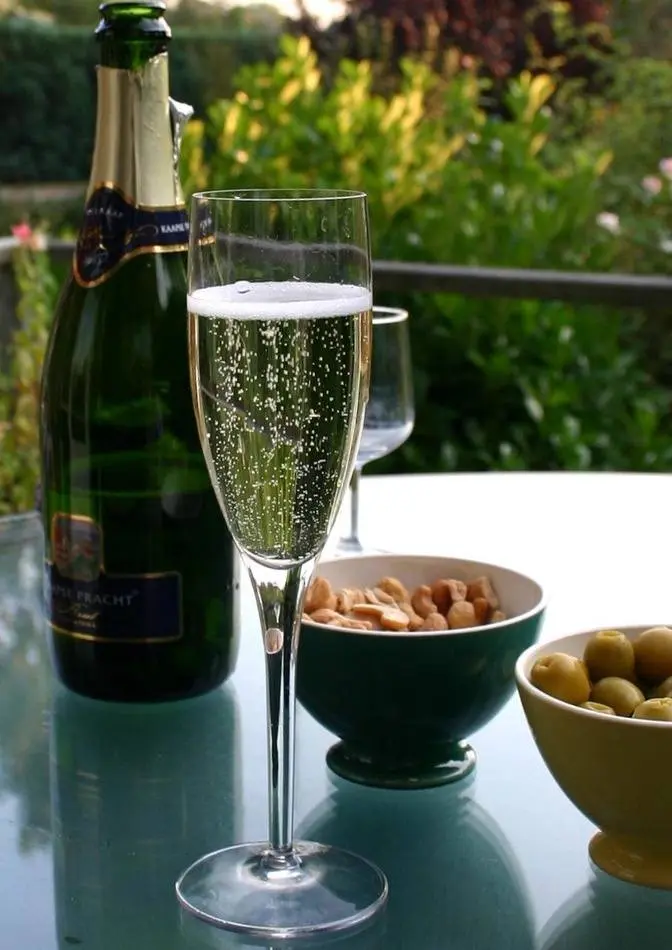
Find out which best champagne bottles are truly world-class and which expensive champagne labels like Dom Pérignon are just marketing hype in this honest champagne review. While brands like Moët and Veuve Clicquot rely on billions in advertising to sell average wine at premium prices, this guide exposes the 5 brands robbing you blind and reveals the 5 real masterpieces that actually deserve your money. We break down exactly why some "luxury" bottles are overpriced and point you toward grower champagnes and houses like Bollinger that deliver genuine quality in every glass.
🎯WHAT YOU'LL LEARN: ➤ Why the most famous labels (Moët, Veuve, Dom Pérignon) often charge you for the brand, not the wine. ➤ How sugar dosage and mass production are used to hide lack of character in expensive bottles. ➤ The 5 undervalued champagnes (like Bollinger and Pierre Gimonnet) that crush the big brands in blind tastings. ➤ How to read a champagne label to spot "Grower Champagne" quality vs. mass-market branding.
⏱️ TIMESTAMPS:
00:00 — Champagne Isn’t Priced for Taste 00:24 — # 5 Overpriced: Moët & Chandon Brut Impérial 01:33 — # 4 Overpriced: Lanson Black Label Brut 02:48 — # 3 Overpriced: Veuve Clicquot Yellow Label 03:58 — # 2 Overpriced: Dom Pérignon 05:08 — # 1 Overpriced: Armand de Brignac “Ace of Spades” 06:20 — #5 Worth It: Piper-Heidsieck Cuvée Brut 08:45 — #4 Worth It: Joseph Perrier Cuvée Royale Brut 09:55 — #3 Worth It: Bollinger Special Cuvée 11:05 — #2 Worth It: Lallier R.020 12:20 — #1 Worth It: Pierre Gimonnet et Fils Cuis 1er Cru 13:20 — What You’re Really Paying For #champagne#champagnebrands
That bottle in your fridge might look like pure celebration, but champagne isn't priced for what's
in the glass, and it's priced for the photo, the reputation, and the comfort of picking something
you recognize. But we did the digging. Today we're exposing five champagne brands robbing you blind
and revealing five that are actually worth the money. If you want breakdowns like this, simple,
direct, and a little uncomfortable, subscribe now and let's get started. Number five, Moët
This is the best-selling champagne in the world for a reason, and that reason isn't because it's
got the most exciting flavor. It's familiar. It's the name people already trust, the label they've
seen a hundred times before, which makes it feel like the safest possible choice in a moment where
nobody wants to overthink the decision. Moët is the bottle people grab when they don't want to
think. It's clean, neutral, and hard to fault, which sounds like a compliment until you realize
what you're paying for, that neutrality isn't accidental. It's designed to offend no one,
surprise no one, and quietly reassure everyone at the table that the right bottle was chosen.
Around 45 pounds to 55 pounds, the experience often isn't significantly better than bottles
that cost less and try harder. It's the champagne equivalent of a designer t-shirt with a huge logo.
It tells everyone you showed up with champagne, but it doesn't give you the depth you secretly
wanted when you popped it. You get correctness, not character. Recognition, not reward. If you're
buying for taste, you can do better for the same money. This is the trap. Safe becomes expensive,
and safe is not a flavor. Number four, Lanson Black Label Brut. This is the bottle that lives
on shelves because it's easy to find, not because it's unforgettable. It's everywhere, which gives
it a kind of quiet authority by default. At roughly 40 pounds to 50 pounds, it's widely available,
which makes it tempting when you're rushing or grabbing something last minute. But available
is not the same as worth it, and convenience is not the same thing as quality. The house style
skips mallow lactic fermentation, which keeps the profile very lean and sharp. Some people like that
edge. A lot of people don't. On paper, that tension sounds elegant. In the glass, the problem is that
lean can turn into aggressively acidic for some palates, especially if you expected something
softer, more rounded, or more obviously celebratory. And here's where the champagne
world gets quietly unfair. You pay champagne money for a glass that can feel more like it's
scolding you than celebrating with you. The bottle doesn't meet you halfway. If you love that cut
glass, high-tension style, you might call it crisp and bracing. If you don't, you'll call it thin,
sharp, and done before it begins. A champagne that finishes the conversation just as it starts.
Number three, Verve Clicker Yellow Label Brut. This is one of the most recognizable bottles in
the world, and it's photogenic for a reason. That yellow label is basically a social signal. It
photographs well, it reads instantly across a room, and it carries decades of cultural momentum with
it. But for 50 pounds to 60 pounds, it's also one of the easiest champagnes to overpay for
if you're chasing taste rather than recognition. It's often criticized for being overly sweet
and lacking freshness. And the real risk is that some bottles can feel tired,
especially if they've been sitting on a supermarket shelf too long under bright lights.
When freshness is part of the promise, that kind of fatigue shows up quickly. And once you notice
it, it's hard to ignore. That's not you being picky. That's the reality of buying a widely
distributed icon bottle that's built to taste consistent and pleasant, not necessarily
thrilling. Consistency at that scale comes with compromises, and excitement is usually the first
thing to get sanded down. You pop it, expecting fireworks, and you get polite bubbles. Clean,
correct, inoffensive. And polite bubbles are not what most people mean when they say,
let's celebrate. Number two, Dom Perignon. Yes, it's a classic. Yes, in the right vintage,
it can be excellent. There's no denying the pedigree. But this is exactly why it's dangerous
for your wallet. Once a bottle becomes a cultural symbol, the price stops reflecting only the wine
and starts reflecting the mythology built around it layer by layer, year after year.
At 200 pounds plus, the question isn't, is it good? That's too easy. The real question is,
is it consistently 200 pounds better? And the honest answer is, not always.
Sometimes it earns the moment, sometimes it doesn't. You're paying for prestige heavily,
and that premium doesn't guarantee a proportionally bigger experience every time.
This is where people confuse luxury with guaranteed transcendence. The expectation
does a lot of the work before the cork even comes out. Sometimes the bottle delivers a beautiful,
composed experience that feels worthy of the reputation. Sometimes you're standing there
wondering why your glass doesn't feel three times more emotional than a great bottle you
could have bought for far less, and realizing that reputation can amplify anticipation faster
than it amplifies flavor. Number one, Armand de Brignac Ace of Spades. This is what happens when
branding becomes the product. It's flashy, celebrity backed, and unapologetically built
to be seen. The bottle itself does a lot of the talking before the wine ever gets a chance.
And look, there's nothing wrong with buying a bottle because it feels fun or theatrical.
That can be part of the appeal. But we're talking value, not vibes. At 300 pounds to 600 pounds,
you're not in casual bubbles territory anymore. You're in serious wine territory,
the range where craftsmanship, sourcing, and aging usually have nowhere to hide.
And that's the problem. Under the bling, this bottle doesn't reliably justify the price jump
the way truly great champagne can. With Ace of Spades, you're often paying more for the mirror
than the wine, and the reflection is doing more work than the liquid. Now, the point isn't never
buy expensive champagne. That's not the argument. Good wine costs money. Time matters. Farming
matters. Craftsmanship and aging matter. Those things are real, and they're worth paying for.
But there's a difference between premium and overpriced, and that difference shows up the
moment the spectacle fades and you're left with the glass. So let's talk about the bottles that
actually feel like your money turned into flavor. Number five, Piper Heidsieck Cuvée Brut. If you
want a champagne you can stock up on without feeling like you got played, this is the kind
of bottle that quietly over delivers. It doesn't make a show of it. It just performs at around 60
to 70 Australian dollars. It's positioned like nice, but not insane. And it drinks like something
that actually wants to impress you rather than just reassure you. The profile is reliably crunchy
with apples, pears and toast. The exact kind of combination that makes people nod after the first
sip like, okay, yes, there's clarity here. Nothing feels muddled or dulled down to chase mass appeal
and that freshness shows immediately and it's vibrant and fruit forward. But it still has
structure, which is why it works as that all-purpose bottle. General enjoyment, unexpected
guests, aperitif energy, and it doesn't collapse the second it touches food. It holds its shape
at the table. This is what value looks like in champagne. Lively, delicious, generous, not neutral,
not flat, not coasting on a label. Just a bottle that does the job champagne is supposed to do.
Make you want the next sip. Number four, Joseph Perrier Cuvée Royale Champagne Brut at roughly 70 to
80 Australian dollars. This bottle lands in that sweet spot where you expect a solid experience,
but you don't expect a story. It looks like it's going to be quietly competent and then it gives
you one anyway. The quality here is often described as a reflection of nearly a decade of improvements
in their winemaking approach, and you can feel that we actually care energy in the way it shows
up. Not as marketing, but in the glass. Aromas lean into primary red fruits, then you get honeyed
pastries and toast. Not in a heavy way, in a this has personality way. Nothing feels forced or
overworked. On the palate it hits with a fresh attack and that salivating liveliness you want
from champagne, but it stays supple and round instead of sharp and punishing. There's tension,
but it's controlled. The finish refreshes instead of dragging, which makes you want another sip
rather than a pause. This is the kind of bottle that makes you realize how many famous labels
are charging you for comfort while bottles like this are charging you for flavor. Number three,
Bollinger Special Cuvée. This is the bottle you bring when you want the table to take you
seriously, but you still want to actually enjoy what you poured. It signals intent without showing
off. At around 80 to 90 Australian dollars, it's not cheap, but it earns its place by delivering a
style that feels both celebratory and genuinely gastronomic. Not just festive noise in a glass.
The description is power and refinement, ripe fruit richness married with nutty brioche
complexity. And that's exactly why it's such a smart worth it champagne. There's substance here.
It doesn't vanish after the first impression. It doesn't feel like bubbles with a famous accent.
It has weight, it has depth, and it loves food. This is champagne that behaves like wine when it
needs to. Put it next to a casual cheese platter and cured ham and watch it suddenly feel like
you planned the whole night. Even grilled lobster works. It rises to the occasion without asking for
one. Number two, Lalia R.020. Here's the thing about value in champagne. It's not always about
being the cheapest. That's the lazy definition. Sometimes value is paying a fair price for a
glass sip after sip without relying on reputation to do the heavy lifting at roughly 80 to 90
Australian dollars. Lalia's whole personality is freshness and purity. And even with the generosity
of 2020, that focus doesn't drift. The wine stays disciplined. The aromas are pronounced
white flowers and zesty citrus with a clear Chardonnay bias. But there's also soft maturity
developing through honeyed notes and ripe fruit like white peach and apricot. It feels expressive
without feeling loose. Then on the palate, you get an immediate lift, a delicate silky texture,
and the power and structure of Pinot Noir holding the whole thing up. Nothing feels out of balance.
The finish runs long, and there's that strong mineral salinity that makes your mouth water
and makes you want food immediately. This is the salivating deliciousness test in action.
It's fresh, lively, complex, and it evolves as you drink it. That's what you want when you're
spending real money on bubbles, a bottle that keeps unfolding instead of peaking in the first
10 seconds and coasting from there. Number one, Pierre Gimonais. If you've ever wondered what it
feels like to buy champagne like a smart person instead of like a billboard, this is it. There's
no theatrics here, just intent. At around $85 to $95, it's a blanc de blanc built around energy
and precision, and it carries the kind of detail that actually explains the price rather than
asking you to accept it. Several vintages are brought together. It sees three years on Lees,
and it's finished with a small dosage that lets the chalky origins show up as real tension
and freshness. Nothing is padded or softened for mass appeal. The wine is allowed to be exact.
The impression is vivid. The kind of wine that starts crisp and focused then, if you give it a
minute, transforms opening into something like apple blossom with incredible length and clarity.
It rewards attention without demanding it. This is why grower and boutique style bottles can
embarrass bigger names at higher prices. They're not trying to be safe. They're trying to be
specific, and specificity is where flavor lives. If you ever find yourself about to pay for a famous
because you think expensive means better, this is the bottle that rewires that reflex. It proves
you can spend under $100 and still get something that feels like it belongs in the serious
conversation. What gets paid for and what doesn't? At a certain price point, champagne stops being
about quality alone and starts being about priorities. The question isn't whether a
bottle is well made. It's what exactly your money is being asked to support, and some bottles are
to be recognized. A lot of the cost goes into consistency at scale, visual identity, and making
sure the experience never surprises anyone. That kind of reassurance is expensive, and for many
brands, it's the main thing you're paying for. Other bottles are built to be interesting. More
of the budget ends up in farming decisions, blending choices, time, and restraint. You notice
it because the wine doesn't give you everything at once. It unfolds. It holds your attention.
Something keeps happening in the glass instead of fading after the first impression. This is why
price alone is such a poor signal. Two bottles can sit in the same range and deliver completely
different experiences because they're solving different problems. One is designed to confirm
expectations. The other is designed to reward attention. You can even see this within the same
house. Same resources, same technical skill, but very different outcomes depending on whether the
broad appeal or character. When the focus shifts away from being instantly agreeable
and toward being specific, the wine almost always becomes more compelling to drink.
So when you're choosing champagne, the useful question isn't, is this expensive? It's,
what is this bottle trying to do? If most of the effort went into being recognized,
you'll feel it. If the effort went into the wine itself, you'll taste it. Tell us in the comments
which champagne you usually buy and whether you've ever had a moment where the label promised more
than the glass delivered. And if this changed how you think about champagne, stay with us.
The next innocent luxury brand we break down is going to challenge even more assumptions.