
Why and How Feudalism Declined in Europe - Medieval History DOCUMENTARY
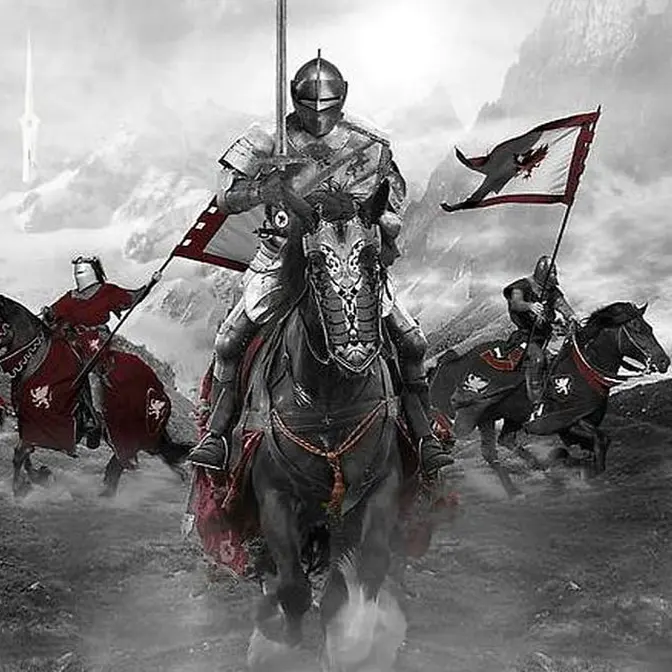
9 Video Views·Sep 4, 2025
Kings and Generals animated historical documentary series on medieval history and economic history continues with a video on how and why Feudalism declined in Europe, as we try to deduce economic, political, social and scientific reasons why the nobles lost their supremacy over European society.
History is often viewed as a linear process of transition from one mode of production
and socioeconomic system to the other. The primitive community transitioned to slavery,
which moved on to feudalism with the transformation of slavery into serfdom,
which gave way to capitalism as a more profitable mode of production. But in practice, this process
was more complicated, involving transitionary forms and passing through different stages at
different points in history in different regions. In this episode of Kings and Generals,
we are going to talk about the reasons for the decline of feudalism in Europe.
And while you might not have to fight in your landlord's personal wars anymore,
we are still going to call you to battle in the PvP shooter Tactical, the sponsor of this video.
Download the game via our link or the QR code on-screen. Use promo code TACTI to get 50 Jason
Tactical is a 5v5 competitive shooter in a chaotic, destructible environment with realistic
physics that lets you tear it apart with vehicles, explosives, and more than 72 weapons used by its
28 playable operators with plenty of upgrades to unlock. We are talking tanks, C4, drones,
miniguns, and if you are really creative, trains. I think I saw a submarine too. You will work with
your friends to uncover hundreds of unique tactics, competing with 20 million players
around the world. If in doubt, just drive in together blasting from each window GTA style.
Use voice chat, form clans, and complete daily assignments, and you might just get good enough
to challenge the top players. As well as the 5v5 mayhem, there is a 15-player battle royale mode
and a 3-player co-op zombie survival mode. And here is the kicker, it is free and was named
Best Competitive Game on Google Play. It is available on iOS and PC too. You can support
our channel by downloading Tactical via the link in the description or by scanning this QR code,
and if you use code TACTIED, you will get an exclusive bonus – 50 Jason shards, an RPG,
and 50,000 silver. What is Feudalism?
Historian Maurice Dobb defines Feudalism as a system virtually identical with what we usually
mean by serfdom, an obligation laid on the producer by force and independently of his own
volition to fulfill certain economic demands of an overlord, whether these demands take the form of
services to be performed or dues to be paid in money or in kind. He describes the main features
of Feudalism as the use of primitive techniques and instruments of production with the unsophisticated
division of labor. In Feudalism, domain farming was the dominant type of labor carried out on
lands owned by a feudal lord and the vast majority of produce was used for the immediate needs of the
lord and his subjects. These lords possessed almost total superiority over their serfs
and could do almost anything short of executing them. One of the primary features of Feudalism
was political decentralization, as while a monarch was a de facto sovereign of all feudal
vassals in the country and exerted control over them through lawmaking, taxation, and use for
military purposes, feudals possessed almost unfettered control over their lands and subjects.
Under Feudalism, a monarch ruled over the state, which was divided into lands of various sizes
among hereditary feudals, who received lands and estates in accordance with their services
for the kingdom. But around the 13th to 14th centuries, Feudalism entered a period of decline
in Western Europe, gradually giving way to Capitalism. Historian Henry Martin observed that
Feudalism concealed in its bosom the weapons with which it would be itself one day smitten,
referring to the struggle of monarchs to establish more control over the state and its feudal
subjects through the support they had received from an emerging class of townspeople,
capitalists, whose rise was possible due to the growth of urban centers, towns, and cities as a
result of the expansion of trade. These and other factors have caused the demise of Feudalism,
and we will discuss them below. Let's start with the Crusades,
which at first glance do not seem like something that could have had a negative impact on Feudalism.
The driving force of the Crusades were large feudal landowners, who would often use their own
money and resources to raise armies for this endeavour. Surviving and returning feudals would
often be so broke that they would accept peasants buying lands and essentially becoming free from
feudal control. The same is true for towns, which used to be under feudal control, and were now able
to purchase their freedom from their former lords. These events led to an increasing portion of lands
and a number of serfs setting themselves free from feudal control. Crusades also played a role
in the import of new military technologies like gunpowder from the east. Gunpowder enabled the
production of cannons, and the cannons made feudal castles one of the key factors behind their
autonomy more susceptible to military actions. In the pre-gunpowder era, it was extremely difficult
and costly to capture castles, and feudal lords were confident in the impenetrability of their
walls and hence their autonomy. Now, it was easier for kings to break feudal resistance
and establish more solid control over their lands, which made Western European states
more centralised. Lastly, and perhaps most importantly, the Crusades also played a major
role in the expansion of trade in Western Europe. Following the collapse of the Western Roman Empire,
there was no major authority in Western Europe to protect and maintain the road network.
Along with that, the Caliphate expanded to important trading regions like Gibraltar,
Alexandria, Sardinia, and Malta, hence the long-distance trade conducted by Western Europeans
gradually diminished and became localised. One of the key tenets of feudalism was its
self-sufficiency, as often all of the produce from the feudal lords were used for mostly the feudal
small portion of it for the feudal subjects living and working on these lands. There was
a very small surplus left for major trade operations. Crusades helped to expand the
Western European reach to major cities like Constantinople and Alexandria, along with
gaining a temporary foothold in the Holy Land. Moreover, Western Europeans regained control of
important islands and trade outposts in the Mediterranean. This played an important role
in the restoration of long-distance trade in Europe. The Belgian historian Henri Pirenne
argued that long-distance trade not only enabled economic development and growth of civilisations,
but was also a major driver of the exchange of ideas, exposure of civilisations and cultures
amongst each other. Lack of these led to ruralisation of Europe, a decrease of the
significance of cities, less contact and exposure within Europe and between Europe
and other civilisations. Expansion of trade led to the accumulation of money by merchants,
and a gradual transition from an exchange-based economy to a money-based economy. The merchant
class was made up of commoners and was the predecessor of the bourgeoisie class, which
would in the upcoming centuries upend the European aristocracy. The emergence of major cities was
another important factor causing the crisis of feudalism. We already talked about how dropping
revenues forced feudal lords to give up control over a large number of serfs, some of whom moved
to cities for employment and a new life. While the exploitation of labour and general hardships
of course existed in cities as well, urban centres were attractive to peasants, for at least being
safe from feudal arbitrariness and oppression, along with providing them with certain rights
and freedoms. Towns and cities would often offer refuge to runaway serfs and peasant rebels,
especially during the 14th century, when peasant rebellions got widespread in Western Europe.
The emerging class of rich urban dwellers was also active in trying to attract peasants
to cities as a cheap labour force and more soldiers for their militaries. It is important
not to over-exaggerate the significance of the impact of the growth of cities on feudalism,
since most of the peasant and serf migration was still within the countryside. The growth of cities
in Europe between the 13th and 15th centuries was major, but the overall urban population of Europe
was no more than 10% in that period. But the mere fact that now there was an alternative for peasants
to leave for cities put additional pressure on feudal landowners and feudalism. The growth of
trade were also linked to the gradual transformation within the manor system itself.
Feudal lords would assign bailiffs amongst their peasants to manage and oversee the cultivation,
storage, and disposal of the produce made on their lands. Naturally, not all dealings between lords
and bailiffs had been honest, as bailiffs tended to keep some of the produce and money made from
trading it for themselves. Gradually, bailiffs accumulated enough money to start renting parts
of the land owned by their feudal lords. They would employ peasants to work on rented lands
in exchange for wages or produce, since serfs were obligated to work only for their feudal lords.
This paved the way for the gradual emergence of capitalist relations in the countryside
and the class of capitalist farmers. Such farmers would usually become better managers of lands,
since they were driven by the motivation to pay the rent and accumulate more profit by selling
the surplus produce in town markets, which enhanced trade between countryside and cities,
further boosting the process of the decline of feudalism. The decrease of population in Western
Europe also played a major role in the demise of feudalism. In the mid-14th century, the bubonic
plague reached Europe and devastated the whole continent over the next decades. There are
different estimates of the bubonic plague casualties in Europe, ranging from 24 million to
70 million. Some claim that 60% of the European population was wiped out during the pandemic.
Whole towns and communities would disappear. It brought chaos and social disruption to European
states. Many serfs would run away from the countryside, hoping that the bubonic plague
would not catch them in the cities. Trade, enterprise, economic relations, all collapsed
and it had to be rebuilt again. There were fewer people to employ due to a drastic decrease in
Therefore, enforcing serf labour was not as easy anymore, since serfs now had more leverage
and often used it to do wage labour instead. This was a further blow to feudalism.
The Hundred Years' War between England and France had a similar impact on feudalism.
This long-lasting conflict had major implications on military strategy, the organization of armies,
the emergence of national identities in Europe, and the increase of the role of commoners against
the nobility, which all had a negative influence on feudalism. Longbows were used extensively
during the war and proved to be an effective weapon against mounted knights, one of the key
components of feudal armies. Cannons were also used during the Hundred Years' War. They would
penetrate castle walls, making feudals vulnerable to the power of the state, where the role of the
was gradually growing. France would be the first country since Roman times to use a standing army
in 1445, making the monarch less dependent on levies and mercenaries, which were the key
components of the feudalism-era armies. Standing armies would consist of commoners, which helped
boost their value in society and decrease their feudal dependence. The many losses suffered by
them during the war would increase their value in peacetime as labourers, making it less and
less likely that they would work for free as serfs. Moreover, the large-scale nature of the
Hundred Years' War and participation of different strata of English and French societies increased
the sense of patriotism, national identity, and loyalty to the state and the king rather than the
feudal lord like it used to be. This process led to the emergence of more centralised territorial
states, where feudal aristocracy was still prominent but was gradually losing its rights
to absolutist monarchs. Territorial states or nation-states paved the way for the further
progression of the urban-based bourgeoisie and capitalism in Western Europe. While feudal
aristocracy still enjoyed political influence well into the modern era, the economic power
was shifting to bourgeoisie and capitalists, mirroring the process of transformation of
the mode of production in Western Europe from feudalism to capitalism. Whereas the processes
described above logically should have led to more rights for peasants and commoners in Western Europe,
as is usually the case in history, the change did not come without popular movements and social
unrest. In the 14th century, Europe was a ground for numerous major peasant rebellions in England,
Flanders, France, Italy, Germany, and Spain. The 1381 Peasant Revolt in England is especially
notable in that respect. In the initial phase, the revolt was so successful that rebels advanced
to London and forced King Richard II to meet with the rebels and promised them to abolish serfdom.
The rebellion was eventually defeated and Richard II reneged on his promise,
but it definitely pushed the English landowners and nobility to think long and hard about necessary
changes, eventually leading to the disappearance of serfdom, the key pillar of feudalism by the
15th century, and its substitution with wage labour. The political struggle between monarchs
and the nobility also played its part in the decline of feudalism. Particularly in England,
the period of the 12th-13th centuries was a time of adoption of laws expanding individual liberties,
including the commoners. In the 12th century, Henry II strengthened the role of royal courts,
as new laws stipulated that an individual could not be jailed or executed for no legal reason,
which in theory weakened the position of feudal lords against their subjects.
In 1215, during the reign of his successor King John, the Magna Carta was adopted.
While in the short term the Magna Carta strengthened the positions of the nobility,
in the long run, it contributed to ideas on individual rights in England,
which was incompatible with a key pillar of feudalism, serfdom. It should be noted that
some historians are less keen on the Magna Carta as the reason feudalism declined,
and offer the devastation of the Wars of the Roses and the economic impoverishment of the
lower classes via enclosures as more important factors. Essentially, most of the factors
negatively impacting feudalism trace their roots to the human factor. Many of these factors caused
and enabled the flight of serfs and peasants from the countryside. Why were they so keen to leave
their homes once the opportunity arose? The answer, according to historian Maurice Dobb,
is simple – over-exploitation. The greed and desire for ever-increasing profit were so high
for feudal landlords that peasants were overworked and exhausted, and as soon as better opportunities
emerged on the horizon, they fled the countryside en masse, causing the gradual decline of feudalism.
This is not to say that over-exploitation ended together with feudalism, as it in fact turned into
capitalist exploitation instead, but it was different in its nature and undoubtedly progressed
for humankind, manifesting if not in better living and economic standards, then at least
in terms of civil and political rights, which they utterly lacked in the feudal era. Over-exploitation
was also a cause for peasant rebellions, dropping economic productivity and bringing
the gradual recognition that serf labour would have to be substituted by wage labour.
It is necessary to remember that the decline of feudalism and the emergence of capitalism
as the dominant mode of production was not a rapid process. It took centuries and numerous
crises for capitalism to upend feudalism. In major Eastern European powers like Russia,
serfdom existed until the 19th century, and the economy was primarily feudal and agrarian for a
very long time. What is described in this video is the decline of feudalism in Western Europe,
where the process of the decline of feudalism started and finished earlier, but it still took
a lot of time. According to Dobb, there were three decisive moments in the process of transition
from feudalism to capitalism. First, the crisis of feudalism in the 14th century.
Second, the beginning of capitalism in the late 16th and 17th centuries. Third, the victory of
capitalism through the industrial revolution in the 18th and early 19th centuries. Based
on Maurice Dobb's theory, it took five long centuries for feudalism to give way to capitalism.
We are planning more videos on economic history, so make sure you are subscribed
and have pressed the bell button to see them. Please, consider liking, commenting, and sharing
it helps immensely. Our videos would be impossible without our kind patrons and
youtube channel members, whose ranks you can join via the links in the description
to know our schedule, get early access to our videos, access our discord, and much more.
This is the Kings and Generals channel, and we will catch you on the next one.