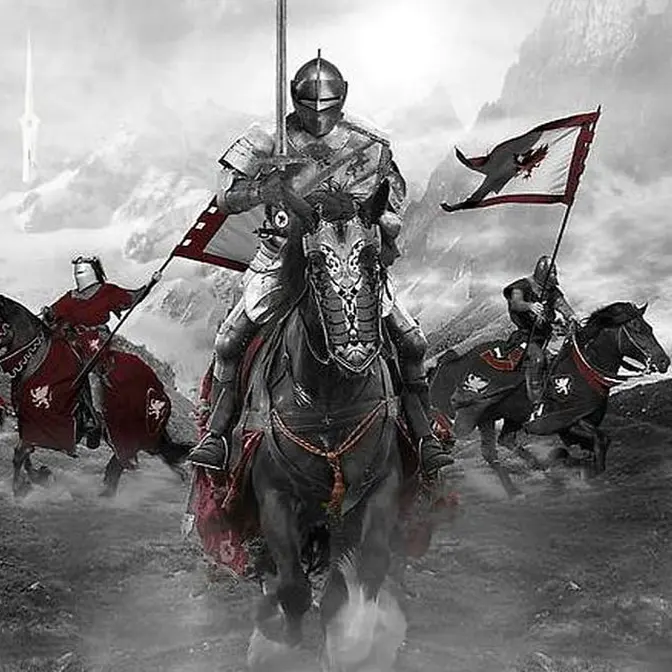
"*Roman–Parthian Wars Completely Explained (4K History)* offers an in-depth look into the centuries-long conflict between two of the ancient world’s most powerful empires: Rome and Parthia. This documentary breaks down the key moments, battles, and political maneuvers that defined the Roman–Parthian rivalry from the 1st century BCE to the 3rd century CE.
*The Origins of Conflict**: The documentary traces the roots of the rivalry, beginning with the **First Roman–Parthian War* during the late Roman Republic under Crassus, whose disastrous defeat at the *Battle of Carrhae (53 BCE)* became a legendary Roman failure. **Major Campaigns**: It explores significant wars and campaigns, such as: *Mark Antony's failed Parthian campaign* in 36 BCE. *Emperor Trajan’s invasion* of Parthia (113-117 CE), during which Rome briefly occupied the Parthian capital of Ctesiphon. The eventual *Sassanian Empire's rise* after the decline of Parthia and the Roman confrontations with the new Persian power.
**Tactical Warfare**: Detailed analysis of military strategies employed by both sides, from the famous Parthian cavalry and their devastating hit-and-run tactics known as the **""Parthian shot""**, to Rome’s attempts to adapt with legionary formations and siege tactics.
**Diplomacy and Power Struggles**: The documentary also delves into the diplomatic aspects of the wars, including treaties, alliances with client kings, and shifting allegiances between Rome and Parthia in their control over buffer states like Armenia.
**Legacy of the Wars**: The Roman–Parthian wars left a lasting impact on the geopolitical landscape of the ancient Near East, influencing the later conflicts between Rome and the Persian Sassanian Empire.
This comprehensive documentary illuminates the brutal yet strategic nature of the Roman–Parthian Wars, detailing how the two empires’ struggle for dominance shaped the fate of the ancient world.
In the ancient world, two great empires stood like towering giants on opposite sides of a vast desert.
To the west, Rome, fierce and proud, ruled with iron discipline.
To the east, the Parthians, mysterious and powerful, held their lands with grace and strength.
Their worlds were different, yet fate would draw them into a rivalry that would shape history.
Rome had risen from humble beginnings. Born as a small city-state on the banks of the Tiber River,
it grew through war and conquest, driven by ambition and a hunger for power.
The Romans were warriors, believing that their strength and will could overcome any obstacle.
Over centuries, they built an empire that stretched across Europe, North Africa, and the Middle East.
By the time of their peak, they had grown into an unstoppable force, with their legions marching
across the known world, claiming land after land for the glory of Rome. Far to the east,
the Parthians built their empire on the ashes of the fallen Seleucid Empire.
The Ars Acid dynasty took control of a land that stretched from the mountains of Iran to the fertile
plains of Mesopotamia. They were skilled horsemen, known for their swift cavalry, which could strike
with terrifying speed and retreat just as quickly, leaving their enemies in confusion.
The Parthians ruled their lands not with the rigid laws of Rome, but with a more flexible,
decentralized system where local rulers had a measure of autonomy under the Ars Acid king.
This allowed their empire to thrive, even in times of internal strife.
Between these two great powers lay Mesopotamia, a region of strategic importance. This land,
nestled between the Tigris and Euphrates rivers, was a fertile crescent in a harsh desert.
Whoever controlled Mesopotamia controlled the crossroads of trade,
the heart of commerce between east and west. Its cities, like Babylon and Seleucia, were bustling
centers where merchants from India, China, Rome, and beyond came to exchange goods and ideas.
Both Rome and Parthia knew the importance of this region, and both sought to control it.
But before swords were drawn, there were words. Rome and Parthia met each other, not on the
battlefield, but through diplomacy. Envoys from both empires traveled long distances to speak
with each other, trying to carve out a space where they could coexist. At first, there was a tense
respect between them. Each recognized the power of the other, and neither wished to push too hard.
But beneath the surface, both empires had ambitions that could not be contained by mere words.
Trade was the lifeblood of both Rome and Parthia.
The Silk Road, a vast network of routes connecting the east to the west,
passed through Parthian lands. Silk from China, spices from India, and other exotic goods flowed
into Roman markets. Rome craved these luxuries, but with each transaction, Parthia grew richer.
The Romans, proud and jealous of their wealth, began to see Parthia not just as a trade partner,
but as a rival who stood in the way of Rome's destiny to control the world.
The tension over trade began to grow, and soon, it was clear that words would no longer suffice.
The first sparks of conflict ignited in Armenia, a mountainous kingdom nestled between Rome and
Parthia. Armenia was a land of strategic importance, acting as a buffer between the two empires.
Both Rome and Parthia sought to place their own puppet kings on the Armenian throne,
hoping to use the kingdom as a foothold for greater influence.
The Armenians, caught between two great powers, often found themselves the pawns in a game far
larger than their own. The struggle for Armenia led to the first clashes between Rome and Parthia.
Roman legions, disciplined and organized, marched into Armenian territory, only to be met by
Parthian cavalry, swift and deadly. These early battles were fierce, each side testing the other's
strength, probing for weaknesses. The Armenians, meanwhile, were torn apart by the conflict,
their land becoming a battleground where foreign powers fought for control.
Yet beneath the surface, there was something deeper than just power and territory at stake.
Rome and Parthia were more than just empires, they represented two different ways of life,
two distinct worldviews. Rome was steeped in the traditions of the West,
influenced by the legacy of Greece, with its cities, its roads, and its focus on order and law.
The Parthians, on the other hand, were shaped by the cultures of the East,
their empire a blend of Persian, Hellenistic, and local influences.
Where Rome valued control and discipline, Parthia thrived on flexibility and adaptation.
This clash of cultures was felt not just on the battlefield, but in the hearts of the people.
The Romans viewed the Parthians as barbarians, a mysterious people who lived on the edge of their
world. Parthia, in turn, saw Rome as a brash and arrogant power, always seeking to impose its will
on others. This divide was not just political, but ideological, with both sides believing that
they were the true heirs of civilization. Propaganda played a powerful role in shaping
these perceptions. Roman writers painted the Parthians as deceitful and cowardly,
relying on trickery and ambushes rather than the honor of open combat. The Parthians, meanwhile,
saw the Romans as brutish conquerors who sought to force their culture and laws on all they
encountered. Both sides used these images to rally their people, to justify their actions,
and to fuel the growing hatred between them. As the rivalry grew, it became clear that the
struggle between Rome and Parthia was not just about territory or trade, it was a battle for
supremacy, for the right to shape the future of the ancient world. Each empire, in its own way,
believed it was destined to rule, and neither could tolerate the existence of the other for long.
And so, the stage was set for a conflict that would rage for centuries, with both Rome and
Parthia locked in a deadly dance, each trying to outmaneuver the other, each determined to
emerge victorious. The lands between them would suffer, the people caught in the crossfire of an
epic struggle between two empires that could never truly coexist. In the blazing heat of the desert,
one of the richest men in Rome marched his army toward what he thought would be his greatest
triumph. Marcus Licinius Crassus, a man who had everything except glory, saw in the distant
lands of Parthia the chance to cement his name in history. He was powerful, wealthy beyond measure,
but unlike his rivals, Pompey and Caesar, he lacked the one thing that could make him truly immortal,
a military victory that would rival the conquests of the greatest Roman generals.
Crassus was driven by ambition. In his mind, the Parthians were nothing more than a stepping stone
to greater power. He believed that by conquering Parthia, he could surpass Caesar's victories in
Gaul and overshadow Pompey's exploits in the east. So, despite warnings and advice from his peers,
he set his sights on Parthia, confident that his legions would sweep through the eastern
lands with ease. But the Parthians were no ordinary foe, and Crassus was about to face
a catastrophe that would forever stain his name. In 53 BCE, Crassus led his army eastward,
crossing the Euphrates River and pushing into Parthian territory. His plan was simple,
he would march into the heart of the Parthian Empire, crush their armies, and return to Rome
in triumph. But from the moment his army stepped into the barren lands of Mesopotamia,
things began to go wrong. The Parthians, masters of the desert, did not fight as Crassus expected.
Instead of meeting the Romans in a traditional battle, they harassed and exhausted them,
drawing them deeper into the hostile landscape. The climax came near the town of Cary, a name
that would forever be etched in the annals of Roman defeat. The Parthian general, Serena,
was a man of cunning and skill. He knew that his smaller army stood no chance in open combat
against the Roman legions, so he relied on the strength of his cavalry. Parthian horse archers,
swift and deadly, rained arrows down on the Romans from a distance. Whenever the Romans
tried to close the gap, the Parthians would retreat, only to turn and unleash another wave
of arrows. The Romans, heavily armored and unused to this kind of warfare, were helpless.
Crassus ordered his men to form a defensive line, but it was no use. The relentless Parthian
archers, combined with the terrifying sight of Parthian cataphracts, heavily armored cavalry
that charged with devastating force, slowly wore down the Roman ranks. The sun beat down on them,
their shields heavy, their throats dry. Every step forward felt like sinking deeper into a trap.
Crassus, for all his wealth and ambition, found himself powerless in the face of this new enemy.
As his army crumbled around him, he tried to negotiate with the Parthians, hoping to salvage
something from the disaster. But Serena, knowing he had the upper hand, toyed with Crassus.
In a final act of humiliation, Crassus was killed, and the remnants of his once-proud army were
slaughtered or taken prisoner. The Battle of Cary ended in one of the worst defeats in Roman history,
with over 20,000 Romans dead and another 10,000 captured. The Parthians, victorious and enscathed,
had dealt a crushing blow to the might of Rome. With Crassus dead and his army shattered,
the Parthians did not rest. They seized the moment, expanding into Roman-controlled territories,
pushing their advantage as far as they could. Roman influence in the east began to wane,
and the once-strong grip they held on their eastern provinces started to loosen.
Parthian forces moved into Syria, and the region was rocked by instability.
Rome, for all its power, found itself struggling to contain the tide of Parthian expansion.
Back in Rome, the news of Crassus' defeat sent shockwaves through the Republic.
The Roman people, who had been fed tales of endless conquest and invincibility,
were stunned by the loss. Crassus, once a pillar of Roman politics, was now remembered as a fool,
a man whose greed and arrogance had led thousands to their deaths. The defeated Cary haunted Rome,
casting a shadow over its ambitions in the east. But Rome would not allow such a humiliation to
go unanswered. After years of instability, another Roman leader rose to take up the fight
against Parthia, Mark Antony. Known for his military prowess and his close ties to Julius
Caesar, Antony was determined to restore Roman honor in the east. He launched his own campaign
against the Parthians, hoping to avenge the disaster at Cary and reclaim the territories
lost to Parthian expansion. Antony's campaign, however, was fraught with its own challenges.
The Parthians, once again, proved to be elusive and formidable opponents.
Despite initial successes, Antony's forces struggled with the harsh terrain and the
Parthian guerrilla tactics. The Roman legions, weighed down by their heavy armor and long supply
lines, were no match for the speed and mobility of the Parthian cavalry. Antony's army faced
starvation, disease, and constant harassment from Parthian forces. Though Antony was a more
experienced general than Crassus, the Parthians' mastery of their own land made every step forward
a grueling task. In the end, Antony was forced to retreat, his ambitions in Parthia unfulfilled.
The campaign, though not as catastrophic as Cary, was still a bitter disappointment.
Thousands of Roman soldiers perished in the deserts and mountains of the east,
and Rome's dream of conquering Parthia remained out of reach. Antony returned to Rome with his
reputation battered, the defeat marking yet another chapter in the long and bloody rivalry
between the two empires. The First Roman-Parthian War left scars on both sides. For the Parthians,
it was a moment of triumph, proof that even the mighty Romans could be defeated.
For Rome, it was a harsh reminder that not every enemy could be crushed by brute force.
The war set the stage for future conflicts, each side determined to prove its supremacy,
each knowing that the other would never stop pushing back.
The winds of change blew fiercely through the mountains of Armenia.
For centuries, this rugged land had been more than just a kingdom, it was the battleground where two
of the world's greatest empires clashed. Rome and Parthia, both powerful and determined,
saw Armenia not as a distant territory, but as the key to their future, a place where their
ambitions collided and where blood and politics would decide the fate of nations. Armenia sat
between the two empires like a stone caught in the middle of a river, battered on all sides.
Its strategic location made it essential, whoever controlled Armenia controlled the
route to the east, the gateway to the rich lands of Mesopotamia and beyond.
For Rome, Armenia was a buffer that could shield its eastern provinces from Parthian advances.
For Parthia, it was a foothold into Roman territory, a launchpad for future conquests.
But Armenia was more than just land, it was a people, a kingdom with its own traditions,
caught in the middle of a deadly game. The Armenians, torn between two empires,
were forced to choose sides or face destruction. And so, the struggle began, Rome and Parthia both
fought to place their own kings on the Armenian throne, hoping to control the land through a
puppet ruler. The Armenians, trying to maintain their independence, found themselves betrayed
time and again by foreign powers who cared little for their well-being. Rome would march its legions
into Armenia, installing a Roman-friendly king on the throne, only to see him overthrown by Parthian
influence. Parthia, in turn, would support its own candidate, only to watch as Roman forces returned
to crush him. The power in Armenia shifted like the changing seasons, with rulers rising and
falling at the whim of the two great empires. It was a struggle that brought no peace, only
suffering for the people caught in the crossfire. The tension between Rome and Parthia over Armenia
reached its peak during the reign of Nero and Rome and Valagases I and Parthia. Both rulers
knew that controlling Armenia meant tipping the balance of power in the region. Valagases,
eager to expand Parthian influence, placed his brother Tiridates on the Armenian throne.
Rome, seeing this as a direct threat, sent one of its most capable generals,
Gnaeus Domitius Corbulo, to deal with the crisis. Corbulo was a man of steel. Known for his
discipline and unyielding nature, he led his legions into the harsh Armenian terrain, determined
to reclaim the kingdom for Rome. His soldiers, hardened by the cold and the mountains, marched
with purpose, knowing that failure was not an option. Corbulo's campaign was relentless, pushing
back Parthian forces and restoring Roman control over the region. But the war over Armenia was not
one of mere battles, it was a war of wills. Valagases, though beaten on the battlefield,
refused to let Armenia slip from Parthian hands. His brother Tiridates, though forced to flee,
remained the symbol of Parthian resistance. Corbulo, recognizing that outright conquest would
lead to endless bloodshed, sought a different solution. In a rare moment of diplomacy between
two fierce rivals, negotiations began. The result was a fragile peace treaty,
one that brought a brief respite to the conflict. In 63 CE, an agreement was reached, Tiridates
would return to the Armenian throne, but only after traveling to Rome to be crowned by Nero
himself. It was a delicate balance, Armenia would remain under Parthian influence,
but with Rome's blessing. For a moment, it seemed as though the storm had passed.
When Tiridates journeyed to Rome, it was more than just a political move.
It was a gesture of respect, a recognition of Rome's power, and a moment of peace between two
great enemies. Nero, ever the showman, received Tiridates in a grand ceremony, presenting himself
as the emperor who had brought stability to the east. But beneath the surface, the tension remained.
Rome and Parthia had not settled their rivalry, they had simply postponed the inevitable.
The Armenian wars had lasting consequences for both empires.
Rome, having learned from its earlier defeats, shifted its priorities. It no longer sought to
dominate Armenia outright, but instead sought a more stable balance of power. Parthia, too, adapted.
Rather than direct confrontation, it began to use diplomacy and influence to achieve its aims,
recognizing that open warfare with Rome would only lead to more losses.
But Armenia, scarred by years of conflict, remained a pawn in a larger struggle.
Its mountains, once a symbol of strength, had become the stage for countless battles.
Its people, once proud and independent, were left to navigate the ever-shifting sands of empire.
Rome and Parthia's rivalry would continue, but the lessons of the Armenian wars would echo
through the centuries. The land, once vibrant with life and culture, stood witness to the ambitions
of men far away. And though the wars would end, the shadows they cast over Armenia would linger
for generations. The year was 114 CE, and the Roman Empire was at its peak, stretching from
windswept shores of Britannia to the burning sands of the east. Trajan, the mighty emperor,
stood at the helm, a man whose ambition knew no bounds. He had conquered lands far and wide,
but there was one adversary that had eluded Rome's grasp for too long, Parthia. It was an ancient
rivalry, a bitter struggle for dominance that had seen victories and defeats on both sides.
But Trajan was not content with the status quo. He wanted more. He wanted Parthia. The Parthians
had ruled the east for centuries, their empire centered around the great city of Ctesiphon.
Trajan, a warrior-emperor, saw Parthia as the last frontier, a land that could bring him the
eternal glory he sought. So, with the full might of the Roman legions behind him, he marched east,
determined to break Parthia's power once and for all. The invasion was swift and brutal.
Roman legions poured across the Euphrates, cutting through Parthian defenses like a blade
through cloth. Trajan's forces, hardened by years of conquest, pushed deeper and deeper
into Parthian territory. Town after town fell to the Roman advance, and soon, Trajan stood before
the gates of Ctesiphon, the heart of Parthian power. The city fell, and for a brief moment,
it seemed as though Trajan had achieved the impossible. Parthia's great capital was in
Roman hands, and Trajan had what no Roman emperor before him had ever held, a piece of Parthia's
soul. But empires are not built in a day, and they do not fall so easily. The Parthians,
though battered, were far from defeated. The land itself seemed to conspire against the Romans.
The scorching heat, the unforgiving deserts, and the relentless resistance of the Parthian
people began to sap the strength of Trajan's legions. This conquest, once so promising,
started to unravel. Parthian guerrilla fighters harassed Roman supply lines, and rebellions
sprang up in the newly conquered territories. The dream of a Parthian empire under Roman rule
began to slip away. Trajan, once full of fire and ambition, saw the cracks in his grand plan.
As the pressure mounted, his health began to fail. In 117 CE, exhausted and disillusioned,
Trajan died, leaving his empire at a crossroads. His successor, Hadrian, saw what Trajan could not,
Parthia could not be tamed. The Roman legions, weary from constant warfare,
withdrew from the eastern territories, leaving behind only the memory of Trajan's fleeting
victory. Hadrian knew that consolidation was the only way forward, and so he pulled back,
focusing on strengthening Rome's borders rather than expanding them.
But the conflict with Parthia did not end with Trajan. In the decades that followed,
the flames of war between Rome and Parthia were reignited. In 161 CE, under the rule of
Emperor Marcus Aurelius, Rome once again found itself at odds with the Parthians.
This time, it was Lucius Verus, the co-emperor, who would lead the charge.
The cause was the same, Parthian incursions into Roman territory, and once again, the legions
marched east. Lucius Verus, though not as experienced as Trajan, led his forces with
determination. The Roman legions, battle-hardened and disciplined, pushed the Parthians back,
winning a series of decisive victories. The Parthian capital, Ctesiphon, fell once more to
Roman forces, and for a time, it seemed as though Rome had regained its foothold in the east.
But even in victory, there was a price to pay. As the Roman legions returned home,
they brought with them something far more deadly than any Parthian sword.
A plague, carried by the soldiers, swept through the empire, leaving death in its wake.
The disease, later known as the Antonine Plague, devastated cities and weakened Rome from within.
Though Rome had won the war, the cost was unimaginable. Thousands died, and the empire,
stretched thin by years of conflict, struggled to recover. The victories of Lucius Verus were
overshadowed by the devastation that followed. And then came the reign of Commodus. He was not
a warrior like Trajan, nor a philosopher like Marcus Aurelius. He was a ruler who inherited
a fractured empire, one weakened by war and disease. The eastern front, once Rome's pride,
began to crumble. Commodus, more interested in gladiatorial games than governing,
neglected the defenses of the empire, leaving the eastern provinces vulnerable.
The Parthians, sensing weakness, struck back. With Roman forces depleted and the empire's
attention focused elsewhere, Parthian forces pushed into Roman territory. The once strong
grip Rome held over the east began to loosen, and the longstanding balance of power shifted.
The legions, once feared and unstoppable, found themselves on the defensive, fighting to hold
onto what little territory remained. In the end, the wars with Parthia had taken their toll on both
empires. Rome, though still mighty, was no longer the unstoppable force it once was.
Parthia, too, had been battered by years of conflict. The eastern front, once the site of
grand conquests, became a line of defense, a place where neither empire could afford to push too far
without risking everything. The dreams of Roman domination in the east faded, leaving behind a
legacy of war, ambition, and the limits of power. As the dust settled, both Rome and Parthia were
left to reflect on the cost of their rivalry. It was a conflict that spanned generations,
a battle for dominance that had shaped the fate of nations. But in the end, the land between them,
the deserts, the rivers, the mountains, stood as a reminder that even the greatest empires
have their limits. The wars would continue, but the glory that once seemed so close was now just
a distant memory, fading into the sands of time. The Parthian empire, once a towering force,
was crumbling from within. The great Ars Acid dynasty, which had withstood centuries of conflict
against the might of Rome, was losing its grip. Power struggles tore at the fabric of the empire
as rival nobles fought for control, weakening the very foundation that had held Parthia together.
The signs were clear to anyone who looked closely, the Parthians,
fierce and resilient as they had been, were no longer the unstoppable force they once were.
And as their empire faltered, a new power began to rise from the shadows.
Far to the south, in the land of Persia, a man named Ardashir had been watching the decline
of the Parthians with ambition burning in his heart. He was no ordinary noble, he was the
founder of a new dynasty, the Sassanids, and he believed that the time had come to reclaim Persia's
ancient glory. The Parthians, he thought, had failed to preserve the true spirit of Persia,
and he would be the one to restore it. In a whirlwind of battles and betrayals,
Ardashir rose to power. The Parthian nobility, already divided by internal conflict,
was no match for the Sassanid forces that stormed across the empire.
One by one, the cities of Parthia fell, and in 224 CE, the Ars Acid dynasty, which had ruled
for nearly five centuries, came to an end. The fall of the Parthians was swift and brutal,
and with it, a chapter in history was closed. Ardashir crowned himself as the first king of
the Sassanid empire, marking the dawn of a new era in Persia. But the rise of the Sassanids
was not just a moment of Persian triumph. It was the beginning of a new and even more
dangerous threat to Rome. The Sassanids, unlike the Parthians, were not content to simply hold
their ground. They wanted to expand, to challenge Rome's dominance, and to reshape the world order.
And their greatest weapon in this fight was Ardashir's son, Shapur I. Shapur was a warrior
king, fierce and relentless, with a vision that stretched far beyond the borders of Persia.
He understood that the Roman empire, despite its size and strength, had vulnerabilities.
The eastern provinces, long a point of tension between Rome and Parthia, were still the key to
controlling the heart of the empire. Shapur launched a series of devastating campaigns against Rome,
pushing deep into Roman territory and capturing cities that had stood under the Roman banner for
generations. The Roman empire, still reeling from internal struggles and barbarian invasions
along its northern borders, found itself facing a new kind of enemy in the Sassanids.
Shapur was not like the Parthian kings of old. He was cunning, strategic, and ruthless. His
victories sent shockwaves through the Roman world. In 260 CE, Shapur even managed to capture the
Roman emperor Valerian, a humiliation that Rome would not soon forget. Statues and carvings were
made in Persia, depicting the Roman emperor kneeling before Shapur, a symbol of Persia's
newfound power. Yet, for all the devastation, there was something hauntingly familiar about
this new conflict. The battles between Rome and the Sassanids echoed the long and bitter wars that
defined the Roman-Parthian rivalry for centuries. The same territories, Armenia, Mesopotamia,
and Syria, became the bloody battlegrounds where the two empires clashed, just as they had under
the Parthians. The same struggles for influence, for power, and for survival played out, only now
with new actors. Rome, though battered, adapted. The legions, honed by generations of warfare
against the Parthians, were seasoned in the art of eastern warfare. The tactics they had developed,
how to fight against heavily armored cavalry, how to navigate the harsh deserts of Mesopotamia,
were now being used against the Sassanids. The conflict with Parthia had taught Rome
valuable lessons, lessons that would now be put to the test against an even more formidable foe.
But the rise of the Sassanids did more than just reignite the flames of war,
it transformed the very fabric of the ancient Near East. The fall of the Parthians and the
ascent of the Sassanids marked the beginning of a new era in the region. Rome and Persia,
once adversaries divided by the Euphrates, now stood as two colossal powers, their rivalry more
intense than ever. The wars that followed were not just battles for territory, they were wars
that shaped the identity and future of both empires. The Roman-Parthian wars, which had
raged for centuries, left a legacy that went far beyond the battlefield. Trade routes that had
once linked the Mediterranean to the East were now vital arteries of commerce, carrying not just
goods, but ideas, art, and culture. The Silk Road, which passed through both Roman and Parthian
lands, had become a symbol of the interconnectedness of the ancient world. Even in times of war,
trade flourished and the cultures of Rome and Persia influenced each other in ways that would
be felt for generations. The fall of the Parthians also marked the beginning of a shift in the
balance of power in the Near East. The Sassanids, with their strong central authority and ambitious
kings, would challenge Rome in ways the Parthians never could. Yet the wars between these two great
empires, while destructive, also laid the groundwork for a more interconnected world.
As Rome and Persia clashed, they also shared. Soldiers, traders, and diplomats carried with
them not just weapons and orders, but stories, beliefs, and traditions that would shape the
cultures of both empires. The ancient Near East was transformed, not just by the rise and fall
of empires, but by the lasting connections forged through centuries of conflict. The Roman-Parthian
wars, and later the Roman-Sassanid wars, were not just wars of conquest. They were wars that
changed the very nature of the world, its politics, its trade, its culture. And as the sun set on the
Empire, a new dawn rose with the Sassanids, setting the stage for a conflict that would
shape the ancient world for centuries to come.