
A Day at a Castle 1218 | Documentary
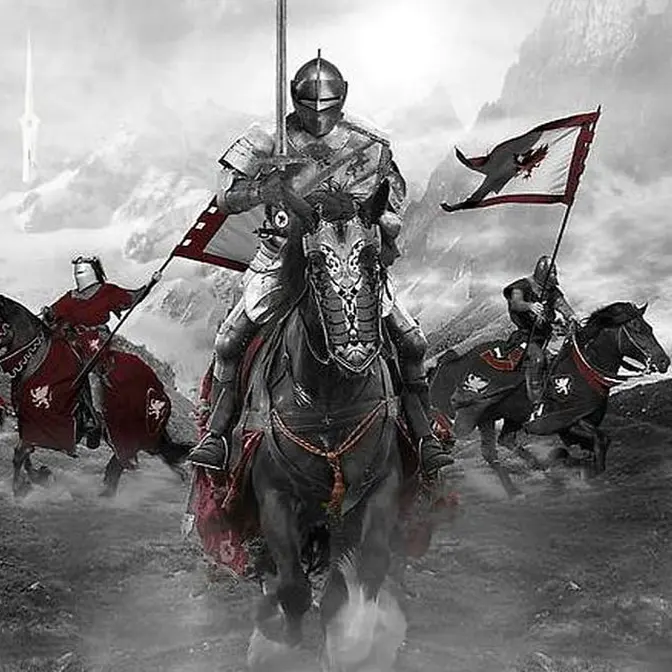
"A Day at Medieval Castle: We follow Eberhard von Münzenberg as he goes about his daily routine.
The 'castellan,' or governor of the castle, serves as an administrator, tax collector, and leader of the castle guards all at once. We gain firsthand insight into the bustling daily life of a castle administrator in the Middle Ages.
Discover the challenges and responsibilities that awaited Eberhard as he managed the affairs of the castle, interacted with its residents, and navigated the complexities of medieval governance. This historical journey promises to transport you to a bygone era, offering a deeper appreciation for the rich tapestry of life in 13th-century Münzenberg Castle.
#medieval #castle #documentary
----"
Munzenberg Castle in the Wetterau region.
This is where Eberhard von Munzenberg works.
He's a castellan.
Munzenberg!
He's a successful manager, taxman, master of ceremonies
and head of the castle guard.
It's his duty to protect the peasants.
If peasants don't feel that they are being protected by their lord,
the willingness to provide the fruits of their labour to support him
will very quickly break down.
It's the year 1218,
a time marked by brutal violence and conflicts
and by a lack of standardised imperial laws.
Munzenberg Castle is already practically a bulwark,
but there are plans to extend it with a new keep.
Protecting the Wetterau is the top priority.
But time and again, the construction poses new problems for Eberhard.
Eberhard is the go-to guy.
No matter the circumstances, he'll find a way to make things work.
Eberhard wants to marry a young noblewoman to pave the way to a glorious future,
but he's an illegitimate child, a bastard,
and doesn't have the right rank to marry into nobility.
And there's a lot more at stake for him.
The Holy Roman Empire in 1218.
A territory stretching from the Baltic Sea to Italy,
ruled by the legendary king of the Hornstaufen dynasty, Frederick II.
His rule is anything but stable.
In the south of his empire, the Lombards revolt against him.
In the north, powerful dukes try to diminish the young king's influence.
To assert his power, Frederick has countless fortresses built.
In an era without capitals, uniform imperial laws, or a civil police force,
fortresses are centers of power, with their own courts of justice.
Protecting the surrounding towns is of utmost importance in the Wetterau.
This region is home to one of the largest granaries in the entire empire.
Münzenberg Castle has to manage and safeguard the fertile valley,
the hamlets, and the city of Münzenberg.
It's up to Eberhard von Münzenberg to guarantee
that the castle can fulfill all these tasks.
He's a castellan, a governor of sorts.
And he's got his work cut out for him.
The 21-year-old starts his day at dawn.
As the castellan, he lives in an official residence in the outer ward.
His house has roughly 100 square meters,
making it 30% bigger than all the surrounding houses.
Eberhard also has his own staff.
A servant and a maid run the house for him.
Like all Münzenbergs, Eberhard wears red and gold,
the colors of the family coat of arms.
This way, it's always apparent which noble house he belongs to.
By wearing his weapons on his belt,
Eberhard signals to others that he has completed his night training.
He's as cultivated as he is a seasoned warrior.
The long years of education are a privilege for such a young man.
After all, Eberhard is viewed as flawed.
The history of the Münzenbergs dates back about 60 years.
Kuno I was the patriarch.
He and his wife had three sons, but two of them died young.
This is why their third born, Ulrich, followed in his father's footsteps
and became the lord of the castle.
Eberhard is Kuno's youngest son and could become Ulrich's successor.
But he and his siblings don't have the same mother,
making Eberhard an illegitimate child, a bastard.
His mother was a woman of gentry status with whom Kuno I had an affair.
The term bastard stems from the Latin word bastrum,
meaning pack saddle.
This points to the place where the sinful encounter
was presumed to have unfolded, the horse barn.
Extramarital relationships were quite common in the Middle Ages.
Just like today, I'd say.
Depending on how life goes, men had several mistresses,
and particularly so if there was a big social gap.
Bastards were in fact a frequent occurrence in medieval society.
We're talking about a society without any birth control.
The church began pushing for monogamous marriages in the high Middle Ages,
but with only very limited success.
Being a bastard, Eberhard faces challenges.
It will be hard for him to find a wife, and he won't inherit anything.
But he's good enough for work, and Eberhard can still count himself lucky.
At least he's the castellan of an influential castle.
Noble families are family businesses,
and therefore are interested in having a lot of staff.
And that also means having many illegitimate children.
They come in handy when a family gains rank and power or conquers territory.
The bastards are often used as representatives,
castellans, or managers of certain castles.
Given his title, Eberhard ranks second in the hierarchy,
right after his half-brother Ulrich.
When it comes to the castle's operations,
the castellan played an extremely important role.
He was responsible for the majority of duties and tasks.
That requires constant control, foresight, and assertiveness.
A successful castellan has the skills that are necessary
to negotiate with the peasantry,
to deal with the leaders of the village community,
to make sure that the dues are paid,
that the renders come in on time,
that the produce that the peasantry are bringing to the castle
is of an appropriate quality.
He's the manager who makes the entire business work.
Eberhard works at least 12 hours a day,
seven days a week, to fulfill his duties.
You also have to assume that the lord of the castle was often away, travelling,
and the castle still had to be kept up and running while he was gone.
On top of that, the castle and its residents
needed to be protected at all times.
We don't have a floor plan of Münzenberg Castle
from the time it was built,
and it has undergone architectural changes
over the course of the centuries,
but historian Dieter Wolf has reconstructed
the original floor plan of this impressive site.
The castle was impressive,
also highlighting the power of the Hohenstaufens,
which is still visible to this day.
When you approach Münzenberg from the south via the main road,
it looked like this castle had been built for a giant.
Such an imposing edifice was meant to communicate one thing.
A powerful man resides here.
He certainly is part of the king's entourage.
As most fortresses at medieval times,
Münzenberg Castle was also a fortified defence complex.
Its ruins rest along an elongated conical peak
with 20 metres of steep side walls.
The basalt rock hill upon which the castle stood
was almost impossible to conquer.
Two-metre-thick walls were meant to keep attackers at bay.
About 200 men were responsible for protecting the castle
and for the surrounding villages.
The kastelein was their commander.
The core of the inner ward was called a palace,
the main building with a great hall.
This is where the lord of the castle lived and received guests.
To this day, the anchor holes reveal
where the ceiling beams once were.
And here a large chimney indicates where the kitchen was.
The kitchen staff cooked and baked around the clock
to make sure everyone was fed.
Perishable foods were stored in cool and dark cellars.
The chimney, several metres high, serves as an exhaust hood of sorts,
enabling steam and smoke to escape easily.
Not far from the kitchen wing was the eastern keep of Münzenberg Castle.
It was built during the first construction phase.
The tower is about 30 metres high,
allowing the men to spot enemies from afar.
A sitemap shows how the inner ward of Münzenberg Castle looked around 1218.
Surrounded by a chemin de ronde, there was the palace,
a chapel, a keep, a granary,
a workshop for carpenters and blacksmiths,
and two stables for the many horses.
A well secured the water supply.
If war were to break out,
the castle could run autonomously for about three months.
The outer ward was outside the actual castle walls,
at the foot of the castle hill.
There was a large farmyard, including the courtyard house of the castellan,
a bakehouse, barns, workshops,
and whatever was needed to maintain the supply of the inner ward.
The castellan had to make sure everything was running smoothly.
The castellan is the interface between these two worlds,
between the world of the castle and the nobility on the one hand,
and the world of the village and the peasantry,
and the economic system supports the castle on the other.
A successful castellan can make sure that the entire system works.
The steward of the castle is responsible for collecting fees
from the peasants and for stock-keeping.
Eberhard oversees his work.
We have a problem.
It's about the taxes that are due to St. Remigius.
The farmers are far below the threshold.
They have almost nothing they can supply us with.
You must listen to what they have to say.
And all that, despite the fact that the climate has been very favourable this year,
and the peasants have brought in record harvests.
On top of that, the arable land has been increasingly expanded
over the past couple of years to feed the ever-growing population.
Technological progress like ploughs and carts
and the use of cows and horses make the work easier and increase the yields.
The peasants have to hand over a third of their harvest.
They keep one third for sowing
and the other third for their families and themselves.
They don't only pay in crops.
There are also special taxes paid in livestock
and the interests on the use of land and soil are settled with money.
It was based on a system of giving and taking.
The lord of the castle could only survive if the peasants survived.
So the farmers were forced to pay fees,
but it was possible in good harvest years with the right climate conditions.
October 1st marks the Day of St. Remigius,
one of the four main payment days in the Wetterau region.
The steward keeps detailed tabs on how much every peasant owes.
This is done using tally sticks.
He carves orthogonal grooves into a piece of wood,
representing how much is owed.
The wood is then cut lengthwise.
The steward keeps one half while the peasant gets the other.
It's a form of double-entry accounting.
Upon delivery, the steward removes grooves
according to the fees the farmer has paid,
a forgery-proof process.
Why do you have so much on the carpets?
We were attacked, sir.
Just before sunrise. We had just loaded the big wagon.
They came on horses and took everything with them.
That's all we have left.
Take it, sir. Your best dress.
The best dress of a peasant's wife.
If she dies, it goes to the lord of the castle,
a form of medieval inheritance tax.
Who was that?
The von Münzenbergs have been at odds with their neighbours,
the von Grüningens, for years.
The dispute revolves around a profitable mill in Ruppertsburg,
owned by the von Münzenbergs.
This is why the von Grüningens want to seize the land around the mill.
The peasants are the victims of this power play.
In the Middle Ages, such conflicts were usually settled by a feud.
This was the term for a legal form of taking the law into one's own hands.
The city archives of Mühlhausen, Thuringia,
are home to a copy of the Sachsenspiegel,
an important book providing insight
into the legal situation in the 13th century.
Usually, the king and his lords are in charge of jurisdiction,
but the sheer amount of conflicts burdens the system.
There's no law enforcement either.
This is why many take matters into their own hands.
One regional example for this
is the feud between the Heldringers and Erfurt.
It was about whether a bucket of wine,
a fee between Erfurt and the Heldringers,
is a debt to be collected by the creditor or to be delivered to him.
So, in essence, it's about whether the Erfurters have to bring the bucket
or the Heldringers have to collect it.
This led to an almost warlike dispute involving 1,000 armed men.
Sometimes feuds are caused by trivialities.
Defamations, theft, and adultery
almost always end in violence and manslaughter
to avenge the alleged injustice.
Of course, arbitrary law and violence were more widespread.
It's not that people were crueler than today,
it's just that they sometimes rather had to resort to violence to resolve conflicts.
But even today, we can see the remnants of feudal culture in modern jurisdiction.
If in self-defense or distress, we are able to resort to violence.
However, strict rules govern feuds.
It must start with a formal feud letter
officially declaring the end of the good neighborly relationships,
the alliance or the friendship.
From this point forward, the parties are officially enemies,
but only once three days have passed.
You can see attempts at de-escalation at every stage of the feud.
This three-day period, for example, was included to give them more time
to think it over again, to renegotiate,
to maybe have a mediator step in and say,
Think again.
If you're really going to smash each other's heads in with your swords,
nobody will win in the long run.
Let's sit down again peacefully and try to find a solution.
The three-day period didn't change much.
The feuds spiral out of control.
Within the empire, more than 300 feuds were recorded in the year 1218 alone.
The estimated numbers are ten times higher.
The peasants are hit particularly hard.
Without armed protection forces, they are at their attackers' mercy.
This is a relationship in which both sides have rights and duties.
Medieval peasants are not slaves.
If peasants don't feel that they are being protected by their lord,
the willingness to provide the fruits of their labour to support him
will very quickly break down.
This is why Eberhard thinks twice
before taking away what little the peasants have left.
Eberhard has to make the right decision.
After all, the peasants' fees are the main source of income for the castle.
One third goes to the king.
The rest is needed as stocks for the lord's family,
the servants, guests and banquets.
Even Münzenberg Castle only has limited reserves.
It would be worse if more of our peasants left their farms to move into the city.
Yes, then the castle's supply would be in real danger.
Rural flight was an enormous issue for the castle lords.
And if life in the countryside was too hard,
of course the temptation to move to the closest city, like Gießen or Frankfurt, was high.
Keep what you still have.
Thank you, sir.
But how do we proceed?
There is no reason to leave the fields.
We will leave you your taxes until the end of the year.
And we will make sure that you are better protected.
Thank you, sir.
Good.
This little war will break our necks in the end.
What about the banquet tonight? Does the kitchen have everything it needs?
Yes, everything is ready. The kitchen is working and is taking care of itself.
So you don't have to worry at all, sir.
Good.
Then I will report to my brother about the attack.
His half-brother Ulrich seems to be expecting him.
As head of security, Eberhard has to explain
how he can protect the castle and the region against the von Grüningens.
The feud letter by their hostile neighbours, the von Grüningens.
They want money and the mill to restore the family's honour
after it has allegedly been tarnished.
Ten men work under Eberhard.
They are petty nobility called Borkmannen.
They are extremely well armed and command at least 500 men,
all very fit for service.
In emergencies, the peasants have to step in too.
With this plan, Eberhard proves he is not only a skilful manager
but also has what it takes to be a commander.
The goal is to protect the peasants
but also the guests that are arriving for a banquet that night.
To put the von Grüningens in their place once and for all,
Ulrich von Münzenberg wants to strengthen the alliance
with one of their other neighbours,
the Borkmannen family von Bellersheim.
Though the Bellersheims are peaceful, they are also cash-strapped.
Their third-born daughter, Mechthild, is a burden to the family.
They haven't managed to find a husband for her yet
because the von Bellersheims can't provide a dowry.
So Ulrich made a deal.
Mechthild will marry the bastard Eberhard
and in return, the Münzenberg family won't ask for a dowry.
They are rich enough. It's a win-win situation for all parties.
On top of that, the alliance will allow the Münzenberg dynasty to live on.
If a family couldn't carry on its name,
they sometimes even resorted to taking bastards from the monastery to marry,
just to keep the family name alive.
North of the Alps, bastards kind of served as reservists or reserve children,
like second-class children, if you will,
that families could resort to as fillers.
Eberhard's life is almost perfect.
He's got an important name, he's been knighted,
and is a castellan of a powerful castle.
The only thing missing is a bride.
He doesn't have time to contemplate.
He's still got a lot of work to do.
The von Münzenbergs want to build a second keep.
Up to now, they only have one in the eastern part of the castle.
These were also symbols, epitomes of power.
This is why important houses didn't build one, but two towers or keeps,
to show how powerful and important they were.
The construction of the keep has only just begun.
It will take years to complete the tower.
Everything goes according to plan.
Good news for Eberhard as the castellan,
he's responsible for making sure the timeline and financial targets are met.
The servants building the tower range from men to women to even children.
They toil from dawn till dusk, six days a week.
The pay is poor.
Wage regulation or occupational safety were non-existent in the countryside back then.
Most labourers were unskilled workers.
Only craftspeople like masons, carpenters or blacksmiths were trained.
They often came from other countries,
travelling from one construction site to the next.
The master builder that Eberhard has commissioned is not a local either.
He's acquired his knowledge all across Europe over the course of many years.
In the Middle Ages, master builders were central figures.
In the High Middle Ages, knowledge was only imparted orally
and the structural implementation of the project
basically depended on the master builder's experience.
Researchers in the Austrian town of Friesach want to learn more
about how medieval master builders erected fortified towers.
The scientists don't have any blueprints,
so they need to conduct experiments to find out how our forefathers worked.
The team relies only on historical construction techniques.
The experts have been working on this project for more than ten years.
Stonemasons, carpenters, blacksmiths and many assistants.
All throughout the year, a team of 60 people are busy trying to piece together
how medieval architects got the job done.
Many different techniques were used
and this poses a particular challenge for the researchers.
In the Middle Ages, people, of course, couldn't go to a DIY market and buy materials.
One square meter of ashlar masonry, please.
That didn't exist back then, obviously.
That means they were forced to manufacture everything they needed on site.
Everything from tools to construction materials.
The Friesach group has made countless attempts trying to come up with the right type of mortar.
To make sure the thick walls of the high keep don't collapse,
the ratio of sand, calcium and water has to be perfectly balanced.
Ideally, the mortar has a quality that even modern concrete can hardly match.
As for the mortar, the ratios and combination of ingredients are key.
We can see that lime plaster, lime mortar from the high Middle Ages is extremely stable.
In many medieval and especially high medieval castles and ruins,
excellent mortar mixtures were used and they have stood the test of time.
The buildings are still standing today.
Ring anchors are just one of the examples of medieval high tech.
Ring anchors were often used when building towers.
They essentially stabilized the towers.
Every five meters, a square of massive wood beams was built into the stonework.
If we want to compare this to modern techniques, I'd say it's like reinforced concrete.
Today's concrete is reinforced with steel.
The ring anchors, the wooden ring anchors, were used to reinforce medieval towers.
The tower in Friesach only grows four meters a year.
And it took just as long in the Middle Ages.
Not least because people could only work during the frost-free seasons.
Unforeseen costs are another obstacle Eberhard has to master.
We need more ring anchors.
There was no talk of that before.
You want a very high mountain peace. It needs stability.
And because you're just there, we absolutely have to improve the fire protection.
That too?
If we use wood, the mountain peace will become a fire trap.
That's why we have to make the ceilings between the bullets with stones fireproof.
How much does that cost?
Less than you think, Castellan.
I can only agree to the construction of the tower if we build everything as safe as possible.
Especially the mountain peace should be worth something to you.
As long as this magnificent building increases the respect of our neighbors.
Then it would have been worth it.
But the bad news continues. A work accident.
Eberhard has to administer first aid.
One of the women fell down the scaffolding.
She's conscious but broke her leg.
Technically Eberhard would need a surgeon specializing in broken bones.
But you only find those in the city.
Occupational safety as we know it today was of course not a thing in the Middle Ages.
We can assume that many accidents took place when constructing castles or fortresses.
And that some people lost their lives too.
Here. You'll feel better soon.
It's all here.
The blacksmith is in charge of broken bones at the castle.
He straightens the leg as far as possible.
They use yarrow, ribwort and comfrey from the herb garden.
These plants are antibacterial, analgesic and promote healing.
A sepsis could be fatal, literally.
The leg is splinted with a firm bandage made of linen cloth
drenched in a mixture consisting of eggs and flour.
To stabilize the leg, the blacksmith puts several wooden sticks around the bandage
and fastens them with a string.
That's all they can do for the woman at this stage.
The von Bellersheims haven't chosen the best moment.
Eberhard almost forgot to see how things were going in the kitchen.
He rushes to the other side of the castle.
The head chef is probably already waiting.
Medieval banquets typically centered around one thing – meat.
Archaeologists in Basel, Switzerland, are trying to find out
what kind of meat people consumed.
Refuse pits and cesspits prove to be a real blessing
when it comes to reconstructing the 13th century menus.
These soil samples are from the Borkalden ruins in Switzerland.
They're cleaned with water in the wet-sifting room
and passed through several different sets of sieves.
This method allows the researchers to find even the smallest of bone splinters,
like the pelvis bone of a hedgehog, among other things.
It's not known if this animal was eaten.
But what is known is that in times of need, poor people ate hedgehog meat.
And sometimes even dogs and cats.
While crops were the staple of people's diet,
meat consumption in medieval times was much higher than today.
The peasants and the nobility usually ate very different things,
but everyone ate songbirds.
They found the bones to prove it.
But the range of medieval menus was far greater than this.
Based on animal bones, we also know they ate doormouse and squirrel.
You probably won't find those on many modern plates.
We have also found herons, cranes, partridges, and lots of songbirds,
very small ones.
The nobility's sophisticated cuisine often included venison.
The animals were usually hunted in local forests and valleys.
But on special occasions, people wanted exotic dishes, too.
Of course, spectacular animals, large birds like peacocks or swans,
are perfect for this.
They were prepared accordingly, stuffed,
and were served with a plumage intact.
A sensational presentation and a culinary delight.
Not even a chicken dressed as a knight riding a pig is too outlandish.
Medieval chefs did their best to impress the guests.
Piers Montay are the highlights of medieval event cuisine.
You could show what's in fashion and that you have ties with Italy or France.
They tried and included artistic elements.
They gilded swans, they made hairs run again using special mechanics,
and there's a panoply of dishes that, by the way,
were also changing all the time during the Middle Ages.
Everything is a trend, everything has to be new all the time,
and better than what the other castles were serving.
The entire kitchen staff is lining up in the corridor
from the kitchen to the great hall, ready to serve the meal.
At medieval banquets, all the dishes were placed on the table at the same time.
The banquets were also really important because they were an occasion
to show off what you've got and who you want to be.
If you held a large and successful banquet,
your guests didn't only enjoy themselves, they would also go and spread the word.
So these meals would either make or break a family's reputation,
and for noble families a banquet was also a chance to climb the social ladder.
And this is exactly what the von Münzenbergs have in mind.
The dinner is meant to impress the family of a potential suitor,
so that Eberhard will be able to marry within his social class.
In the 10th century, forced marriages make way for common-law marriages,
meaning the families have to come to an agreement.
They sometimes bargain and haggle until the very last moment,
and the bride has to give her consent too.
This is why it's crucial that Mechthild has a good time
and isn't put off by the rough table manners of the others.
Having ladies around typically ensures that all those at the table are well-behaved.
But it didn't always work, even though people already followed a certain etiquette back then.
Using the tablecloth to wipe your hands was regarded as impolite.
If someone broke the rules, the jester would be swift to point it out.
It's also frowned upon to pick one's teeth or to have long nails.
If someone had to sneeze, they were expected to turn away from the table.
And it's taboo to bite off more than one can chew,
or even worse, drink or talk with your mouth full.
The table manners really only evolved in the 13th century.
If we try and imagine what a banquet was like in 1218,
we can assume that people would wipe their hands on their pants or their doublet.
You were allowed to burp, that's a given, and just throw the gnawed-off bones behind you.
The banquet at the von Münzenbergs seems to go well,
even if some of the guests are still struggling to respect the new table rules.
And it looks like Mechthild is enjoying the night and likes Eberhard.
Now they only need to seal the alliance.
SPEAKS GERMAN
The bride's father only pretends to be worried. He wants to negotiate again.
SPEAKS GERMAN
It's true that the church rejects bastard marriages,
but people can also marry without a priest.
I think the noble families had a very rational approach to weddings.
What they cared about was their possessions.
And by the way, I think that is still largely the case today.
There are still many noble families that basically refuse any marriage outside their social class.
SPEAKS GERMAN
Ulrich is referring to wheat bread, a delicacy in the Middle Ages and very expensive.
Both parties agree.
The von Bellersheim family will get the von Münzenbergs lucrative mill in Ruppertsburg and the peasants.
In return, the bride's family will allow the Münzenbergs to mine salt at their source.
The agreement between the families is legally binding
and can be sealed with an official document here and now.
A risky situation. Eberhard has to take care of it immediately.
It's his duty to protect the castle.
Bastards are maybe a bit like bodyguards.
They were the ones that had to take care of rather risky business.
This was a safety mechanism for the families, of course.
If anything went awry, it was just a bastard,
and if it was a success, the family could boast with it.
Eberhard hastily leaves the castle and rushes to the northern city gate.
His servant informed him that that's how far the von Grüningens have come.
This is what Eberhard has been worrying about.
Their enemy neighbours want to escalate the conflict.
The city walls merely consist of a mound reinforced with wooden palisades.
Luckily, Eberhard has deployed most of the Borkmannen to defend the city of Münzenberg,
because Knight von Grüningen is waiting at the gates with a following of almost 100 men,
all wound up and ready to fight.
If Eberhard can't calm things down, the situation could quickly derail
and turn into a carnage, claiming many lives on both sides.
It was not uncommon for castle lords involved in a feud to pick up a stick or club themselves
and attack their enemies with brutal physical violence.
Eberhard is taking a big risk, but he wants to settle this amicably with the von Grüningens.
The intentions of the von Grüningens are crystal clear.
They want to steal the goods and chattels from the von Münzenbergs.
If need be, they'll use force.
It wouldn't be the first time a feud turns into a bloodbath and wipes out entire families.
He must be punished.
Honor meant everything in the Middle Ages.
Nowadays, politicians say, I can't be insulted.
And this meant to show strength.
They are willing to discuss, are relaxed, rational, etc.
But in the Middle Ages, a noble person would always have said,
you can insult me and you can do so with the pettiest of things.
And not here.
He reached us far too late.
You don't want a divine agreement, but plunder and embezzlement.
You destroyed an entire village and took the lives of one of our farmers.
With what right are you standing here?
With money, a lot can be arranged.
Get out of here quickly.
This game has new rules.
Nobody can really afford a feud.
If you look at how much it costs to get involved in such a process,
you see that it takes 10 to 20 years to get back what you spent.
It's a lot of money.
And that's just the combat expenses.
You have to rent the soldiers.
And then, when someone dies and maybe you lose the feud on top of that,
you have to pay a compensation.
So people were very careful to prevent things from derailing so fast.
You have to pay your dues according to the known rules.
And then everything will be settled accordingly.
But everyone must know,
if justice is served for revenge, there are no winners.
No matter what family we belong to.
And that of a bastard.
If a bastard contributes to the justice being done again,
then I'm happy to be a bastard.
The young man has managed to do the impossible.
The von Gruningen's leave without having achieved anything.
Not one drop of blood was shed, and Eberhard has gained respect.
The wedding between Eberhard and Mechthild is officially sealed that same night.
This also ensures the continuation of the von Münzenberg's bloodline,
because the couple's children will be legitimate successors,
even if their father is a bastard.
The alliance between the two families brings peace to the Wetterau region.
The conflict with the von Gruningen's is arbitrated in an orderly court,
and the imperial peace of Mainz puts an end to the feud system in 1235,
replacing it with an ordinary jurisdiction.
Eberhard and Mechthild live in Münzenberg for a couple of years
until the Kastellan gets his own castle.
Eberhard von Münzenberg's story is fictional, and yet it's true in many ways.
It's a story about a young nobleman, born an illegitimate child,
who manages to break free from the barriers of his origin,
stands up for justice, and ultimately finds happiness.